Two wind seasons
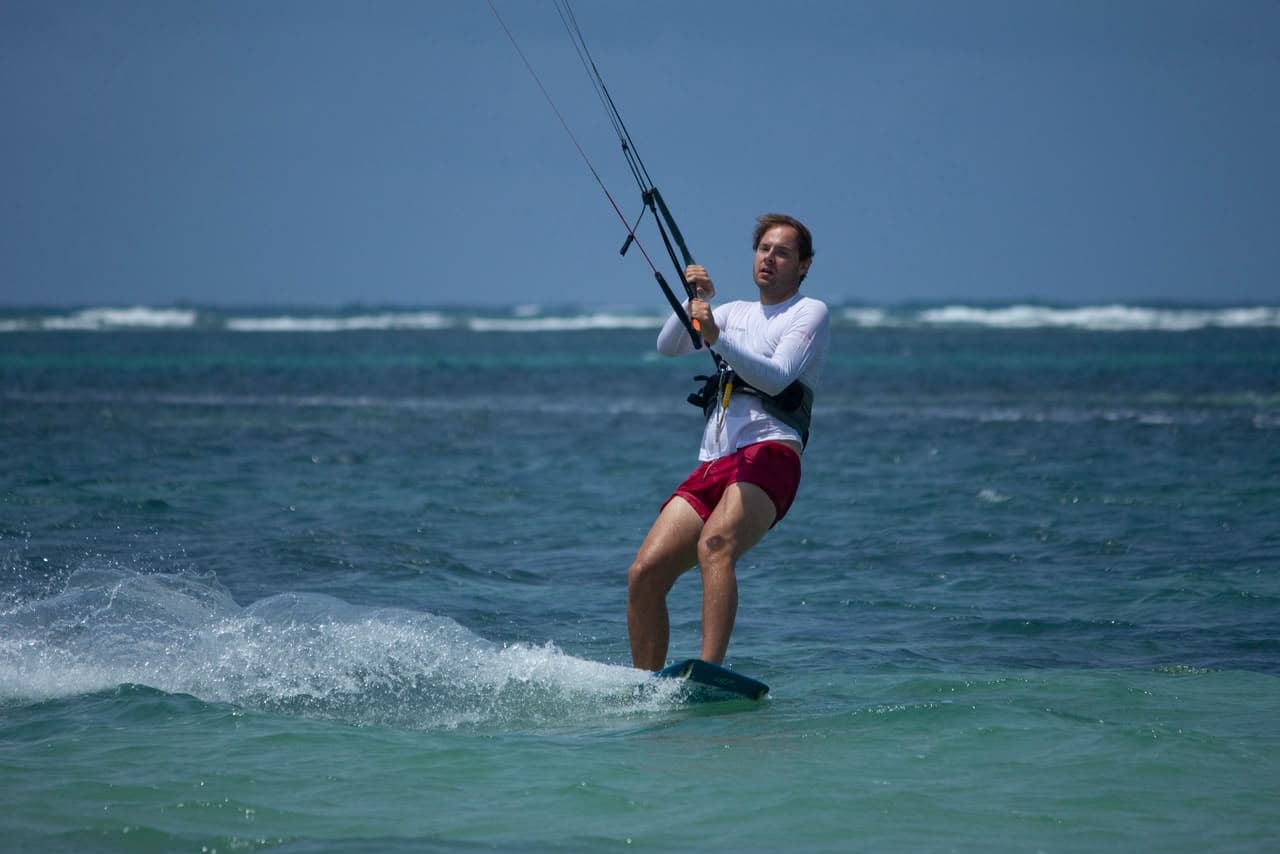
The Kaskazi season runs from December to the end of March. The wind comes from the north, it is sunny and warm, the water is around 30°C so you don't need a wetsuit, and the wind is a steady 22 to 25 knots, up to 27. The beach is clean, without seaweed. This is the season we like best.
The Kusi season runs from June to the end of September, with the wind from the south. It is stronger, 25 to 30 knots in July and otherwise 20 to 27, but it is colder, so a wetsuit is sometimes needed, and seaweed can wash up on the beach. April and May are the rainy months, and some of the rain reaches into the start of Kusi. Public guides to Watamu describe the same two seasons, with cross or cross-onshore wind that usually builds from around late morning. Treat that as a general guide: the start time changes from day to day.
The tide decides how the water feels
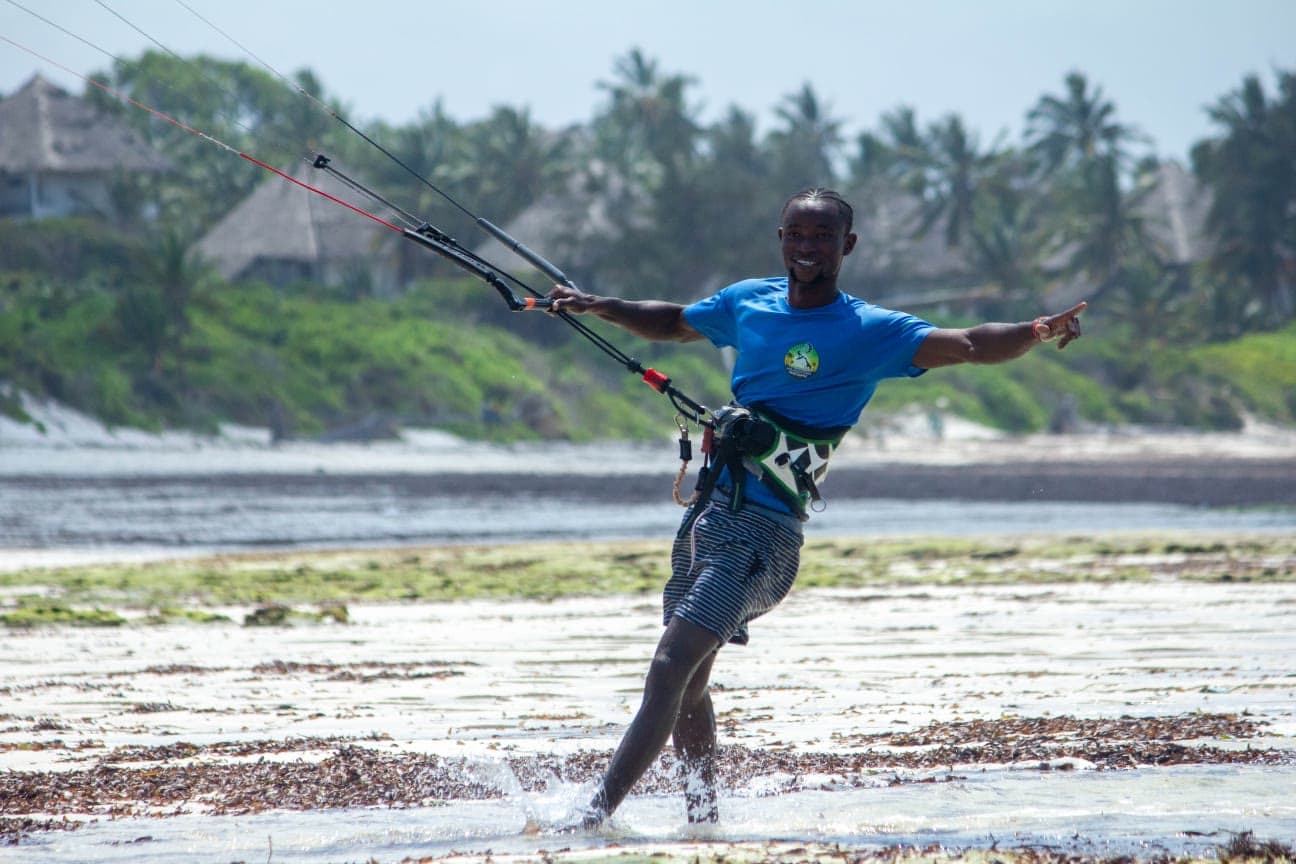
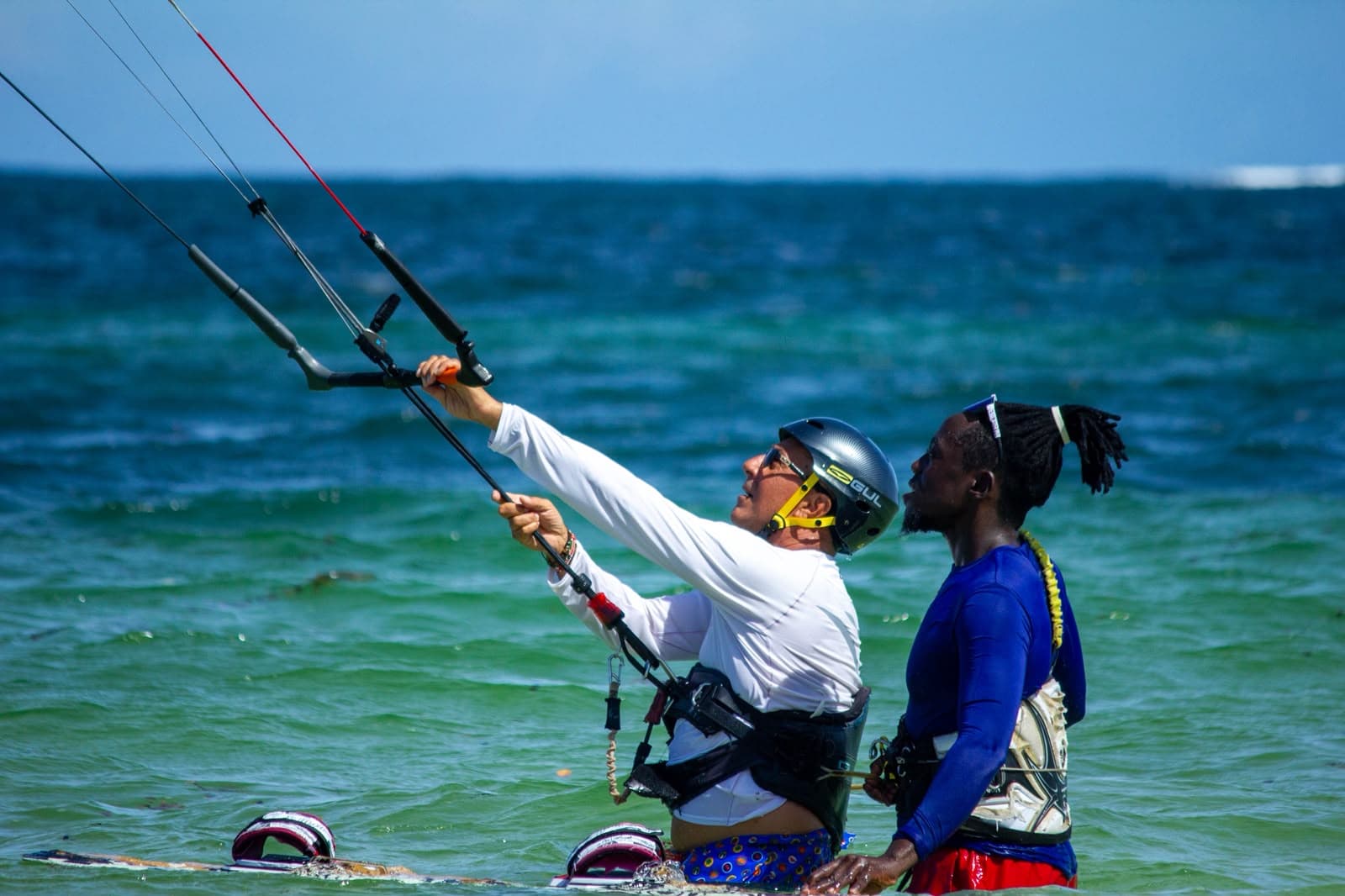
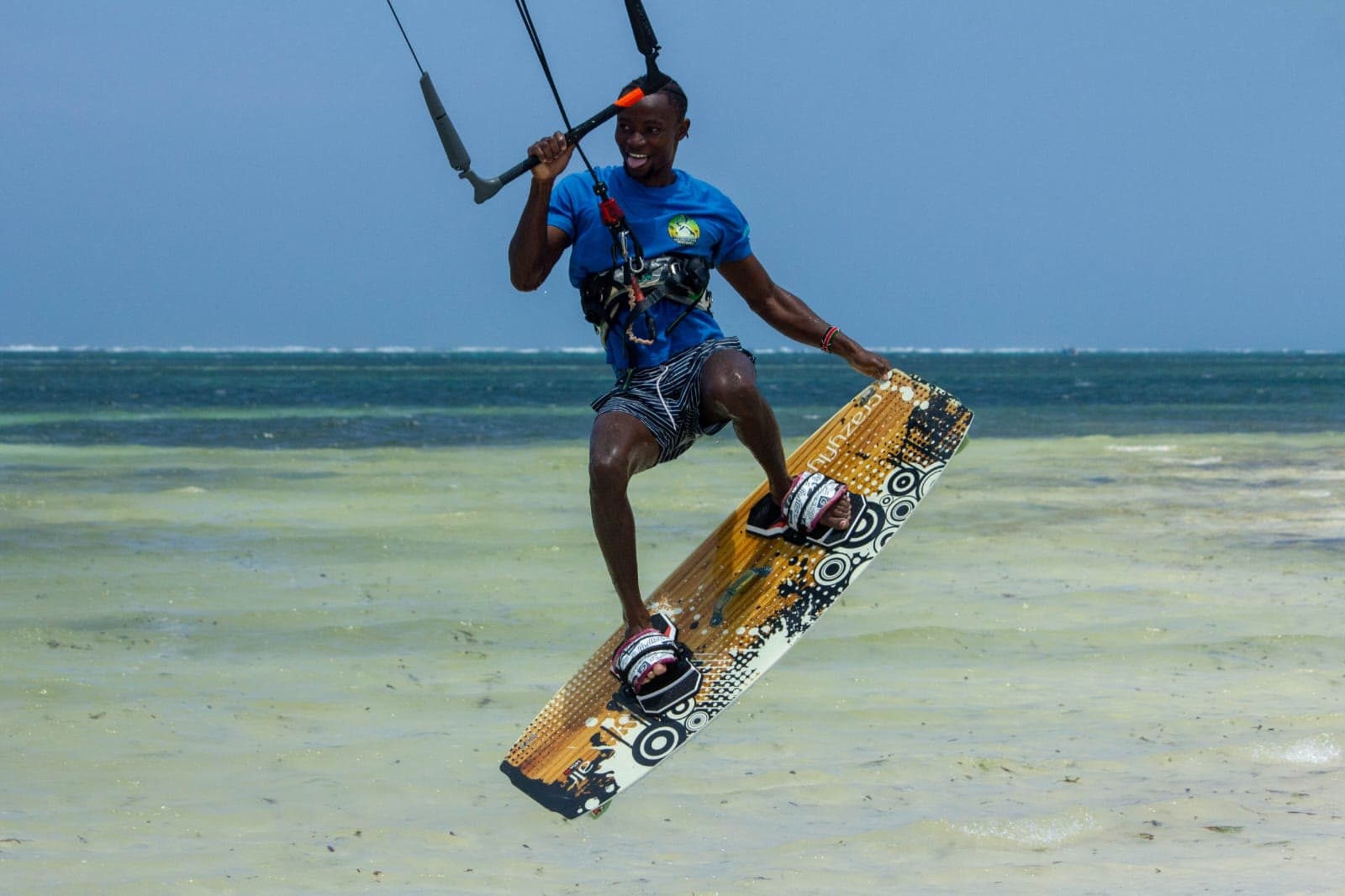
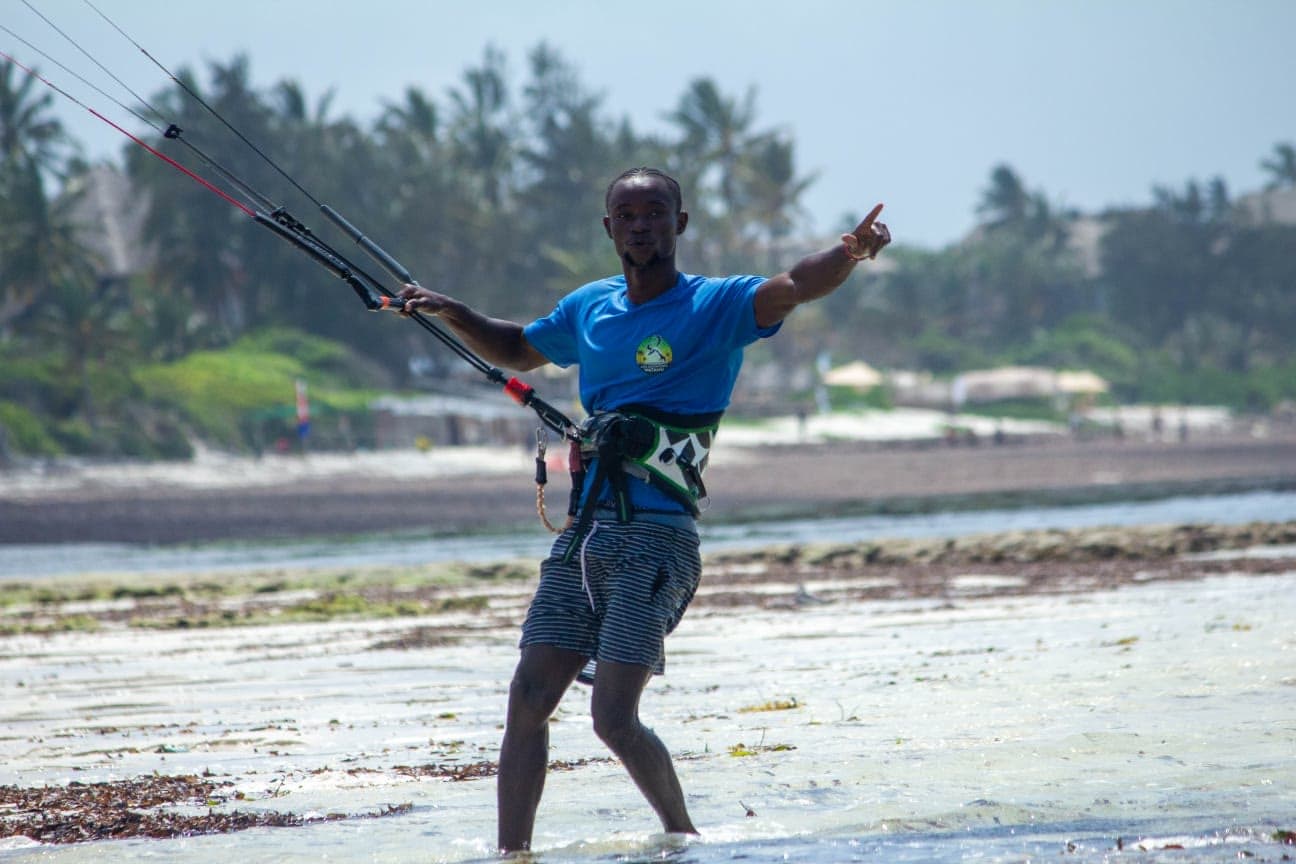
The water at Turtle Bay Beach changes with the tide. At high tide it is deeper. At low tide it is shallow, and that is the best time for learning kitesurfing here, so we normally teach at low tide. It is also when the wind works best for us.
The tide range on this coast is large. Public tide tables for Watamu list high water of around 4 metres and low water close to zero, based on the Malindi station, so times can be off by some minutes. If you are planning a day of riding on your own, look at the tide table first, and ask us which window suits your dates.
The beach and what to watch for
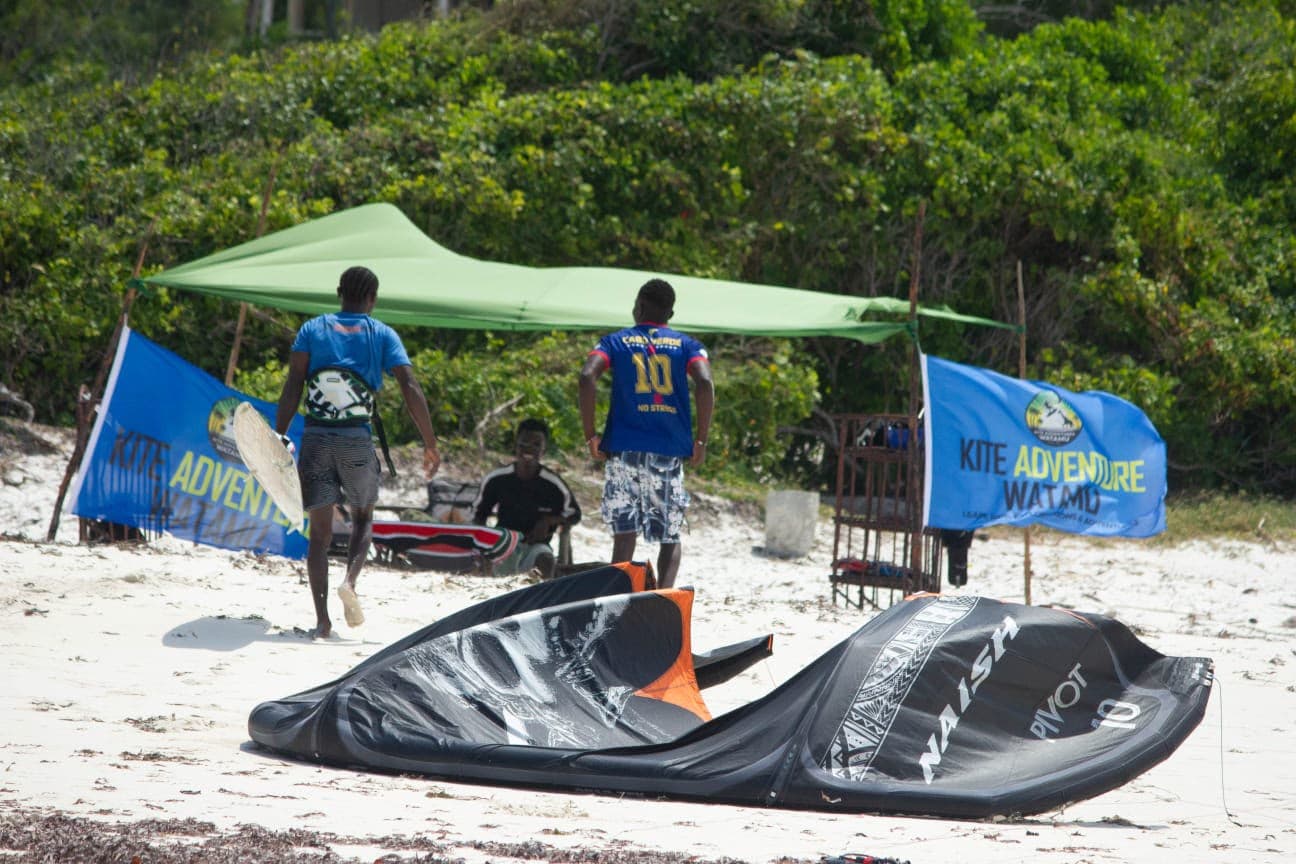
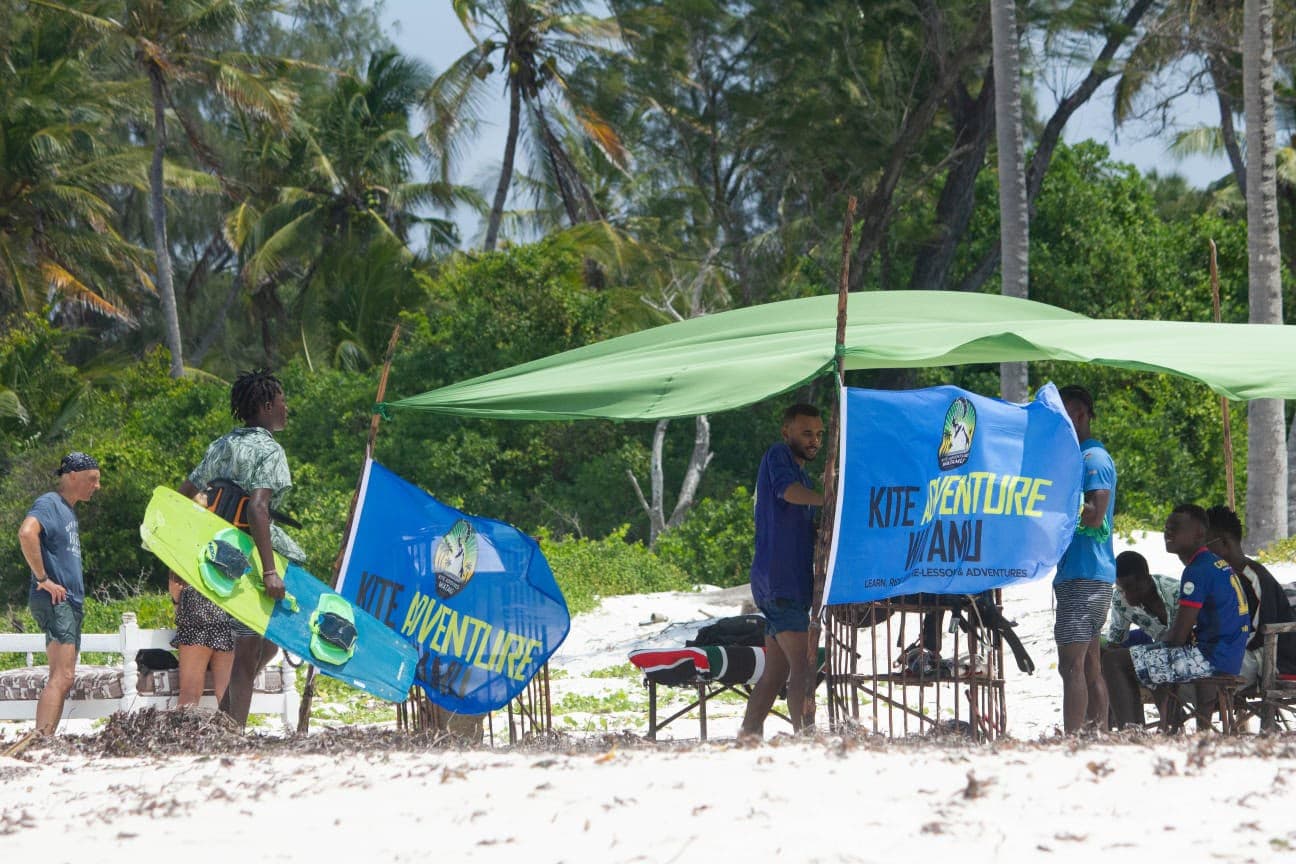
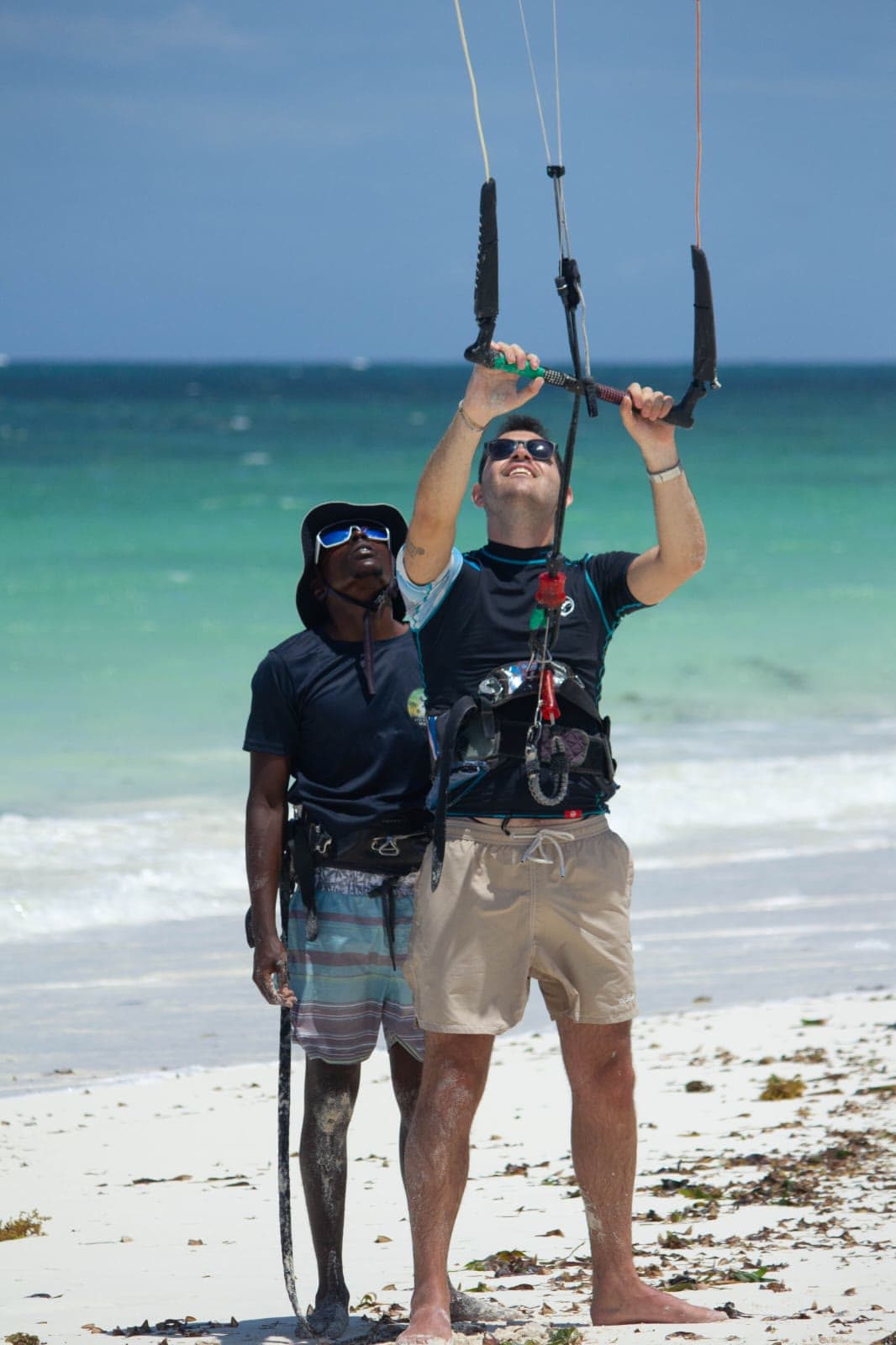
We are set up on the sand at Turtle Bay Beach, under the blue Kite Adventures Watamu flags and the green shade tent. One stretch of the beach has rocks. We don't teach there, and if you ride on your own, take care around it. Ask us on the day where it is.
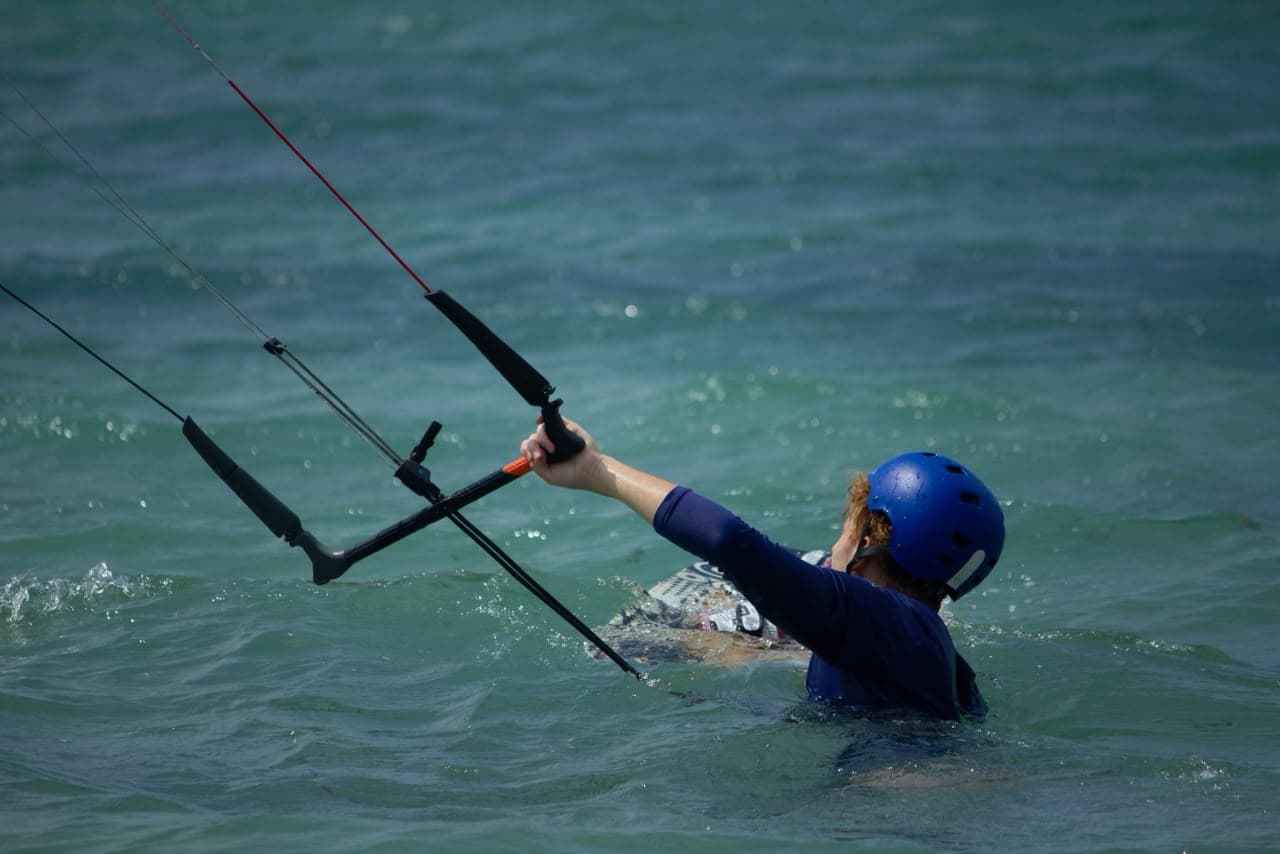
During lessons a rescue boat is available, and students wear helmets with radios, so we can talk to you on the water. The boat is also on the water during our camps.
Getting to Watamu
The nearest airport is Malindi, about 21 kilometres and 25 minutes by road. Mombasa airport is about 125 kilometres away, roughly two hours by road. Our all-inclusive camps include the airport transfer. If you book only lessons, tell us your flight and we will help you plan the arrival.
Learning here
Most people who come to us have never kited before, and our lessons start from zero. You need to be able to swim, at any age. Kids are welcome from 8, after a short assessment of height, fitness and how quickly they pick things up. If you already ride, we coach you further.