How an e-foil works
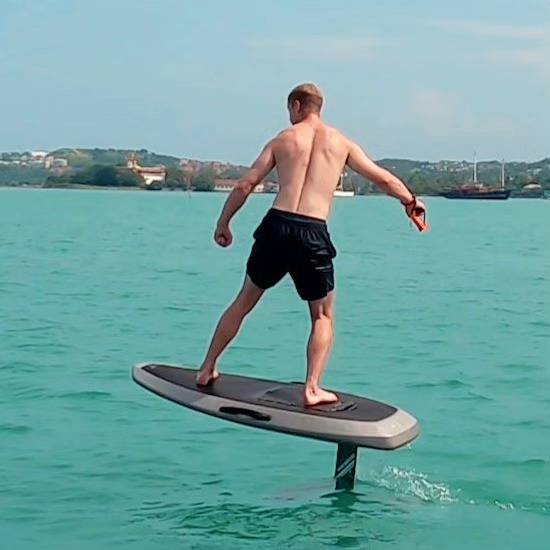
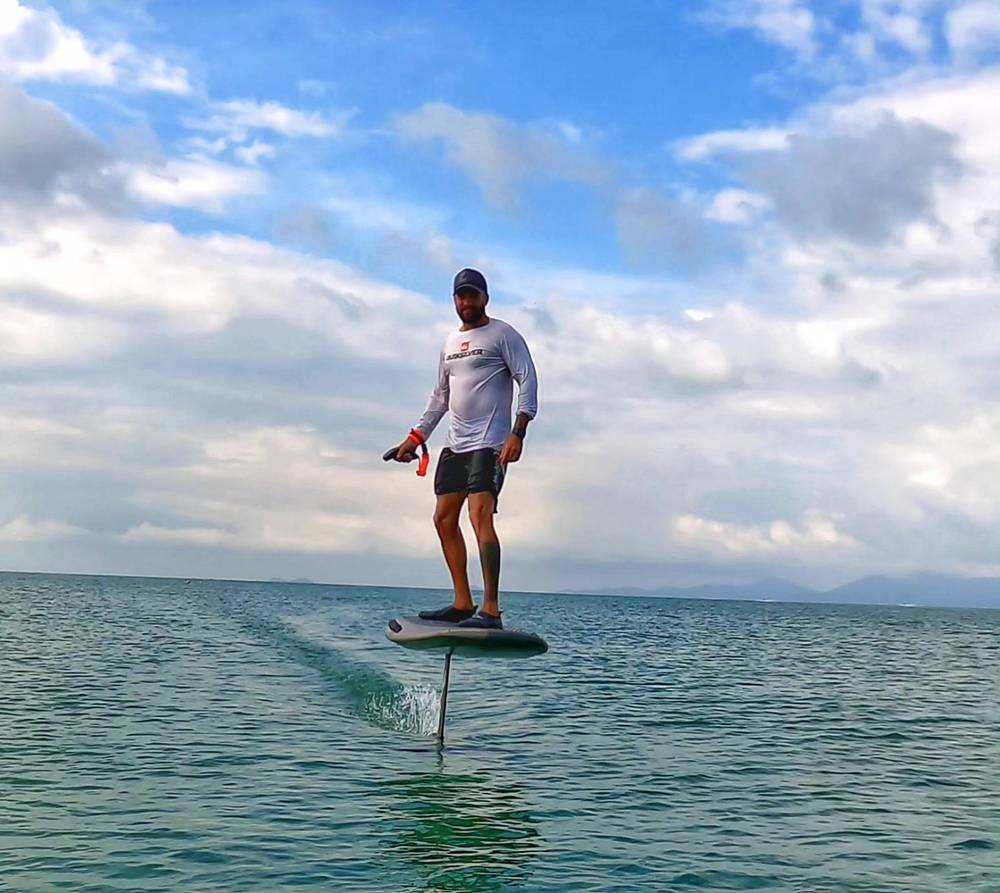
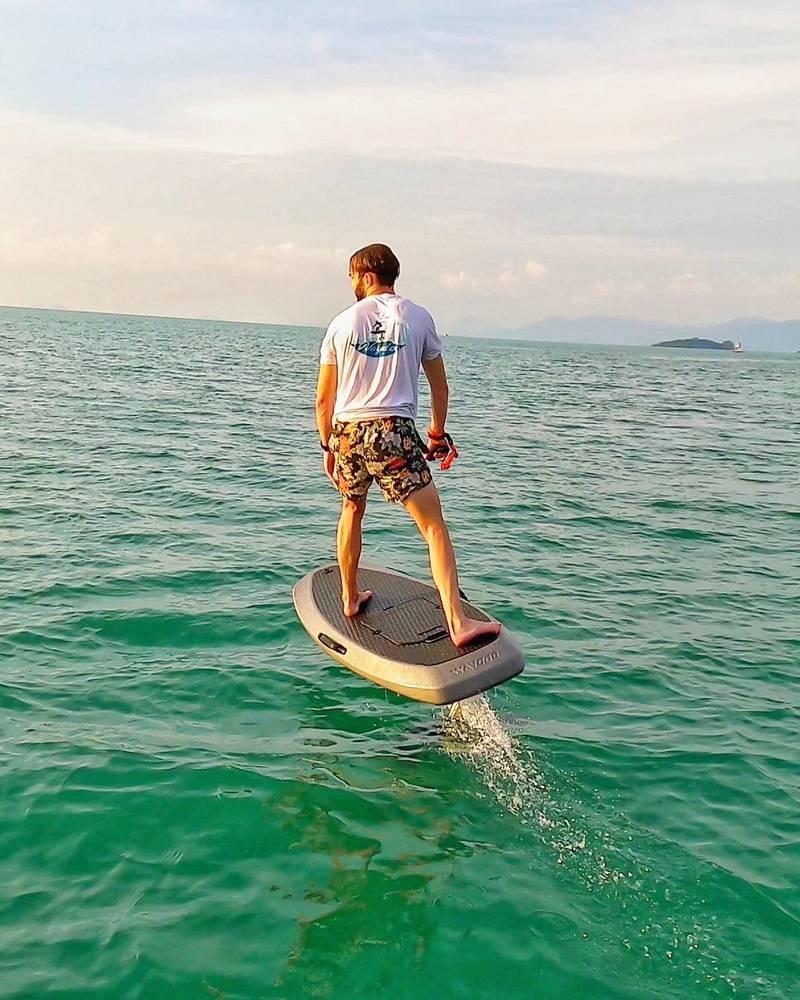
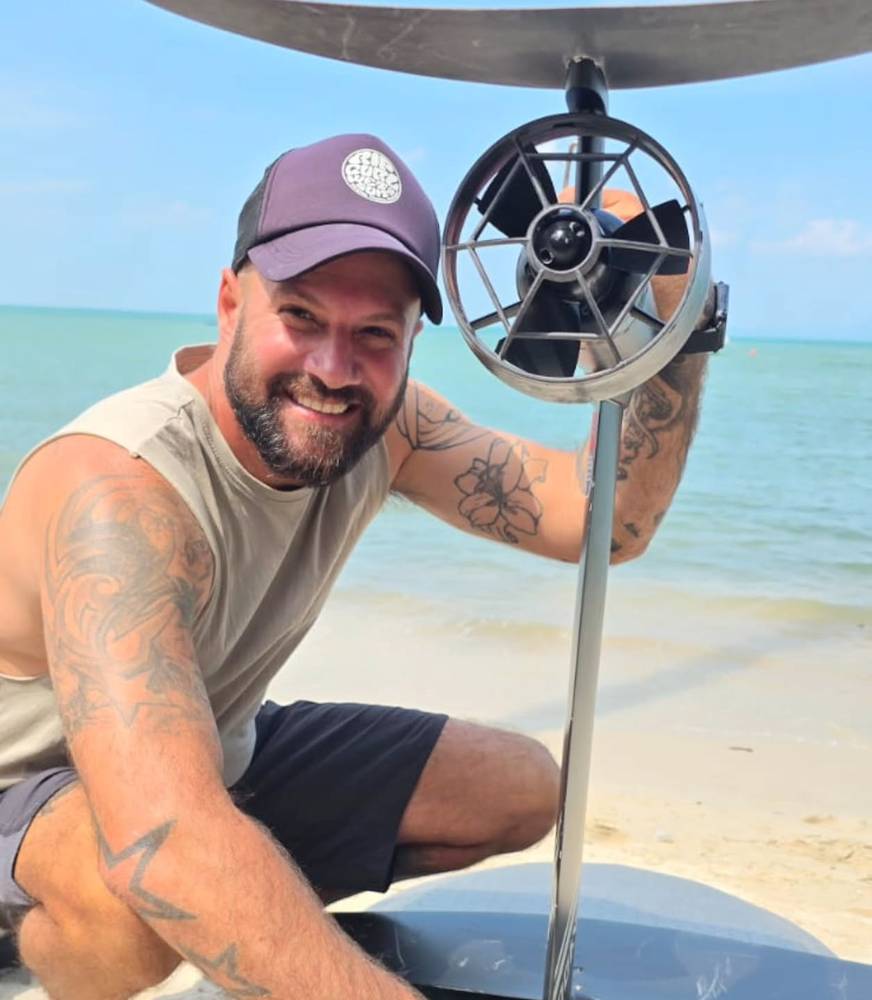
The board carries a battery and a mast with an electric motor and a hydrofoil, an underwater wing. You set the speed with a small hand remote. At low speed the board floats like a normal board; as it speeds up, the foil lifts it out of the water and you glide above the surface, almost without a sound.
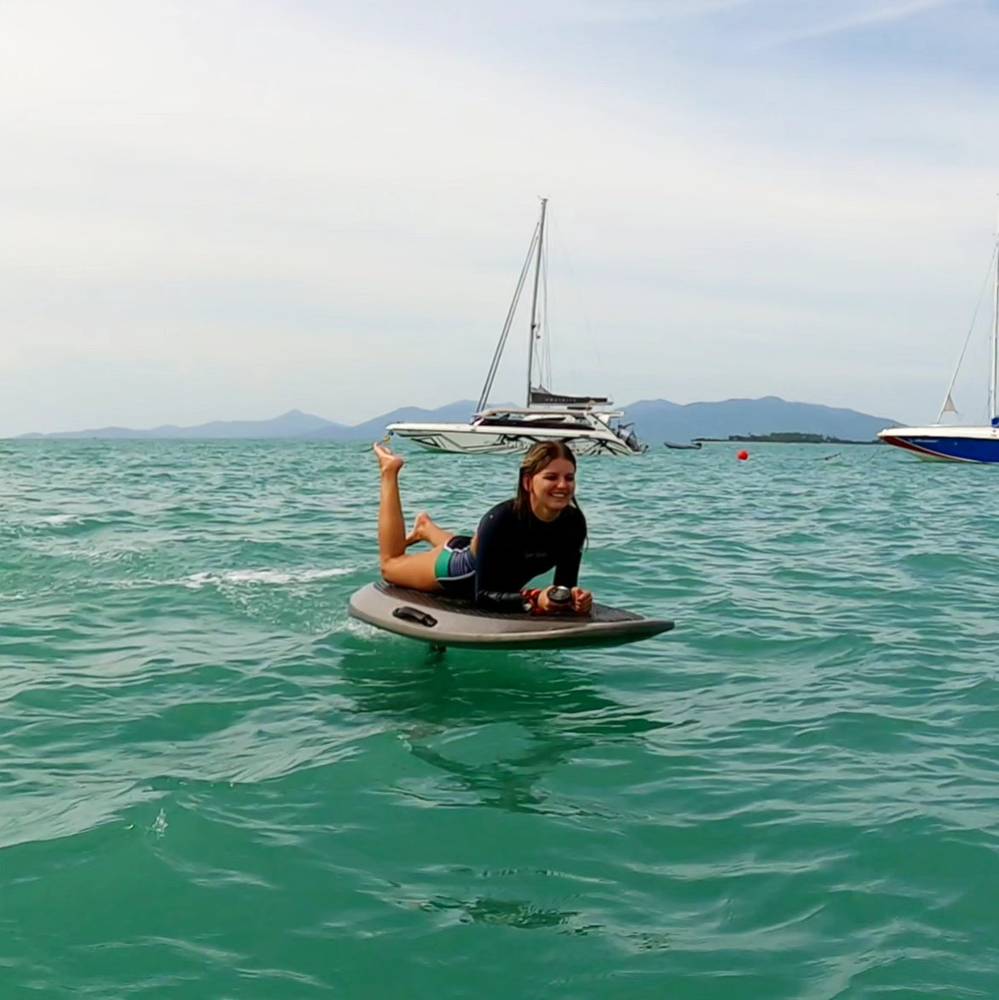
Step one: lie, kneel, sit
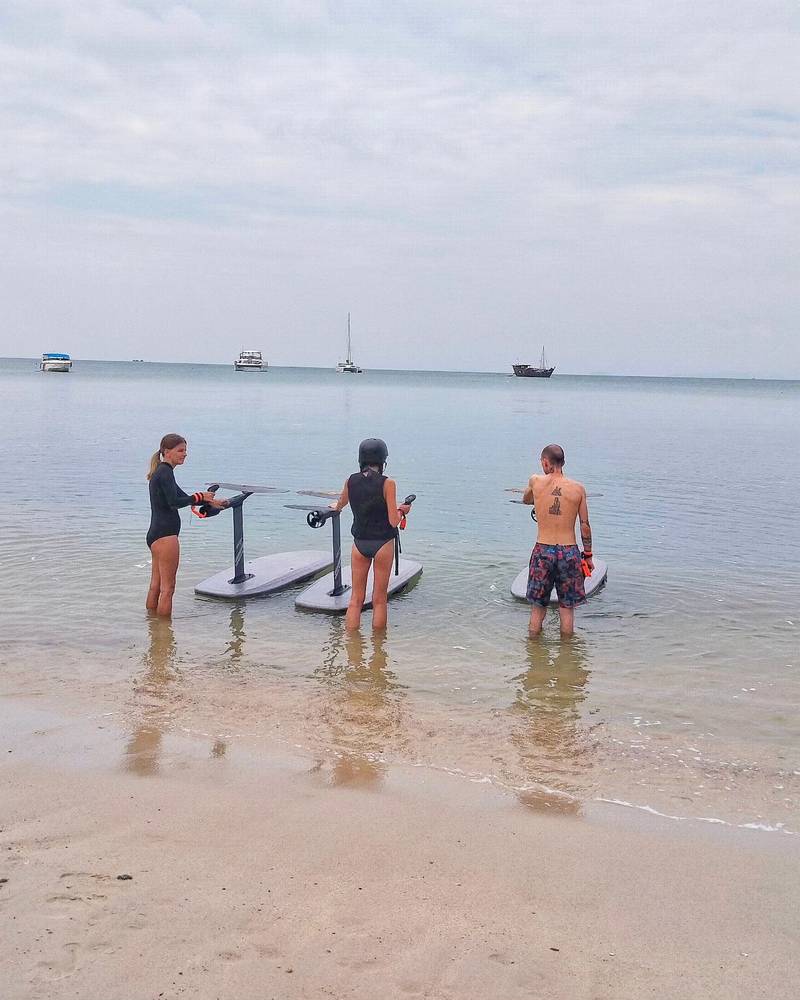
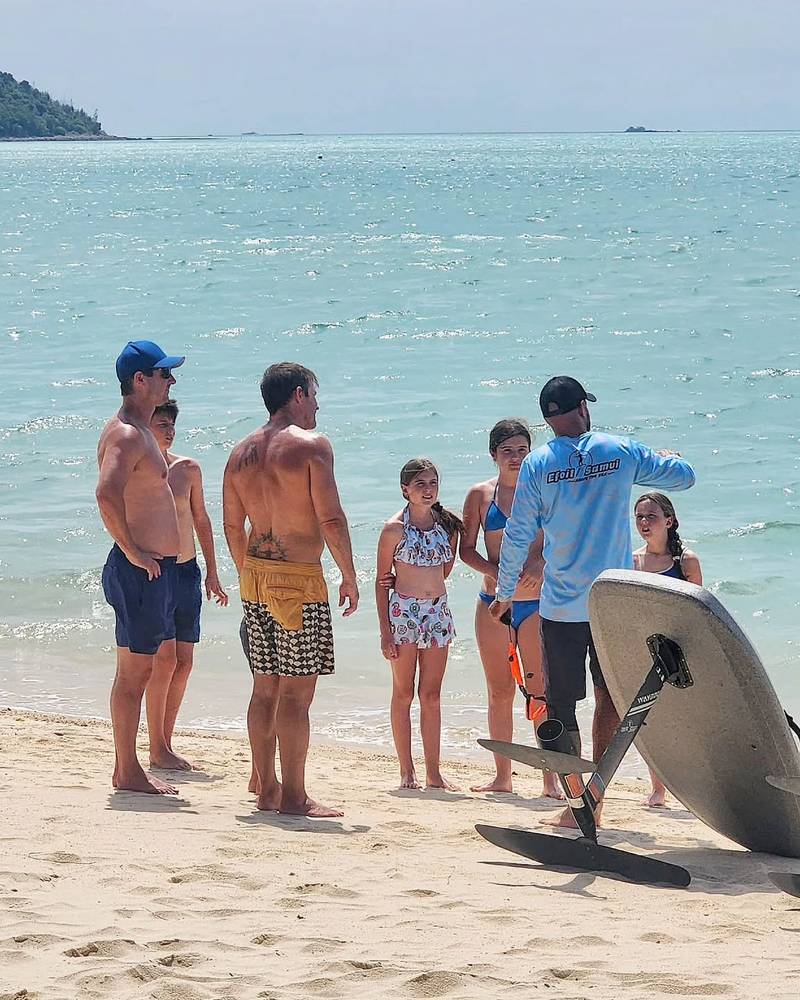
You do not have to stand from the start. You can ride an e-foil lying down, kneeling or even sitting, and that is how most first sessions begin: you get a feeling for the speed and for how the board reacts, close to the beach, with our instructor next to you.
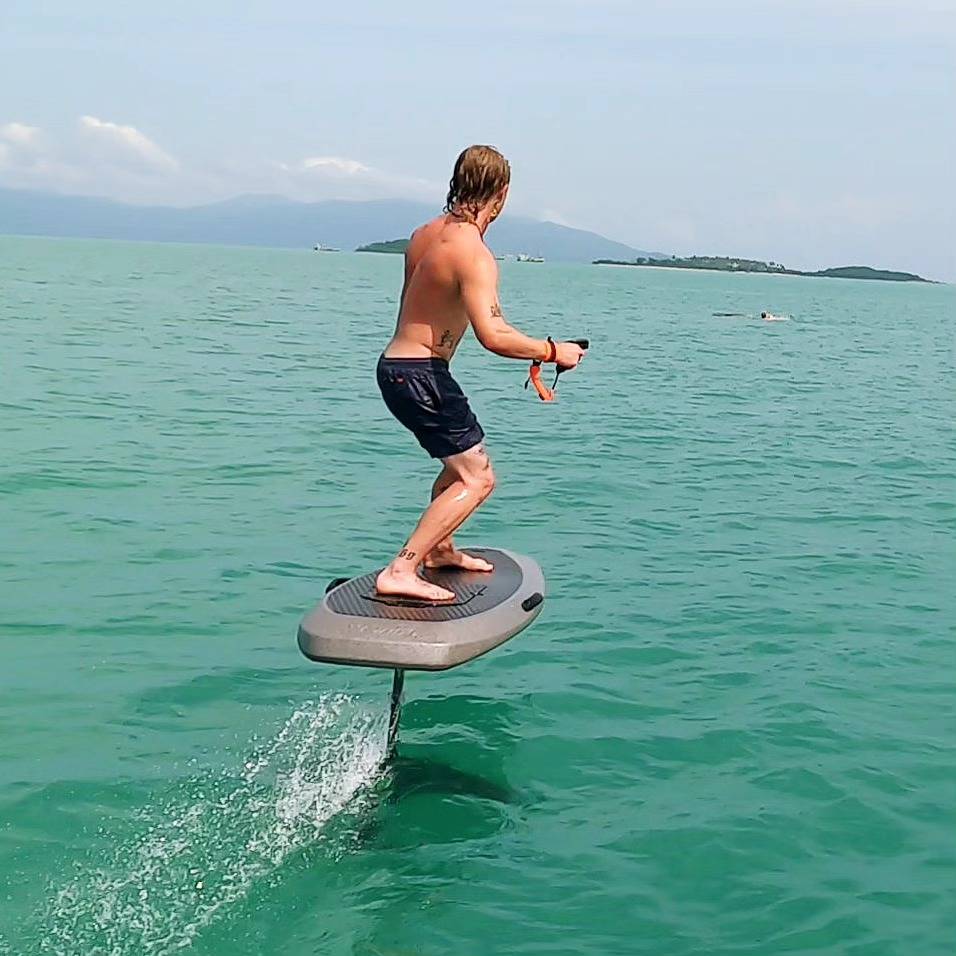
Step two: stand up, then fly
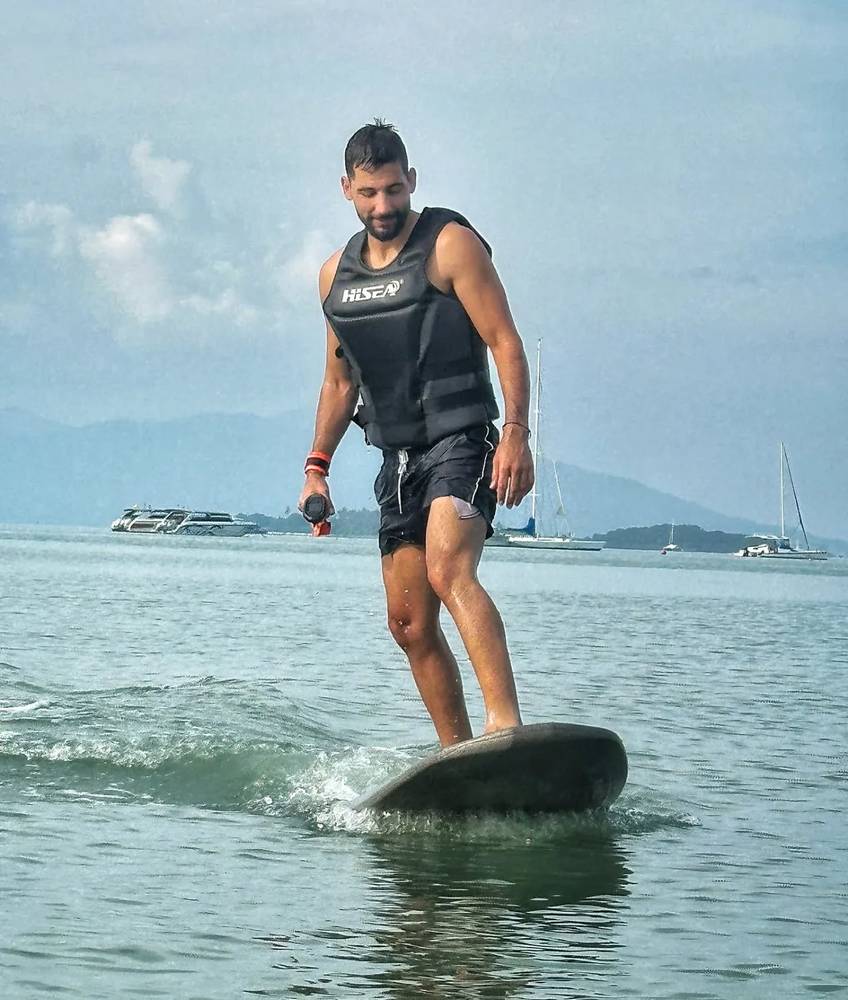
When you feel ready you stand up, keep your weight in the middle and add a little speed. The board starts to rise and you are flying. For many guests that moment comes in their very first session, and it is still our favourite part of the job: watching people lift off for the first time.
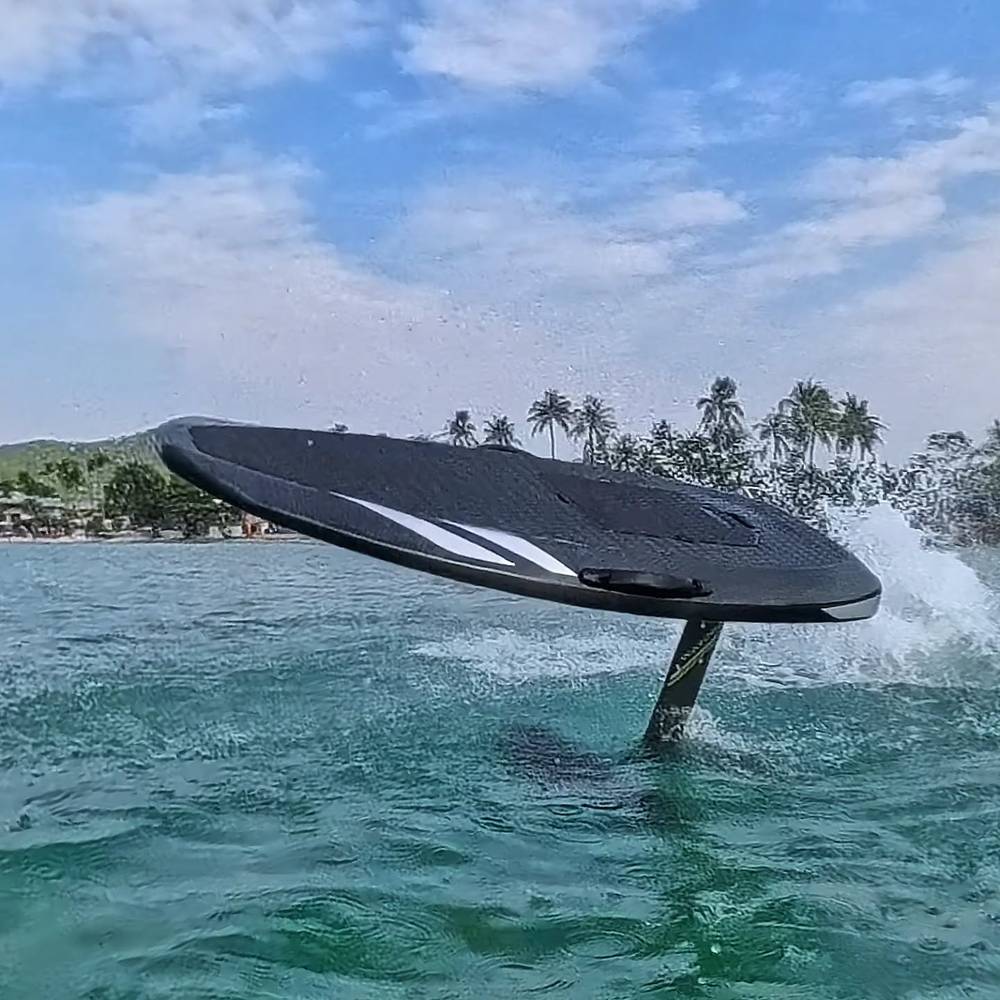
Falling is part of it
Everyone falls on an e-foil, our instructors too, just more spectacularly. You fall into warm, calm water, the motor stops when you let go of the remote, and you climb back on. It is simply part of riding and you get used to it fast.
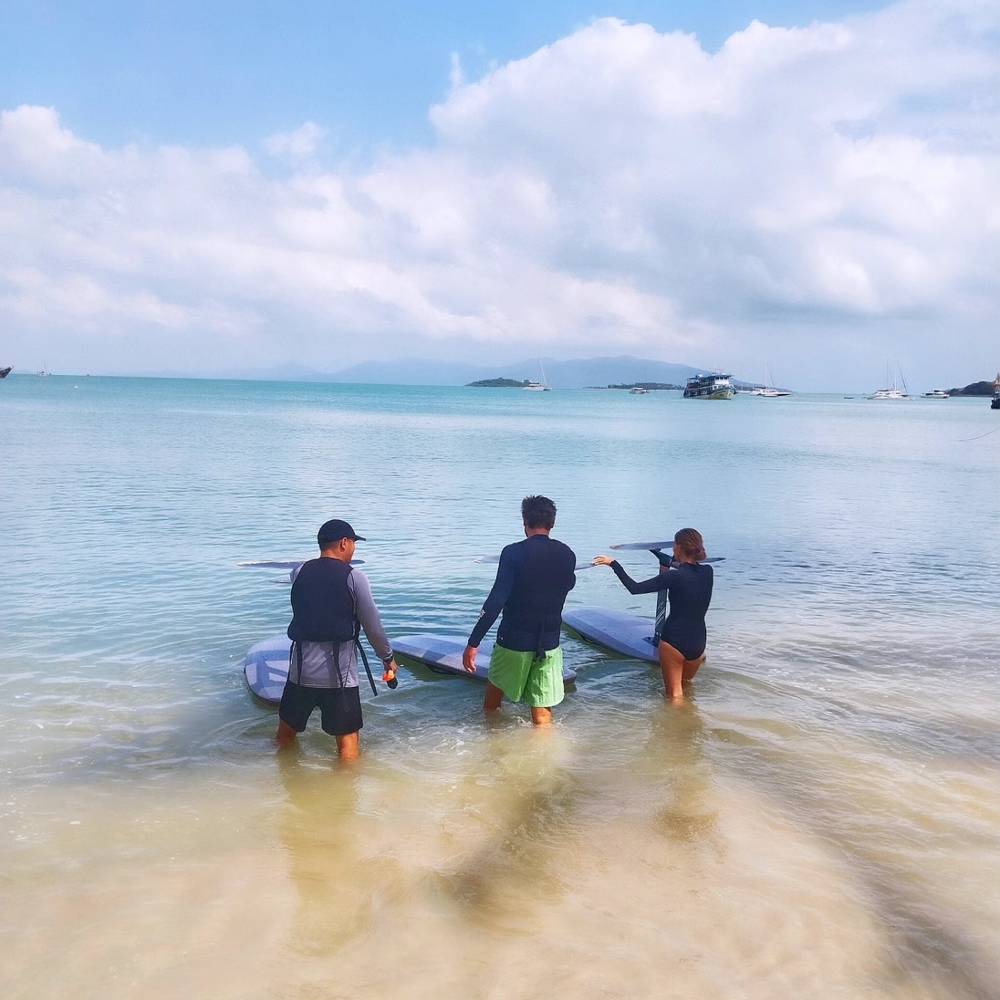
Why Bangrak Beach is easy to learn on
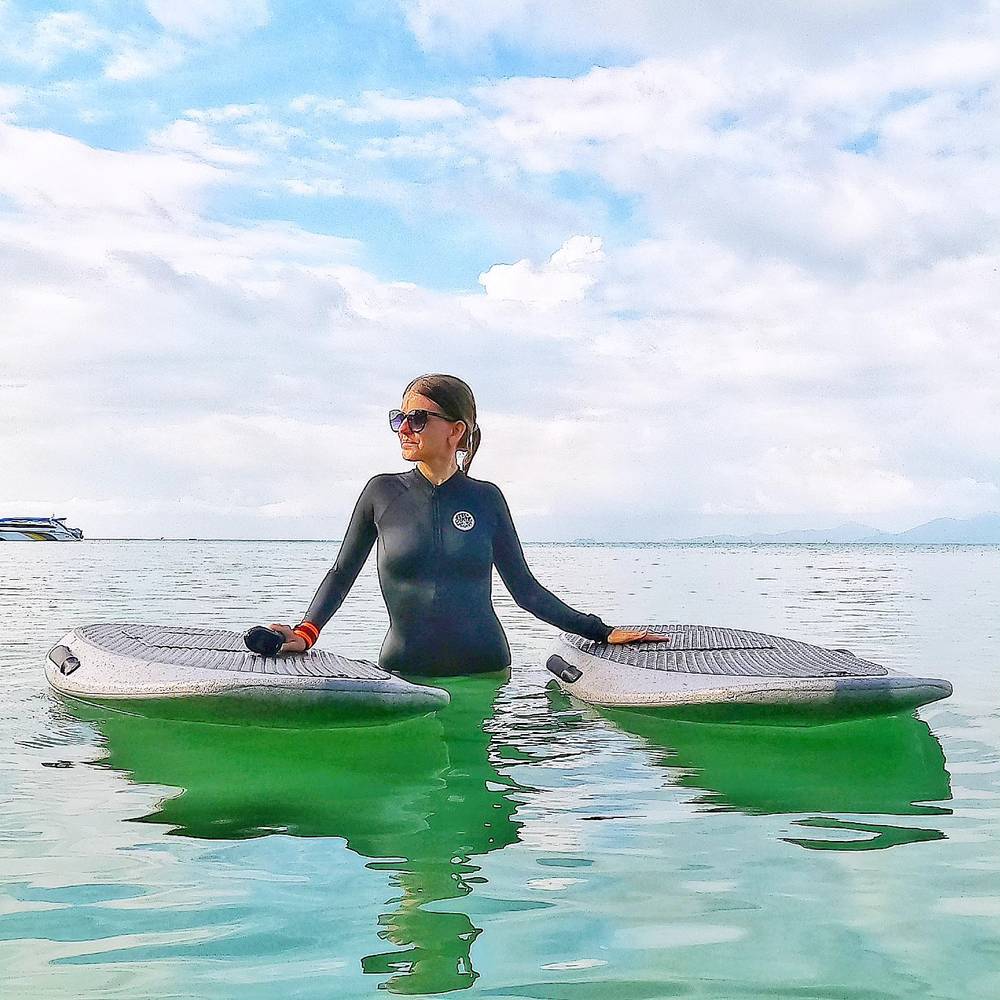
The bay is calm and shallow at the shore, so you start standing in the water next to your board. On the best days there are no waves at all; on others a few small waves make the ride more fun. Cloudy skies are no problem, and the water is good all year.
From e-foil to jetsurf
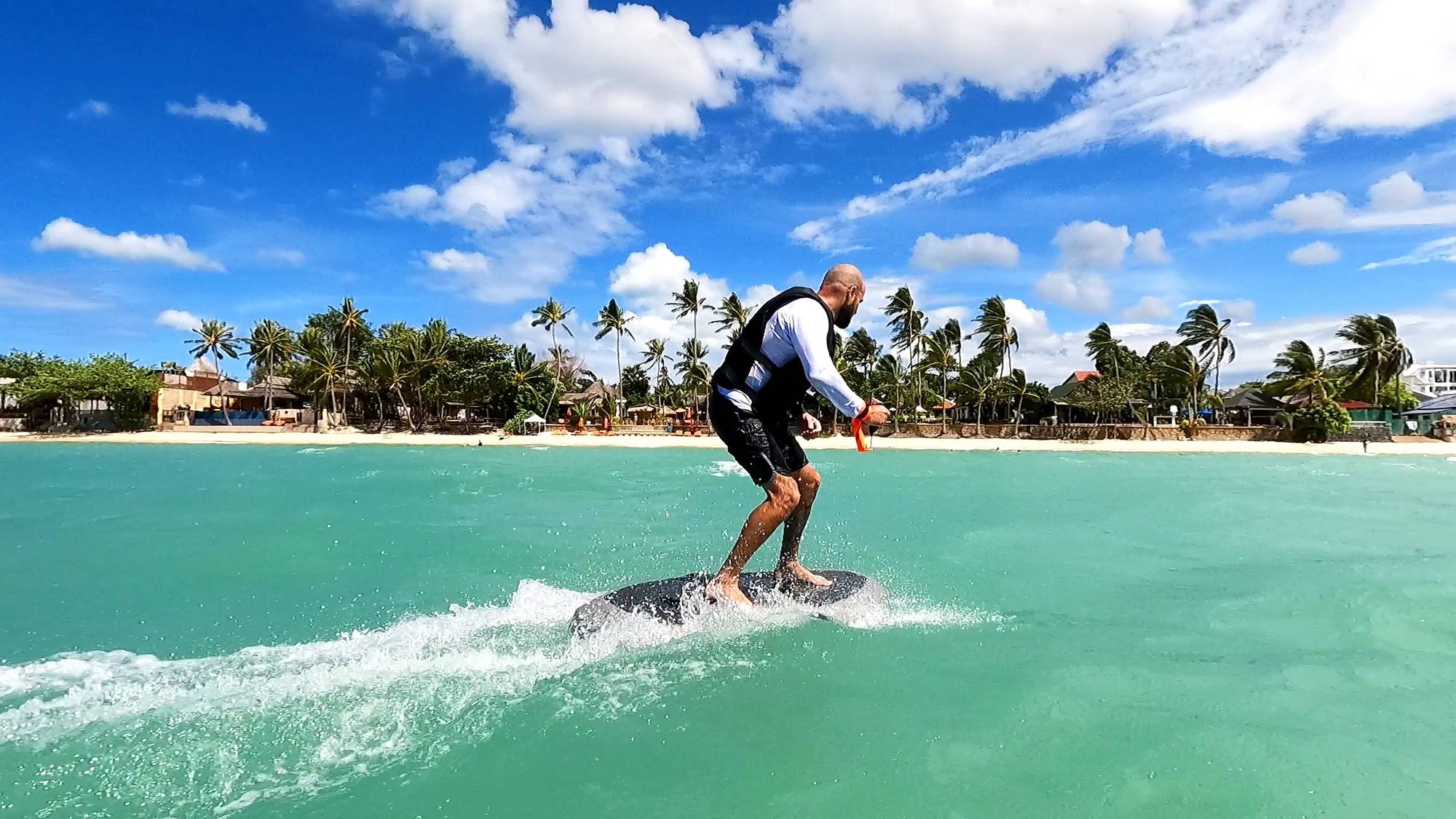
A jetsurf is the opposite experience: a motorised board that stays on the water and goes fast, steered with your feet and a throttle in your hand. It needs a bit more balance and a bit more nerve, and many guests try it after their e-foil session.