Best Time to Kitesurf in Cape Town: Wind by Month
The Cape Doctor blows hardest from November to January. Here is the month-by-month wind, water temperature and crowd picture for a Cape Town kite trip.
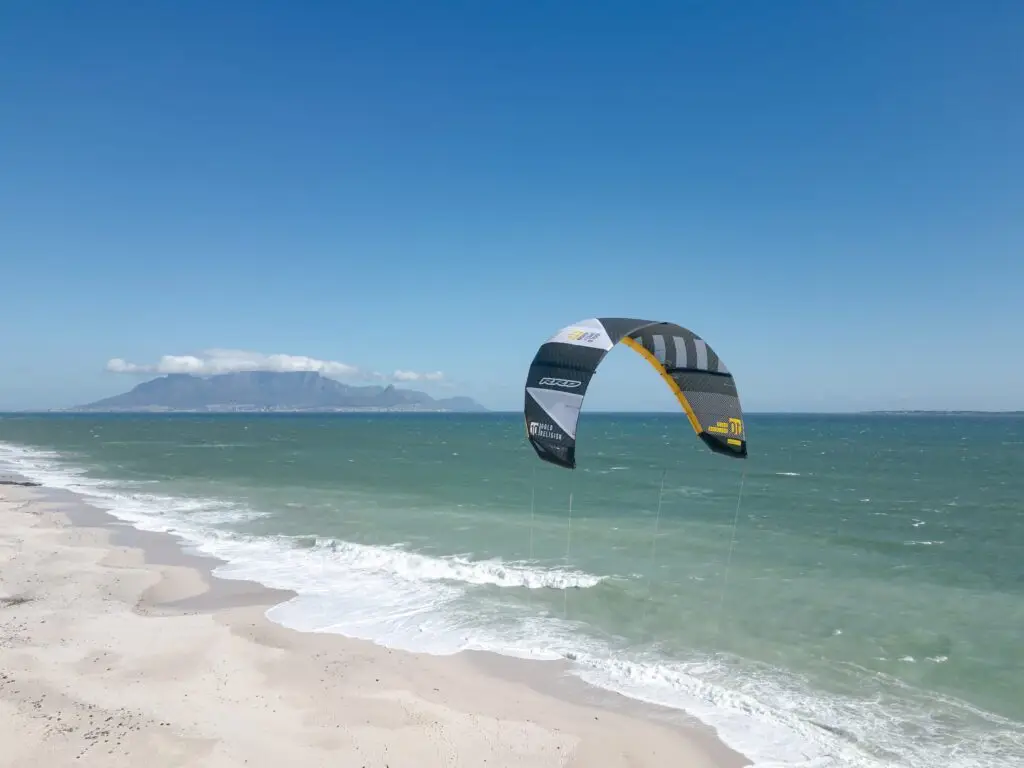
The best time to kitesurf in Cape Town is November through January, when the Cape Doctor, the region's thermal south-easter, blows most consistently at 20 to 30-plus knots most afternoons. February into early March is a calmer, less crowded second window. Outside October to March the wind is unreliable and most schools close for winter.
Why does Cape Town only have a six-month kite season?
The Cape Doctor is a thermal wind, created by the temperature gap between the cold Atlantic and the hot land inland. That gap is strongest in the southern-hemisphere summer, so the wind is reliable from roughly October to March and weak the rest of the year. There is no second riding wind here the way some spots have a winter alternative.
That single-wind pattern also shapes how schools plan a trip: there's no fallback coast to chase when the Cape Doctor is off, so a winter booking is a real gamble rather than a quieter off-peak option. For a full breakdown of the beaches that make up this stretch of coast, see the Cape Town kite spot guide.
Cape Town wind by month
November through January is the most reliable stretch, February stays strong with noticeably fewer people, March tapers off with more wind-free days creeping in, and April to September is effectively off-season. The table below breaks down wind, water temperature and who each window suits best.
| Months | Wind | Water | Good for |
|---|---|---|---|
| November to January | Strongest and most consistent Cape Doctor, commonly 20-30+ knots on a good afternoon | About 15-18°C, warmer end of the year | All levels, the most reliable stretch of the year |
| February | Still strong and reliable, a notch calmer than peak, thinner crowds | About 17-18°C | All levels, good value window |
| March | Winding down, more wind-free days creeping in | About 16-17°C | Flexible travellers, riders chasing the last of the season |
| October | Season building toward peak, less consistent than November onward | About 14-15°C | Early-season visitors with flexible dates |
| April to September | Cape Doctor essentially off; most schools close for winter | About 12-15°C, the coldest months | Not recommended for a dedicated kite trip |
How strong does the Cape Doctor actually get?
On a strong summer afternoon the Cape Doctor commonly reaches 20 to 30 knots, according to backingwind.com and North Action Sports' South-Easterly explainer. It is light or absent at dawn and builds through the morning, so most sessions and lessons happen from late morning into the evening, not at sunrise.
Exposed beaches further down the coast, away from the sheltered Blouberg cluster, have been reported at 15 to 45 knots on the windiest days. That range is why schools keep beginners at Blouberg or Dolphin Beach rather than the more exposed spots, where the same day's wind can feel like a completely different session.
Is December and January too crowded to kitesurf in?
Mid-December to the end of January is Cape Town's busiest kite window, according to Cape Town Kite Club: the water, the parking and the beach itself all get fuller. The Red Bull King of the Air, one of kiteboarding's biggest big-air events, runs off Kite Beach on Blouberg's main beach in a window spanning late November into early December, drawing extra crowds around those dates.
February is the trade-off worth knowing. The wind is still strong and reliable, but the summer-holiday crowd has largely gone home by then. If a quieter beach matters more to you than squeezing into the single windiest week, plan around February rather than the Christmas-New Year stretch, and expect an easier time finding parking and space on the water.
What does the water feel like, and when?
Cape Town's Atlantic side runs cold year-round because of the Benguela Current's upwelling, roughly 12 to 15°C in winter and up to around 18°C in summer, sometimes colder during a strong upwelling spell even in January. A 4/3mm wetsuit is the baseline most of the year; many riders choose a 5/4mm, especially outside the warmest weeks.
Packing for Cape Town's wind and cold water
Pack for a windy beach and a cold swim, not a tropical kite trip. A 4/3mm or 5/4mm wetsuit covers the water temperature year-round, and a hooded vest helps on the coldest winter sessions if you're kiting outside the main season at all.
- A full wetsuit, 4/3mm as a baseline and 5/4mm if you run cold or you're visiting outside peak summer.
- Reef booties for the rockier stretches near Big Bay and Sunset Beach.
- A windbreaker or warm layer for the beach itself: the Cape Doctor cools the air even on a hot day.
- Sun protection that survives a full afternoon outdoors, since most sessions run into the strongest sun of the day.
Best months for beginners versus advanced riders
Beginners do best in the shoulder parts of the season, October, February and March, when the wind is still kiteable but a notch gentler and the water is less crowded for a first lesson. Advanced and big-air riders should target November through January, when the Cape Doctor is at its strongest and Big Bay and Kite Beach are firing.
- Within any week, mornings are calmer than afternoons; schools often start beginner lessons before the wind fully fills in.
- If you can only come once, December and January guarantee wind but also guarantee a busy beach.
- If your dates are flexible, February gives you nearly peak wind with noticeably fewer people on the water.
What can you do on a flat day in Cape Town?
A windless day in Cape Town is rarely a wasted one. Table Mountain, the winelands around Stellenbosch and Franschhoek, and the city's beaches and markets are all within an hour's drive of Blouberg, so a flat morning is a normal excuse for sightseeing rather than a lost day of the trip. Riders chasing more wind sometimes drive north toward Langebaan, where the lagoon can stay rideable on days the open coast is quiet.
Because the Cape Doctor is reliable across the season rather than guaranteed on any single day, most visitors find they only need a backup plan for the odd afternoon, not whole days at a stretch. Building one or two flexible days into a week-long trip covers almost any lull the forecast throws at you.
Want the beach-by-beach detail, the full wind breakdown and local safety notes? See the full Cape Town kite spot guide.
What about sharks on the Atlantic side?
The Shark Spotters flag programme watches False Bay beaches such as Muizenberg, not the Atlantic kite cluster at Blouberg and Big Bay. Where the flags do apply, a white flag with a black shark and a siren means a shark is in the water right now; a red flag means one was recently seen nearby. Leave the water on either.
Booking a lesson around the wind
Once you have picked your window, the next question is which course fits it. Our guide to learning to kitesurf in Cape Town covers course lengths, what is included and current prices at Good Vibes Kiteschool, the partner school teaching at Blouberg Beach and Langebaan Lagoon. If you're planning a wider trip, our South Africa kitesurfing guide covers how Cape Town compares with the country's other spots.
Whichever dates you land on, book your Cape Town kitesurfing lesson with a few spare days either side. The Cape Doctor is reliable across a season, not on any single afternoon, and a flexible window is the simplest way to make sure a quiet day doesn't cost you the trip.
What is the best month to kitesurf in Cape Town?
November, December and January have the strongest, most consistent Cape Doctor, commonly 20-30+ knots on a good afternoon. February is a close, calmer second choice with noticeably fewer people on the water and easier parking at the main beaches.
Is there wind in Cape Town in winter?
Not reliably. The Cape Doctor is a summer thermal wind, so from roughly April to September it blows weakly or not at all, and most kite schools close for the season rather than chase the occasional windy day that does turn up.
How strong is the wind in Cape Town for kitesurfing?
Commonly 20 to 30 knots on a strong summer afternoon at the main Blouberg beaches. More exposed spots further down the coast have been reported at 15 to 45 knots on the windiest days, which is why beginners stay closer to the sheltered Blouberg cluster.
Do I need a wetsuit to kitesurf in Cape Town?
Yes, every month. The Atlantic side runs about 12-15°C in winter and up to around 18°C in summer. Most riders wear a 4/3mm wetsuit at minimum, with many choosing a 5/4mm outside the warmest weeks of the year.
When is the Red Bull King of the Air in Cape Town?
It runs off Kite Beach on Blouberg's main beach in a window spanning late November into early December, with the organisers choosing the actual competition days once they see the wind and swell forecast closer to the event.