
Egypt has 10 kite spots with 73 schools listed on kitesurfing.me. Beginner courses average €49 per hour, the mean of 32 schools' cheapest comparable hourly rate; the most common course is €593/12h.
Source: schools' own published rates · updated November 2026.
Book kitesurfing in Hurghada
Kitesurfing lessons in Hurghada
Pick a course, choose your dates and send it straight to the school. Nothing to pay today.
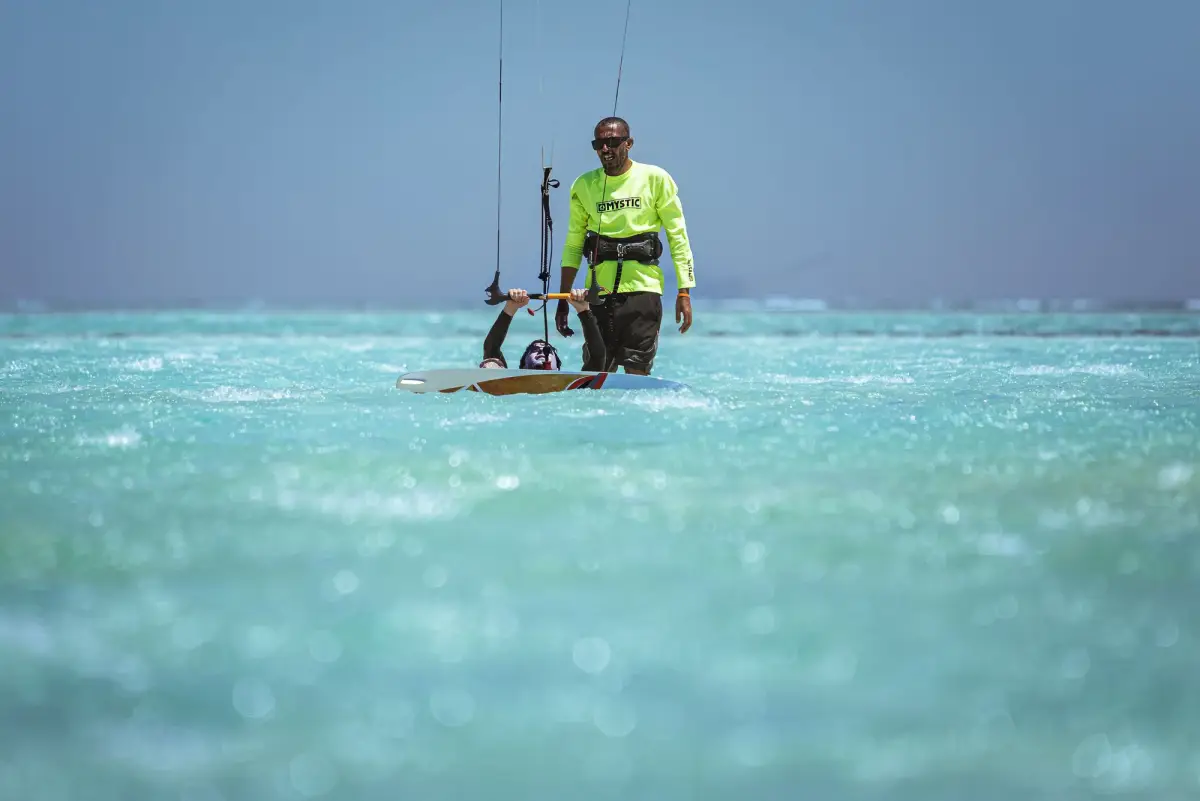
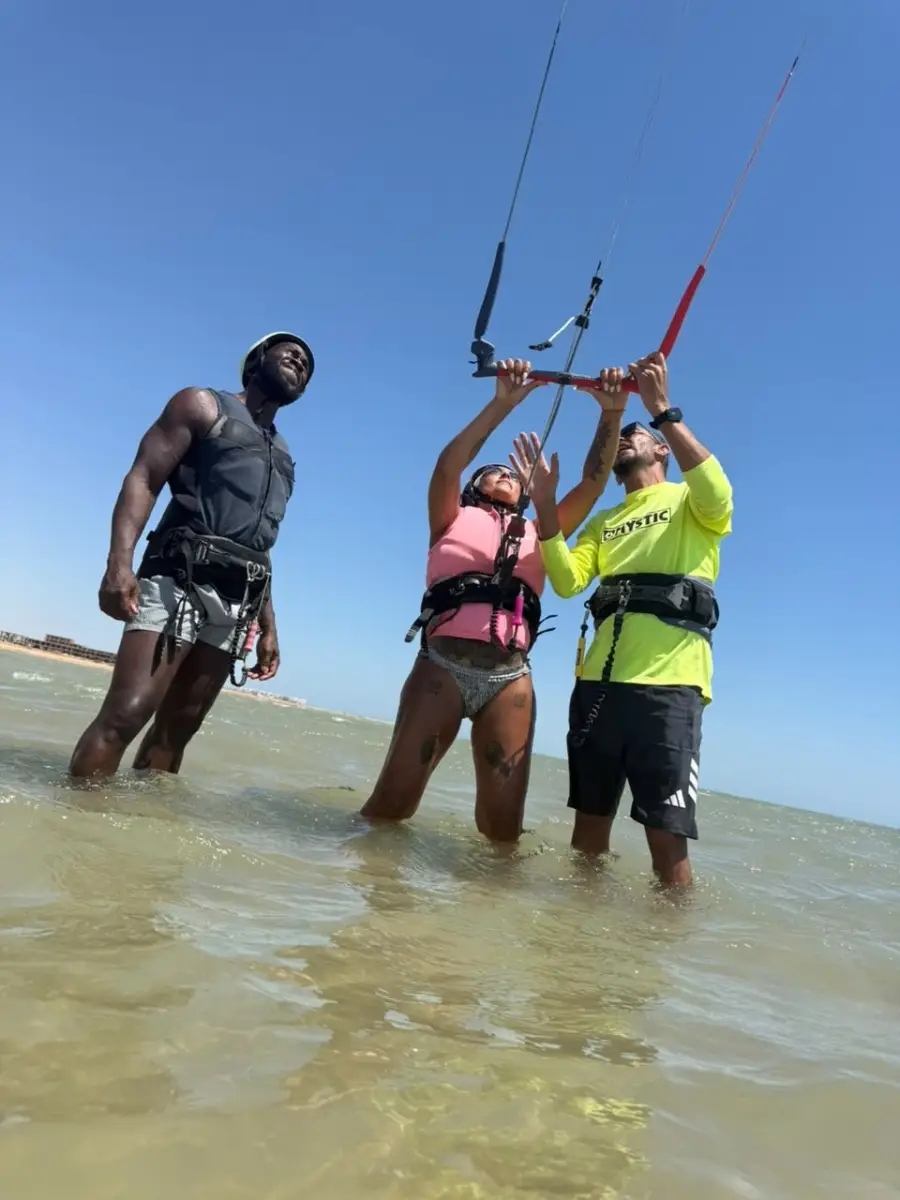
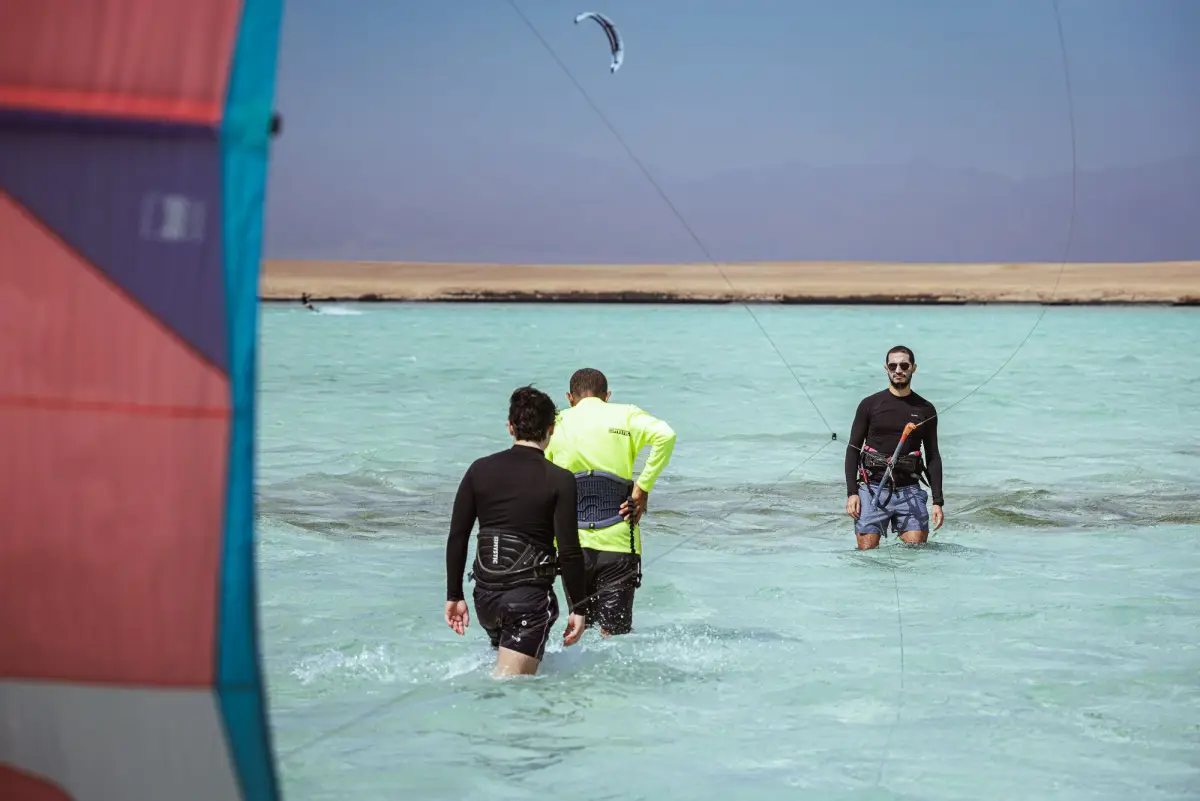
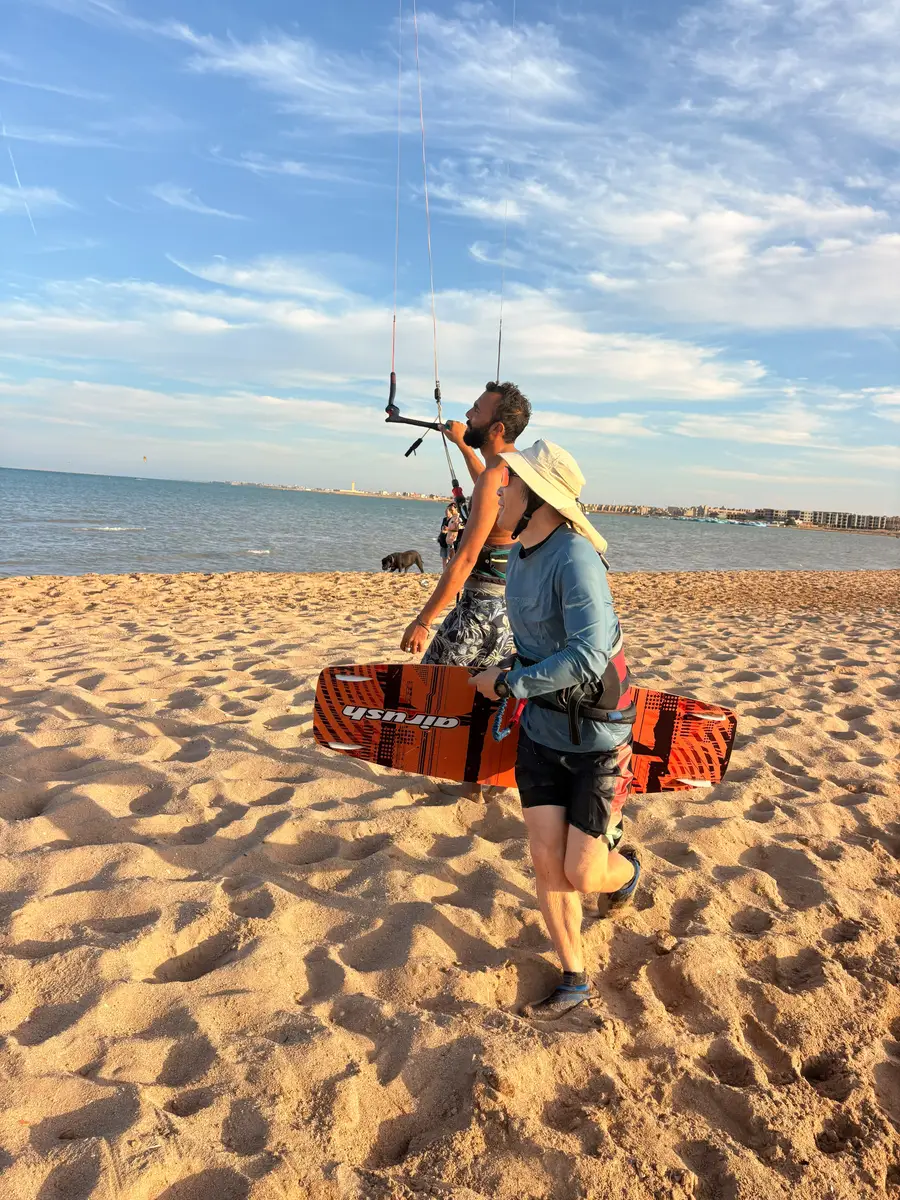
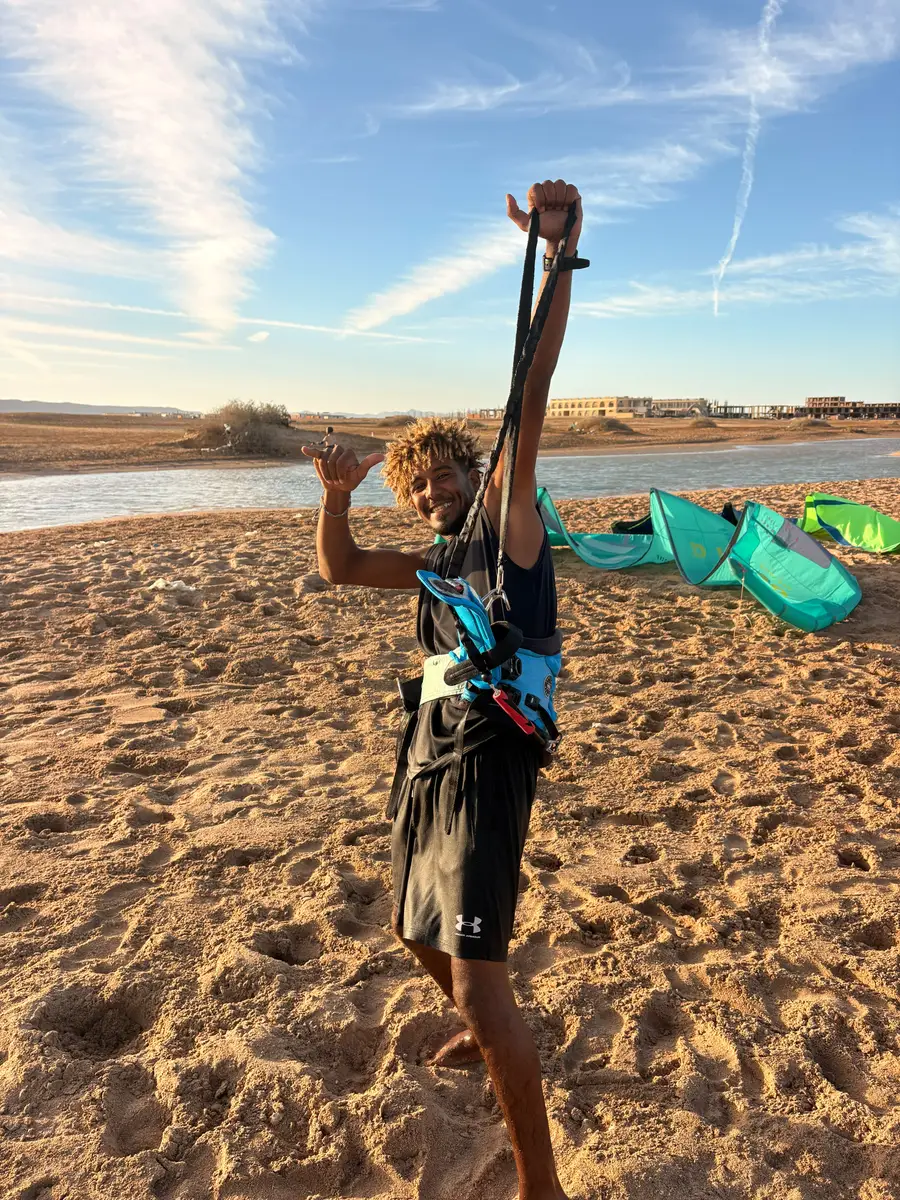
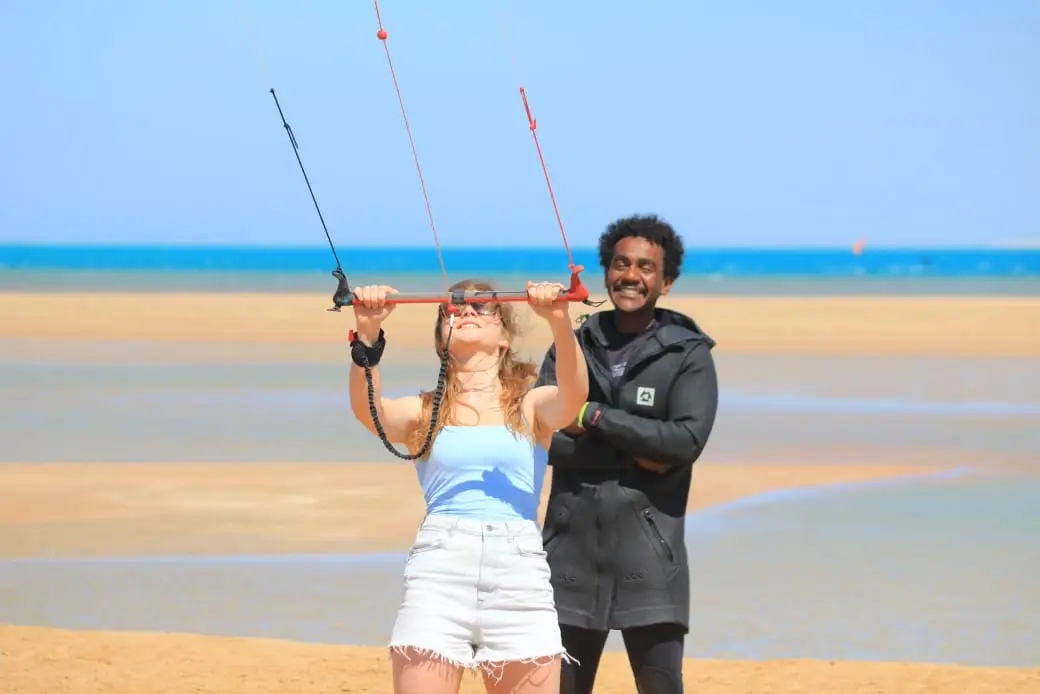
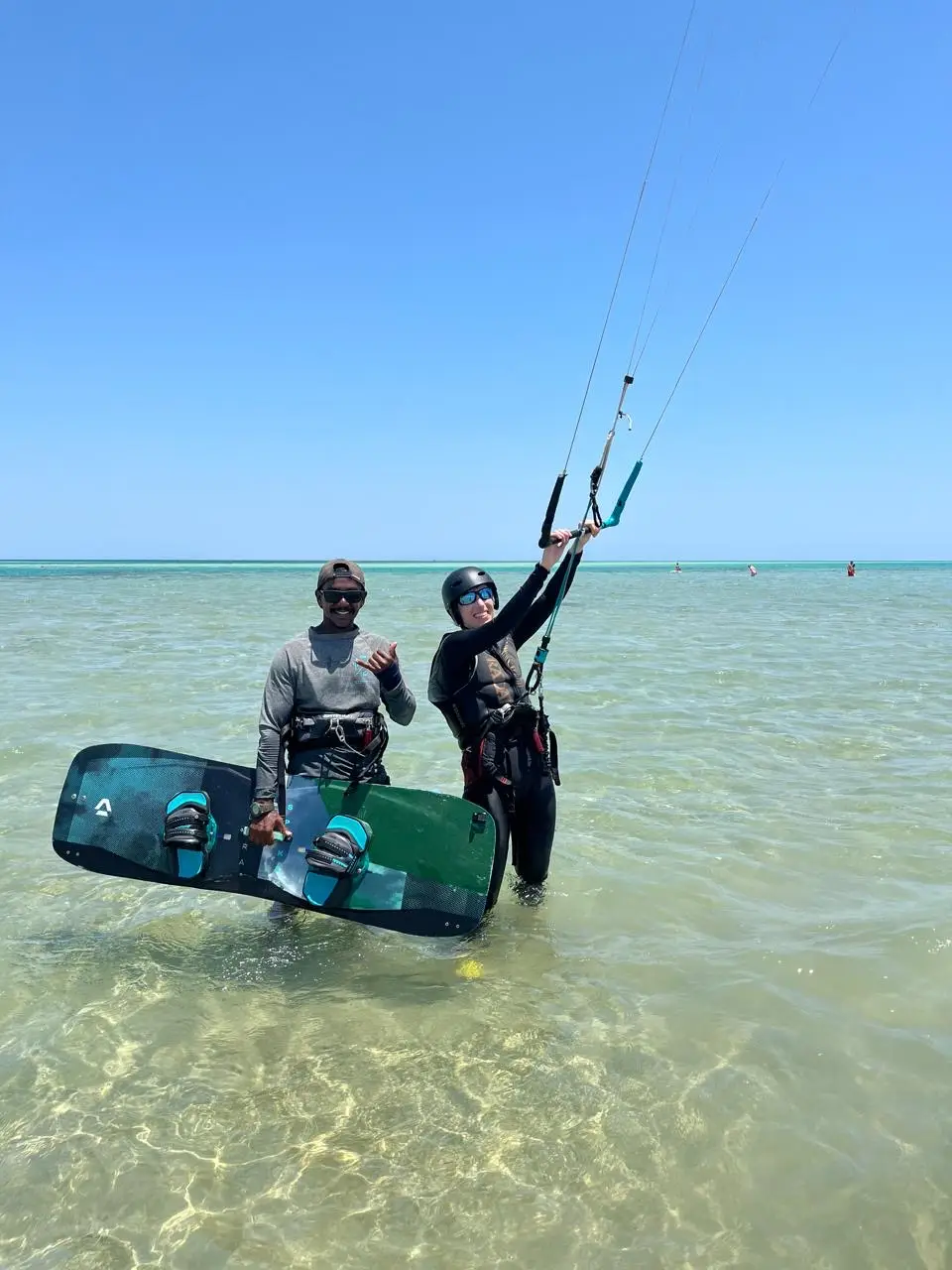
Kite camps in Hurghada
A week with stay, meals and kite sessions. Pick your arrival date and send the booking request, the school confirms.
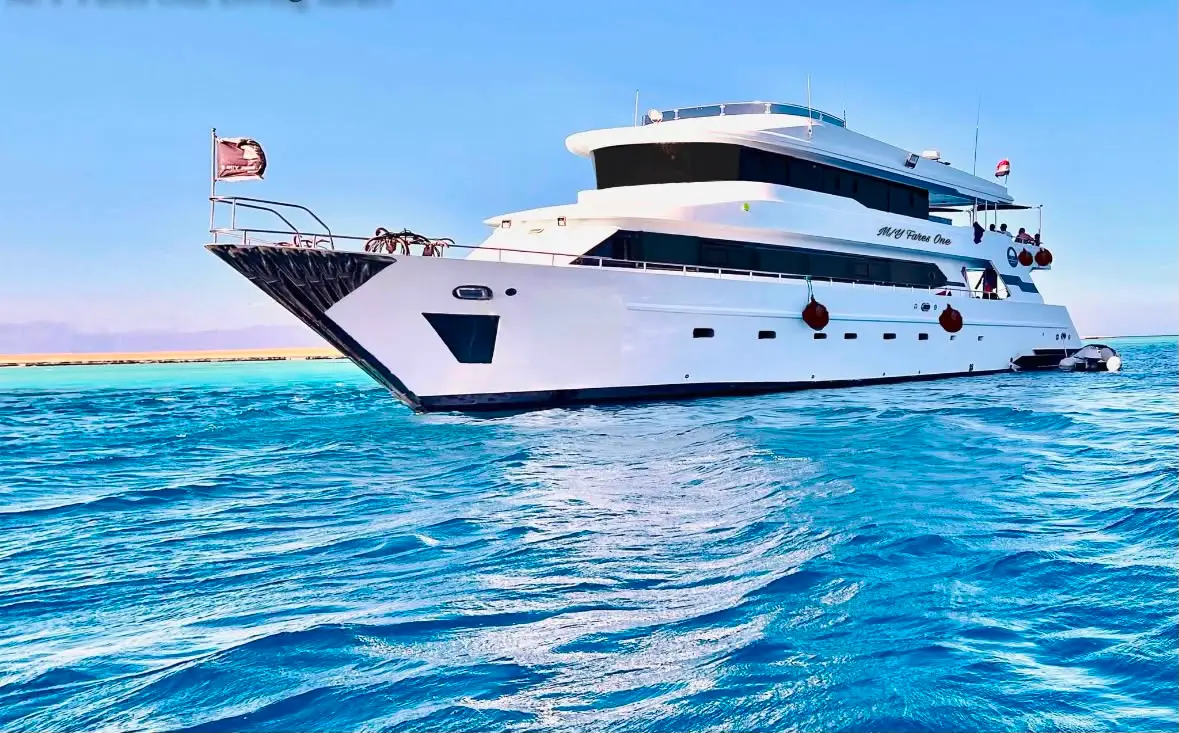
Book kitesurfing in Dahab
Kitesurfing lessons in Dahab
Pick a course, choose your dates and send it straight to the school. Nothing to pay today.
Kite gear rental in Dahab
Rent from the school on the beach. Pick the day and send the booking request, the school confirms.
Book kitesurfing in Safaga
Kitesurfing lessons in Safaga
Pick a course, choose your dates and send it straight to the school. Nothing to pay today.
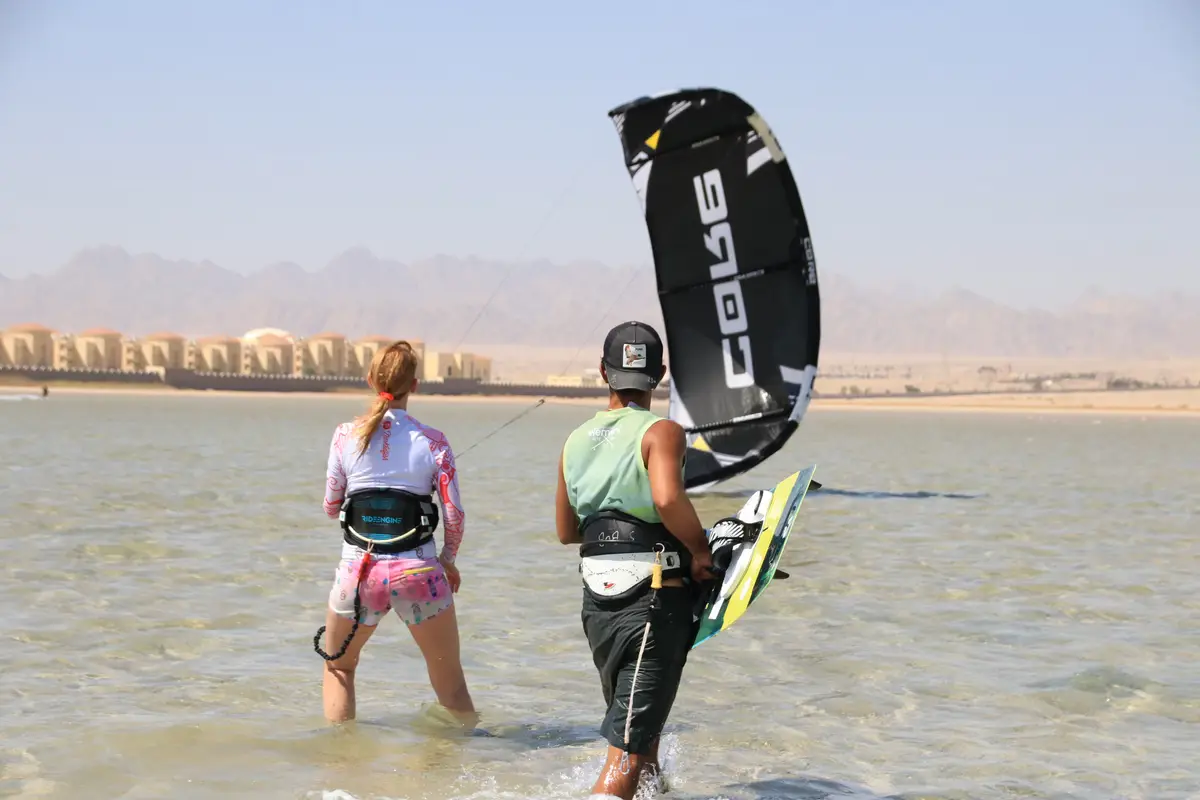
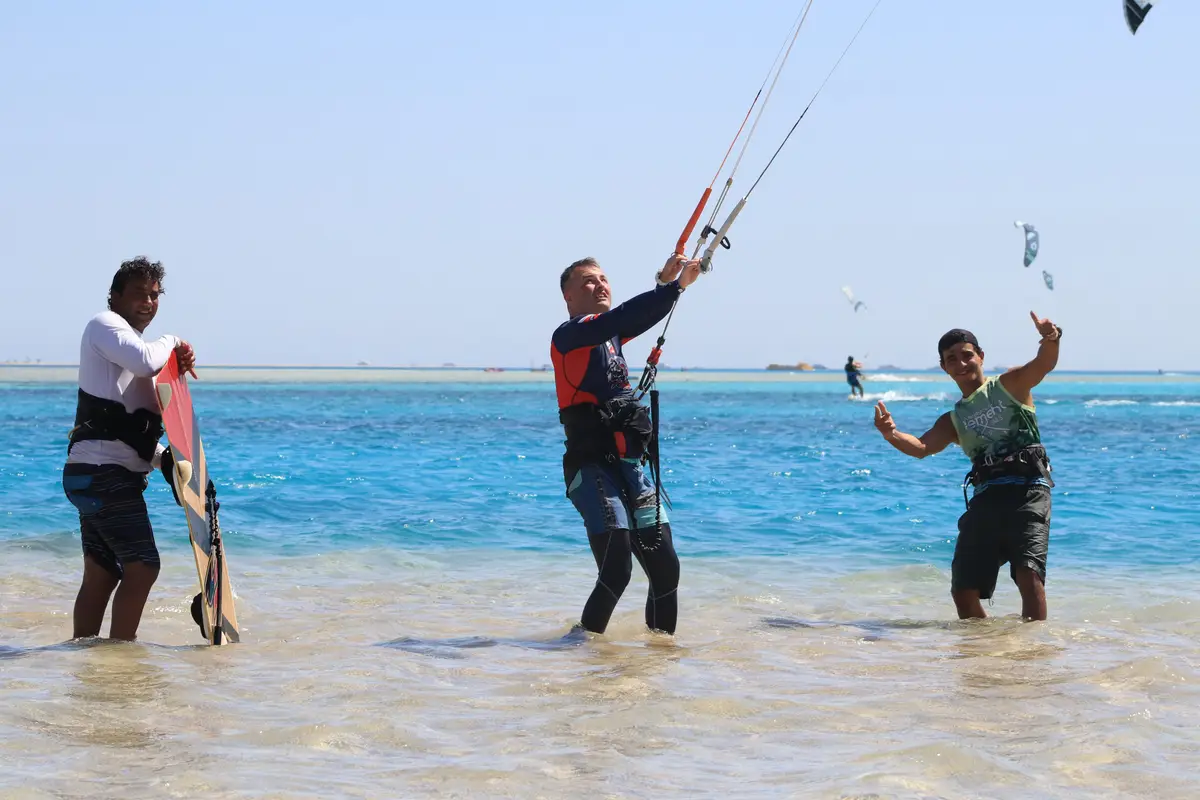
Book kitesurfing in Soma Bay
Kitesurfing lessons in Soma Bay
Pick a course, choose your dates and send it straight to the school. Nothing to pay today.
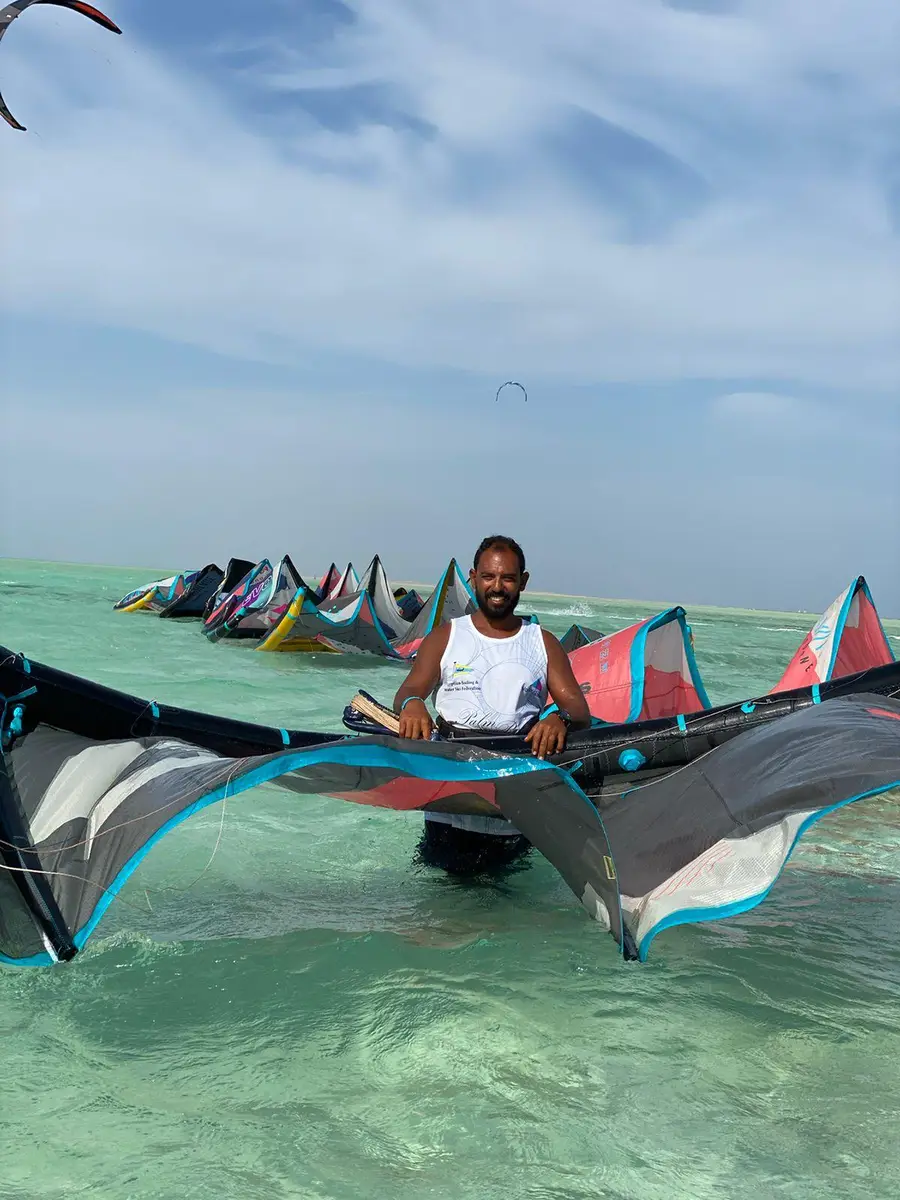
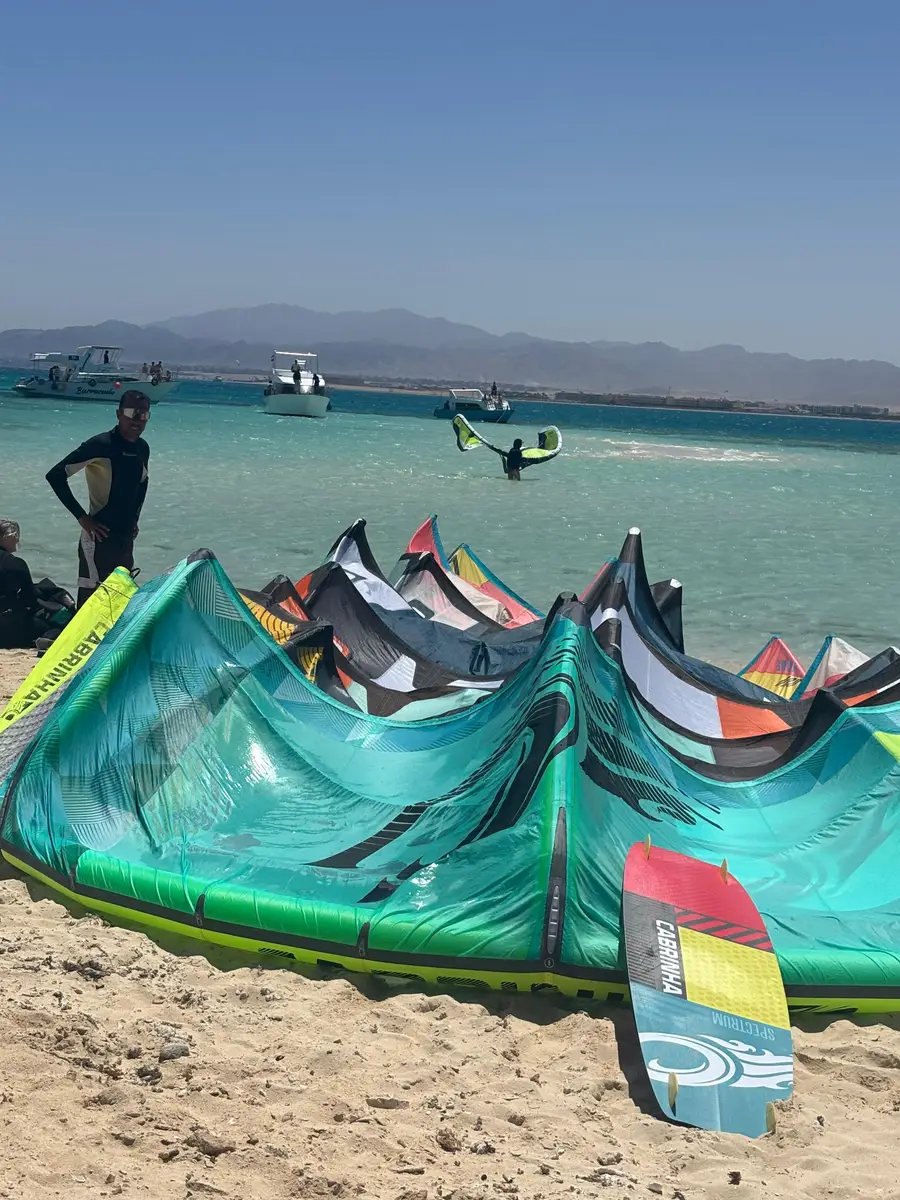
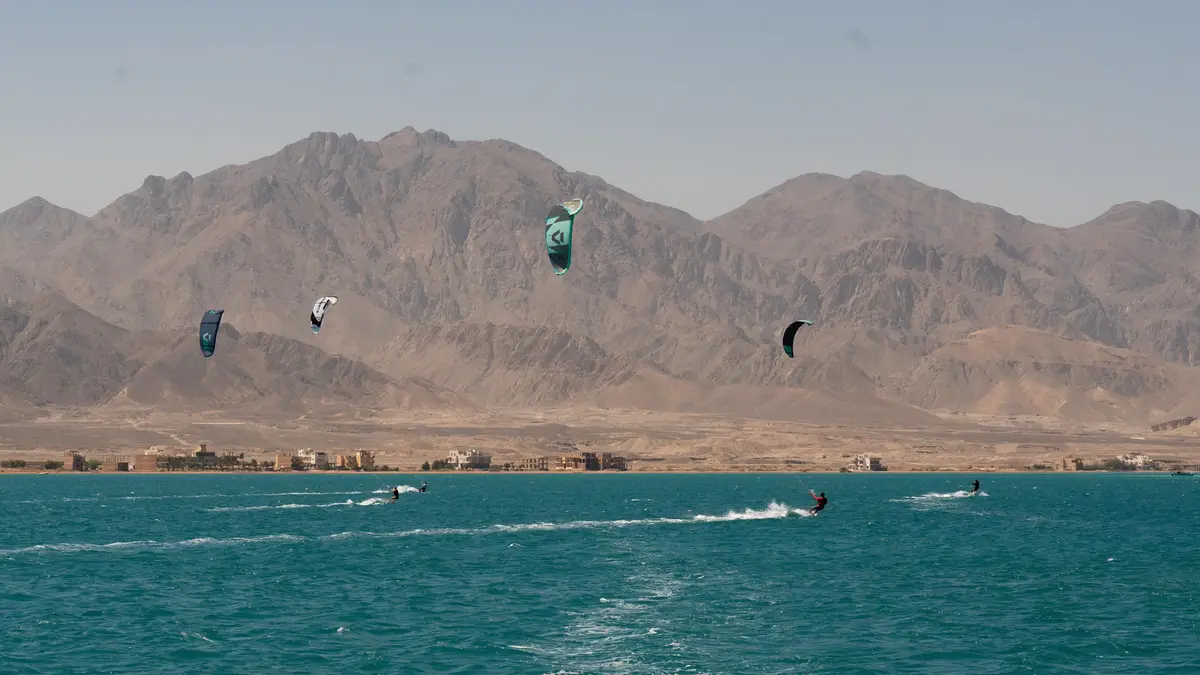
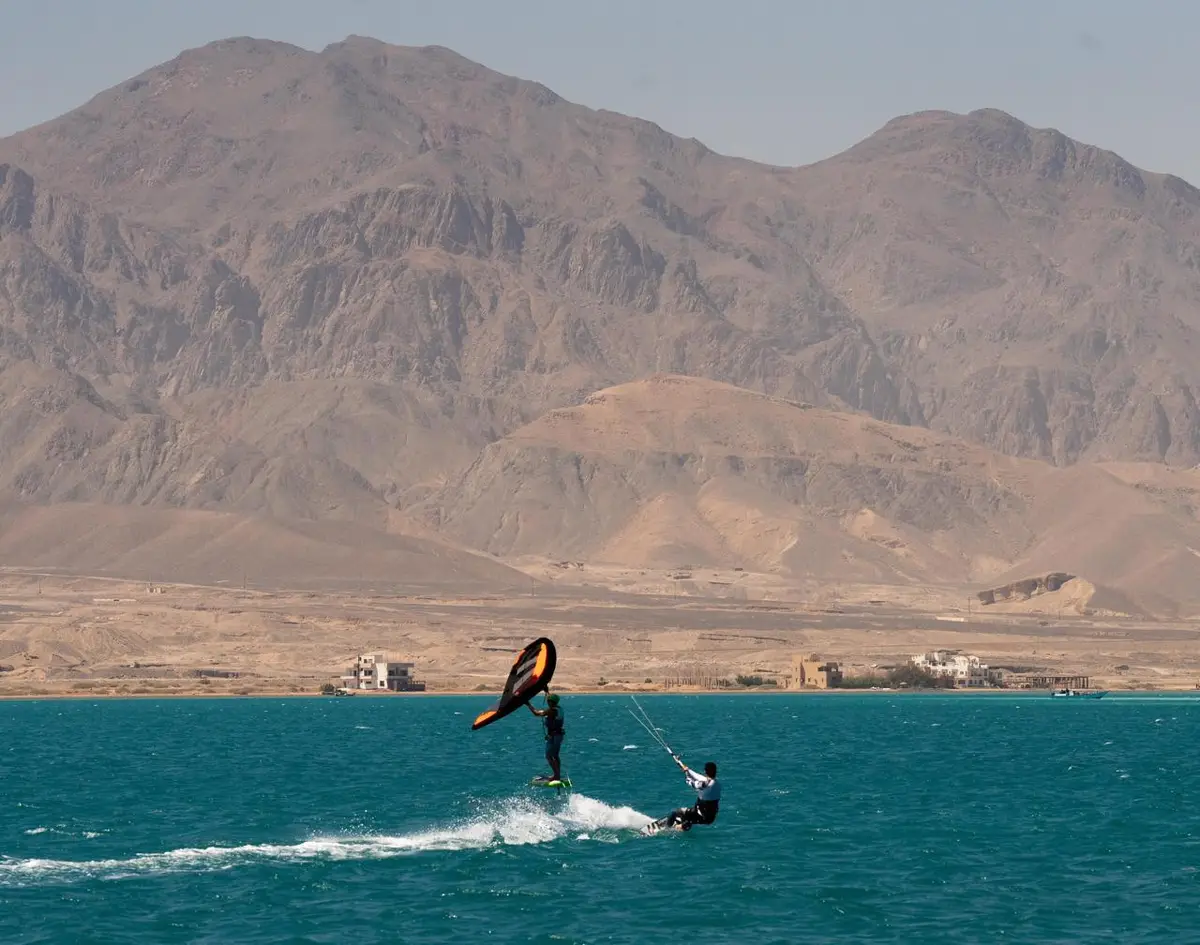
Book kitesurfing in Nabq Bay
Kitesurfing lessons in Nabq Bay
Pick a course, choose your dates and send it straight to the school. Nothing to pay today.
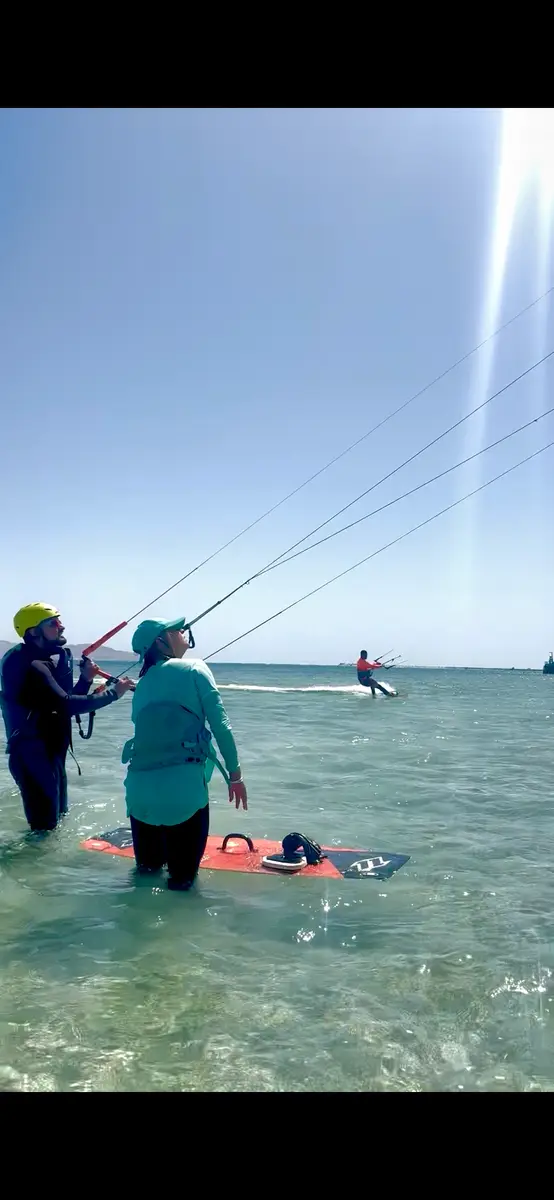
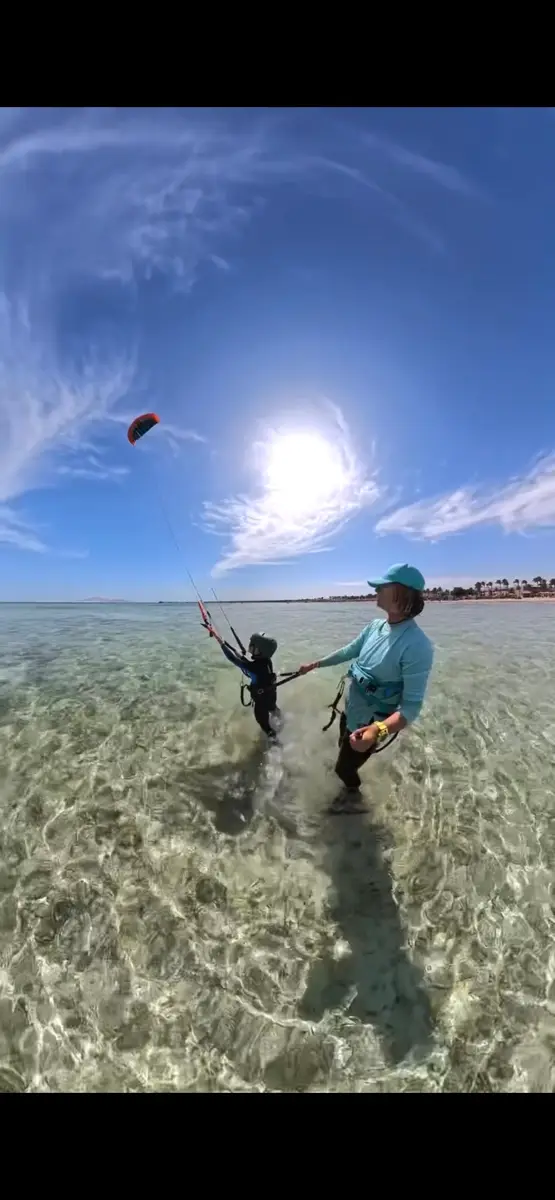
Kitesurfing in Egypt at a glance
Kitesurfing in Egypt centres on the Red Sea coast and South Sinai, with 73 schools listed on kitesurfing.me. El Gouna and Dahab offer shallow teaching areas, Hurghada has the widest choice of listed schools, and Soma Bay offers space for freeride. May to September is a useful window across both coasts. Choose a specific beach before booking because water depth and access differ between launches.
Egypt's Red Sea destinations span the mainland coast from Hurghada to Marsa Alam and South Sinai around Dahab and Sharm El Sheikh. Three regional airports serve different parts of the coast. Choose a base according to your itinerary and transfer needs, leaving time for beaches, desert landscapes and access to coral reefs.
- Choose the Hurghada coast for El Gouna, Safaga and Soma Bay, or South Sinai for Dahab and Nabq Bay.
- Kitesurfing.me lists 73 schools in Egypt, including 23 in Hurghada and 9 in Dahab.
- Across 37 listed schools with published prices, beginner courses have a median price of 47 EUR per hour.
- Long-term monthly mean wind ranges from 11 to 18 knots in Safaga and 11 to 14 knots in Hurghada. These averages are not a forecast.
- Use Hurghada airport (HRG), Sharm El Sheikh airport (SSH) or Marsa Alam airport (RMF), according to your base.
- Check beach access, tides, reef hazards and rescue arrangements before riding.
When is the best time for kitesurfing in Egypt?
The kitesurfing season in Egypt generally runs from March or April to October, with May to September a useful summer window across the mainland Red Sea coast and South Sinai. Summer is hot; March, April, October and November can be more comfortable. Allow extra days because wind and usable water depth vary by beach. Dahab and Sharm El Sheikh also have winter riding opportunities. Long-term monthly mean wind ranges from 11 to 18 knots in Safaga and 11 to 14 knots in Hurghada. These averages are not a forecast. Monthly means range from about 10 to 14 knots in El Gouna, 8 to 13 knots in Dahab and 8 to 12 knots in Sharm El Sheikh. Long-term monthly average water temperatures range from 22.3 to 29.1°C in Hurghada, 21.8 to 28.8°C in El Gouna, 22 to 28.3°C in Dahab, 22.7 to 29.5°C in Sharm El Sheikh and 22.5 to 29.4°C in Safaga. Check the forecast and local tide for your chosen beach before each session.
| Spot | Jan | Feb | Mar | Apr | May | Jun | Jul | Aug | Sep | Oct | Nov | Dec |
|---|---|---|---|---|---|---|---|---|---|---|---|---|
| Hurghada | ||||||||||||
| El Gouna | ||||||||||||
| Dahab | ||||||||||||
| Sharm El Sheikh | ||||||||||||
| Safaga | ||||||||||||
| Ras Sudr |
| Spot | Jan | Feb | Mar | Apr | May | Jun | Jul | Aug | Sep | Oct | Nov | Dec |
|---|---|---|---|---|---|---|---|---|---|---|---|---|
| Hurghada: wind (kn) | 11 | 11 | 12 | 12 | 13 | 14 | 13 | 14 | 14 | 12 | 11 | 11 |
| Hurghada: water (°C) | 23 | 22 | 22 | 23 | 25 | 27 | 28 | 29 | 28 | 27 | 26 | 25 |
| El Gouna: wind (kn) | 11 | 14 | 12 | 12 | 13 | 13 | 11 | 13 | 12 | 14 | 12 | 10 |
| El Gouna: water (°C) | 23 | 22 | 22 | 23 | 25 | 26 | 28 | 29 | 28 | 27 | 26 | 24 |
| Dahab: wind (kn) | 9 | 8 | 9 | 10 | 11 | 13 | 11 | 12 | 11 | 9 | 8 | 10 |
| Dahab: water (°C) | 23 | 22 | 22 | 23 | 24 | 26 | 27 | 28 | 28 | 27 | 26 | 24 |
| Sharm El Sheikh: wind (kn) | 8 | 9 | 10 | 10 | 11 | 12 | 11 | 11 | 12 | 10 | 9 | 8 |
| Sharm El Sheikh: water (°C) | 24 | 23 | 23 | 23 | 25 | 27 | 29 | 30 | 28 | 28 | 27 | 25 |
| Safaga: wind (kn) | 12 | 14 | 14 | 14 | 16 | 18 | 14 | 16 | 17 | 16 | 12 | 11 |
| Safaga: water (°C) | 23 | 23 | 23 | 23 | 25 | 27 | 29 | 29 | 28 | 28 | 26 | 25 |
The best spots for kitesurfing in Egypt
| Spot | Water | Level | Best months | Why go |
|---|---|---|---|---|
| Hurghada | Lagoons and sandbanks | All levels | May to Jun, Aug to Sep | Hurghada, Egypt, has 23 schools listed on kitesurfing.me and several separate riding areas. Northern beaches offer shallow water for lessons, while boat trips reach the Magawish sandbanks. Choose accommodation after confirming whether your course uses a northern beach or a boat departure. |
| El Gouna | Shallow lagoon and deeper water | All levels | May to Sep | El Gouna, Egypt, has shallow kite beaches including Mangroovy, where suitable tides create standing-depth teaching water. Low tide can leave parts too shallow, so check the lesson window. Kitesurfing.me lists 19 schools in El Gouna; allow roughly 45 minutes by road from Hurghada airport, depending on your beach and traffic. |
| Dahab | Lagoon and open water | All levels | May to Sep | Dahab, Egypt, has a sheltered lagoon with sandy shallows for lessons and more exposed water beyond it. Kitesurfing.me lists 9 schools in Dahab. Choose a school using the lagoon if you want sheltered teaching water, and arrange a road transfer from Sharm El Sheikh airport. |
| Sharm El Sheikh | Lagoon and open water | All levels | Apr to Sep | Sharm El Sheikh, Egypt, is a resort base for the Nabq Bay kite area north of town. Its sheltered lagoon offers flatter lesson water, with more exposed water farther out. Kitesurfing.me lists 7 schools for Sharm El Sheikh. Check tidal depth and the reef edge at the teaching beach. |
| Safaga | Sheltered water and open bay | Beginners to advanced | Jun to Sep | Safaga, Egypt, gives learners access to sheltered water and independent riders a larger bay for freeride. The coast around Abu Soma has distinct launches with different depths and nearby coral. Kitesurfing.me lists 7 schools in Safaga; check the location of the reef at your chosen launch. |
| Marsa Alam | Reef-sheltered bays | Beginners to intermediate | See the spot guide | Marsa Alam, Egypt, is a quieter southern Red Sea base with reef-sheltered bays and access to remote kite areas farther south. Kitesurfing.me lists 2 schools for Marsa Alam. Check where the teaching beach lies in relation to Marsa Alam airport and the reef before arranging your transfer. |
| Makadi Bay | Ask the school | All levels | See the spot guide | Makadi Bay, Egypt, is a resort base south of Hurghada with 2 schools listed on kitesurfing.me. Confirm whether your course takes place in Makadi Bay or includes a transfer to another launch before choosing your hotel. |
| Sahl Hasheesh | Ask the school | All levels | See the spot guide | Sahl Hasheesh, Egypt, is a resort base south of Hurghada, with 2 schools listed on kitesurfing.me. Confirm the lesson launch and any transfer charge before booking, as your teaching beach may be away from your accommodation. |
| Soma Bay | Flat water and open bay | All levels | See the spot guide | Soma Bay, Egypt, is a peninsula near Safaga with flat-water areas and a larger open bay. Kitesurfing.me lists 1 school here. Independent riders should check the wind direction and launch rules for their chosen beach before entering the water. |
| Nabq Bay | Sheltered lagoon | Beginners to advanced | See the spot guide | Nabq Bay, Egypt, lies north of Sharm El Sheikh and has sheltered lagoon water for lessons and more exposed riding farther out. Kitesurfing.me lists 1 school under Nabq Bay. Tides and reef edges affect the riding area, so check the permitted launch and depth for your session. |
| Ras Sudr | Shallow lagoon | Beginners to advanced | May to Sep | Ras Sudr, Egypt, lies on the Gulf of Suez, around 200 km from Cairo. Shallow lagoons suit learners and flat-water riders, while tides change the available riding space. Check the depth at your chosen beach before making the road trip from Cairo. |
| Hamata | Shallow lagoon | Beginners to advanced | See the spot guide | Hamata, Egypt, is a remote southern Red Sea destination with a broad, shallow lagoon and a desert setting. Its flat water appeals to learners and freestyle riders. Marsa Alam airport is a practical arrival point; arrange the onward road transfer before travelling. |
| Wadi Lahami | Lagoon and open water | All levels | See the spot guide | Wadi Lahami, Egypt, is a remote bay south of Hamata, with a sandy lagoon and access to more exposed water. It suits travellers seeking a quiet stay and a longer transfer from Marsa Alam airport. Ask whether the lagoon and rescue service suit your level on your travel dates. |
Which Egypt spot suits your kitesurfing level?
Complete beginner
El Gouna's shallow beaches and Dahab's sheltered lagoon are good places to start. In Hurghada, ask which beach your school uses and whether the lesson includes equipment and rescue cover.
Learning to ride upwind
El Gouna, Hurghada and the sheltered areas around Safaga offer flat-water practice. Check tidal depth and the space available at your chosen launch.
Independent rider
Soma Bay, Hurghada's boat-access sandbanks and deeper water off El Gouna offer room for freeride. Establish the launch rules and rescue arrangements before riding.
Advanced freestyle
Soma Bay and deeper water beyond suitable lagoons offer room for freestyle and freeride. For waves, confirm the break and current conditions with a local school before choosing a base.
Getting to Egypt and between the spots
- Getting to Egypt
- Egypt's Red Sea coast is served by three regional airports: Hurghada International (HRG) for the mainland coast from Hurghada to Soma Bay, Sharm El Sheikh International (SSH) for Dahab and South Sinai, and Marsa Alam International (RMF) for the southern coast. Direct routes and charters vary by season; travellers from farther afield may connect through Cairo International (CAI). Check flight schedules and transfer arrangements for your dates.
- Airports
- HRGHurghada InternationalFor Hurghada, El Gouna, Safaga, Makadi Bay, Sahl Hasheesh, Soma Bay. The main gateway for the northern mainland Red Sea coast; hotels and local operators can arrange pickup.
- RMFMarsa Alam InternationalFor Marsa Alam. A practical gateway for the southern mainland Red Sea coast.
- SSHSharm El Sheikh InternationalFor Sharm El Sheikh, Nabq Bay, Dahab. Serves Sharm El Sheikh and South Sinai, including Dahab. Arrange a road transfer to Dahab.
- CAICairo InternationalThe main hub for long-haul connections and a gateway to Gulf of Suez destinations near Cairo.
- Between the spots
- On Egypt's mainland Red Sea coast, road transfers connect Hurghada with El Gouna, Safaga, Makadi Bay, Sahl Hasheesh and Soma Bay. Marsa Alam is farther south and has its own airport. For travel between the mainland coast and South Sinai, check current flight schedules or allow for a long road journey via Cairo. Ask your accommodation for a route-specific transfer quote and confirm luggage space before booking.
- Entry and visa
- Entry rules for Egypt depend on your passport and itinerary. British passport holders arriving by air at Sharm El Sheikh and staying for less than 15 days at specified South Sinai resorts can receive a free entry permission stamp. Travel outside those resorts requires a visa. At approved airports, eligible British travellers can buy a visa on arrival for US$30 in cash. Check current requirements for your nationality and route before travelling, including the official e-visa portal at visa2egypt.gov.eg.
- Money and costs
- Egypt's currency is the Egyptian pound (EGP). Cards are accepted in many hotels and resorts, while cash is useful for taxis, tips and small purchases. Carry small denominations where possible and check ATM fees before withdrawing. Prices and accepted currencies vary by provider, so confirm the amount and payment method when booking.
- Climate and water
- Egypt's Red Sea coast is warm and generally dry year-round. In Hurghada, average night-time lows and daytime highs are about 10°C and 21°C in January, and 26°C and 34°C in August. Sea temperatures vary by location and month, with cooler water in winter and warmer water in summer. Summer heat makes sun protection and drinking water especially useful.
- Safety
- Travel advice for Egypt varies by region and can change. Restrictions apply to parts of North Sinai, the Western Desert and the Egypt-Libya border. Check your government's current advice for your precise route before booking and again before departure.
Sources for this guide: Egypt kite travel overview, Ras Sudr kite travel guide, Marsa Alam airport wind statistics, Safaga kite spot guide, Hamata lagoon and airport access, Egypt entry requirements, Egypt travel advice, Canada travel advice for Egypt, Ras Sudr geography, El Gouna tides and beach access, Hurghada airport to El Gouna, Wadi Lahami destination fact sheet, Egypt airports, Egypt visa policy, Egypt visa fees, Hurghada climate, Egypt money and currency, Hurghada to Marsa Alam travel, Windfinder, station Hurghada Airport (2000-2026), seatemperature.info, monthly average, Windfinder, station El Gouna Kiteboarding Club (2006–2026), seatemperature.info, 10-year average, Windfinder, station Dahab (2003–2019), seatemperature.info, 10-year average, Windfinder, station Sharm el-Sheikh International Airport (2000-2026), seatemperature.info, monthly average, Windfinder, station Soma Bay / Surf Motion (2020-2026), seatemperature.info, monthly average · Last checked November 2026.
Kitesurfing in Egypt: when and where
Hurghada
Hurghada is the largest city on Egypt's Red Sea coast and stretches for about 36 km along the shore, so 'kitesurfing in Hurghada' really means a string of separate beaches rather than one spot: shallow lagoons north of town toward El Gouna, sandbanks reached by boat around Magawish, hotel beaches in town, and Soma Bay about 45 km to the south. The wind comes from the north to north-northwest on most days, the water is warm all year, and many of the teaching areas are shallow and sandy, which is why the coast is popular with beginners. Most kite spots sit on hotel or resort land, so where you ride usually depends on where you stay or which school you book.
The wind blows all year, but sources agree that the stronger, more reliable months run from about March to October and that November to February is lighter and less consistent. They disagree about July: thekitespot lists it as the windiest month, while windsurf.co.uk and a local instructor name March to June and August to October as the best stretches, with July weaker. May, June, August and September are the months every source counts as good.
The full Hurghada guide: wind by month, beaches, getting there →
KiteFlow: courses, team and photos →
Kite Pirates: courses, team and photos →
Saida Kite: courses, team and photos →
Best Time to Kitesurf in Hurghada: Wind and Water by Month →
Dahab
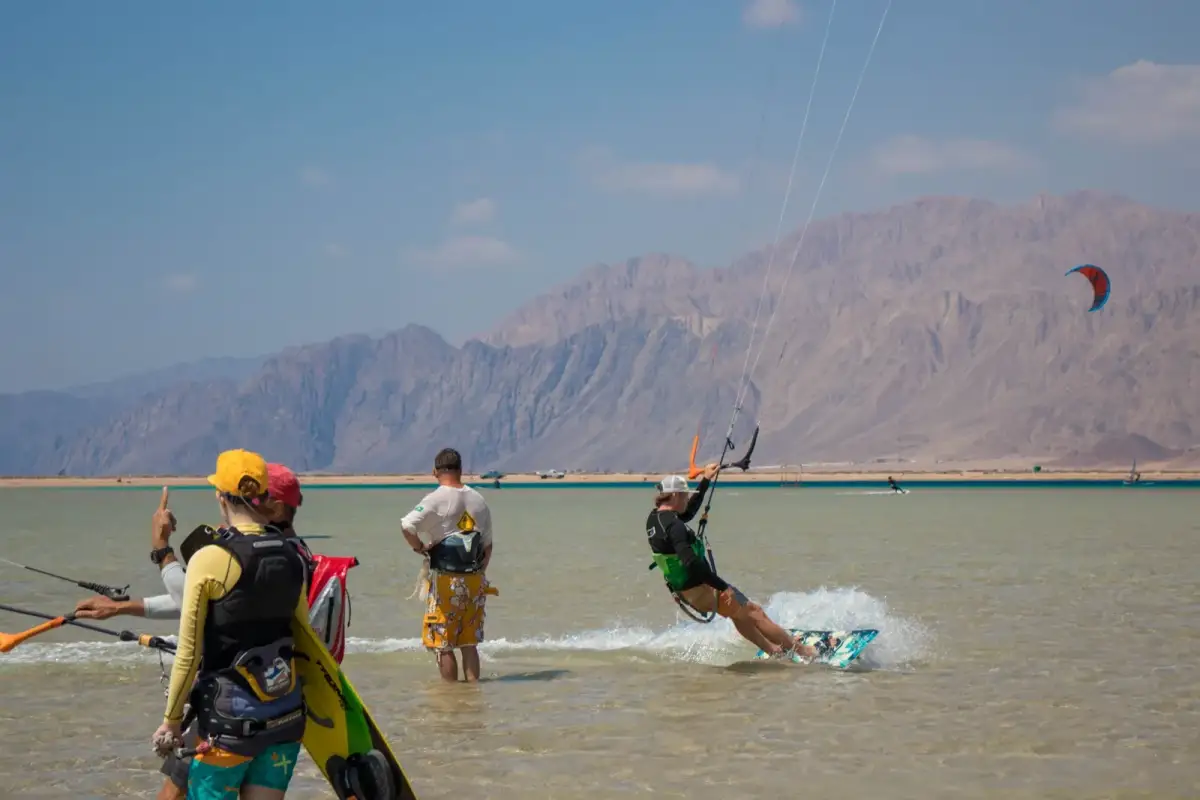
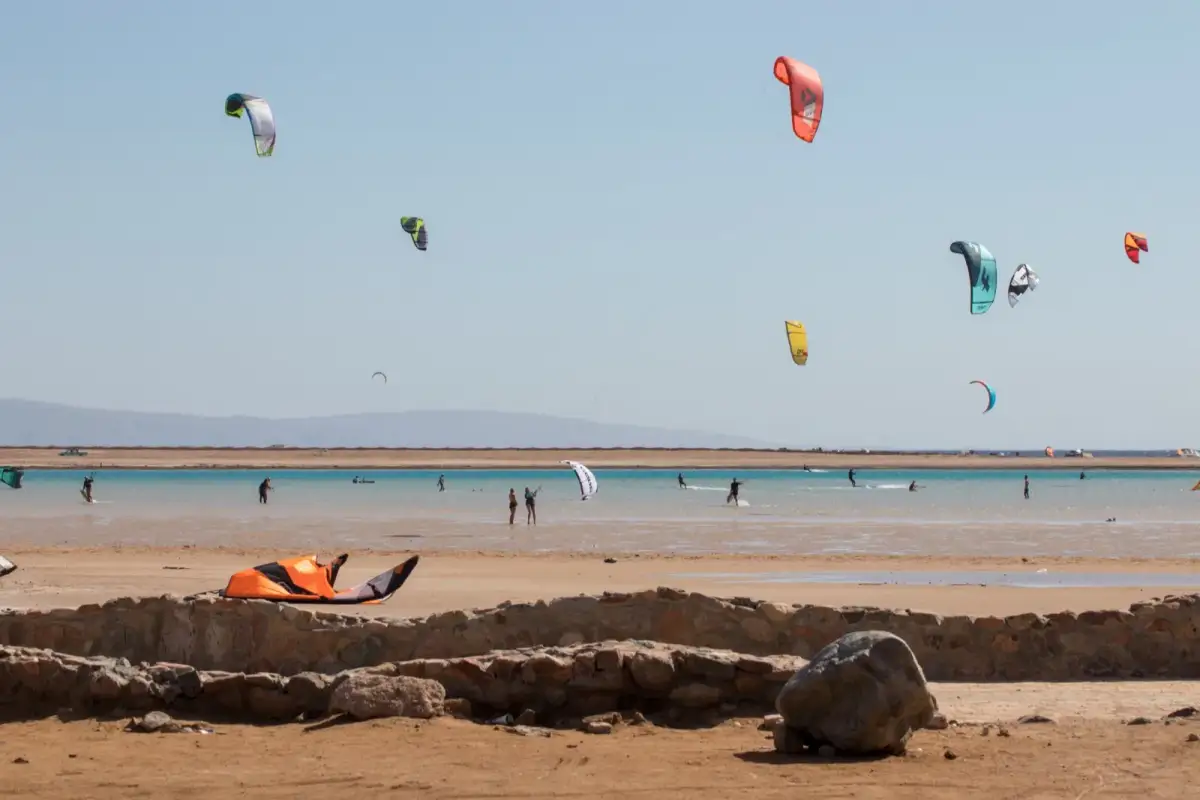
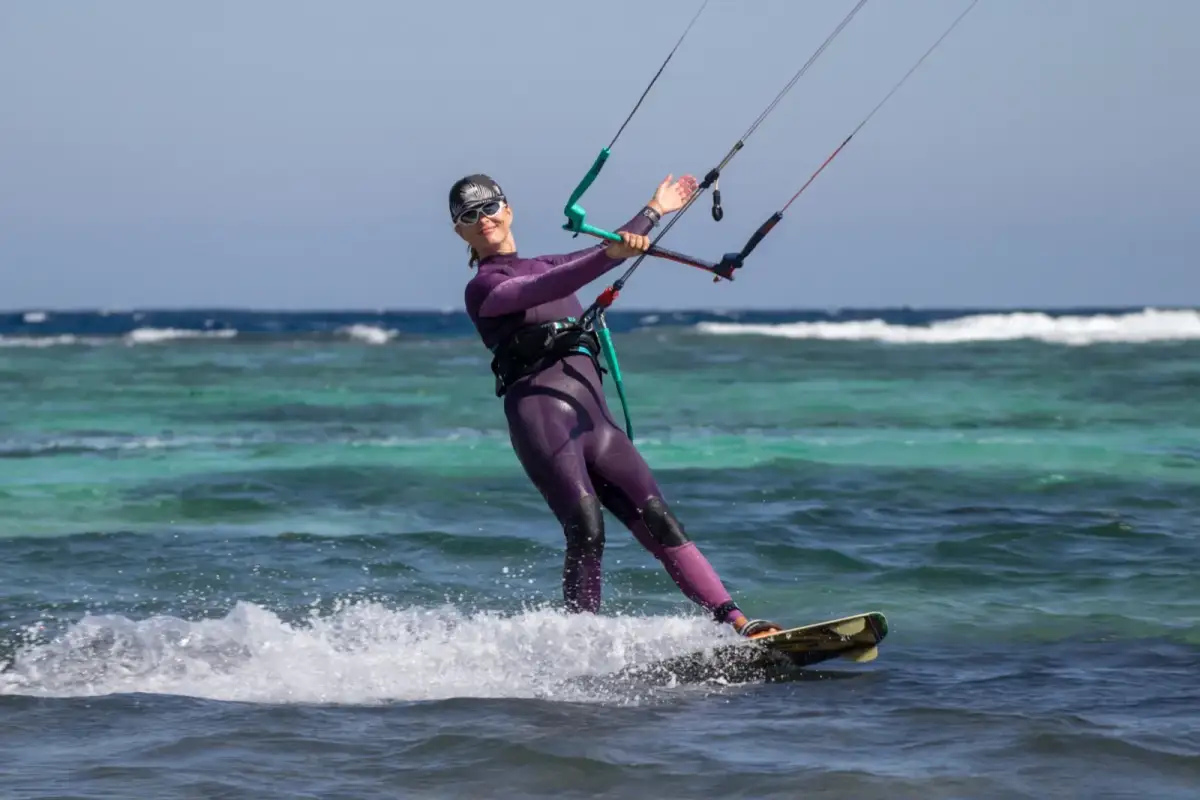
Dahab is a small town on the Gulf of Aqaba in Egypt's South Sinai, built its kite reputation on a shallow, enclosed lagoon right at the edge of town, one of the more reliable dedicated beginner spots anywhere. The Gulf funnels a steady wind along the Sinai coast on an estimated 300 days a year, so unlike most kite destinations Dahab doesn't really have an off-season, just a calmer winter and a windier summer. Desert mountains rise straight across the water as a backdrop, and the same town is one of the Red Sea's best-known diving spots, so a no-wind day is rarely a wasted one.
Dahab doesn't shut down for a season the way a single-wind spot does. Independent trackers put winter (December-February) at roughly 50-70% windy days, rising through spring to a widely-cited 90%+ reliability from May to September, then easing again into a calmer autumn. In practice the lagoon is kiteable most of the year; May-September is simply the safest bet for consistent, stronger wind. A local school adds the catch: in summer the wind tends to come mostly in the morning and the heat is intense, so October-November and March-April, which still bring great wind, are often the nicer time to come.
The full Dahab guide: wind by month, beaches, getting there →
Soul Kiters: courses, team and photos →
Dolphin Watersports Dahab Kitesurfing: courses, team and photos →
Safaga
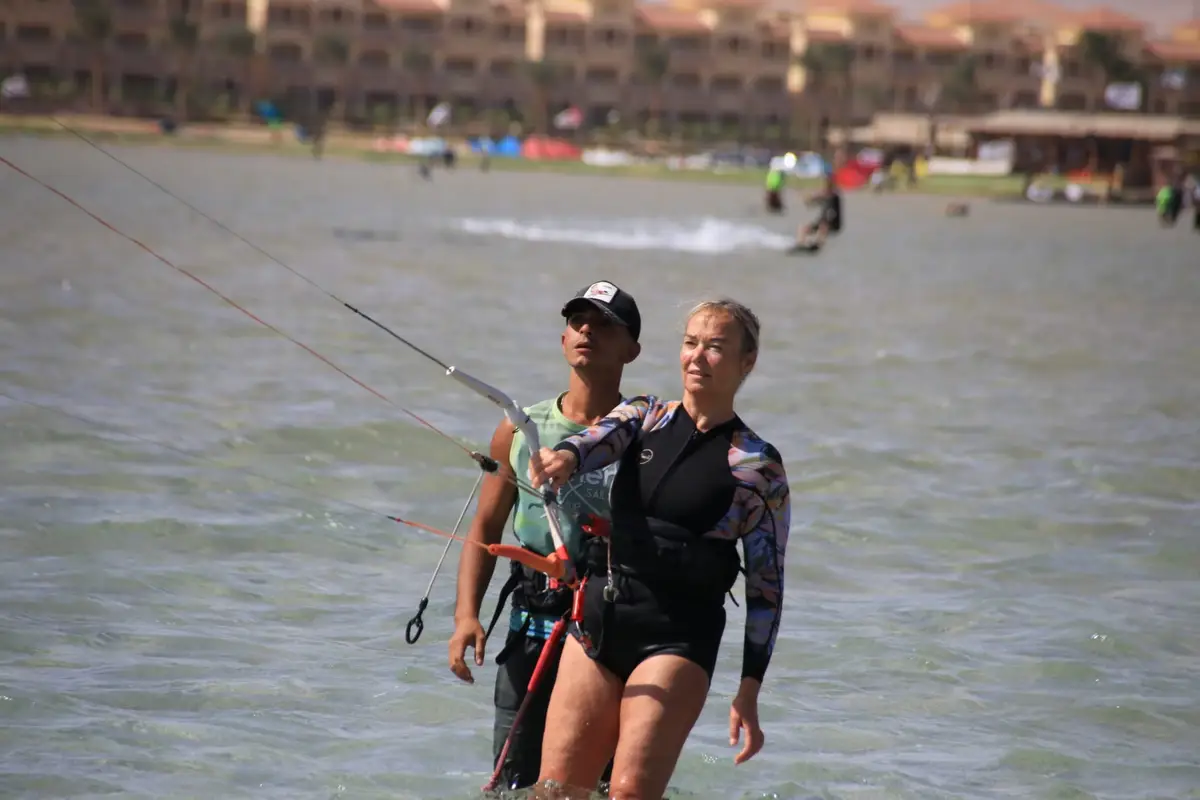
Safaga is a quiet Red Sea port town about 50 km south of Hurghada, Egypt, where kitesurfing happens on the long beach strip shared with the Soma Bay resort cluster rather than in the town itself. A thermal desert wind blows side-offshore in the morning and swings side-shore by late morning most days from March to November, strongest from June to September when afternoons can reach 25-30 knots. The water is shallow and warm for most of the year, the beach is markedly less crowded than Hurghada or El Gouna, and independent riders can run downwind to Tobia Island, a small coral-ringed sand island about 3.5 km offshore.
Wind blows on most days from March to November, with June to September rated the strongest and most reliable stretch. November to April is lighter and less consistent day to day, and the water is noticeably cooler, though schools keep teaching through the cooler months on the days that deliver.
The full Safaga guide: wind by month, beaches, getting there →
Kite Instructor: courses, team and photos →
Nabq Bay
Kitesurfing in Sharm El Sheikh centres on Nabq Bay, a shallow lagoon suited to learners and riders practising flat-water skills. The lagoon is knee-deep in places, with waves farther out. KiteLuna teaches private lessons at the Regency Plaza Aqua Park & Spa. April to September is one peak-season option, while March to May and September to November are also cited as good months. Hotel beach access and the coral reef make it sensible to check launch arrangements with a local centre.
April to September is one peak-season window for Nabq Bay. March to May and September to November are also listed as good months. Wind often works best in the morning, so check the forecast and ask a local centre about conditions on the day.
The full Nabq Bay guide: wind by month, beaches, getting there →
KiteLuna: courses, team and photos →
Kitesurfing in Egypt: common questions
What is the best time to kitesurf in Egypt?
May to September offers a useful summer window across Egypt's mainland Red Sea coast and South Sinai, but expect heat. March, April, October and November can be more comfortable; allow extra days because wind and usable water depth vary by spot. Dahab and Sharm El Sheikh also offer winter riding opportunities.
When is the best time to kitesurf in Dahab?
In Dahab: Dahab doesn't shut down for a season the way a single-wind spot does. Independent trackers put winter (December-February) at roughly 50-70% windy days, rising through spring to a widely-cited 90%+ reliability from May to September, then easing again into a calmer autumn. In practice the lagoon is kiteable most of the year; May-September is simply the safest bet for consistent, stronger wind. A local school adds the catch: in summer the wind tends to come mostly in the morning and the heat is intense, so October-November and March-April, which still bring great wind, are often the nicer time to come.
When is the best time to kitesurf in Safaga?
In Safaga: Wind blows on most days from March to November, with June to September rated the strongest and most reliable stretch. November to April is lighter and less consistent day to day, and the water is noticeably cooler, though schools keep teaching through the cooler months on the days that deliver.
When is the best time to kitesurf in Nabq Bay?
In Nabq Bay: April to September is one peak-season window for Nabq Bay. March to May and September to November are also listed as good months. Wind often works best in the morning, so check the forecast and ask a local centre about conditions on the day.
Where can I book kite lessons in Egypt?
On kitesurfing.me you send a booking request with nothing to pay today; the school confirms your dates and you pay at the school: lessons with KiteFlow and Kite Pirates and Saida Kite in Hurghada; lessons with Soul Kiters and Dolphin Watersports Dahab Kitesurfing in Dahab; lessons with Kite Instructor in Safaga; lessons with Abu Soma Riders Kiteboarding in Soma Bay; lessons with KiteLuna in Nabq Bay. Other kite spots in Egypt: El Gouna, Makadi Bay, Marsa Alam, Sahl Hasheesh, Nabq Bay.
How much does a kite lesson cost in Egypt?
In Hurghada, KiteFlow and Kite Pirates and Saida Kite starts at €120 per person: Refresher and progression session from €120, Small-group kitesurf course from €250, Private kitesurf course from €300, Group Kitesurfing Course (max 3 per instructor) from €110, Private Kitesurfing Course from €180, Private kitesurf session from €70, Private kitesurf beginner course from €440. In Dahab, Soul Kiters and Dolphin Watersports Dahab Kitesurfing starts at $75 per person: Private kitesurf lesson from $75, Group beginner kitesurf course from $325, Private beginner kitesurf course from $435, 3-day beginner course from €350, 9 hours intensive course from €485, Zero to Hero course from €600. In Safaga, Kite Instructor starts at €140 per person: Kite Refresh Course from €140, Kite Taste (Basic) from €150, Kite Beginner Course from €250. In Soma Bay, Abu Soma Riders Kiteboarding starts at €95 per person: Personal Training from €95, Group Beginner Kitesurf Course (2-4 people) from €150, Private Beginner Kitesurf Course from €180, Refresher Course from €180. In Nabq Bay, KiteLuna starts at €50 per person: Private Kitesurfing Lesson from €50, Level Up Kitesurfing Course from €270.
How do I get to Hurghada?
Fly into Hurghada International Airport (HRG), which serves the whole coast. From the airport, a taxi or a transfer arranged by your hotel or school takes you on; El Gouna is about 25 km north of Hurghada, Sahl Hasheesh about 18 km and Makadi Bay about 30 km south, and Soma Bay about 45 km south. Many kite schools pick guests up from their hotel, so a rental car is optional.
How do I get to Dahab?
Dahab has no airport of its own; almost everyone flies into Sharm El Sheikh (SSH), about 90km and roughly 90 minutes south along the coast. From there it's a private transfer or taxi, or the public bus, which is the cheapest option at only a few euros but takes closer to 1.5-2 hours. If you're arranging your own transfer, agree on space for kite bags before you get in.
How do I get to Safaga?
Fly into Hurghada International Airport (HRG), the gateway for this stretch of coast. Safaga is about 50-53 km south, roughly 40-60 minutes by road. Most schools and hotels can arrange the transfer directly, so a rental car isn't necessary just to get there.
How do I get to Nabq Bay?
Fly to Sharm El Sheikh International Airport (SSH). Transfer operators describe Nabq Bay as approximately 8 to 12 km away, with car transfers taking around 10 to 25 minutes depending on the destination.
Where should I go kitesurfing in Egypt?
Choose El Gouna for shallow-water lessons and a lively resort town, Hurghada for a broad choice of schools, or Dahab for a smaller South Sinai base. Soma Bay offers flat water and open-bay riding. Marsa Alam and Hamata suit travellers seeking a quieter southern Red Sea trip.
What are the best kitesurfing spots in Egypt?
El Gouna, Hurghada, Dahab, Safaga and Soma Bay are among Egypt's best kitesurfing spots for different types of trip. El Gouna and Dahab suit learners, while Soma Bay and Hurghada's sandbanks appeal to independent riders. Ras Sudr is a lagoon destination within reach of Cairo by road.
Is kitesurfing in Egypt good for beginners?
Egypt is a good choice for beginners, especially at El Gouna's shallow beaches, Hurghada's suitable lagoons and Dahab's sheltered lagoon. Kitesurfing.me lists 73 schools across Egypt. Ask which beach the lesson uses, how tides affect the teaching area and whether equipment and rescue cover are included.
Where should I kitesurf in Egypt in November?
In November, consider Dahab or Sharm El Sheikh in South Sinai, or El Gouna or Hurghada on Egypt's mainland Red Sea coast. Temperatures can be more comfortable than in summer, but allow extra days for lighter wind and changing water depth. Diving and snorkelling offer alternatives.
How do I get between Egypt kitesurfing spots with gear?
Use Hurghada airport for El Gouna, Hurghada and Safaga, and Sharm El Sheikh airport for Sharm and Dahab. Arrange a road transfer with space for your board bag. Between Hurghada and Sharm, check flight schedules; a road journey via Cairo is much longer. Confirm airline sports-baggage limits before booking.
Do I need a visa for an Egypt kitesurfing trip?
Entry rules for Egypt depend on your passport and itinerary. British passport holders flying into Sharm El Sheikh and staying at specified South Sinai resorts for less than 15 days can receive a free entry permission stamp. Travel outside those resorts requires a visa. Check current rules for your nationality and route.
Do I need a wetsuit for kitesurfing in Egypt?
A wetsuit is most useful for Egypt's cooler, windier winter days. Long-term monthly average water temperatures range from about 22 to 29°C in El Gouna and about 22 to 28°C in Dahab. A short suit or sun-protective top suits warmer months; consider a longer suit in winter.
What are the local rules and safety considerations for kitesurfing in Egypt?
In El Gouna, Egypt, kite beaches are generally managed by centres, so independent riders should arrange access and ask about any beach or rescue fee before arrival. Check the tide at Mangroovy and reef edges and permitted launches at Nabq Bay. Keep clear of swimmers and protected marine areas.
Where to kite in Egypt
All destinations →Find your place in Egypt.
Pick a spot above, or explore schools across the country by what you want to do.
Explore schools in Egypt