Hurghada or El Gouna for Kitesurfing? How the Two Compare
Egypt's two best-known Red Sea kite towns are 25 km apart and share one wind. The difference: the water, the beaches and the rest of your day.
Choose El Gouna if you want to live right on a big, purpose-built kite lagoon and walk from your room to the water. Choose Hurghada if you want a wider choice of hotels and prices, a real city around you and a school that picks you up and drives you to the beach. The wind is the same in both: north to north-northwest, usually 15 to 25 knots in the main season, because the two towns are only about 25 km apart and share one airport.
Side by side
| Hurghada | El Gouna | |
|---|---|---|
| What it is | Egypt's largest Red Sea city, about 36 km of coast | A purpose-built resort town around a lagoon system |
| Kite spots | Separate beaches: lagoons north of town, Seahorse Bay, Magawish sandbanks by boat, hotel beaches | Several lagoons next to each other: Mangroovy, Buzzha, Zeytuna, the Osmosis lagoon |
| Water | Shallow, sandy teaching areas; choppier further out, small waves of about 1 m on strong days | Large, shallow lagoons, mostly flat; reef and coral edges at low tide |
| Getting to the water | Usually via your hotel or a school's pick-up; most spots are on resort land | Walk, tuk-tuk or shuttle boat; no car needed |
| Best months | May, June, August, September; good March to October | May to September, especially June and September; windy March to November |
| Winter | Lighter, at least 3–4 kiteable days a week | Lighter but reliable, roughly 12–18 knots |
| Off the water | City life, wide range of hotels and prices | Marina, restaurants, a quieter resort feel |
Wind and season: practically the same
Both towns get the same north to north-northwest wind, helped along by the desert heating up during the day. El Gouna's kite centres put the stronger window at March to November with roughly 20 to 25 knots and December to February at roughly 12 to 18 knots. For Hurghada, thekitespot gives 15 to 25 knots from May to October and at least three to four kiteable days a week in winter. If your dates are fixed, the season matters far more than the town. Our best time to kitesurf in Hurghada guide goes through it month by month.
Water and beaches: one lagoon town against a long coastline
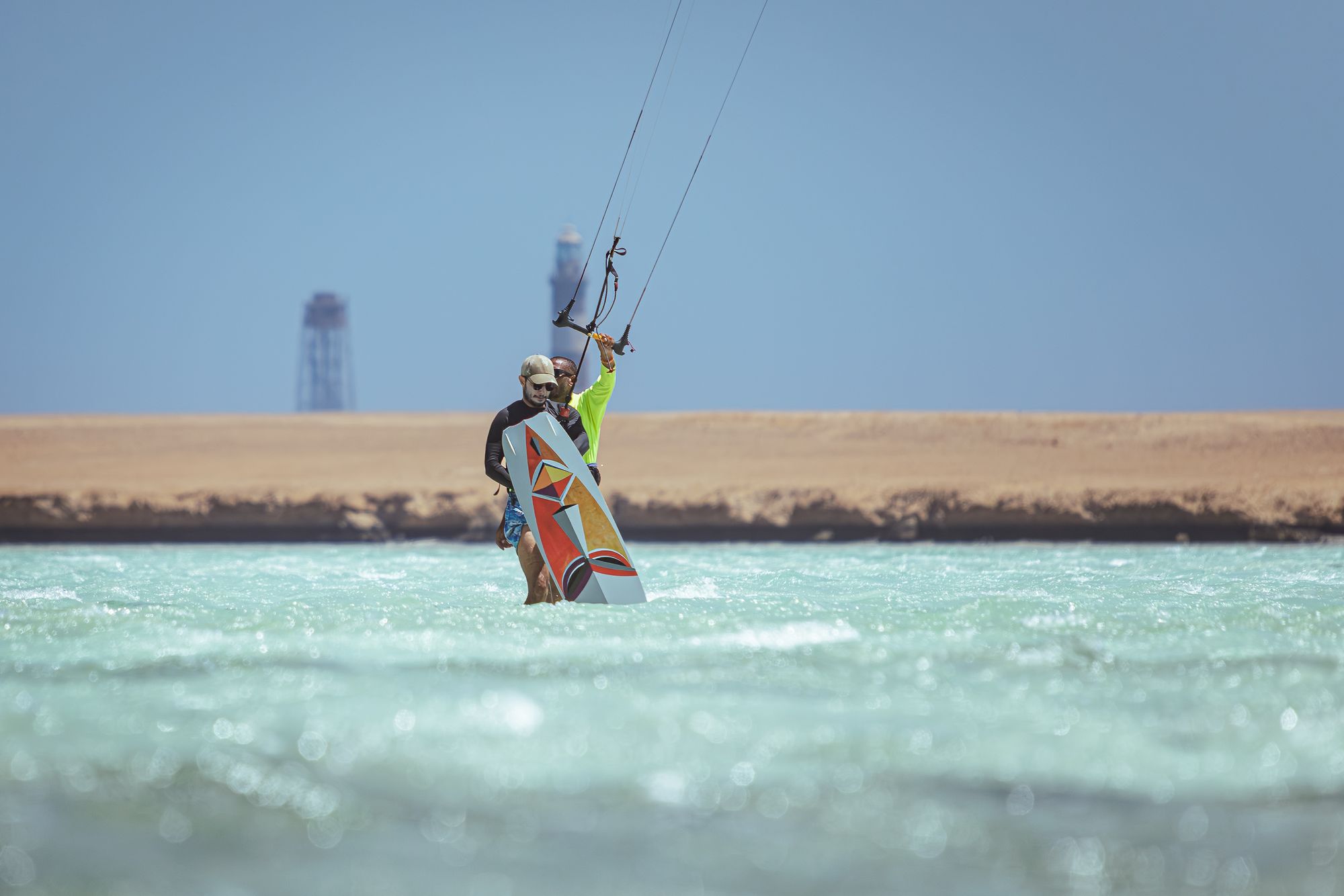
El Gouna's strength is that its kite lagoons are next to each other and next to town. At Mangroovy, the water stays waist-deep a long way out, and Buzzha's lagoon covers more than 2 km². The catch is the reef: at low tide, reef and coral sections come close to the surface, and around full moon in summer Buzzha's lagoon can almost drain for a few hours, so schools keep beginners away from the reef edge.
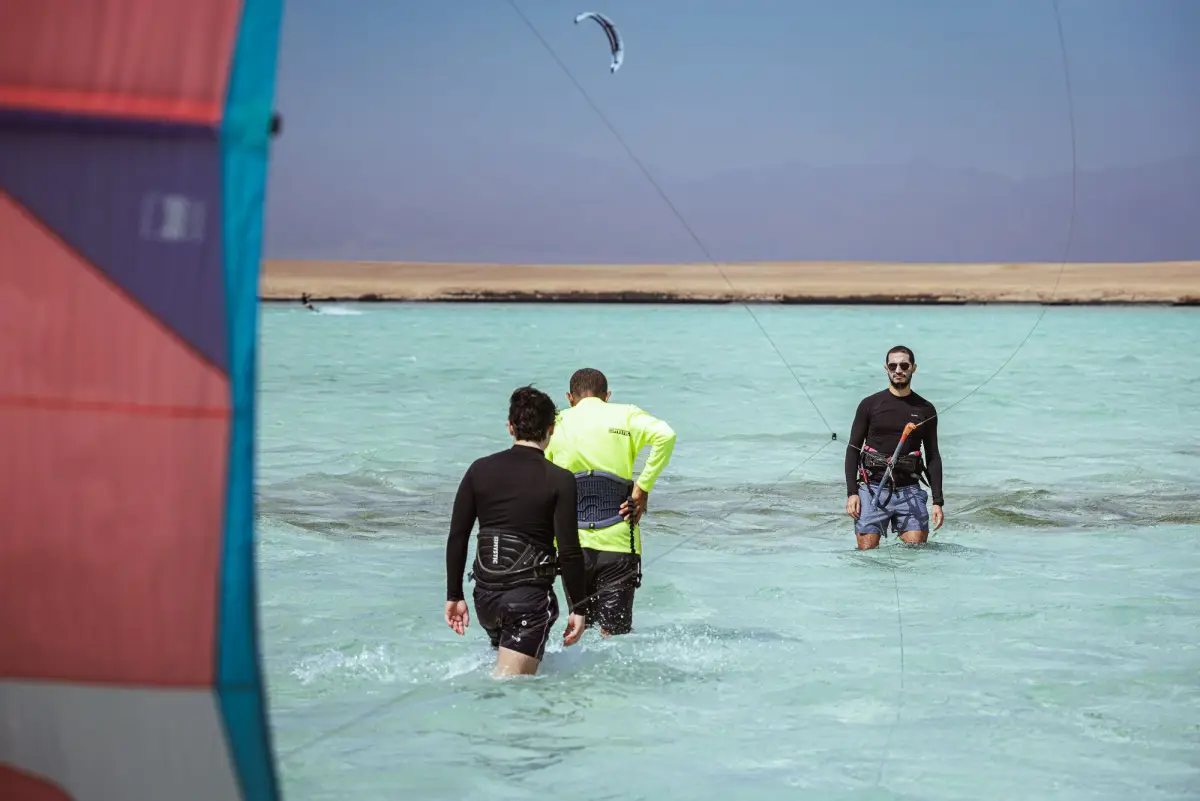
Hurghada's spots are spread out along about 36 km of coast. North of town there are shallow, sandy beaches and lagoons, such as the beach between Hurghada and El Gouna, which has no rocks on the bottom according to the instructor who teaches there, and Seahorse Bay. Magawish has long sandbanks you reach by boat. Most of these sit on hotel or resort land, so in Hurghada you usually ride where your hotel or your school takes you.
For beginners
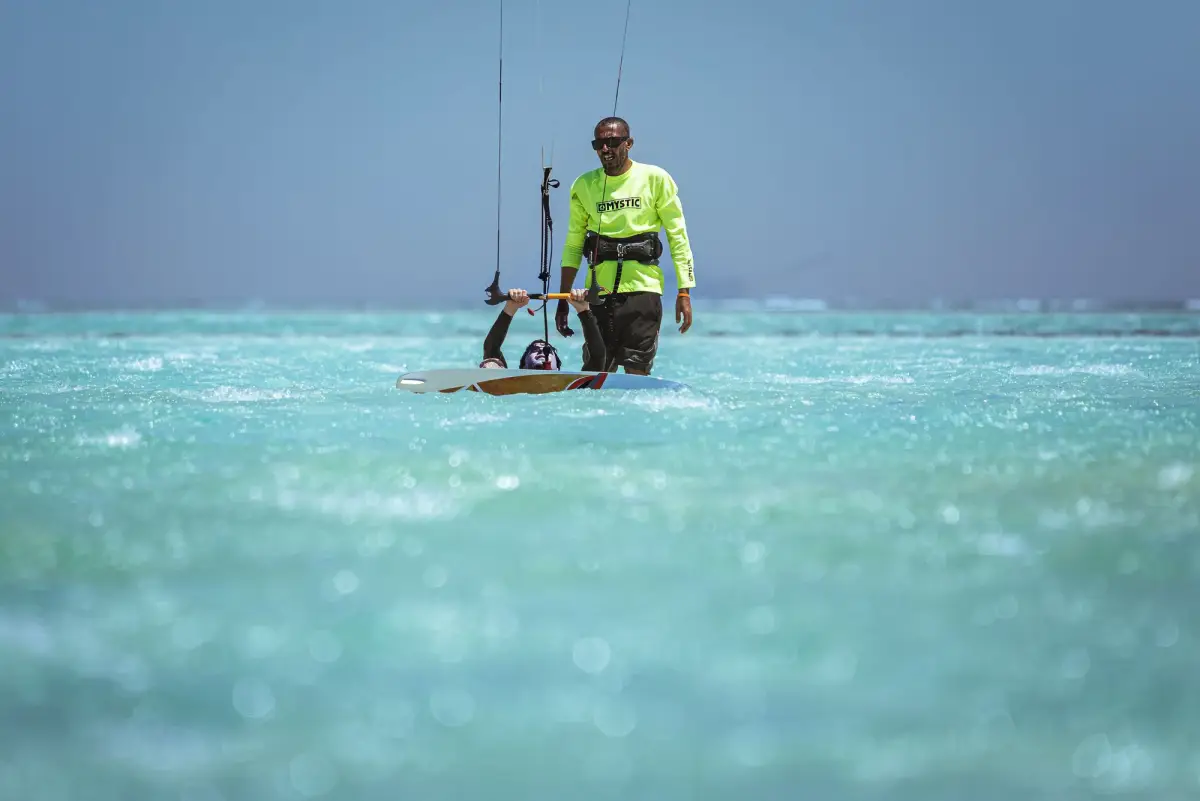
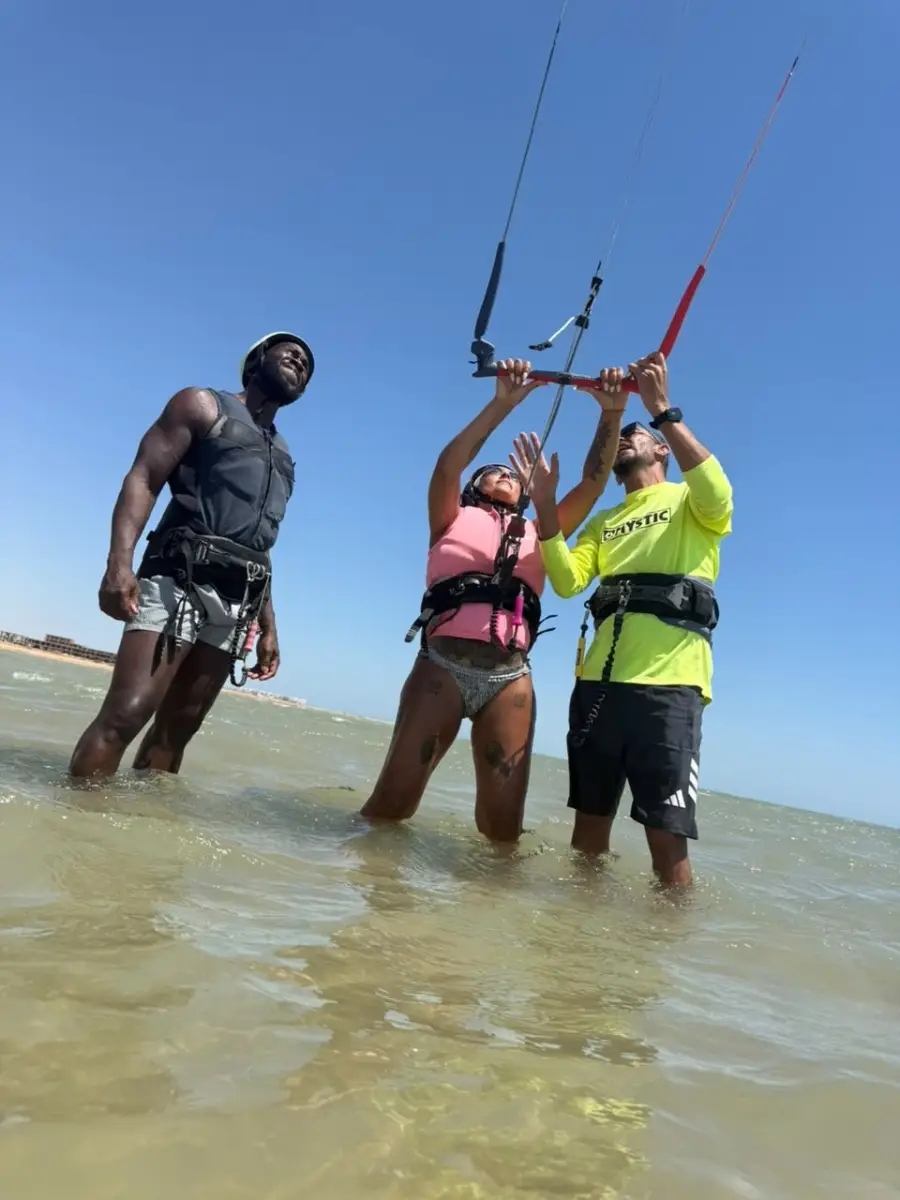
Both are good places to learn, for the same reasons: warm water, wind on most days and standing-depth water. El Gouna suits you if you want to stay on the lagoon and do nothing but kite for a week. Hurghada suits you if you are already staying there, on a family or package holiday for example, and want lessons that fit around it: many schools pick you up from your hotel, so you do not need to move.
- Staying in Hurghada, Sahl Hasheesh or Makadi Bay: book a school that includes hotel pick-up, and check if there is a surcharge outside town.
- Staying in El Gouna: pick a school on the lagoon you can walk or take a tuk-tuk to.
- Either way: plan four to six days for a beginner course, so one calm day does not cost you the course.
For riders who already kite
El Gouna gives you the most lagoon in one place, plus a deep-water zone with occasional small waves at the Osmosis spot. Around Hurghada, Magawish is the best-known freeride spot, and Soma Bay, about 45 km south, has steady cross-shore to cross-offshore wind, with compulsory rescue service at the schools there. Neither is a wave destination.
Beach-by-beach detail, wind charts and travel: Hurghada kite spot guide · El Gouna kite spot guide.
Booking a lesson in Hurghada
In Hurghada you can book lessons directly on kitesurfing.me with KiteFlow. Its IKO-certified instructor teaches on the shallow, sandy beach between Hurghada and El Gouna and picks you up from your hotel (included in Hurghada, €10 extra from Makadi Bay or Sahl Hasheesh). A private beginner course costs €300 for 6 hours, the small-group course €250 per person, with at most two students per instructor, and a refresher session €120 for 2 hours. All kite equipment is included.
Is Hurghada or El Gouna better for kitesurfing?
The wind is the same. El Gouna is better if you want to stay right on a big kite lagoon; Hurghada if you want more choice of hotels and a school that picks you up and drives you to the beach.
How far is El Gouna from Hurghada?
About 25 km north of Hurghada. Both use Hurghada International Airport (HRG).
Can I stay in Hurghada and kite near El Gouna?
Yes. There are shallow beaches between the two towns, and some schools pick guests up from their Hurghada hotel and drive them there.
Is El Gouna good for beginners?
Yes. Its lagoons, such as Mangroovy and Buzzha, are shallow a long way out. At low tide, schools keep beginners away from the reef and coral edges.
When is the best time to kitesurf in Egypt's Red Sea?
May to September is the most reliable stretch in both towns, and March to October is good. Winter is lighter but still kiteable on many days.