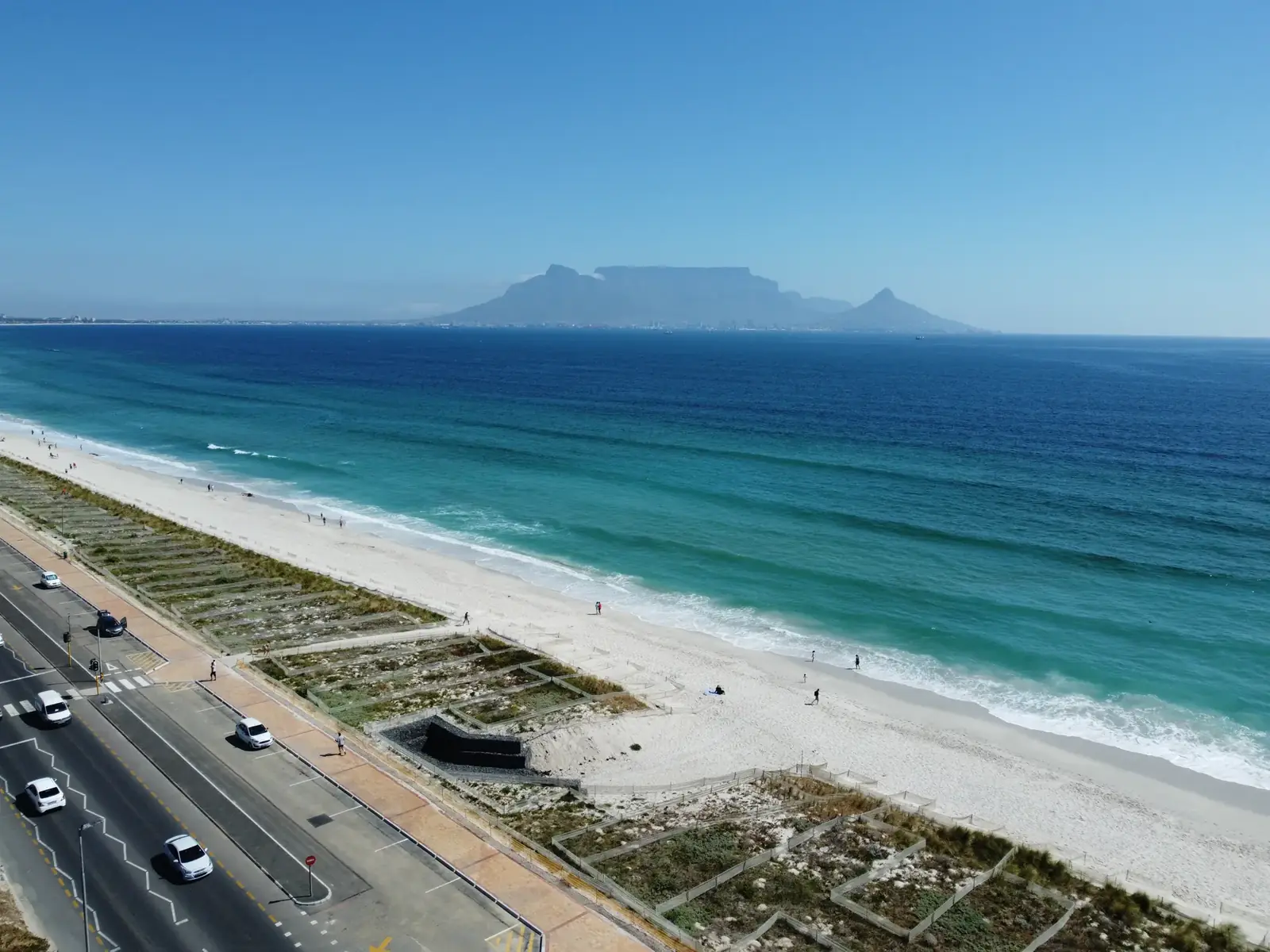
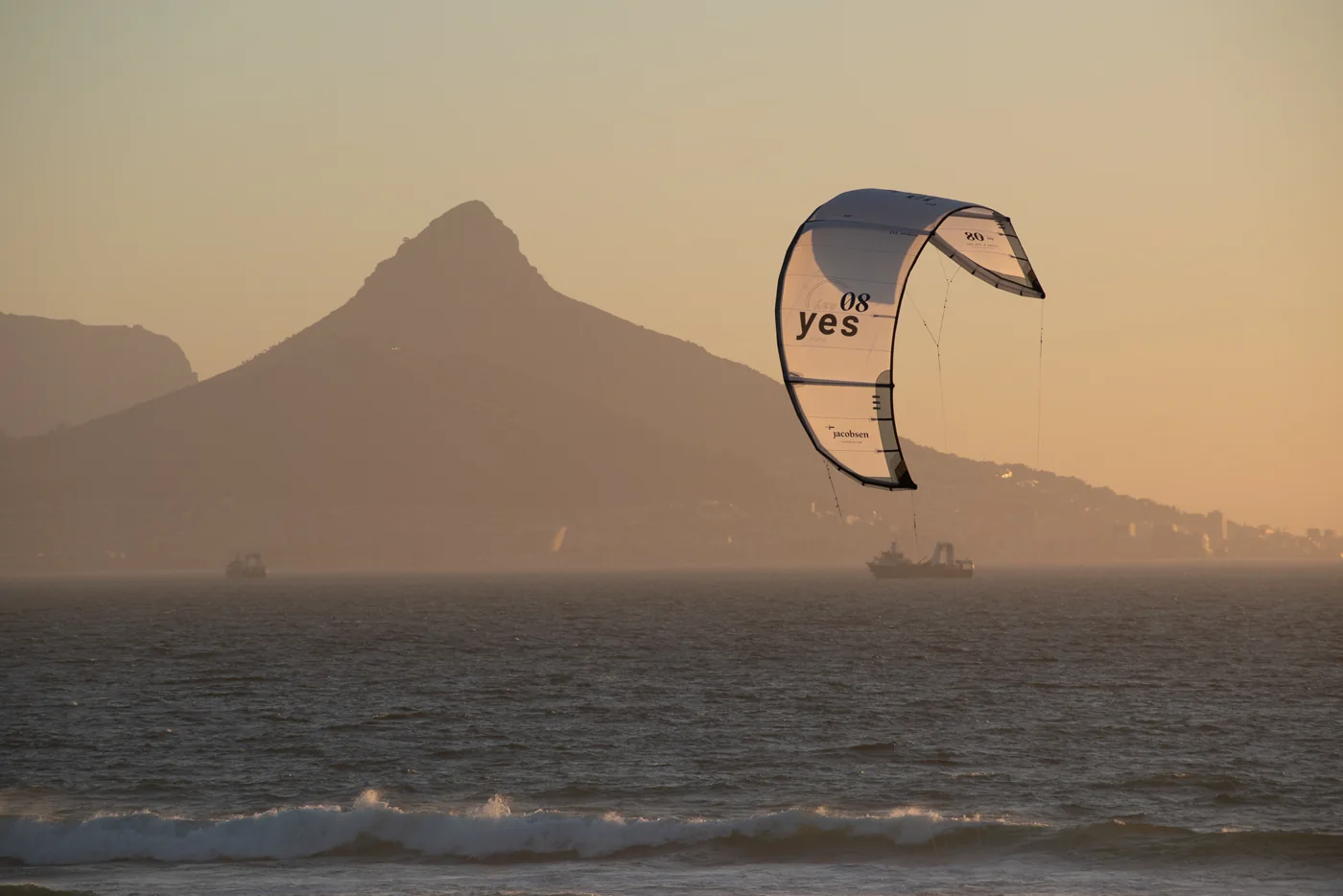
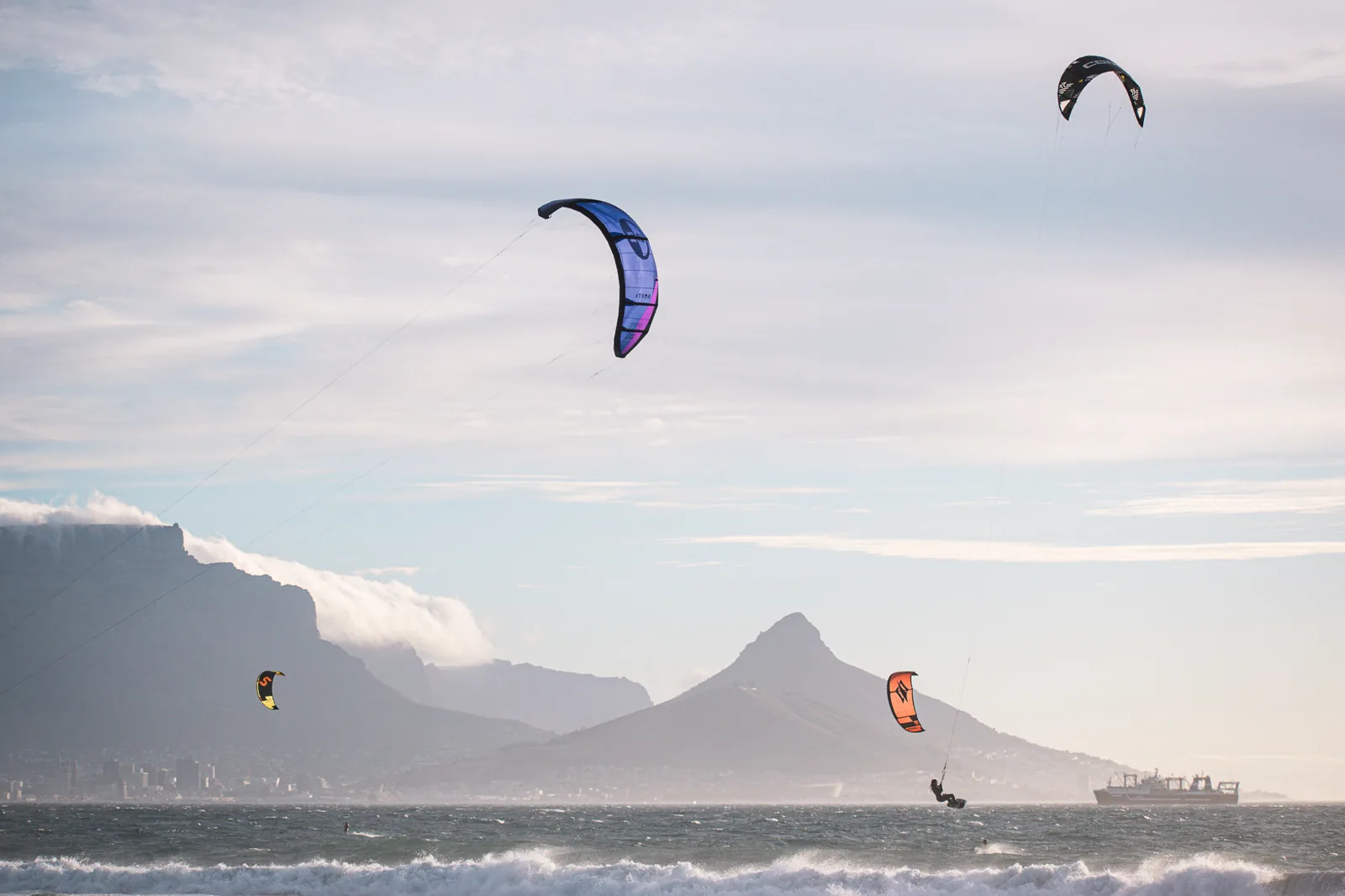
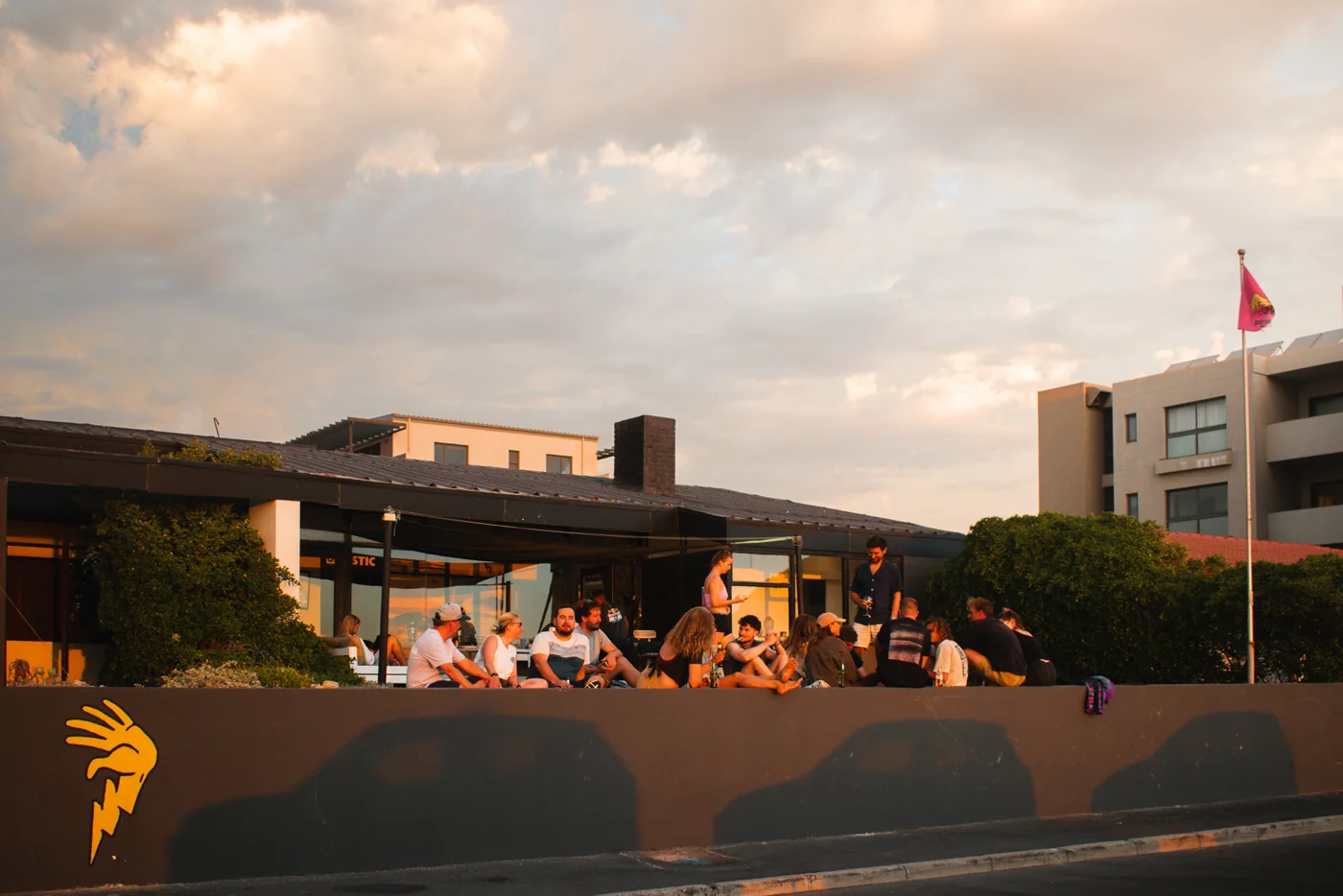
Cape Town's kite scene sits north of the city on the Atlantic coast, around Bloubergstrand and the string of beaches running from Sunset Beach through Dolphin Beach and Big Bay — all with a postcard view of Table Mountain across the bay. The draw is the "Cape Doctor", a thermal south-easter that blows reliably strong through the southern-hemisphere summer, drawing riders from Blouberg's family-friendly shallows to Big Bay's big-air sessions, while the Red Bull King of the Air now runs off Kite Beach on Blouberg's main beach. The water is cold Atlantic (Benguela Current), so a wetsuit is not optional, and most schools run a strict October–March season and close over winter.
Water: wavesAll levelsBest: Nov, Dec, Jan, Feb
Wind & season
The "Cape Doctor" is a thermal south-easterly that blows parallel to the coast, typically starting late morning and building through the afternoon to 20-30+ knots on a strong day — sessions are usually a late-morning-to-evening affair, not a dawn one. It's the same wind every day it blows, unlike Tarifa's two-wind system, so the call each day is less about which wind and more about which beach suits that day's strength and swell. The kite season runs October to March; most schools close for winter (April–September). Wind is most reliable November through January, with a second good window opening again in February into early March as crowds thin out.
What makes Cape Town special
The "Cape Doctor" south-easter blows reliably through the summer, most consistently November–January
A run of connected beaches — Sunset Beach, Dolphin Beach, Big Bay — each with a different character, plus organised downwind routes between them
Kite Beach on Blouberg's main beach hosts the Red Bull King of the Air, one of kiteboarding's biggest big-air events (it moved there from Big Bay)
Table Mountain as a backdrop on almost every session
Cold Atlantic water (Benguela Current) means a proper wetsuit year-round, even in summer
Most Cape Town kite schools teach here — sheltered enough for a first lesson, but gets genuinely crowded in January–February. Low winter sun can make spotting other riders harder late in the day.
WindCape Doctor (SE)WaterShallow with flatter patches; small-to-medium waves further outLevelBeginner-friendly
The freestyle and big-air beach, with the most facilities (parking, food, security) of the cluster. It used to host the Red Bull King of the Air, which has since moved to Kite Beach on Blouberg's main beach.
WindCape Doctor (SE)WaterA small bay between rock reefs that organises the swell into rideable waves with flatter water in betweenLevelIntermediate to advanced
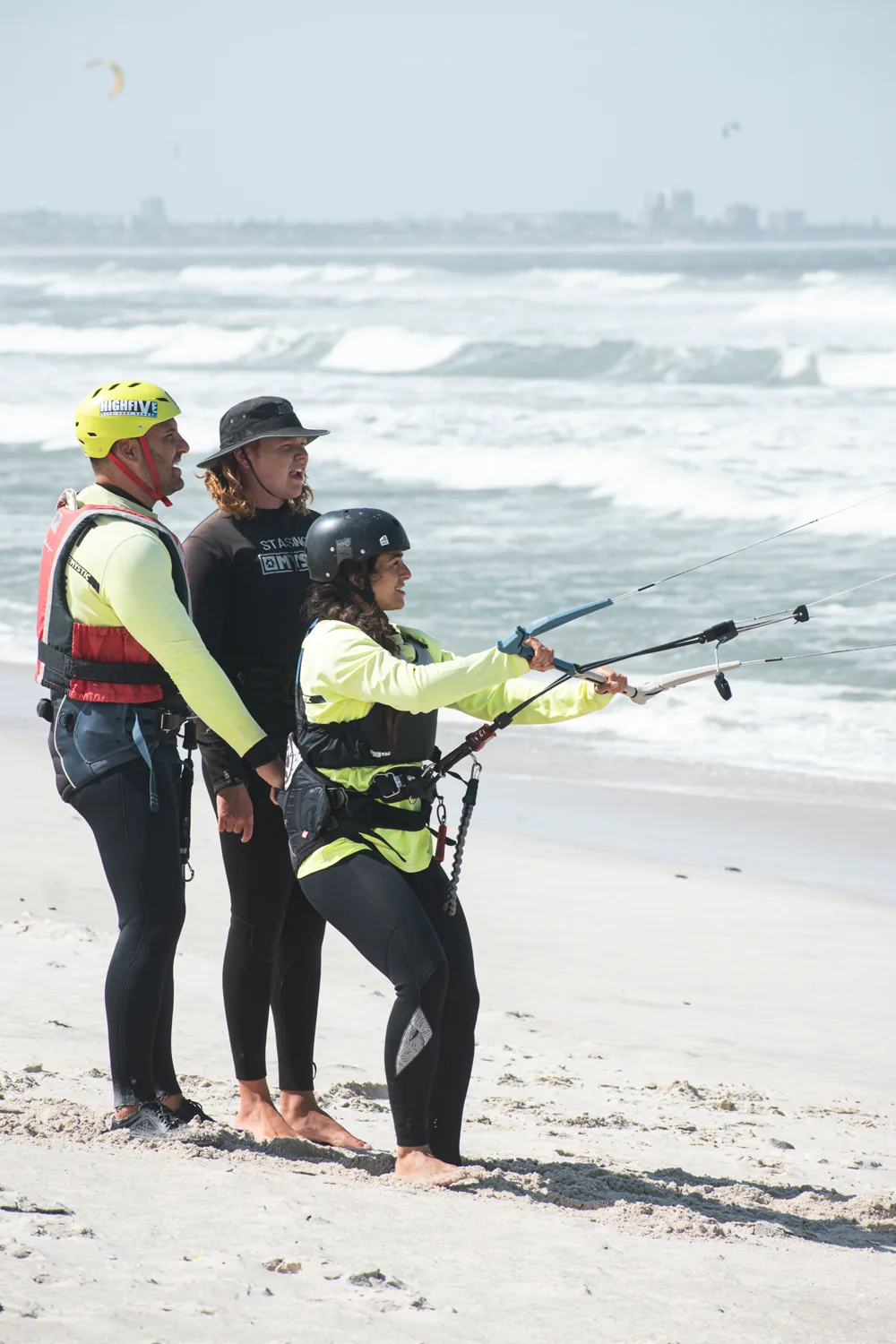
Yes, with a local school on a manageable day at Dolphin Beach or the main Blouberg beach — the Cape Doctor is strong enough that your first sessions should be supervised, and cold water means proper gear from a school makes a real difference.
Can waterstart but not yet riding upwind
Dolphin Beach and Blouberg give you steady, reliable wind to rack up hours, though it's rarely as flat as a dedicated lagoon spot — expect some chop to manage while you progress.
Independent rider
A full run of beaches to choose between depending on the day's strength and swell, plus organised downwind routes from Sunset Beach through to Big Bay or Haakgat.
Advanced / big air / freestyle
Big Bay is a genuine big-air venue with reliably strong, consistent wind through the peak months, and the Red Bull King of the Air now runs just down the coast off Kite Beach on Blouberg's main beach.
What kitesurfing costs in Cape Town
Based on published prices from 14 schools we've indexed in Cape Town. Updated September 2026.
Averages per hour booked of what Cape Town schools publish, September 2026. Each figure is pulled from the school's own published rates — we don't invent numbers or ratings. How it works →
Not sure which course you need? Explore lesson types and prices, including how Cape Town sits against other destinations.
Kitesurfing lesson prices in Cape Town, by course type
Lessons per hour booked, with the most common fixed-price offer beside it; camps as the listed total. Only schools that publish a length are counted.
Course type
Typical rate
Range
Most common offer
Schools
Beginner course
R400 (~€20)/h
R90 (~€5)–R672 (~€34)/h
R550 (~€28)/1.5h
10
Group or semi-private lesson
R444 (~€22)/h
R167 (~€8)–R767 (~€38)/h
R550 (~€28)/1.5h
14
Private lesson
R900 (~€45)/h
R287 (~€14)–R1300 (~€65)/h
R700 (~€35)/1.5h
17
Intermediate coaching
R544 (~€27)/h
R90 (~€5)–R1300 (~€65)/h
R550 (~€28)/1.5h
8
Advanced coaching
R1150 (~€58)/h
R267 (~€13)–R1500 (~€75)/h
R550 (~€28)/1.5h
12
Kitesurfing rental in Cape Town: prices & where to rent
13 schools in Cape Town rent out gear. A full kite set costs R2000 (~€100) per day on average (R200 (~€10)–R3000 (~€150), 3 schools with a comparable price, September 2026).
There's no municipal kite-zoning ordinance for Cape Town's Atlantic beaches the way Tarifa has one, but two safety systems matter here. On the False Bay side (Muizenberg and similar), Shark Spotters run a flag system: green means normal spotting conditions, yellow means visibility is too poor to spot reliably, red means high alert, and black means a shark has actually been sighted — get out immediately. The NSRI (South Africa's volunteer sea-rescue service) also publishes standing kiteboarding safety guidance: avoid straight offshore wind unless you're expert and have rescue support, wear bright colours (not black, blue or white), and check your kit and quick-release before every session.
False Bay beaches (Muizenberg etc.): Shark Spotters flags apply — a black flag means leave the water immediately, a siren sounds.
All beaches: Never launch or ride through a marked swimming/lifeguard zone; the right-hand-forward kiter has right of way over a left-hand-forward rider.
Rules can change season to season — always confirm current zoning with your school or local signage. Last checked September 2026. Source: NSRI (National Sea Rescue Institute).
Getting to Cape Town and getting around
Nearest airports
Cape Town International (CPT) ~25-30 min by car to Blouberg/Big Bay
What to pack
The Atlantic side runs cold year-round thanks to the Benguela Current — roughly 12-15°C in winter and 13-18°C in summer. A 4/3mm or thicker wetsuit is standard even in peak season; many riders use a 5/4mm.
Do I need a car?
The Blouberg-to-Big Bay stretch runs a few kilometres along the coast road, so a car (or a school transfer) makes it easy to move between beaches depending on the day's wind and crowd level.
Where to stay
Bloubergstrand / Table View: Closest to Dolphin Beach and the main Blouberg beach, with the classic Table Mountain view across the bay.
Big Bay / Melkbosstrand: Closer to the freestyle/big-air end of the cluster, with more restaurants and beachfront facilities.
Where to find kitesurfing schools in Cape Town
32 of 33 schools listed in Cape Town (all watersports) with a verified location, labelled with their entry price. Tap a pin to open the school.
Kitesurfing in Cape Town — common questions
When is the best time to kite in Cape Town?
The best months are Nov–Feb: mean wind 13–14 knots (all hours, calm days included — riding days are windier), water 15–17 °C, so a 5/4 mm wetsuit is usual. Wind measured by Windfinder, station Cape Town International Airport (2000–2026).
What are the wind conditions in Cape Town?
The "Cape Doctor" is a thermal south-easterly that blows parallel to the coast, typically starting late morning and building through the afternoon to 20-30+ knots on a strong day — sessions are usually a late-morning-to-evening affair, not a dawn one. It's the same wind every day it blows, unlike Tarifa's two-wind system, so the call each day is less about which wind and more about which beach suits that day's strength and swell. The kite season runs October to March; most schools close for winter (April–September). Wind is most reliable November through January, with a second good window opening again in February into early March as crowds thin out.
Where should a first-timer kite in Cape Town?
Most schools teach beginners at Dolphin Beach or Blouberg (main beach) in Cape Town — check with your school which one suits the day's wind.
Are there rules or restricted zones for kitesurfing in Cape Town?
There's no municipal kite-zoning ordinance for Cape Town's Atlantic beaches the way Tarifa has one, but two safety systems matter here. On the False Bay side (Muizenberg and similar), Shark Spotters run a flag system: green means normal spotting conditions, yellow means visibility is too poor to spot reliably, red means high alert, and black means a shark has actually been sighted — get out immediately. The NSRI (South Africa's volunteer sea-rescue service) also publishes standing kiteboarding safety guidance: avoid straight offshore wind unless you're expert and have rescue support, wear bright colours (not black, blue or white), and check your kit and quick-release before every session.
How many kitesurfing schools are in Cape Town?
We have indexed 14 kitesurfing schools in Cape Town, with prices pulled from their published rates.
Do kitesurfing schools in Cape Town offer gear rental?
Yes — a full gear set in Cape Town averages R2000 (~€100) per day across the 3 schools that publish a per-day rate.
Verified local expert
High Five Kitesurf School's local guide to Cape Town
First-hand advice from the High Five Kitesurf School team, who teach here every day.
Oct-MarMain season
3-5 daysBeginner trip
BloubergWhere to stay
What is the best spot for first-timers?
“Kite Beach in Blouberg is a good place to start. It has a wide sandy beach, easy access to the water and plenty of space for lessons. It is also at the heart of Cape Town's kite community, with the iconic Table Mountain view across the bay. At High Five, we adapt each lesson to the conditions and the student's level, so beginners can learn safely while getting a feel for Cape Town's famous conditions.”
Which months suit beginners and advanced riders?
“The main kite season runs from October to March. December to February is when the Cape Town wind really gets going and is particularly exciting for experienced riders. There is no single perfect month for beginners because conditions change from day to day. Great beginner conditions can occur throughout the season, so flexibility matters more than planning the whole trip around one forecast.”
What should visitors know about the South-Easter?
“The South-Easter, also known as the Cape Doctor, is the famous summer wind that makes Cape Town such a special kite destination. It usually builds during the morning and can become very strong in the afternoon. If you are not used to strong wind, do not underestimate it. Check the conditions, choose your kite size carefully and ask local riders or instructors when you are unsure.”
How many days should a beginner book?
“We recommend at least 3-5 days for a beginner trip. Kitesurfing is weather-dependent and everyone progresses at a different pace. A few days give you flexibility when the wind does not cooperate and enough time to build confidence and make progress.”
What is the most common planning mistake?
“Trying to plan everything around one specific kite day. Cape Town is amazing, but you cannot control the wind. Give yourself a few days instead of booking one lesson on one fixed day. Another common mistake is underestimating how strong the Cape Town wind can be. Local knowledge is especially valuable here.”
Where should kiters stay?
“If kitesurfing is the main reason for your trip, stay in Bloubergstrand. Being close to the beach lets you check the conditions and get on the water without wasting time driving. For the full kite experience, the High Five Kite House is directly on the beachfront, with the school and kite spot outside. It is also a great place to meet kiters from around the world.”
What is one local tip most visitors do not know?
“Do not judge the day by the morning. It can look completely calm early on and turn into an epic kite day later. The South-Easter often builds during the day, so have a slow morning, keep an eye on the forecast and be ready when the wind arrives.”