
Spain has 115 kite spots with 165 schools listed on kitesurfing.me. Beginner courses average €42 per hour, the mean of 54 schools' cheapest comparable hourly rate; the most common course is €120/3h.
Source: schools' own published rates · updated November 2026.
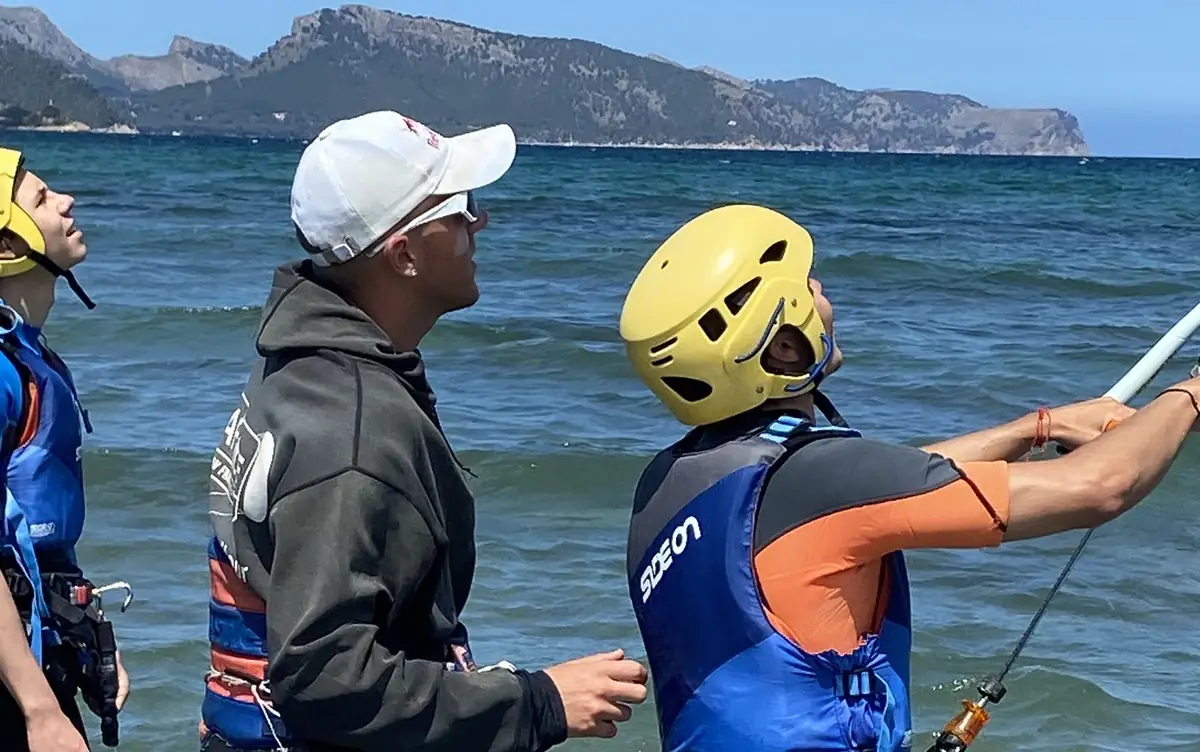
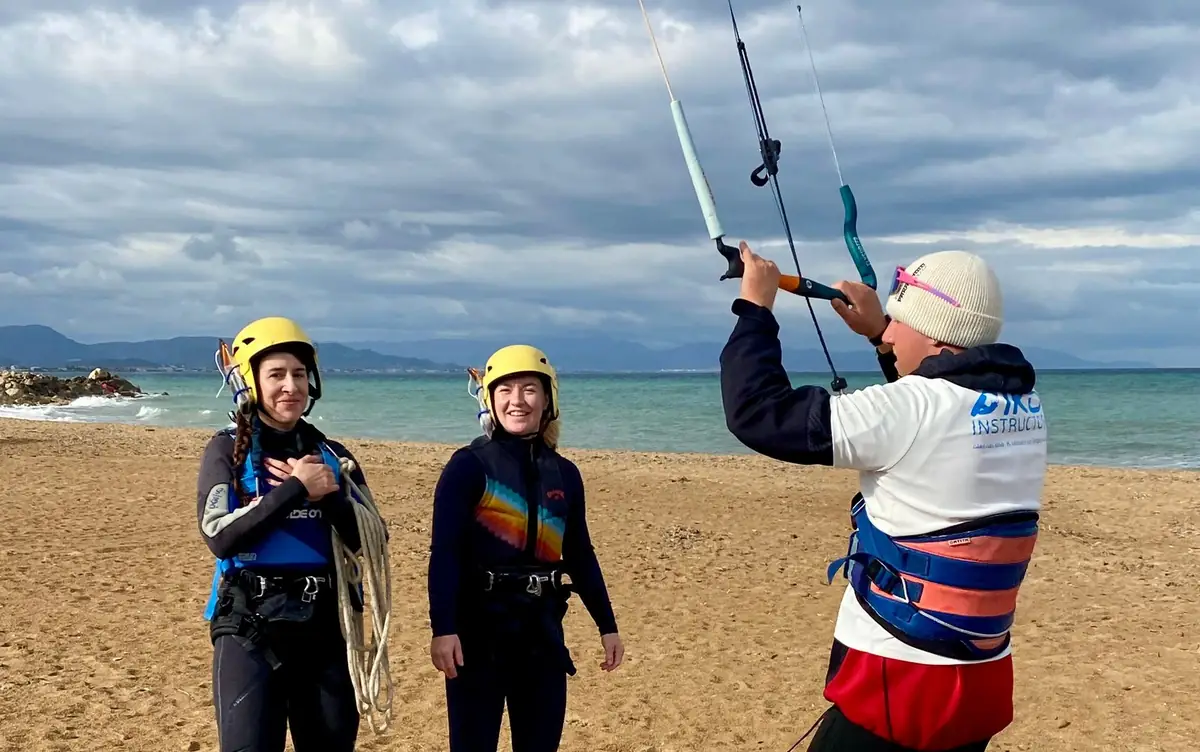
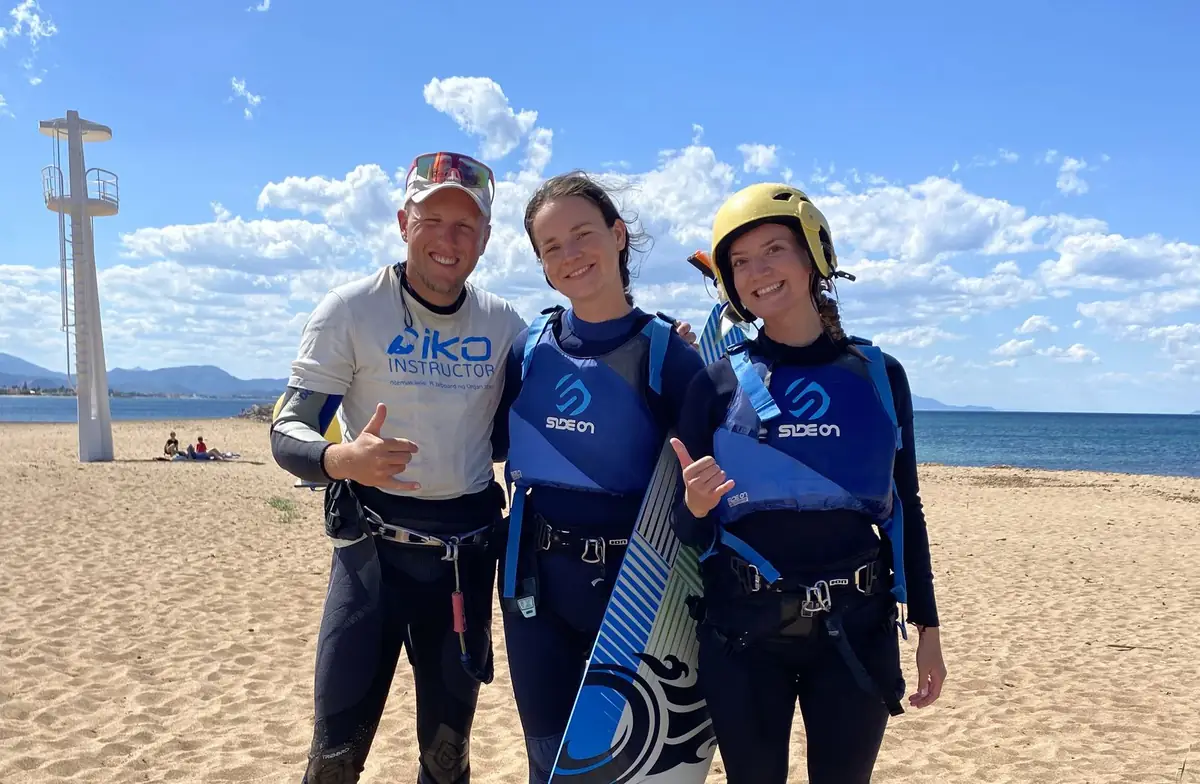
Book kitesurfing in Dénia
Kitesurfing lessons in Dénia
Pick a course, choose your dates and send it straight to the school. Nothing to pay today.
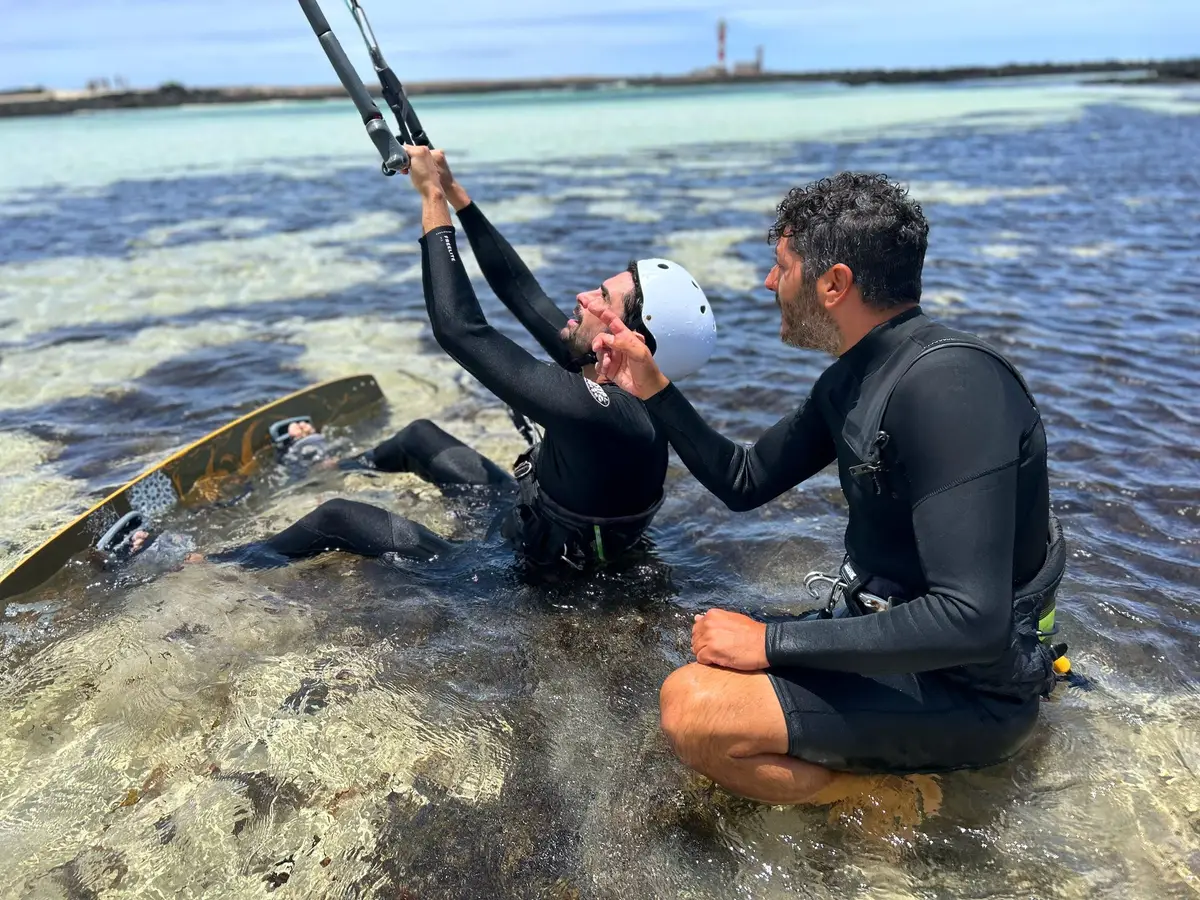
Book kitesurfing in El Cotillo
Kitesurfing lessons in El Cotillo
Pick a course, choose your dates and send it straight to the school. Nothing to pay today.
Kitesurfing in Spain at a glance
Kitesurfing in Spain spans Atlantic beaches around Tarifa, Mediterranean bays and the Canary Islands, where riding is possible throughout the year. Kitesurfing.me lists 163 schools teaching the sport in Spain, including 56 in Tarifa. For a first lesson, consider Los Lances, Isla Canela or Los Alcázares with a school. Independent riders can choose Tarifa for changing winds, Fuerteventura for Atlantic beaches and Lanzarote for waves. April to September is a useful starting window for a mainland trip, while the Canaries also attract riders in winter. Choose your base by season, experience and beach access.
Spain's coastal regions span the Atlantic coast, Mediterranean coast, Balearic Islands and Canary Islands. Choose one region as a base and allow time for local transfers, especially when travelling between islands or carrying bulky equipment. Airports, train services and ferries offer different routes depending on your destination.
- Tarifa has 56 schools listed, Corralejo 12 and El Médano eight.
- Ask the school about equipment, group size and the full course price before requesting a lesson.
- Choose Los Lances or Isla Canela for supervised learning, and Famara for Atlantic beach-break conditions.
- Sotavento's lagoon depends on the tide; offshore wind makes a rescue arrangement essential.
- Use a car for mainland beach transfers and a flight or ferry between Canary Islands.
- Request lessons through kitesurfing.me; the school confirms availability and payment is made at the school.
When is the best time for kitesurfing in Spain?
Spain has several wind seasons, with April to September a useful starting window for a mainland trip. Mediterranean sea breezes are most relevant from spring to early autumn, while Tarifa receives Levante and Poniente beyond summer. The Canary Islands' northeast trade winds are especially relevant in summer, although riding is possible in other months. Long-term monthly mean wind ranges from about 10 to 13 knots in Tarifa and 10 to 14 knots in Corralejo. These averages describe wind speed, not the number of rideable days or a forecast.
| Spot | Jan | Feb | Mar | Apr | May | Jun | Jul | Aug | Sep | Oct | Nov | Dec |
|---|---|---|---|---|---|---|---|---|---|---|---|---|
| Tarifa | ||||||||||||
| Corralejo | ||||||||||||
| El Médano | ||||||||||||
| Caleta de Famara | ||||||||||||
| Dénia | ||||||||||||
| Isla Canela | ||||||||||||
| Costa Calma | ||||||||||||
| Almería | ||||||||||||
| El Cotillo | ||||||||||||
| Sotavento |
| Spot | Jan | Feb | Mar | Apr | May | Jun | Jul | Aug | Sep | Oct | Nov | Dec |
|---|---|---|---|---|---|---|---|---|---|---|---|---|
| Tarifa: wind (kn) | 10 | 12 | 13 | 13 | 13 | 12 | 12 | 12 | 12 | 12 | 10 | 10 |
| Tarifa: water (°C) | 17 | 16 | 16 | 17 | 18 | 19 | 21 | 22 | 21 | 20 | 19 | 18 |
| Corralejo: wind (kn) | 11 | 11 | 12 | 12 | 13 | 13 | 14 | 13 | 11 | 10 | 11 | 10 |
| Corralejo: water (°C) | 19 | 18 | 18 | 19 | 20 | 21 | 22 | 23 | 23 | 23 | 22 | 20 |
| El Médano: wind (kn) | 12 | 12 | 13 | 12 | 12 | 12 | 14 | 14 | 12 | 11 | 12 | 12 |
| El Médano: water (°C) | 20 | 19 | 19 | 20 | 20 | 21 | 22 | 23 | 24 | 24 | 23 | 21 |
The best spots for kitesurfing in Spain
| Spot | Water | Level | Best months | Why go |
|---|---|---|---|---|
| Tarifa | Flat to choppy | All levels | Apr to Jun, Oct | Tarifa, on Spain's Strait of Gibraltar, has 56 listed schools and several beaches. Los Lances is a starting point for lessons, while Valdevaqueros attracts experienced riders. Easterly Levante can be strong and gusty; westerly Poniente offers a different setup. Ask a school which beach suits your level and the wind direction. |
| Corralejo | Flat to choppy | All levels | Jun to Sep | Corralejo in northern Fuerteventura gives riders access to Flag Beach and a town with 12 listed schools. Northeast trade winds make summer a useful time for lessons and freeriding. Rocks emerge at low tide, so arrange the launch and lesson timing with a school. |
| El Médano | Chop and waves | All levels with instruction | Jun to Aug | El Médano is a Tenerife beach town close to Tenerife South airport. Its northeast trade winds, chop and occasional waves reward riders comfortable in open water. Beginners can arrange lessons with one of eight listed schools and ask about the designated launch and conditions. |
| Sant Pere Pescador | Open bay | All levels | See the spot guide | Sant Pere Pescador sits on the broad Bay of Roses on the Costa Brava. Summer sea breezes and stronger Tramontana winds offer different sessions. Five schools are listed here. Choose the permitted kite area and ask a school about the wind before setting up. |
| Maspalomas | Open sea and chop | Conditions-dependent | See the spot guide | Maspalomas is a southern Gran Canaria base with four listed schools. Nearby coastal launches face Atlantic wind and can have chop, currents and crowded beaches. The dunes are protected, so ask a school to identify the current permitted riding area and a suitable launch. |
| Caleta de Famara | Beach break and waves | All levels with instruction | May to Sep | Caleta de Famara on Lanzarote has a long beach below volcanic cliffs and Atlantic beach break for wave riders. May to September is a useful trade-wind window. Four schools are listed here; beginners should arrange instruction and check the marked kite zone and seasonal restrictions. |
| Dénia | Open sea and bay | All levels | Apr to Sep | Dénia on the Costa Blanca has four listed schools and several distinct beach areas. Les Deveses is an option to discuss for lessons, while experienced riders also look towards the north breakwater. Spring to early autumn is a useful window for easterly conditions. Before booking, check the exact permitted beach and seasonal rules with Dénia's local police or beach authority. |
| Isla Canela | Shallow areas, tidal | Beginner-friendly | May to Sep | Isla Canela lies on the Huelva coast near Portugal. Shallow areas and summer southwest thermal winds make it a good place to investigate for supervised first lessons. Four schools are listed here. Tides and currents affect the beach, so settle the meeting point and timing locally. |
| Chiclana de la Frontera | Beach and tidal channels | All levels with guidance | See the spot guide | Chiclana de la Frontera is a Cádiz coast base for La Barrosa and the Sancti Petri area. Levante and Poniente affect the choice of launch, while estuary channels bring tidal currents. Three schools are listed here; ask about access and the right location for your experience. |
| Costa Calma | Tidal lagoon and sea | Conditions-dependent | May to Sep | Costa Calma is an accommodation and travel base for southern Fuerteventura's beaches, with three schools listed here. Check where your school meets and how you will reach the day's launch. See the Sotavento row for lagoon conditions and the precautions needed there. |
| Los Alcázares | Shallow lagoon | Beginner-friendly | See the spot guide | Los Alcázares sits on the Mar Menor, a large saltwater lagoon in Murcia. Shallow water around Playa de las Salinas attracts supervised learners, and three schools are listed here. The municipal beach ordinance provides for authorised, marked water-sports areas during bathing season. Before booking, ask the town council and school which exact area is authorised for your dates. |
| Sant Carles de la Ràpita | Shallow bay and sandbar | All levels | See the spot guide | Sant Carles de la Ràpita is close to the Ebro Delta and El Trabucador sandbar. Its shallow bay appeals to learners and freeriders, and two schools are listed here. The delta is protected. Before booking, check the exact permitted launch and access for your dates with the Ebro Delta Natural Park and La Ràpita council. |
| San Bartolomé de Tirajana | Open sea | Conditions-dependent | See the spot guide | San Bartolomé de Tirajana covers much of southern Gran Canaria, including San Agustín and Las Burras. These are open-coast settings where wind direction and local access matter. Ask a local school for the appropriate launch, current beach rules and rescue arrangements before choosing a session. |
| Barcelona | Open sea, zoned | All levels with guidance | See the spot guide | Barcelona is a city base for exploring the Catalan coast, but beach sports are subject to local and seasonal rules. Nearby Castelldefels and Badalona have separate regulations. Before booking, ask Barcelona City Council or the relevant neighbouring council about the exact permitted launch for your dates, and confirm where the school teaches. |
| Almería | Open sea | Conditions-dependent | Apr to Oct | Almería's Mediterranean coast receives easterly Levante and westerly Poniente. Riders choose beaches around Cabo de Gata or the city according to wind direction. Protected coastline and bathing areas have separate access rules, so check the exact beach and launch before travelling. |
| El Cotillo | Tidal lagoons and beach | Intermediate to advanced | Jul to Aug | El Cotillo on northwest Fuerteventura offers an Atlantic beach and the tidal Los Lagos area. Rocks appear as the water drops, and exposed conditions demand experience. Independent riders should check the tide, launch restrictions and local advice before choosing a session. |
| Alcúdia Bay | Sheltered bay | Beginner to intermediate | See the spot guide | Alcúdia Bay on Mallorca's north coast is a broad Mediterranean bay and a Balearic option for a lesson or freeride trip. Beach use is regulated, particularly during the bathing season. Confirm the permitted launch and school availability for your travel dates. |
| Sotavento | Tidal lagoon and sea | Conditions-dependent | Apr to Sep | Sotavento lies south of Costa Calma on Fuerteventura. Its lagoon fills only around suitable high tides, while the adjacent sea offers a different session. Check the tide calendar and kite zone, and arrange rescue or instruction because the wind can blow offshore. |
Which Spain spot suits your kitesurfing level?
Complete beginner
Book supervised lessons at Los Lances in Tarifa, Isla Canela or Los Alcázares. Ask the school where it teaches and check the exact authorised area with Los Alcázares council before booking.
Waterstart, not yet upwind
Tarifa and Corralejo have 56 and 12 listed schools respectively. Ask about supervised practice, equipment and rescue while you work towards riding upwind.
Independent rider
Choose Tarifa for changing wind directions, the Ebro Delta for shallow water, or Fuerteventura for Atlantic beaches. For El Trabucador, check the exact permitted launch with the Ebro Delta Natural Park and La Ràpita council before travelling.
Advanced, freestyle or wave rider
Famara's beach break suits wave riding, while Tarifa's Levante and Sotavento's tidal lagoon offer different challenges. Check swell, launch rules and offshore rescue arrangements.
Getting to Spain and between the spots
- Getting to Spain
- For Dénia, look at flights to Alicante or Valencia. For Corralejo, fly to Fuerteventura; for El Médano, use Tenerife South. Gibraltar, Málaga and Jerez are options for Tarifa, depending on your route. International flights also reach Madrid-Barajas (MAD) and Barcelona-El Prat (BCN), with onward train or domestic flight connections. Check your airline's baggage dimensions, weight limit and fee before booking. If you plan to rent a car, check that your equipment bag fits and confirm equipment arrangements with your provider in advance.
- Airports
- GIBGibraltar AirportFor Tarifa. Gibraltar Airport is an option for Tarifa. Check the current driving route, border-crossing time and rental-car terms before booking.
- AGPMálaga-Costa del Sol AirportFor Marbella. A gateway for Marbella and an alternative for Tarifa and Chiclana de la Frontera.
- XRYJerez de la Frontera AirportFor Chiclana de la Frontera. An option for Chiclana and Tarifa. Check the current driving route and transfer time.
- LEIAlmería AirportFor Almería.
- ALCAlicante-Elche AirportFor Dénia. Alicante and Valencia are options for Dénia. Check the current road route and transfer time from each airport.
- RMURegión de Murcia Airport (Corvera)For Los Alcázares. Los Alcázares is on the Mar Menor, a drive from the airport. Alicante is an alternative.
- BCNBarcelona-El Prat AirportFor Barcelona. Castelldefels and Badalona are within driving distance; check your route and traffic.
- GROGirona-Costa Brava AirportFor Sant Pere Pescador.
- REUReus AirportFor Sant Carles de la Ràpita. An option for the southern Ebro Delta.
- FUEFuerteventura AirportFor Corralejo, Costa Calma, El Cotillo. An option for Corralejo, Costa Calma and El Cotillo. Check the current driving route and transfer time for your destination.
- TFSTenerife South AirportFor El Médano. Close to El Médano; check the current route and transfer time.
- LPAGran Canaria AirportFor Maspalomas.
- ACELanzarote AirportFor Caleta de Famara.
- FAOFaro Airport (Portugal)For Isla Canela. Across the Portuguese border from Isla Canela. Check the driving route and rental-car cross-border terms.
- Between the spots
- High-speed trains connect Madrid with Barcelona and Málaga; journey times vary by service, so check the current timetable before booking. A hire car can make local transfers easier, especially with bulky equipment. Travel between the Canary Islands by domestic flight or ferry; journey times and practical routes depend on the islands.
- Entry and visa
- Entry requirements for Spain depend on your nationality, passport and reason for travel. Check current official Spanish guidance before booking, including visa requirements, permitted length of stay and passport validity. If you need a visa or other documents, allow enough time to obtain them before departure.
- Money and costs
- Spain uses the euro (EUR). Cards are widely accepted, though some cash can help with parking machines and purchases in rural areas. Food and drink prices vary by location and venue, so check menus when planning your budget.
- Climate and water
- Spain's Mediterranean coast has mild winters and hot summers, while Atlantic Andalusia is generally a little cooler and the Canary Islands remain mild. Long-term measurements put Tarifa's monthly mean water temperature at roughly 16 to 22°C, while Fuerteventura is roughly 18 to 23°C across the year. These averages do not predict conditions on a particular day.
- Safety
- Spain's beaches can have hidden rocks, sudden depth changes and strong currents, particularly on Atlantic-facing or unsupervised stretches. Follow beach flags and signs, and ask a lifeguard or local provider about hazards. A red flag means do not enter the water. Keep valuables out of sight at airports, car parks and busy tourist areas, and dial 112 in an emergency.
Sources for this guide: Spain tourism: kitesurfing destinations, Spain tourism: kitesurfing in the Balearic Islands, Windfinder: Tarifa wind statistics, Windfinder: Sant Pere Pescador wind statistics, Canary Islands tourism: Famara kitesurfing, Barcelona City Council: beach sports regulations, Terres de l'Ebre tourism: kitesurfing at El Trabucador, Ebro Delta Natural Park: access and visit information, Dénia local police: beach information, Los Alcázares council: beach use ordinance, Canary Islands government: San Bartolomé de Tirajana beach services document, Fuerteventura Playas: Cotillo Lagos, Renfe: passenger and baggage conditions, European Commission: applying for a Schengen visa, Aena: Tenerife South airport, Spain Ministry of Foreign Affairs: conditions for entry into Spain, UK government: Spain travel advice, safety and security, Wikipedia: Climate of Spain, SeaTemperature.org: Tarifa sea temperature, Weather2Travel: Fuerteventura climate guide, Spain.info: AVE high-speed train, Wikipedia: Binter Canarias, seatemperature.info, 10-year average, Windfinder, station Fuerteventura Airport (2000–2026), seatemperature.info, 10-year average, Windfinder, station Tenerife South-Reina Sofia Airport (2000–2026), seatemperature.info, 10-year average · Last checked November 2026.
Kitesurfing in Spain: when and where
Dénia
Dénia is a port town on the Costa Blanca in the province of Alicante, roughly halfway between the cities of Alicante and Valencia, and the closest Spanish mainland city to Ibiza. Kitesurfers use three different stretches of its coast: Les Deveses on the north coast, where schools start beginners when the levante blows, Punta Molins (Playa dels Molins), where the strong north-westerly winds of the winter arrive, and Playa Escollera Norte, a small bay behind the port's north breakwater with flat water. Kite schools in town describe the spot as rideable almost all year round: thermal winds in the afternoon from April to September, and stronger north-westerly wind from November to March.
Dénia is not a one-season spot. The thermal wind, a side wind that builds in the afternoon, blows from April to September at about 12 to 20 knots according to a wingfoil magazine's spot description, and the Dénia school we list gives April to October. From November to March the north-westerly terral takes over and reaches up to 25 knots at Punta Molins (regional kitesurfing guide on rove.me), and the wind between the two seasons depends on the weather pattern of the day. We found no month-by-month count of windy days for Dénia, so this guide shows no monthly wind chart.
The full Dénia guide: beaches, getting there →
KS Kitesurf Wingfoil Center: courses, team and photos →
Kitesurfing Lessons in Denia: Prices and What to Expect →
Best Time to Kitesurf in Denia: Thermal Wind, Winter Terral →
El Cotillo
Kitesurfing El Cotillo suits experienced riders looking for an Atlantic beach break, while beginners should arrange lessons and use only a permitted, suitable teaching area. The main exposed kite beach is Piedra Playa, also called Playa del Castillo, south of the village. Its shorebreak, gusty wind near the beach, rocks and currents call for care. The tidal lagoons north of town are separate spots, with rocks and local restrictions; do not treat every lagoon as a kite launch.
May to September is the stronger, more consistent trade-wind period, with spring and summer bringing smaller swell at Piedra Playa. Winter Atlantic swell can make the exposed beach substantially more difficult.
The full El Cotillo guide: wind by month, beaches, getting there →
Fly Kitesurf School: courses, team and photos →
Kitesurfing in Spain: common questions
What is the best time for a Spanish kite trip?
April to September is a useful starting window for a mainland Spain kite trip, while the Canary Islands and Tarifa also offer sessions outside those months. Summer brings trade winds to the Canaries and sea breezes to parts of the Mediterranean. Check seasonal beach rules before choosing dates.
When is the best time to kitesurf in El Cotillo?
In El Cotillo: May to September is the stronger, more consistent trade-wind period, with spring and summer bringing smaller swell at Piedra Playa. Winter Atlantic swell can make the exposed beach substantially more difficult.
Where can I book kite lessons in Spain?
On kitesurfing.me you send a booking request with nothing to pay today; the school confirms your dates and you pay at the school: lessons with KS Kitesurf Wingfoil Center in Dénia; lessons with Fly Kitesurf School in El Cotillo. Other kite spots in Spain: Tarifa, Corralejo, El Médano, Zarautz, San Sebastián, Alicante, Salinas, Sant Pere Pescador, Maspalomas, Caleta de Famara, Isla Canela, Suances, Los Alcázares, Costa Calma, Chiclana de la Frontera, Costa Teguise, Ferrol, Gijón, Laredo, Mundaka, Santander, Sopelana, Alcúdia, La Manga del Mar Menor, Conil de la Frontera, Sant Carles de la Ràpita, Valencia, Almería, Barcelona, Can Pastilla, Cobreces, Las Palmas de Gran Canaria, Marbella, Playa de las Américas, Ribadesella, San Bartolomé de Tirajana, San Vicente de la Barquera, Somo, Castelldefels, El Puerto de Santa Maria, Lajares, Málaga, A Coruña, Castellón, Gran Canaria, Huelva, Ibiza, Morro Jable, Santa Pola, A Illa de Arousa, Aguadulce, Aguilas, Altea, Ayamonte, Badalona, Bahía Feliz, Bakio, Barro, Benicarló, Cádiz, Calpe, Carballo, Colunga, Deltebre, El Ejido, El Palmar de Vejer, Embalse del Ebro, Empuriabrava, Estepona, Fornells, Hondarribia, Islares, L’Estartit, La Pineda, La Savina, Liencres, Mallorca, Moya, Muros, Muros de Nalon, Navalagamella, Noja, Nuevo Portil, O Grove, O Porto de Espasante, Oliva, Palma de Mallorca, Parque Holandés, Peñíscola, Playa Blanca, Playa del Hombre, Poo de Llanes, Port de Pollença, Portals Nous, Pozo Izquierdo, Punta Umbría, Razo, Redondela, Rías Baixas, Riumar, Rota, Salou, San Martín de Valdeiglesias, Sant Carles de Peralta, Santa Eulalia del Río, Santoña, Tarragona, Teguise, Telde, Torrevieja, Valdáliga, Xagó, Zahara de los Atunes.
How much does a kite lesson cost in Spain?
In Dénia, KS Kitesurf Wingfoil Center starts at €50 per person: Kitesurf Discover lesson from €50, Kitesurf Progress lessons from €80, Kitesurf course, 10 hours from €400. In El Cotillo, Fly Kitesurf School starts at €140 per person: Advanced Kitesurf Coaching from €140, Private Kitesurf Lesson from €150.
How do I get to Dénia?
Dénia lies on the Costa Blanca, roughly halfway between the cities of Alicante and Valencia, so most visitors fly into Alicante-Elche or Valencia airport and continue by road. The port has a daily Baleària ferry to Ibiza and the other Balearic Islands, which makes Dénia the closest Spanish mainland city to Ibiza.
How do I get to El Cotillo?
Fly to Fuerteventura Airport (FUE), then drive north via Puerto del Rosario and La Oliva to El Cotillo. The road transfer takes about 40 minutes; a hire car, taxi or private transfer is practical. Public transport requires a change in Puerto del Rosario.
Where are the best kitesurfing spots in Spain?
The best Spain kitesurfing spots depend on your dates and experience. Start with Tarifa, Corralejo, El Médano and the Mar Menor. Tarifa has 56 listed schools and varied winds; Corralejo offers Atlantic beaches. Los Alcázares has shallow lagoon water, while Famara offers waves for experienced riders.
Can I learn kitesurfing in Spain?
Yes. Spain has kitesurfing lessons in Tarifa, Isla Canela and Los Alcázares, among other places. The 163 schools teaching the sport listed here give travellers several regions to explore. Ask a school to select a teaching area for your ability and explain the equipment, group size and conditions.
Which Spain kitesurfing spots are best for beginners?
Los Lances in Tarifa, Isla Canela and Los Alcázares are useful starting points for beginners taking supervised lessons in Spain. Isla Canela has shallow areas, while Los Alcázares sits on the Mar Menor lagoon. Ask the school about the day's wind, currents, equipment and authorised teaching area.
Where can I kitesurf in Spain in July or winter?
In July, consider Corralejo, El Médano or Famara for the Canary Islands' trade-wind season, and Isla Canela for summer thermal winds. In winter, investigate Tarifa or the Canaries. Strong wind, waves and beach access vary by location, so choose your school and launch for your ability.
How do I travel between Spain's kitesurfing spots with gear?
Use a hire car to reach beaches within mainland Spain, and take a domestic flight or ferry between Canary Islands. Tenerife South airport is close to El Médano. For a board bag, check the airline's size, weight and sports-equipment fees, or the train operator's baggage rules, before booking.
Do I need a visa to visit Spain?
Visa requirements for Spain depend on your nationality and travel documents. Spain is in the Schengen area, where short stays generally follow a limit of 90 days in any 180-day period for visitors subject to that rule. Check current entry requirements and passport validity for your circumstances before booking.
How warm is the water in Spain and what wetsuit should I bring?
Tarifa's long-term monthly mean water temperature ranges from about 16 to 22°C. Corralejo ranges from about 18 to 23°C, and El Médano from 19 to 24°C. These are averages, not a forecast. Wetsuit needs depend on season, wind and personal comfort; ask your school what thickness it recommends and supplies.
Is kitesurfing in Spain safe for beginners?
Beginners can learn in Spain with supervised instruction and a location chosen for the day's conditions. At Corralejo's Flag Beach, rocks emerge at low tide; at Sotavento, wind can blow offshore. Ask about local hazards, insurance and rescue, and follow beach signs and designated zones.
Can I learn kitesurfing near Madrid?
Madrid is inland, so plan onward travel to a coastal school in Spain for kitesurfing lessons. High-speed trains connect Madrid with cities including Barcelona and Málaga, and flights reach the Canary Islands. Allow for the final beach transfer and check board-bag rules if travelling with your own equipment.
Where to kite in Spain
All destinations →Find your place in Spain.
Pick a spot above, or explore schools across the country by what you want to do.
Explore schools in Spain