
Best Time to Kitesurf in Kenya: Kaskazi vs Kusi Explained
Kenya's coast has two kite seasons a year: the warm north-east Kaskazi from December to March and the stronger south-east Kusi from June to September. Here is which one fits you, month by month.
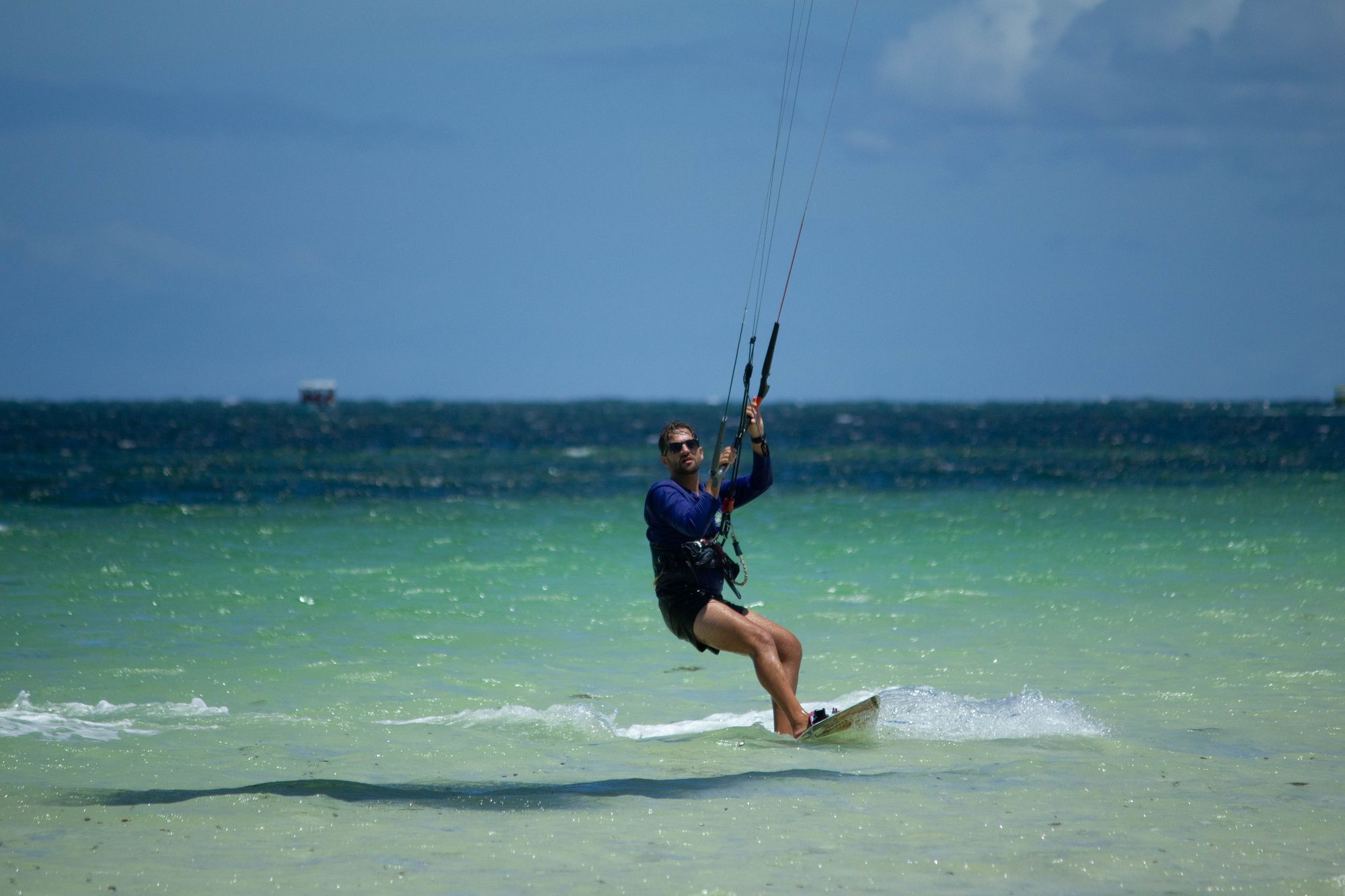
The best time to kitesurf in Kenya is December to March for most riders, when the north-east Kaskazi blows a steady 20 to 25 knots over warm, flat water. If you want stronger wind and waves, come from June to September for the south-east Kusi. April, May, October and November are transition months with less reliable wind. Everything below is based on Watamu, on Kenya's north coast, where both seasons are well documented.
Kenya's two kite seasons at a glance
| Kaskazi | Kusi | |
|---|---|---|
| Months | December to March (some sources say into April) | June to September |
| Direction | North-east, cross to cross-onshore | South-east, cross to cross-onshore |
| Typical wind | Around 20–25 knots; the local school reports 22–25, up to 27 | Around 25 knots, occasionally 30+; the local school reports 20–27, up to 30 in July |
| Usual kite | 9 m most of the day, 12 m towards evening | Around 7 m |
| Water and air | Water around 30 °C, hot air, no seaweed | A little cooler, seaweed can build up on the beach |
| Best for | Beginners, freestyle, flat water | Experienced riders, waves on the reef |
Kaskazi (December to March): the season to learn
The Kaskazi is the warm, steady season. It usually picks up from late morning and blows cross-onshore, which pushes you back towards the beach rather than out to sea. Combined with the tides, it makes Watamu a good place to take your first lessons: at low tide, sandbars inside the reef turn the bay into shallow flat water, and that is exactly when schools teach.
- Bring a 9 m kite for most sessions and a 12 m for lighter evenings, if you ride your own gear.
- Plan your days around low tide: the flat-water sandbars work for roughly three hours either side of it.
- Expect real heat on land. Sun protection matters more than a wetsuit in this season.
Kusi (June to September): stronger wind and waves
The Kusi is the windier season. Riders size down to around 7 m, and the reef about one to two kilometres offshore starts producing rideable waves, with Silversands, about 20 minutes away, working for wave riders on a south-east swell. It is a great season if you already ride independently. For complete beginners it is harder going: the wind is stronger, the air is cooler and seaweed can collect on the beach.
What about April, May, October and November?
These are transition months. April and May bring the rains, and sources disagree on how much wind October and November deliver. You can get good days, but you cannot count on them. If your trip dates are fixed, book inside one of the two main seasons.
Tides matter more than the calendar day
In Watamu the tide decides where you ride. Kite Beach works on every tide, with a mix of flatter water and reef waves. The Turtle Bay and Plot 40 sandbars give flat water for about three hours either side of low tide, and Jacaranda only on neap tides. At high tide the water is deeper and a few coral patches and one rocky stretch of beach need care. A good school plans your lessons around the tide table, not around a fixed clock time.
Want the beach-by-beach detail, the wind chart and how to get there? See the full Watamu kite spot guide.
Booking a lesson or a camp
In Watamu you can book lessons directly on kitesurfing.me with Kite Adventures Watamu, from €67 per person for a two-hour group lesson up to private lessons from €130. If you want the whole trip sorted, their seven-day all-inclusive Beginner Kite Camp costs €1,250 per person and includes the airport transfer, villa, full board, a Tsavo safari and a dolphin trip. Riders who already kite can take the Pro & Advanced Riders Camp from €800.
What is the best month to kitesurf in Kenya?
January and February are the most reliable months for learning, in the middle of the Kaskazi season. For strong wind, July and August in the Kusi season.
How windy is Kenya for kitesurfing?
Around 20–25 knots in the Kaskazi (December to March) and around 25 knots, sometimes 30+, in the Kusi (June to September), as reported by riders and schools in Watamu.
Do I need a wetsuit to kitesurf in Kenya?
Usually not. The water is around 25–30 °C all year, so boardshorts or a bikini are enough.
Is Kenya good for beginner kitesurfers?
Yes, especially in the Kaskazi season, when lessons run at low tide on shallow, flat sandbars with steady cross-onshore wind.
Which airport is closest to Watamu?
Malindi (MYD), about 20–25 minutes by road, usually via Nairobi. Mombasa (MBA) is about two hours away and often cheaper.