
Is Kitesurfing Hard? How Long It Takes to Learn
Most beginner kite courses run 9 hours, based on the published course lengths of 206 kite schools. Here's what's hard, what isn't, and what learning costs.
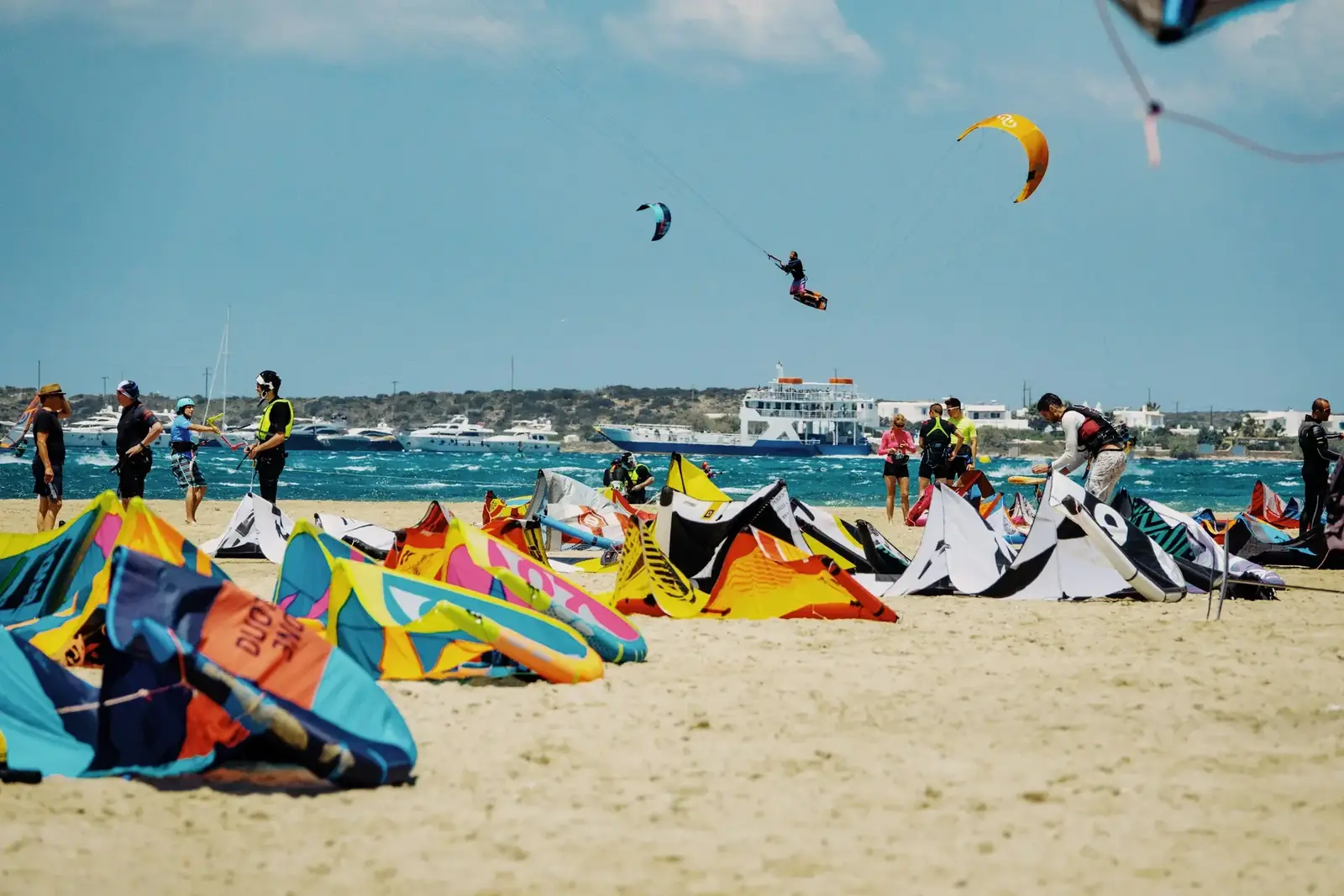
Kitesurfing is harder to start than surfing or paddleboarding, but easier to learn than most people expect. In October 2026, the median beginner kite course across the 206 schools on kitesurfing.me that publish a course length was 9 hours. That's usually enough to get you riding short distances on the board on your own.
Short answer: you don't need to be strong or sporty. The harness carries the kite's pull, not your arms. What takes time is kite control, reading the wind and getting up on the board. Plan on 6–12 hours of lessons over 3–5 days before you can ride alone.
Is kitesurfing hard to learn?
It's hard at the start and gets easier fast. The first hours feel slow because you aren't on the board yet. You're on the beach and in the water learning to steer the kite. Most of the 206 schools we analysed spend the first sessions on kite flying and body dragging before any board time.
The hard parts aren't physical. They're about coordination: flying the kite with one hand while you put the board on your feet, then keeping the kite steady as it pulls you up. Once that "waterstart" clicks, progress speeds up a lot. Riders who already snowboard, wakeboard or windsurf usually get there sooner because board balance is familiar.
- Harder than it looks: steering the kite smoothly, judging gusts, and the first waterstarts.
- Easier than it looks: strength. The harness takes the load, which is why schools teach teenagers and adults of very different fitness levels.
- The real bottleneck: wind. A lesson can't run without it, so a spot with reliable wind saves you days.
How long does it take to learn kitesurfing?
Most people need 6 to 12 hours of lessons. In our October 2026 data, the median beginner course was 9 hours, and the most common course length was 10–12 hours. Very short offers of 1–3 hours exist too, but those are taster sessions. You won't be riding independently after one of them.
| Longest beginner course a school publishes | Schools | Share |
|---|---|---|
| 1–3 hours (taster) | 33 | 16% |
| 4–6 hours | 24 | 12% |
| 7–9 hours | 57 | 28% |
| 10–12 hours | 70 | 34% |
| More than 12 hours | 22 | 11% |
Those hours are usually split over three to five days, two or three hours at a time. That's deliberate. Kite control is tiring for the brain, and wind rarely stays perfect all day. If you have a one-week holiday, book the course for the first days so a windless day doesn't cost you the whole course.
The 9-hour figure is the length of a school's main beginner course, not a promise. Some people waterstart after 6 hours; others need 15, especially in gusty wind or waves. Shallow, flat water speeds things up because you can stand, reset and try again without swimming after your board. Our guide to the best places to learn kitesurfing compares spots on exactly that.
What do you learn at each stage?
Most schools follow the three-level structure set by the International Kiteboarding Organization. In our data, 270 of 465 kite schools (58%) mention IKO certification in their listing, and 53 mention VDWS, the German system. Both teach the same skills in roughly the same order.
- Level 1, Discovery: assessing the spot, setting up the kite, safety systems, launching, landing and steering the kite in the wind window. Mostly on the beach and in shallow water.
- Level 2, Intermediate: body dragging in the water, relaunching the kite from the water, self-rescue and getting back to your board.
- Level 3, Independent: first waterstarts and riding. At the end you get the certificate that lets you rent gear at other spots.
If you're choosing between schools that teach to different systems, it matters less than you'd think. We compared them in IKO vs VDWS.
How much does it cost to learn?
A full beginner course costs around €390. That's the median fixed price for a 6–15 hour beginner course across 135 schools that publish one, as of October 2026. The middle half of schools charge between €301 and €510. Per hour, the cheapest beginner rate a school offers has a median of €50.
Private lessons cost more per hour (median €62 across 282 schools) but you progress faster with the instructor's full attention. Group lessons are cheaper per hour but you share the kite, so you get fewer minutes of actual flying. For prices by country and spot, see how much a kitesurf course costs, or compare kitesurfing lessons side by side.
Is kitesurfing dangerous for beginners?
It carries real risk, but most recorded injuries are minor. A 2020 prospective study in the World Journal of Orthopedics followed 194 kitesurfers for a season and recorded 10.5 injuries per 1,000 hours. Cuts and abrasions were the most common, at 25.4%.
The same study found most injuries happened during jumps or tricks. As a beginner, the biggest risk is going out on your own too early, in too much wind or at a crowded beach. That's what the self-rescue and spot-assessment parts of a course are for. Learning with a licensed school is the single best safety decision you can make.
Frequently asked questions
Can you learn kitesurfing in one day?
No. One day is enough for a taster where you fly a kite and maybe body drag. In our October 2026 data, the median beginner course is 9 hours, usually spread over three to five days. Riding on your own takes most people 6–12 hours of lessons.
Is kitesurfing harder than surfing?
It's harder to start, because you need a few hours of kite control before you can ride. After that, many people find it easier than surfing: you don't have to paddle or wait for waves, and the kite pulls you along on flat water.
Do you need to be fit or strong to kitesurf?
No. The harness transfers the kite's pull to your hips, so your arms only steer. You should be comfortable in water and able to swim. Schools set their own age and weight rules, so check with the school before you book.
How much does a beginner kitesurf course cost?
Around €390 for a full course. That's the median fixed price for a 6–15 hour beginner course across 135 schools on kitesurfing.me in October 2026. Prices vary a lot by country, so compare schools at your spot before you book.
The bottom line
Kitesurfing isn't easy on day one, but it's very learnable. Budget about 9 hours of lessons, around €390, and a spot with steady wind and shallow water. Pick a school first, then book the course for the start of your trip. You can compare kite schools by spot and price on kitesurfing.me.