
How Much Does a Kitesurf Course Cost? Real Prices from 443 Schools
We pulled the published beginner-course, private-lesson and gear-rental prices straight from every school we've indexed in Spain and Brazil — here's what kitesurfing actually costs, by country and by spot.
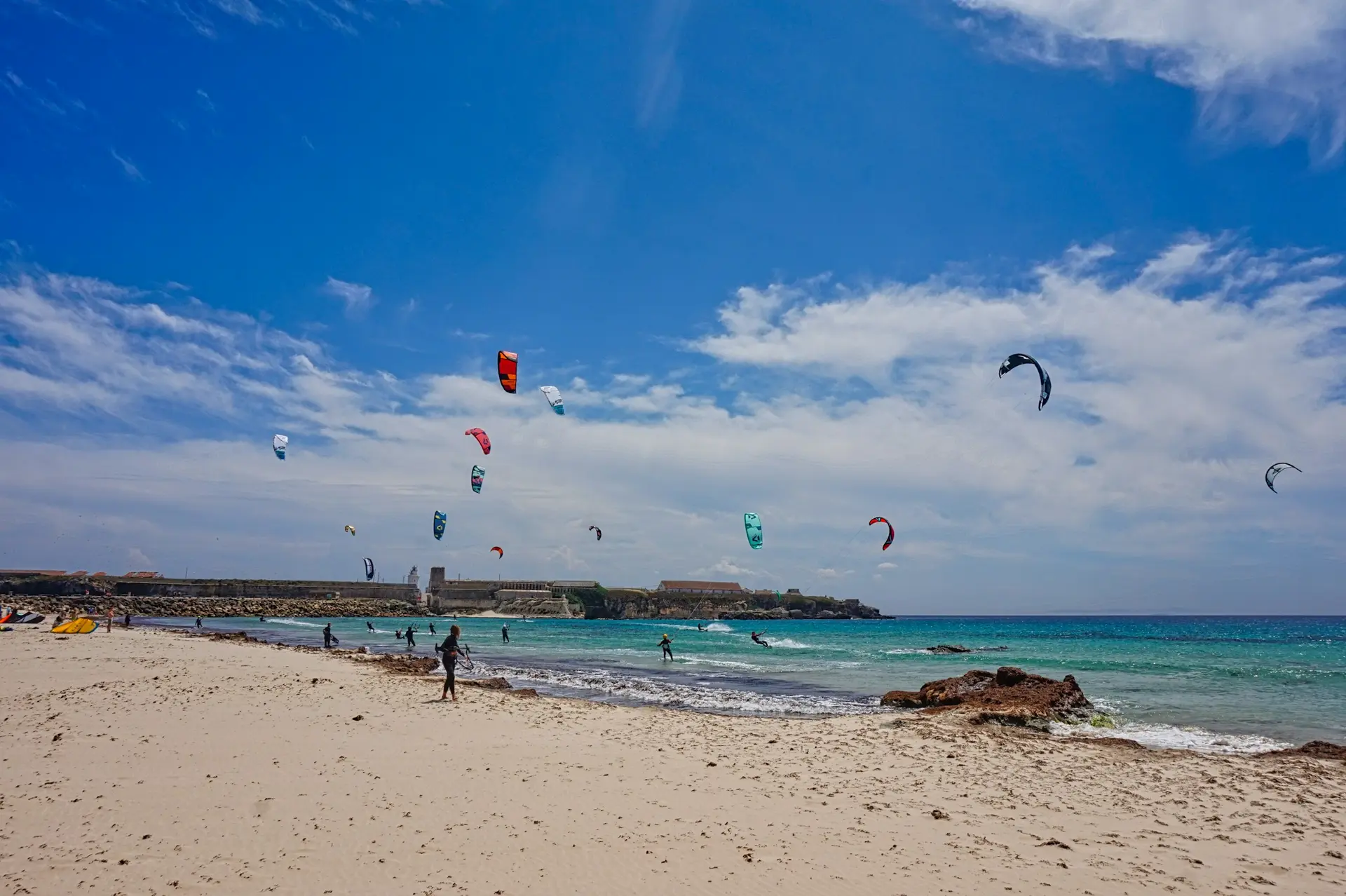
A beginner kitesurfing course averages €185 in Spain and around R$1,786 (about €304) in Brazil, based on the published rates of the 68 schools — out of 443 we've indexed — that list a specific beginner-course price. Private lessons average €126/hour in Spain and R$453/hour (about €77) in Brazil.
Beginner course prices by country
That's not every school we've indexed — most schools publish a price list, but some only quote on request, especially for custom or multi-day packages. We show the real figure when a school has one, and we never invent an average from a school that hasn't published a price.
Private lessons and gear rental
One thing stands out in the raw numbers: Brazil's beginner courses run noticeably higher in euro terms than Spain's, but its private lessons come out cheaper. If you already know how to kite and just want 1:1 time with an instructor, it's worth asking a Brazilian school for their private rate directly rather than assuming the course price scales down.
Cost by spot
| Spot | Schools indexed | Beginner course (avg) | Private lesson (avg/h) |
|---|---|---|---|
| Tarifa, Spain | 57 | €210 | €117 |
| Corralejo, Spain | 17 | €184 | €155 |
| Cumbuco, Brazil | 15 | R$2,300 (~€391) | R$595 (~€101) |
| Jericoacoara, Brazil | 11 | R$2,118 (~€360) | R$628 (~€107) |
Tarifa is both Europe's biggest kite hub by school count and almost exactly at the Spain-wide average — a large, competitive market keeps prices in line. Corralejo runs a bit cheaper on courses but noticeably pricier on private time; Cumbuco and Jericoacoara, Brazil's two biggest hubs, sit close together on both.
Why prices vary this much
- Group size — a shared course costs less per person than the private-lesson rates above, which are always quoted 1:1.
- Certification body — schools affiliated with a major body (IKO is by far the most common in our index — see below) tend to run structured, multi-day curricula; independent schools sometimes price more loosely.
- Currency movement — part of the Spain/Brazil gap in euro terms reflects the exchange rate, not necessarily a pricier product on the ground.
- Season — most schools we've indexed don't publish separate high- and low-season rates; treat the figure above as what they show year-round unless you ask directly.
Does certification change the price?
Of the 443 schools we've indexed, 143 (32%) list at least one certification. IKO is by far the most common — 80 of those 143 schools carry it — with VDWS the main alternative at 11 schools. We didn't find a consistent price gap between certified and uncertified schools in the data; certification tracks more with curriculum structure than with cost.
Every number on this page comes straight from a school's own published price list. We don't estimate from reviews, average across unrelated sources, or infer a price nobody actually quoted — if a school updates its rate, ours updates with it.
Compare real schools, not averages
An average is a starting point, not a quote. The only way to know what your course will actually cost is to compare the real schools at your spot, side by side.