
Kitesurfing vs Windsurfing vs Wing Foiling: Which to Learn?
We compared beginner course lengths and lesson prices across 465 kite, 211 wing foil and 65 windsurf schools. Here's how the three wind sports differ for a beginner.
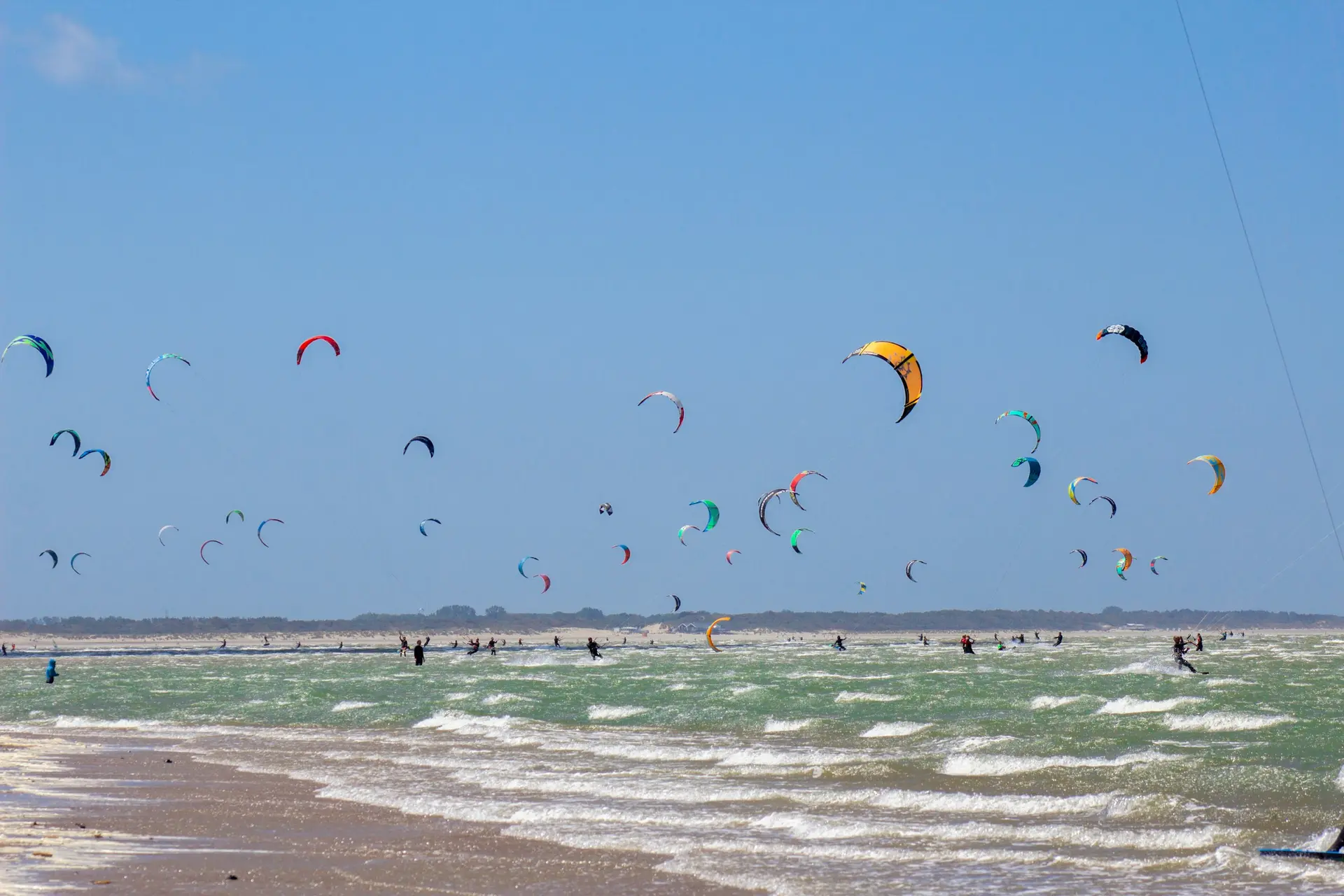
Kitesurfing, windsurfing and wing foiling all use the wind to pull you across the water, but they feel very different to learn. As of October 2026, kite schools on kitesurfing.me publish a median beginner course of 9 hours. Wing foil and windsurf schools publish 6. Price per hour differs even more.
What's the difference between the three sports?
The difference is where the wind power comes from and how it reaches you. In kitesurfing, a large kite flies high above you on long lines and pulls you through a harness. In windsurfing, the sail is fixed to the board by a mast. In wing foiling, you hold a small inflatable wing in your hands and ride a hydrofoil board that lifts out of the water.
- Kitesurfing: most power and the biggest jumps. Needs space on the beach to launch and land the kite, and a second person or a school to help at first.
- Windsurfing: everything is attached to the board, so there are no lines to manage. It's slower to get going in light wind but very forgiving early on.
- Wing foiling: the lightest gear and easiest to carry. The wing is simple; the foil board is the hard part, because it lifts you above the water.
Which is the easiest to learn?
Windsurfing usually gets you standing and moving first, often on day one, because the board is big and stable. Kitesurfing takes longer to start: the median beginner kite course across 206 schools is 9 hours, mostly kite control before you ride. Wing foiling is quick to start on a regular board and slow to master on a foil.
That doesn't make windsurfing easier overall. Many riders say kitesurfing gets easier faster once you can waterstart, because the kite does the work and you can ride in a wider range of wind. Windsurfing stays physical for longer, especially in stronger wind. Wing foiling's learning curve is steep in the middle, when you first try to fly the foil.
| Kitesurfing | Wing foiling | Windsurfing | |
|---|---|---|---|
| Schools on kitesurfing.me teaching it | 465 | 211 | 65 |
| Beginner course length (median) | 9 h | 6 h | 6 h |
| Beginner rate (median) | €50/h | €61/h | €29/h |
| 6–15 h beginner course (median) | €390 | €415 | €180* |
| Private lesson (median) | €62/h | €70/h | €63/h* |
* Small sample: only 15 windsurf schools publish a 6–15 hour course price and 15 a private rate, so treat those windsurfing figures as indicative. All prices are the schools' own published rates, converted to euros in October 2026.
Which is cheapest to learn?
Windsurfing lessons are the cheapest: a median €29 an hour across 29 schools, against €50 for kitesurfing and €61 for wing foiling. Windsurf lessons often happen in groups on calm water with big beginner boards. Kite and wing lessons usually need more gear per student and more space, which pushes prices up.
Wing foiling has the highest beginner rate per hour, but its courses are shorter. A full 6–15 hour course ends up close to kitesurfing: a median €415 for wing against €390 for kite. For a detailed breakdown by country and spot, see how much a kitesurf course costs.
Can you learn more than one at the same school?
Often, yes. Of the 465 kite schools we list, 186 also teach wing foiling, and 45 also teach windsurfing. 33 schools teach all three. That makes a combined trip easy: learn to kite in the afternoon wind and try a wing session on a lighter morning.
If you already kite, wing foiling is the natural next step. You know how to read the wind, and many schools offer short wing courses for kiters. If you windsurf, kitesurfing will feel familiar on the board but new in the air. You can filter schools by sport, for example wing foil schools.
Which sport is right for you?
Pick kitesurfing if you want speed, jumps and the most riding days per trip. Pick windsurfing if you want the cheapest, gentlest start and you're happy to build strength over time. Pick wing foiling if you want light, portable gear and the floating feeling of foiling, and you don't mind a steep middle phase.
There's no wrong answer at Olympic level either. At Paris 2024, kiteboarding (Formula Kite) and foiling windsurfing (iQFoil) both made their Olympic debut, according to World Sailing. Wing foiling isn't an Olympic sport, but 211 of the schools we list already teach it.
Frequently asked questions
Is kiteboarding the same as kitesurfing?
Yes. Kiteboarding and kitesurfing are two names for the same sport. "Kiteboarding" is more common in North America, "kitesurfing" in Europe and most other places. The schools on kitesurfing.me use both terms for the same lessons.
Is windsurfing or kitesurfing harder?
Kitesurfing is harder to start: the median beginner course is 9 hours across 206 schools, against 6 hours for windsurfing. Once you can ride, many people find kitesurfing less physically demanding, because the harness and kite carry most of the load.
Is wing foiling easier than kitesurfing?
The wing itself is easier to handle than a kite, and courses are shorter: a median 6 hours against 9 for kitesurfing. The foil board is the hard part. Expect quick early progress, then a slower phase while you learn to fly the foil.
The bottom line
Windsurfing is the cheapest start, kitesurfing gives the most power, and wing foiling is the lightest kit. If you're still unsure, book a taster in each at one of the 33 schools that teach all three. Then read how hard kitesurfing is to learn or find the best places to learn kitesurfing.