Best Time to Surf in San Juan del Sur: A Month-by-Month Guide
San Juan del Sur's surf season runs roughly May to November, peaking May through August, while the water stays a warm 25 to 29 degrees Celsius all year.
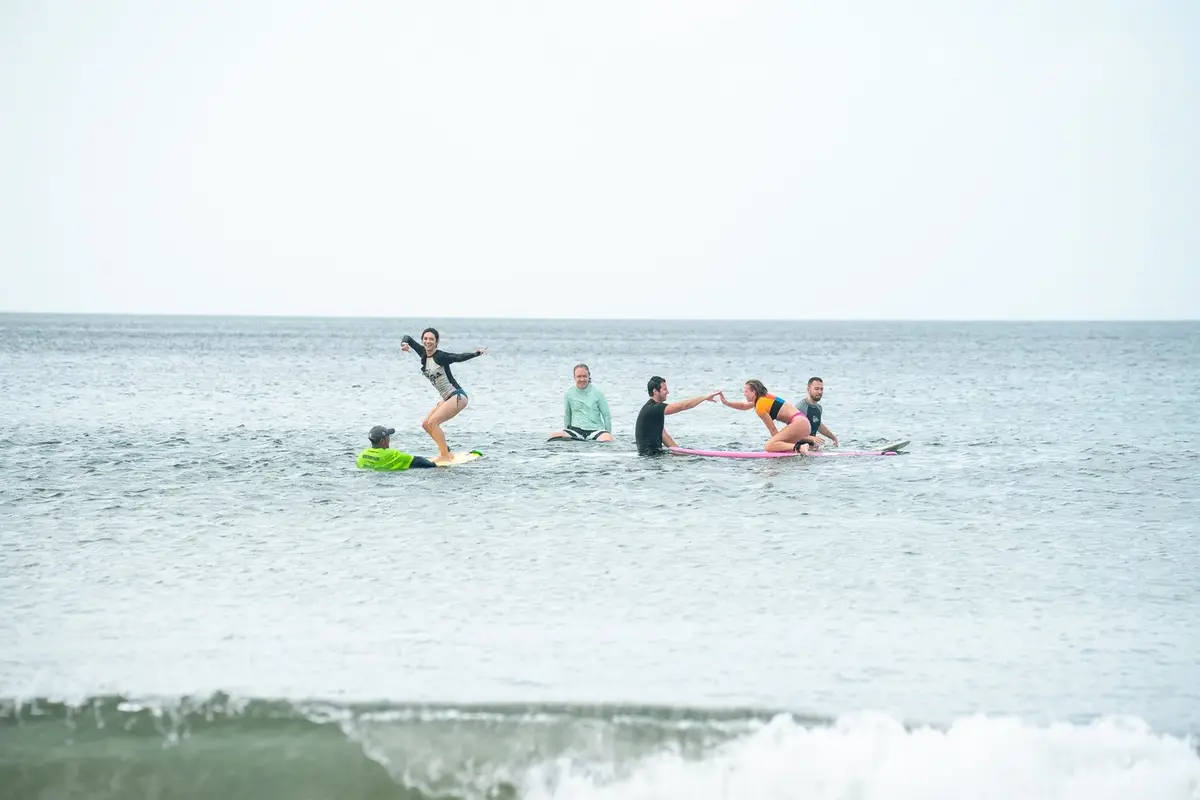
The best time to surf in San Juan del Sur is roughly May to August, when Nicaragua's wet season brings the biggest, most consistent South Pacific swell to Playa Maderas and the area's other breaks. December and January are a gentler alternative for beginners, and February stands out as the one month several sources flag as a real dip in swell quality.
When is the best time to surf in San Juan del Sur?
The Surf Atlas's own guide to the area names May to August as the best overall window, when the biggest waves arrive on strong South Pacific groundswells and surf is available most days. It separately calls December and January a prime, more manageable stretch for learners, and flags February specifically as a dip in swell quality.
Matador Network's Nicaragua surf-spot guide frames the same picture a little differently: a wet season running roughly May to November, with constant, solid swell but less predictable wind, against a dry season of roughly December to April, where swell is smaller but the wind blows offshore far more reliably. Both sources agree on the broad shape of the year, they just draw the line between the two seasons in slightly different places.
San Juan del Sur's surf season, month by month
No single source publishes a day-count of surfable swell for every month at San Juan del Sur. The table below follows the two named seasons every source agrees on in its own words, not a day-by-day forecast, and treats September to November as a tapering shoulder window since the sources' season boundaries do not line up exactly there.
| Months | Typical conditions | Who it suits best |
|---|---|---|
| May-Aug | Peak season; named the best overall window for size by The Surf Atlas's own San Juan del Sur guide | Intermediate and advanced surfers chasing size |
| Sep-Oct-Nov | Tapering wet-season shoulder; still inside Matador's wider May-to-November wet season, but past the named May-Aug peak | All levels; check a live forecast for that week's wind |
| Dec-Jan | Named 'prime' for learners by The Surf Atlas; smaller, more manageable swell with the dry season's offshore wind setting in | Beginners and improvers |
| Feb | The one month multiple sources flag as a genuine dip in swell quality, not just smaller waves | Still fine for a first lesson at Playa Maderas or Playa Hermosa; don't plan a trip purely for swell |
| Mar-Apr | Dry season continues; smaller waves, wind more reliably offshore | Beginners; a solid shoulder window before the wet season returns |
What is the Papagayo wind, and why does it matter for surfing here?
The dry season's reliable offshore wind is tied to the Papagayo wind pattern, a strong north-east wind that the American Meteorological Society's glossary describes blowing across Nicaragua and Guatemala's Pacific coast in the dry months. Locally it funnels across Lake Nicaragua toward the Pacific, which is why the coast around San Juan del Sur gets such dependable offshore conditions from December to April.
That same wind is part of why the dry season is also Nicaragua's peak tourism season: milehacker.com's own travel guide notes that flight prices rise through December-April and the holiday weeks inside it. Booking lessons and accommodation further ahead matters more in this window than in the quieter wet season.
How warm is the water, and what should you pack?
Sea temperature at San Juan del Sur runs from around 25-26°C in the cooler months (January to March) up to 28-29°C from May through October, based on long-term monthly averages. That is warm enough that no wetsuit is needed in any month of the year.
Pack a rash guard for sun protection rather than warmth, reef-safe sunscreen, and a hat for the beach between sessions. Boardshorts or a bikini are standard; a thin top layer is a comfort choice on an early, overcast morning, not a necessity.
Is San Juan del Sur crowded, and when should you go to avoid it?
Playa Maderas, the area's best-known wave, is also the busiest: most local surf schools teach there, and day-trippers from San Juan del Sur town fill the lineup once the morning wind picks up. Early sessions, before the crowd and the wind arrive, are noticeably calmer.
If Maderas feels too crowded on the day, Playa Hermosa and El Remanso are quieter alternatives nearby, and The Surf Atlas describes Hermosa specifically as uncrowded in the dry season. Playa Hermosa and the area's other beaches are covered in full in our San Juan del Sur surfing guide.
Which months suit beginners, and which suit advanced surfers?
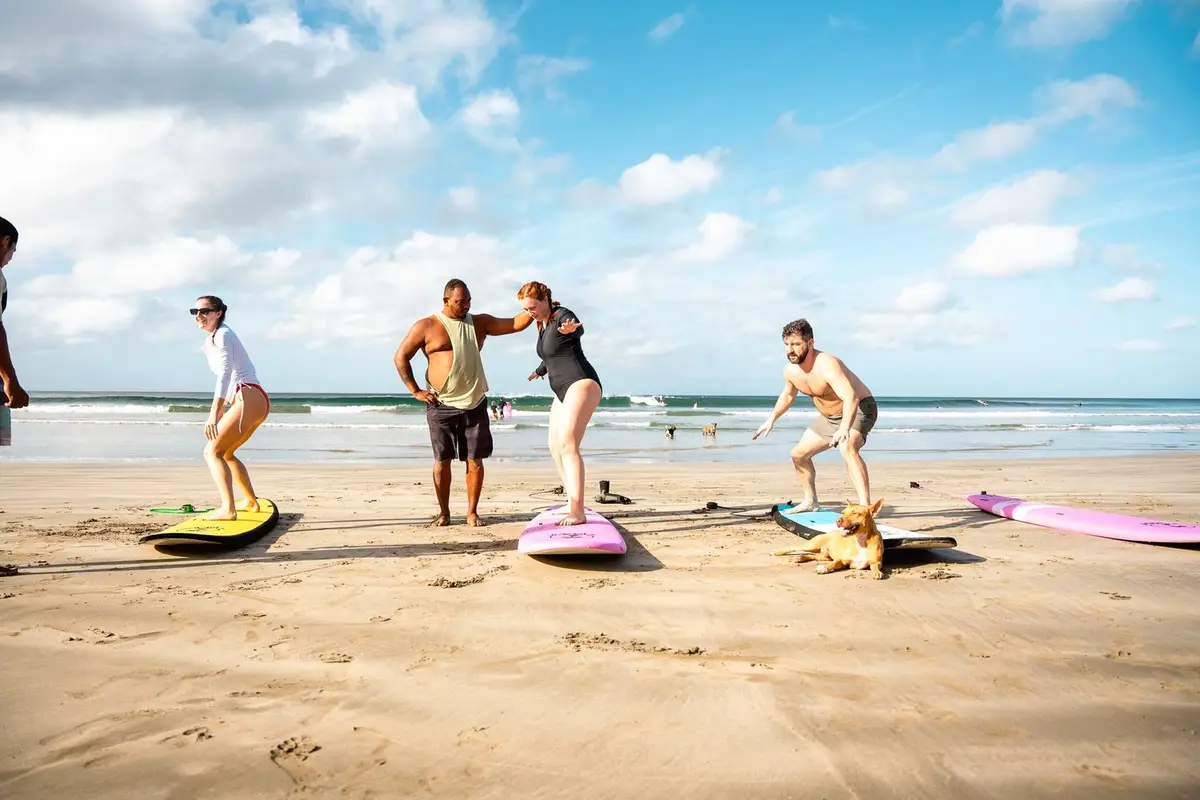
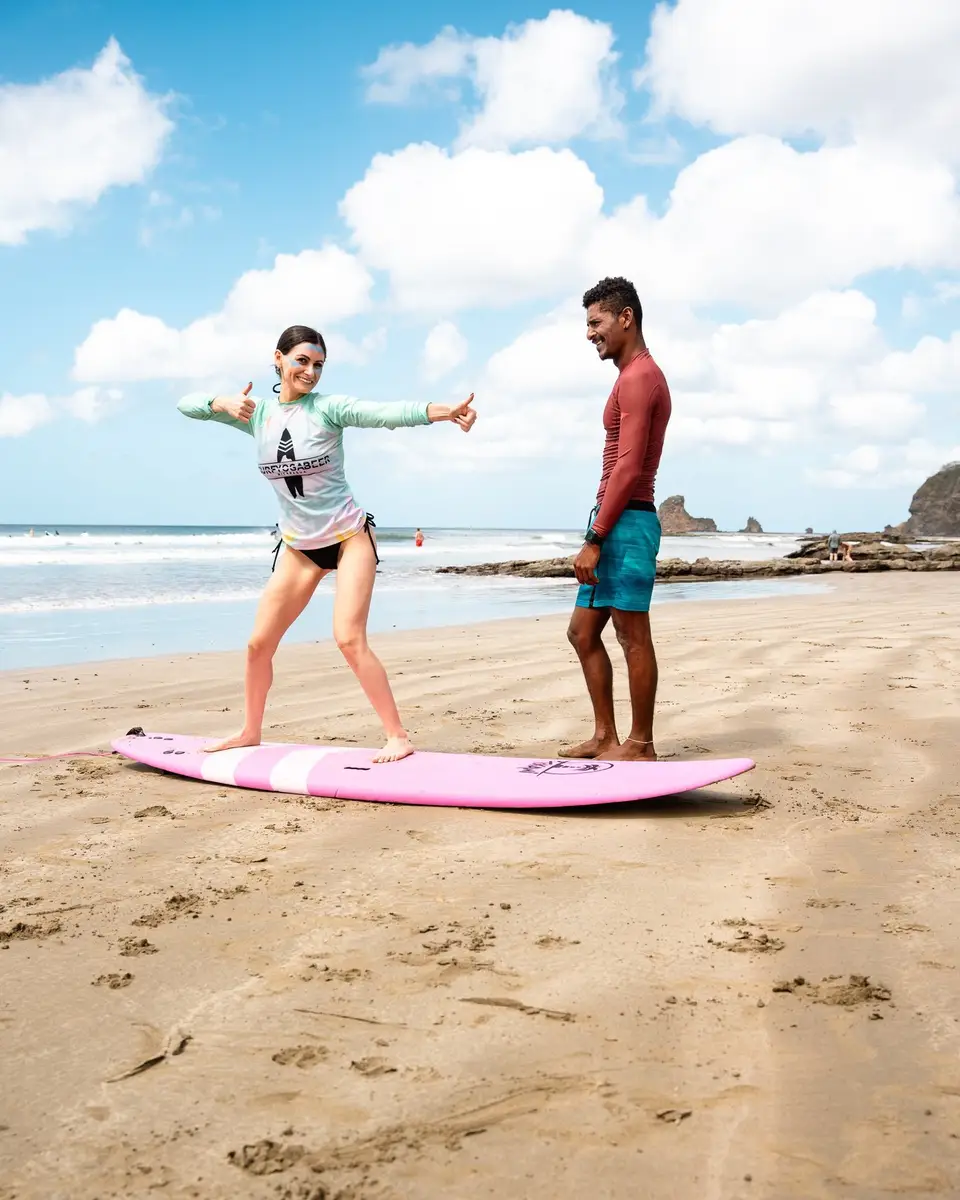
Beginners do best in the dry season, roughly December to April, when the wind is more reliably offshore and the waves at Playa Maderas and Playa Hermosa stay smaller and cleaner. Beach Break Surf School teaches at Maderas every day of the year regardless of season.
Advanced surfers get the most out of the wet season, May through August especially, when El Yanke and Playa Maderas carry real size on a strong swell. If you are travelling specifically for bigger waves, aim for that window and check a live forecast once you land, since the exact swell on any given day still decides which beach is working best.
What if the swell is small or the wind is wrong on the day?
San Juan del Sur's cluster of beaches is the advantage here: a small day at Maderas can still be a good lesson day at Playa Hermosa or El Remanso, and Playa Escameca is reported as almost always offshore regardless of the wider pattern. There is nearly always somewhere workable nearby.
If you came for bigger waves and the wet season's wind has turned onshore for a few days, which Matador Network notes does happen, El Yanke's more exposed position can still hold swell that the sheltered beaches lose. Know the US National Oceanic and Atmospheric Administration's standard rip-current advice before you paddle out anywhere here: relax rather than fight a current, since it pulls you along the surface rather than under it, swim parallel to shore or toward the breaking waves to escape it, then angle back toward the beach, and wave and call out for help if you cannot get back in on your own.
Getting to San Juan del Sur, and where to stay
Most travellers fly into Managua International Airport (MGA), about 130-140 km away. Shuttles and taxis cover the trip in roughly 2.5 to 3.5 hours, with no border crossing involved. Some travellers instead fly into Liberia (LIR) in Costa Rica and cross the Peñas Blancas land border instead; milehacker.com's own guide puts the border crossing alone at 1 to 3 hours, longer on weekends and holidays, on top of the driving on each side.
A car is not required. Public transport and shuttles reach the main beaches, especially Playa Maderas, and most surf camps and hostels run their own transport to the breaks on a daily schedule. For where to base yourself, San Juan del Sur town has the most restaurants and services; staying right at Playa Maderas puts you a short walk from the water instead, at the cost of fewer places to eat nearby.
Surf lessons across the season
The lesson format at Beach Break Surf School does not change by season: beginner and advanced classes run every day of the year at Playa Maderas. What changes is how big the wave looks from the beach and how reliably offshore the wind is that morning.
For course formats and prices, see learning to surf in San Juan del Sur. Booking on kitesurfing.me works the same way whatever month you pick: you send a request, the school confirms, and you pay the school directly.
What is the best month to surf in San Juan del Sur?
May to August is named most often as the strongest window, when the wet season brings the biggest, most consistent South Pacific swell to Playa Maderas and El Yanke. December and January are a gentler, learner-friendly alternative.
Is San Juan del Sur surfable in the rainy season?
Yes, and the rainy, wet season (roughly May to November) is actually when the biggest, most consistent swell arrives. The trade-off is less predictable wind, which can turn onshore for a few days at a time, something the dry season rarely does.
How warm is the water in San Juan del Sur?
Sea temperature runs from around 25-26°C in the cooler months (January to March) up to 28-29°C from May through October, based on long-term monthly averages. No wetsuit is needed in any month.
When is Playa Maderas least crowded?
Early mornings, before the wind picks up and day-trippers arrive from San Juan del Sur town. Playa Hermosa and El Remanso are quieter alternatives nearby on a given day, and The Surf Atlas specifically describes Hermosa as uncrowded in the dry season.
Can beginners surf in San Juan del Sur outside the main season?
Yes. Beach Break Surf School and other local schools teach at Playa Maderas every day of the year, and the dry season (December-April), with its smaller waves and more reliably offshore wind, is actually the easier window for a first lesson.
Do you need a car to go surfing near San Juan del Sur?
No. Public transport and shuttles reach the main beaches, especially Playa Maderas, and most surf camps and hostels run their own transport. A rental car only helps if you want full control over which beach you reach on a given day.