Best Time to Wing Foil in Cape Town: Wind by Month
The best time to wing foil in Cape Town runs December to February, when the Cape Doctor blows most reliably; the month-by-month wind and water picture.
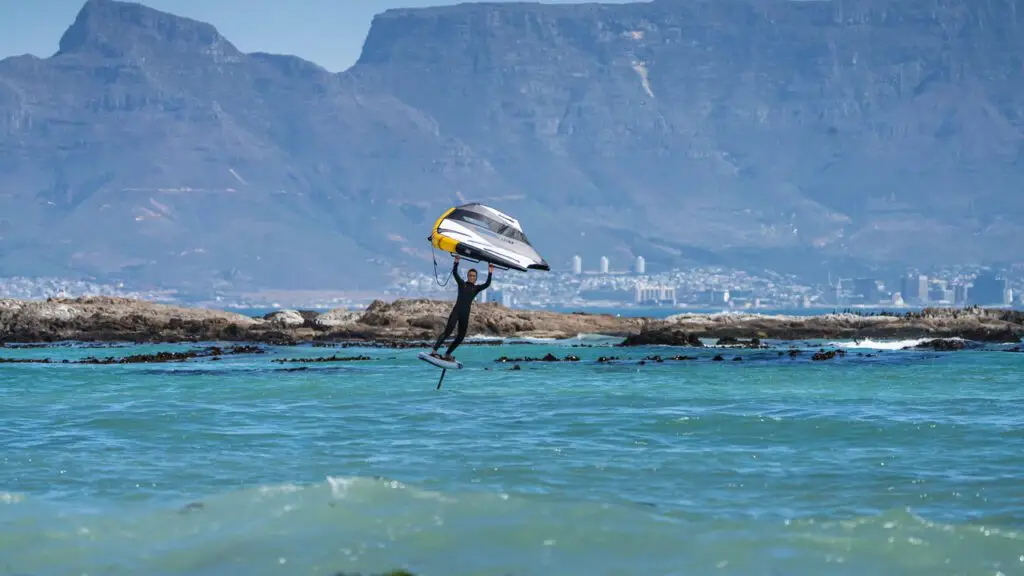
The best time to wing foil in Cape Town is December through February, when the Cape Doctor, the city's thermal south-easter, blows most reliably and strongest. January and February are usually the windiest individual months, while November and March form a calmer but still useful shoulder season either side of the peak.
When Is the Best Time to Wing Foil in Cape Town?
December to February is the core window, the same stretch IKSURFMAG calls Cape Town's primary wind season. The Cape Doctor is light at dawn most days, fills in through late morning and builds hardest in the afternoon, so a session here is usually a lunchtime-to-evening plan, not a sunrise one.
This is the same wind that makes Cape Town one of the world's best-known kite destinations, and the season dates line up for both sports. What differs is where you ride it: a kite thrives on the open, onshore Atlantic beaches, while a wing often works better on sheltered or cross-shore water instead, which changes the month-by-month plan a little once you add spot choice on top of wind strength.
How Strong Does the Cape Doctor Blow Each Month?
4ActionSport's 2025 Cape Town spot guide describes summer, roughly November to March, as bringing consistent wind and warm weather, with the rest of the year much patchier. IKSURFMAG names January, February, March, April, November and December as windiest, with December through February the primary season within that list.
| Month | Wind reliability | Water temperature | Notes |
|---|---|---|---|
| January | High | 20°C | Windiest month alongside February |
| February | High | 20°C | Still peak season, the warmest water |
| March | Medium-high | 19°C | Still breezy, fewer visitors |
| April | Medium | 17°C | Wind dropping off, shoulder month |
| May | Low | 17°C | Mostly calm, short days |
| June | Low | 17°C | Calmest stretch of the year |
| July | Low | 16°C | Cold, variable weather |
| August | Low | 15°C | Among the coldest water of the year |
| September | Low | 15°C | Wind still inconsistent |
| October | Medium | 16°C | Season building again |
| November | Medium-high | 15°C | Reliable shoulder month |
| December | High | 17°C | Peak season begins |
Treat this as a season shape, not a day-by-day forecast: both sources describe months qualitatively rather than giving a per-spot wind station for wing foiling, so always check a short-range forecast for your actual travel dates once you have picked a window.
Which Spot Works Best in Each Season
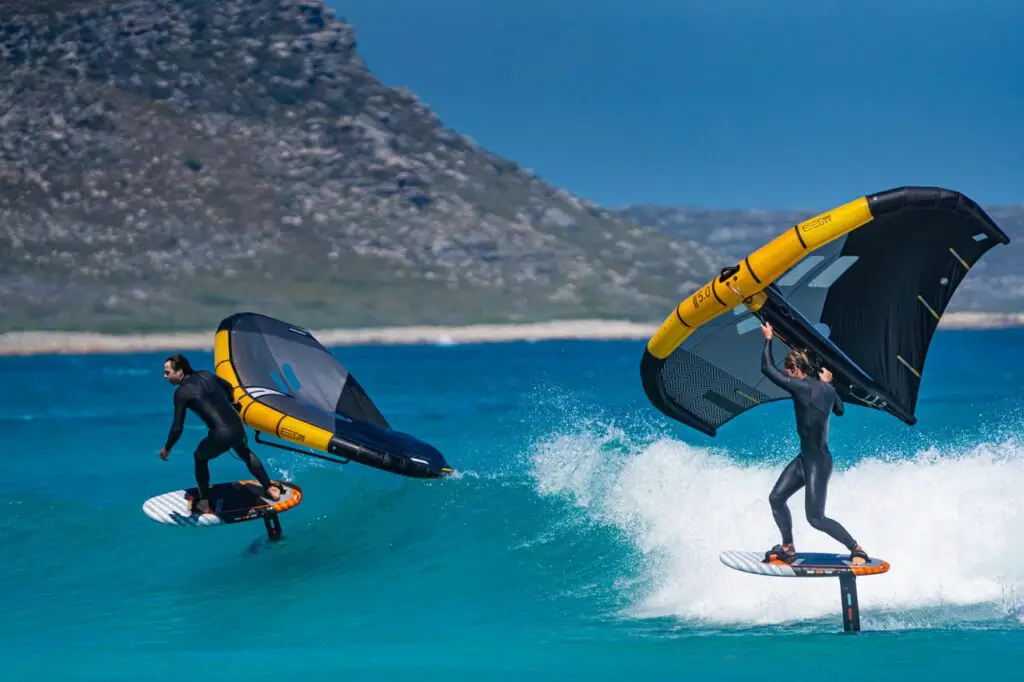
In peak season, December to February, the open beaches, Big Bay and Blouberg, turn on for wave riding on the rising tide, and Long Beach in Simon's Town fills reliably with its cross-shore version of the same wind. Lake Rietvlei stays the dependable fallback whatever the month, since it sits in its own exposed gap and runs windy even on a calmer coastal day.
Outside the main season, April to October, the lake and Langebaan Lagoon become the more sensible bet: both are sheltered enough to make the most of a lighter or less consistent wind day, while the open coast can sit flat for a week at a time. A local school such as Good Vibes Kiteschool & Wing-Foil School will know which beach is working on a given day better than any guide can from a distance.
This split matters more for wing foiling than it does for kitesurfing at the same spots. A kite rider at Blouberg or Big Bay is working with the Cape Doctor exactly as it arrives, straight onto the beach. A wing rider at the same beach is fighting that same onshore angle a little, which is part of why Cape Town's wing scene spreads across more, and more varied, locations than its kite scene does.
How Crowded Does Peak Season Get?
Neither of our sources gives a visitor count, but IKSURFMAG specifically calls November and March quieter than the December-to-February peak, which implies the opposite is also true: high summer draws the most people onto Cape Town's water, kiters and wing foilers together at the shared beaches such as Big Bay and Blouberg.
If a quieter beach matters more to you than guaranteed strong wind every day, the shoulder months are worth weighing seriously, especially since Lake Rietvlei and Langebaan Lagoon see a different, generally smaller crowd than the open coast at any time of year.
Are November and March Worth Planning Around?
Yes, if your dates are flexible. Both are described as reliable but calmer shoulder months, with noticeably fewer people on the water than the December-to-February peak. For a traveller choosing between a crowded peak week and a quieter shoulder one, the trade-off is usually worth it unless strong, consistent wind every single day matters more than space on the water.
How Much Wind Does a Wing Actually Need?
Mackite Boarding puts the ideal range at 16 to 20 knots, and most Cape Town riders fly a 4 to 5 square-metre wing in that range, sizing up toward 6m² when it is lighter. Because a wing needs less steady wind than a kite to stay up, a morning that would be too marginal to kite can still be flyable on a bigger wing, which widens the useful window beyond the strict kite forecast.
Northern Kites' sizing chart backs this up from the gear side: a 4m² wing suits roughly 14 to 30 knots and a 6m² wing works from about 8 knots, so riders carrying two or three wing sizes can use a wider stretch of the season than someone with only one. Weight matters too: the same chart recommends a bigger wing for a heavier rider at the same wind speed.
In practice that means Cape Town's shoulder months, and even some winter days at Lake Rietvlei, can still produce a usable session for a traveller with the right wing size, even though the same day would read as too light on a kite forecast built around a 9-12 square-metre kite.
Getting Around Cape Town's Wing Foil Spots
4ActionSport's spot guide treats renting a car as essential for Cape Town's wind-sport beaches, since public transport does not reach most of them directly. Lake Rietvlei and Blouberg sit close together near Milnerton, while Long Beach in Simon's Town is a further drive south down the peninsula, and Langebaan is roughly 90 minutes north.
Build a little driving time into any plan that hops between spots to chase the day's best wind, and treat Table Mountain, the Cape Peninsula and the Winelands as worthwhile stops on a driving day rather than detours away from the water. The Cape Town wing foil page lists each beach with its own wind and level notes if you want the full picture before you plan a route.
A Flat Day in Cape Town
Outside the wind, Cape Town does not run short of things to do: Table Mountain, the Cape Peninsula drive down to Cape Point, the Winelands an hour inland, and a city full of beaches, restaurants and galleries. Treat a flat morning as a reason to see the city, not a wasted travel day, and check back in the afternoon once the Cape Doctor has had a chance to fill in.
For how a first lesson actually runs here, from course lengths to Good Vibes' own prices, see learning to wing foil in Cape Town. You can also see the full conditions picture on the Cape Town wing foil page, or go straight to the Good Vibes Kiteschool & Wing-Foil School profile to request a booking.
What is the best month to wing foil in Cape Town?
December through February, which IKSURFMAG calls Cape Town's primary wind season within its wider list of windy months (January, February, March, April, November and December). November and March are calmer but still reliable shoulder months with fewer people on the water.
What is the worst time to wing foil in Cape Town?
May through September. 4ActionSport's spot guide describes this stretch as the patchy off-season, and water temperatures drop to 15°C in August, September and November, their coldest of the year, so sessions become shorter and colder as well as less windy.
How warm is the water for wing foiling in Cape Town?
Roughly 15 to 17°C from April to November, rising to 19-20°C at the January-to-March peak, per seatemperature.net's monthly average. A 4/3mm wetsuit covers most of the year; many riders prefer a 5/4mm in winter.
Do you need as much wind to wing foil as to kitesurf?
No. Mackite Boarding gives 16 to 20 knots as the ideal wing-foil range, and a big wing, around 6 square metres, can work from roughly 8 knots, per Northern Kites' chart, so marginal kite days can still be flyable on a wing.
Is Cape Town too windy to wing foil in peak season?
Rarely a problem for wing foiling. The Cape Doctor commonly reaches 16 to 25 knots on a strong December-to-February afternoon, well inside the range wings are designed for, though a smaller wing and sheltered spot make the gustiest days easier to manage.
Should I book Cape Town wing foil lessons in summer or winter?
Summer, December to February, gives the most reliable wind for an outdoor-focused trip. If your dates fall outside that window, plan sessions around Lake Rietvlei or Langebaan Lagoon, which stay rideable on a lighter day better than the open coast.