Best Time to Kitesurf in Cartagena: January to March
The best time to kitesurf in Cartagena is January to March, when the trade wind is steadiest. See month by month what to expect at La Boquilla.
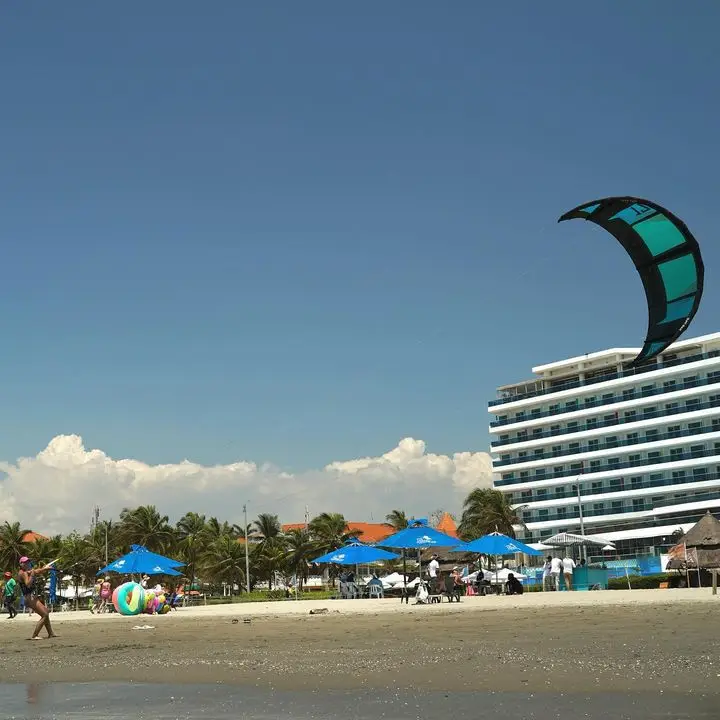
The best time to kitesurf in Cartagena is January to March, when the north-east trade wind blows most reliably at La Boquilla, the beach just north of the city. The season starts in mid-December and carries on, with fewer days, to about June. September to November is the weakest stretch, so book your lessons around the first quarter of the year.
When is the best time to kitesurf in Cartagena?
January, February and March are the best months. The wind usually starts in mid-December and gives good sideshore conditions until about June, from the north and north-north-east. A weather-model summary of past years rates the same three months as prime and April as good, while the rest of the year sits well below that.
Cartagena's kite spot is La Boquilla, a fishing village on a wide sandy beach a few kilometres north of the old city. The trade wind is the engine here: it is strongest in the dry months, when Cartagena gets almost no rain, and fades as the wet season builds from May. You can read the full spot breakdown on the Cartagena kitesurfing page, and how to get there and where to stay in our La Boquilla kitesurfing guide.
What does the wind do during a day at La Boquilla?
On a trade-wind day there is little wind until about 11 am, then around 7 knots, building steadily to 20 to 25 knots before sunset. The wind starts almost straight onshore and turns sideshore as it strengthens, which is why the afternoon is the time to be on the water.
Two practical points follow from that. First, a morning with a flat sea is normal and not a sign that the day is lost; plan your session for the afternoon. Second, the same day can need two different kite sizes, one for the lighter late morning and a smaller one when the wind peaks, so ask your instructor what is on the beach rather than bringing only one. The tide does not change the conditions here, which makes planning simpler than at tidal spots.
Month by month: what to expect in Cartagena
The table below lines up the season described by the kite guides with Cartagena's measured rainfall and the modelled sea temperature. Read the wind column as a guide to how likely good days are, not a forecast, because we found no measured monthly wind statistics for La Boquilla.
| Month | Kite season | Rain (mm) | Sea (°C) |
|---|---|---|---|
| January | Best: steady trade wind | 0.5 | 29 |
| February | Best: steady trade wind | 0.3 | 29 |
| March | Best: steady trade wind | 3.2 | 29 |
| April | Good: sideshore wind, fewer days | 18.6 | 29 |
| May | Fading: some days until about June | 117.4 | 30 |
| June | Fading, some surf camps list a mid season from mid-June | 92.5 | 31 |
| July | Mid season: occasional kiteable days | 121.1 | 31 |
| August | Mid season: occasional kiteable days | 127.5 | 31 |
| September | Weakest: about one rideable day a week | 133.1 | 31 |
| October | Weakest: about one rideable day a week | 236.5 | 30 |
| November | Weakest: about one rideable day a week | 178.3 | 30 |
| December | Season starts in mid-month | 44.7 | 30 |
Rainfall is the long-term average for the airport (1991 to 2020), so a dry month can still have a shower and a wet month can have a good afternoon. Sea temperature is a model summary, rounded.
Why do the sources disagree about the middle of the year?
They agree on January to March, and differ a little on everything after that. One kite guide says the wind keeps going to about June, while a surf camp near Cartagena lists mid-June to mid-September as a mid season. We treat the first quarter as the safe window and the rest as bonus.
The weakest months are less disputed: the kite spot guides name September to November, with roughly one rideable day per week. That also lines up with the rain, since October is the wettest month of the year in Cartagena at about 237 mm. If your dates are fixed outside January to April, ask the school how the wind has been in recent weeks before you commit to a block of lessons.
Which months suit beginners and which suit experienced riders?
Beginners should come between January and March. That is when a steady afternoon wind meets a wide beach, shelter from large chop and waves, and warm water. Experienced riders get the same window, plus the stronger late sessions, and have more flexibility if they only want a few good days.
- Complete beginner: January to March. Steady wind and a bay-sheltered beach make the first sessions predictable, and lessons can be planned for the afternoon build.
- Improving rider: December to April. Sideshore wind of 20 to 25 knots late in the day gives room to work on riding upwind and first jumps in small chop.
- Advanced rider: January to March, with the option of other months when a front brings wind. A surf camp reports harder wind and fewer people at Manzanillo del Mar, about 25 minutes from Cartagena.
- Short-notice visitor in the weak months: keep your days flexible, because some days will be too light.
For lessons, a longer course also gives you more chances at a good wind day. The Cielomar Kitesurf School profile lists a basic course of 8 hours over 3 days and an intermediate course of 10 hours over 4 days, which spread your learning across several afternoons. Our guide to kitesurfing lessons in Cartagena explains the formats and prices.
How hot and wet is Cartagena in each season?
Cartagena is hot all year. Average daily highs stay between 31 and 32 °C and lows between 24 and 26 °C. The dry season runs roughly from December to April, the rainy season from May to November, with the heaviest rain in October and November.
For your kite days that means strong sun in the dry months, when the wind is best, and a real chance of afternoon rain or squalls in the wet months. The sea is about 29 °C from January to April and up to 31 °C in the middle of the year, so you do not need a wetsuit. Guides describe the water as warm all year.
What should you pack for kitesurfing in Cartagena?
Pack for sun and warm water: boardshorts or a bikini, a rash vest, a hat and plenty of high-factor sunscreen. If you are learning, the school provides the kite equipment, so you can leave your own gear at home and fly light.
- A rash vest or lycra top for sun protection and harness chafe; no wetsuit is needed.
- Reef-safe sunscreen, a hat and sunglasses with a strap for the walks along the beach.
- A dry bag for phone, cards and keys, because a beach day can end with a rain shower.
- Your IKO card or your own harness, if you already ride; the school can tell you what it provides for your level.
If you plan to bring your own kites, check your airline's sports baggage rules before you book. It is simpler to ride on school equipment for a first trip and bring your own gear when you know the beach.
What can you do on a windless day in Cartagena?
Cartagena has plenty to fill a calm day, because La Boquilla sits at the edge of a historic port city. Wander the walled old town, take a boat tour through the mangroves beside the village, or simply relax on the beach and watch for the wind to arrive after 11 am.
If you want a few kite days without relying on the weather, stay a week or more rather than a long weekend. A longer stay also makes it easier to fit in a course; see kitesurfing lessons in Cartagena for the formats and prices. You can see how the pieces fit together, including the airport and where to stay, in our guide to kitesurfing in Colombia.
How do you book lessons for the right month?
Send a booking request on kitesurfing.me for the dates you want. Cielomar Kitesurf School, based in La Boquilla, confirms whether those days work, and you pay the school directly when you arrive. Private lessons start at USD 80 for one hour, and you can ask about dates before you travel.
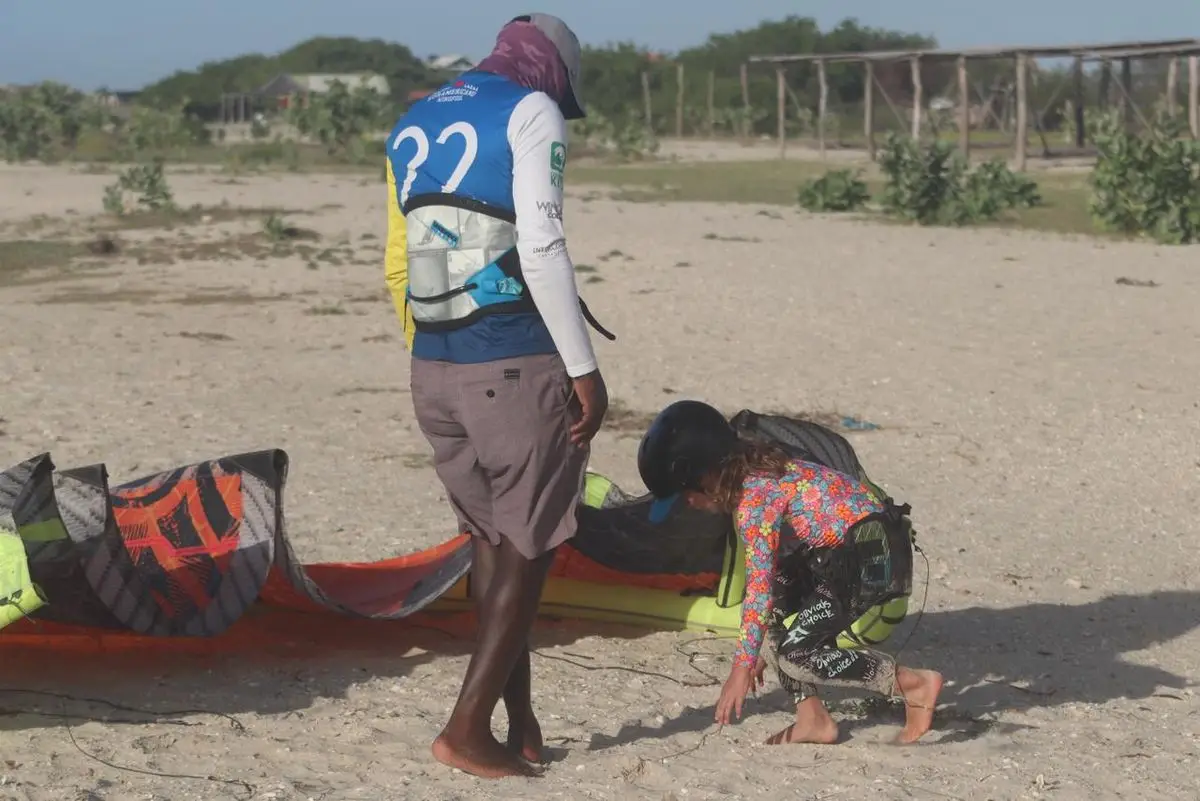
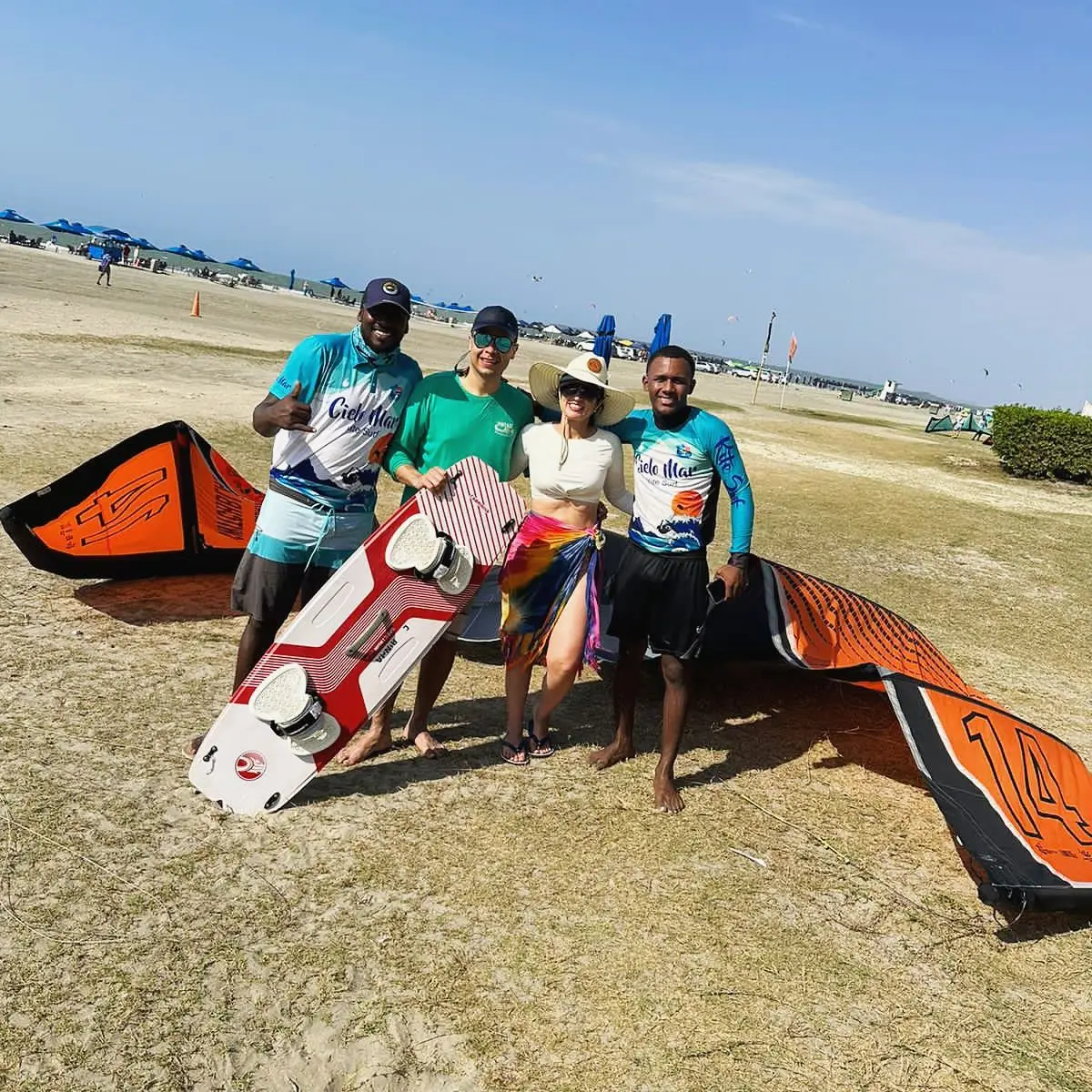
Because the wind builds through the day, tell the school you prefer afternoon slots. The school's own website lists a 7:00 am start, so confirm the exact time for your lesson when the school replies to your request. Our Cartagena kitesurfing page has the current offers and the booking form, and the school profile shows the team.
What is the best month to kitesurf in Cartagena?
February is a safe pick, though January and March are just as good. The north-east trade wind blows most reliably in these three months, and rain is close to zero at about 0.3 to 3 mm per month. Book January to March if you want the best chance of a wind every afternoon.
Is it possible to kitesurf in Cartagena in the rainy season?
Yes, but expect fewer days. The wet season runs roughly May to November, and September to November has about one rideable day per week according to the kite spot guides. Some days in June to August can work. Keep your schedule flexible and check with the school before you plan a block of lessons.
What time of day is best for kitesurfing at La Boquilla?
The afternoon is best. On a trade-wind day the wind is light until about 11 am, then around 7 knots, and it builds to 20 to 25 knots before sunset. Plan your session for the afternoon, and use the quiet morning for a beach briefing or a rest.
Do I need a wetsuit to kitesurf in Cartagena?
No. The sea is warm all year, about 29 °C from January to April and up to 31 °C in the middle of the year, and guides describe the water as warm all year. A rash vest is enough for sun protection and to stop the harness rubbing.
Is Cartagena a good place to learn kitesurfing?
Yes, particularly between January and March. La Boquilla has a wide sandy beach, a bay that shelters the water from big chop and waves, and conditions that do not depend on the tide. Cielomar Kitesurf School teaches there with IKO-certified instructors.