Best Time to Kitesurf in Dakhla: Wind and Season by Month
Dakhla gets wind on 300+ days a year. Which months are strongest, which are the best balance for learning, and when the wave spots work.
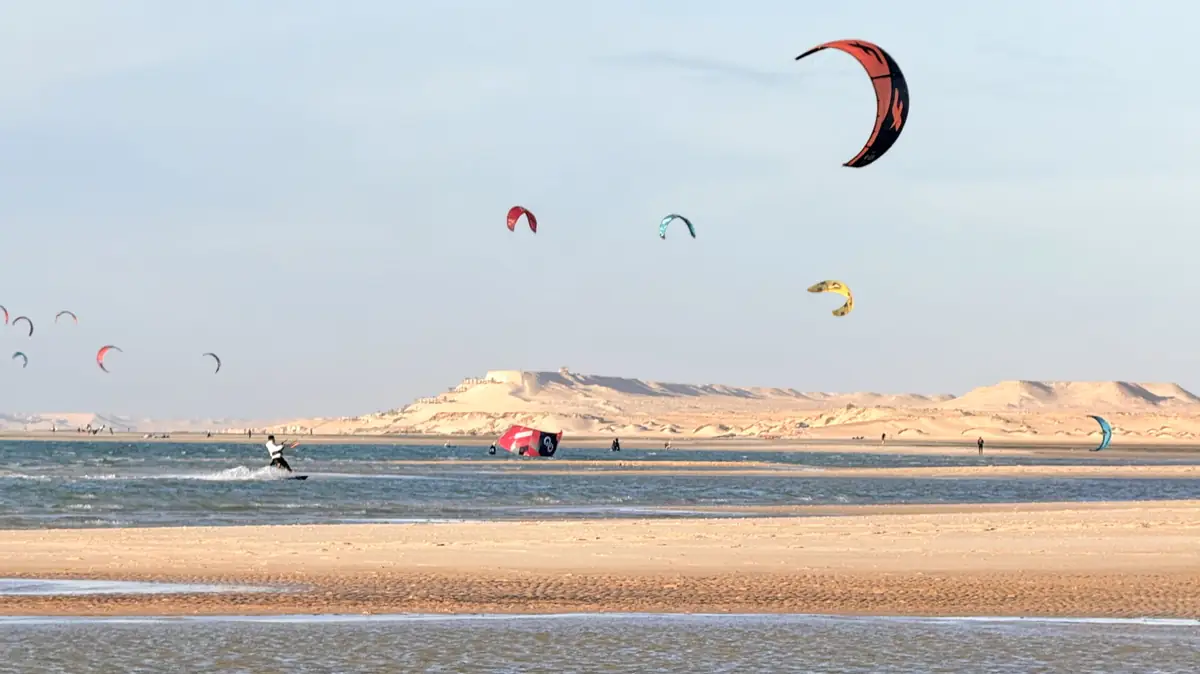
The best time to kitesurf in Dakhla depends on what you want. June to August is the windiest stretch, April to May and September to October are the best balance of strong, reliable wind and milder conditions, and November to March is lighter for flat-water kiting but the best window for Atlantic waves. Overall Dakhla has 300+ windy days a year.
Dakhla wind by season
| Months | Wind | Good for |
|---|---|---|
| November – March | Lighter, estimated 60–70 % of days windy; still kiteable with a bigger kite | Wave riders at Oum Lbouer and Lassarga, flexible plans |
| April – May | Strong, reliable wind, roughly 18–25 knots | Beginners and improvers, the best balance |
| June – August | Windiest, 25–35 knots, close to daily, but hot and gusty | Experienced riders, flat-water freestyle |
| September – October | Strong, reliable wind, roughly 18–25 knots | Beginners and improvers, the best balance |
How the wind works
Dakhla's wind is a single thermal system: hot air rising off the Sahara pulls cooler air in from the Atlantic, building through the morning and blowing steadily from around midday into the evening, mostly from the north or north-north-east and side-shore across the lagoon. Sources differ on averages: Dakhla Airport's long-term average is 16 knots with average gusts of 32 knots (Windfinder), while lagoon-based trackers cite roughly 12 to 21 knots with single-day gusts up to 35 knots in July and August.
Best months for a first kite course
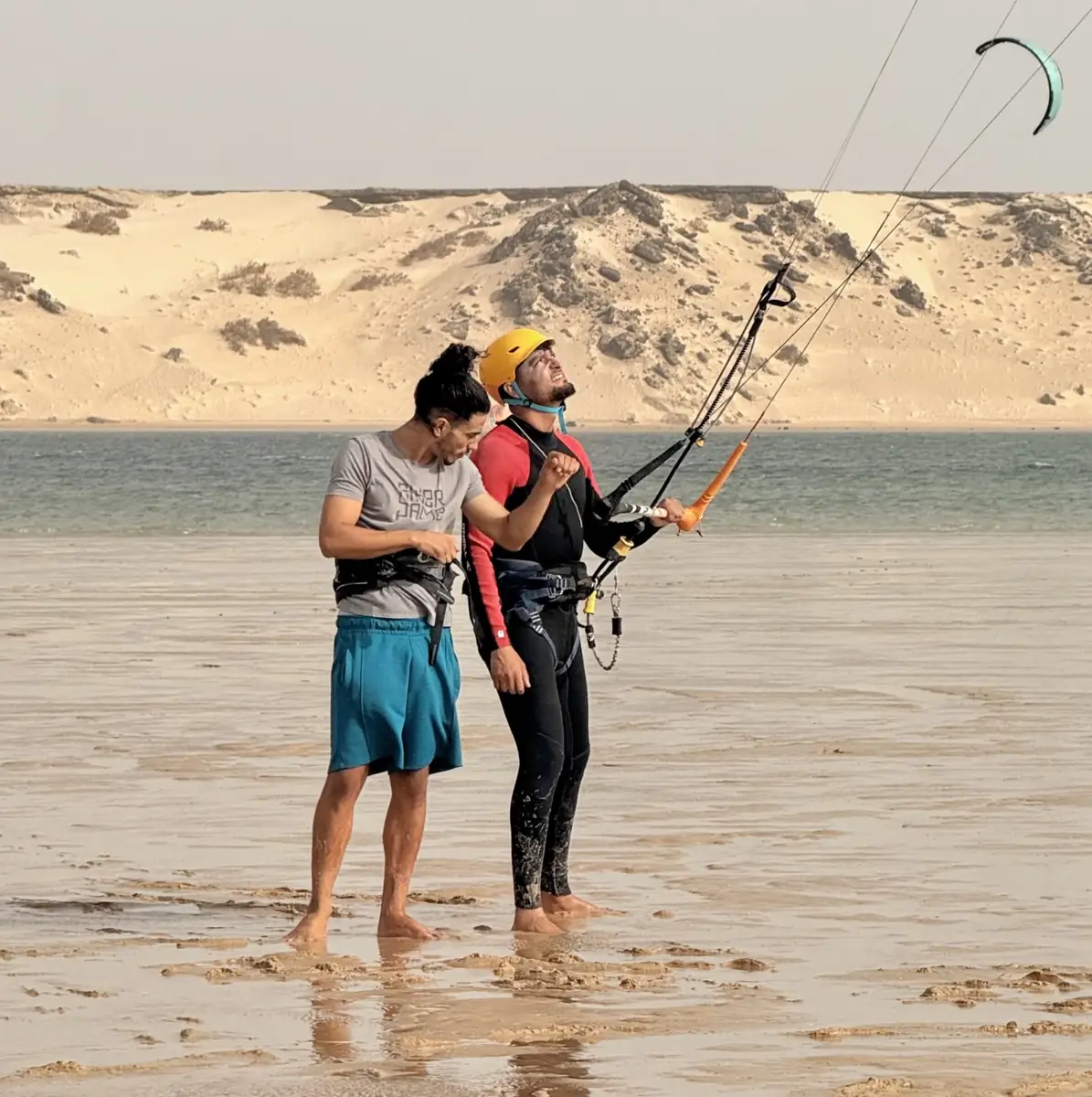
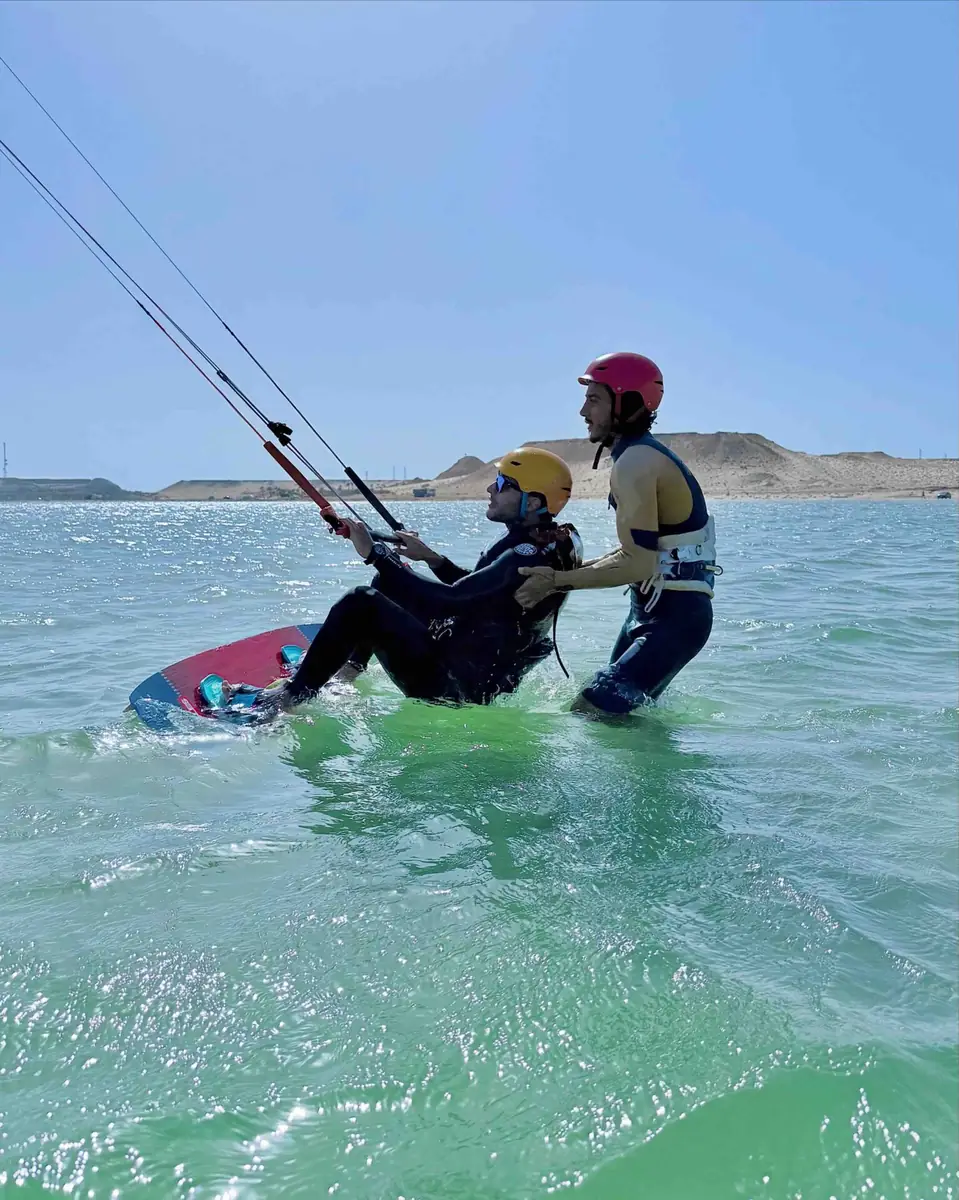
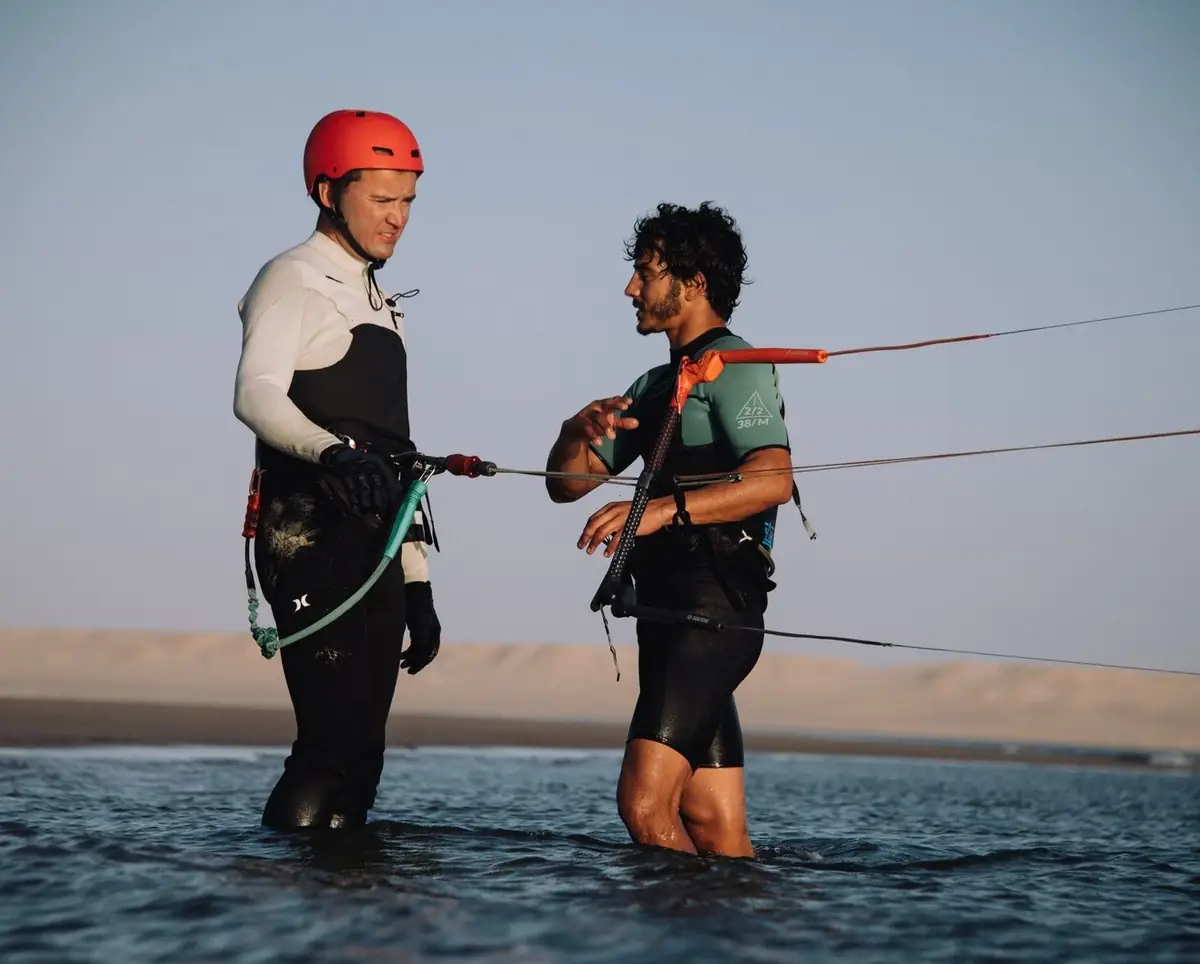
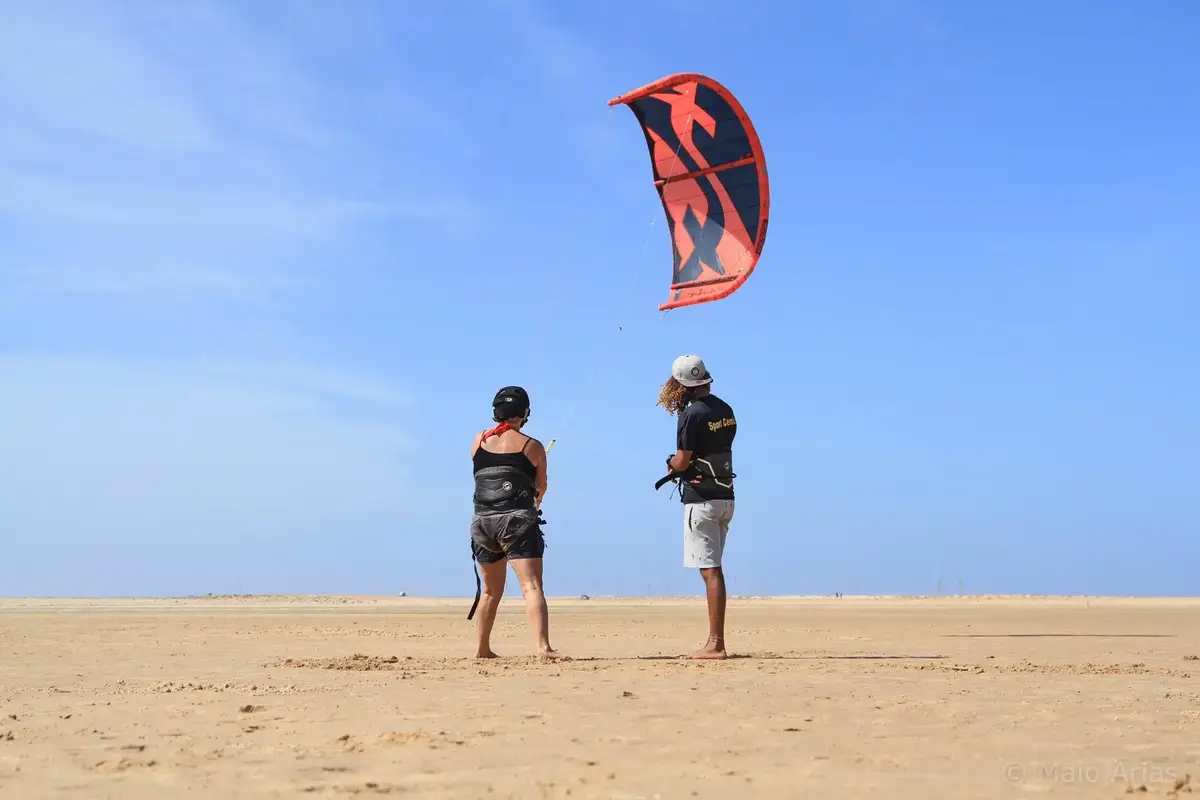
The lagoon is flat and shallow all year, so the question is wind strength and heat. In July and August the wind can be extra strong and gusty for a first-ever session, so April to May and September to October are often the gentler choice. Two schools on the lagoon take bookings here. At Hawama Kiteboarding a course starts at €60 per person for 2 hours in a group or €130 for a private 2 hours; at KiteResorts Dakhla 2 hours cost €70 in a group of up to four or €150 private. Both include the equipment and the 4x4 transfer. See learning to kitesurf in Dakhla for all formats and prices.
When the waves work
Dakhla also has real Atlantic point breaks a short drive away, Oum Lbouer and Lassarga. They work best from October to March, when the swell is running, which is the calmer-wind season of the lagoon. They are for experienced wave riders; the lagoon is the place to learn.
What to know before you go
- Fly into Dakhla (VIL), usually connecting through Casablanca.
- Lagoon camps are about 5 to 25 km from the airport; most schools include the transfer.
- Wetsuit: a 3/2 mm shorty-to-fullsuit in summer, a 4/3 mm for winter mornings.
- Heat: air can reach 35 to 40 °C on a still day and cool sharply after dark.
- Book lessons on the Dakhla kite page or on the profiles of Hawama Kiteboarding and KiteResorts Dakhla.
What is the best month to kitesurf in Dakhla?
April, May, September and October are most often singled out as the best balance of strong, reliable wind and milder conditions. June to August is windiest.
How windy is Dakhla in July and August?
Roughly 25 to 35 knots and close to daily, but also hot and gusty.
Can you kitesurf in Dakhla in winter?
Yes. From November to March the wind is lighter, estimated at 60 to 70 % of days, but still kiteable with a bigger kite. It is also the best season for Atlantic waves.
When are the waves good in Dakhla?
October to March, when the Atlantic swell runs at Oum Lbouer and Lassarga.
What is the water temperature in Dakhla?
Roughly 18 to 24 °C across the year, cooler from November to March and warmest from June to September.