Best Time to Kitesurf in Thalawila, Sri Lanka
The best time to kitesurf in Thalawila runs from May to September and December to February, with warm water and two distinct wind seasons.
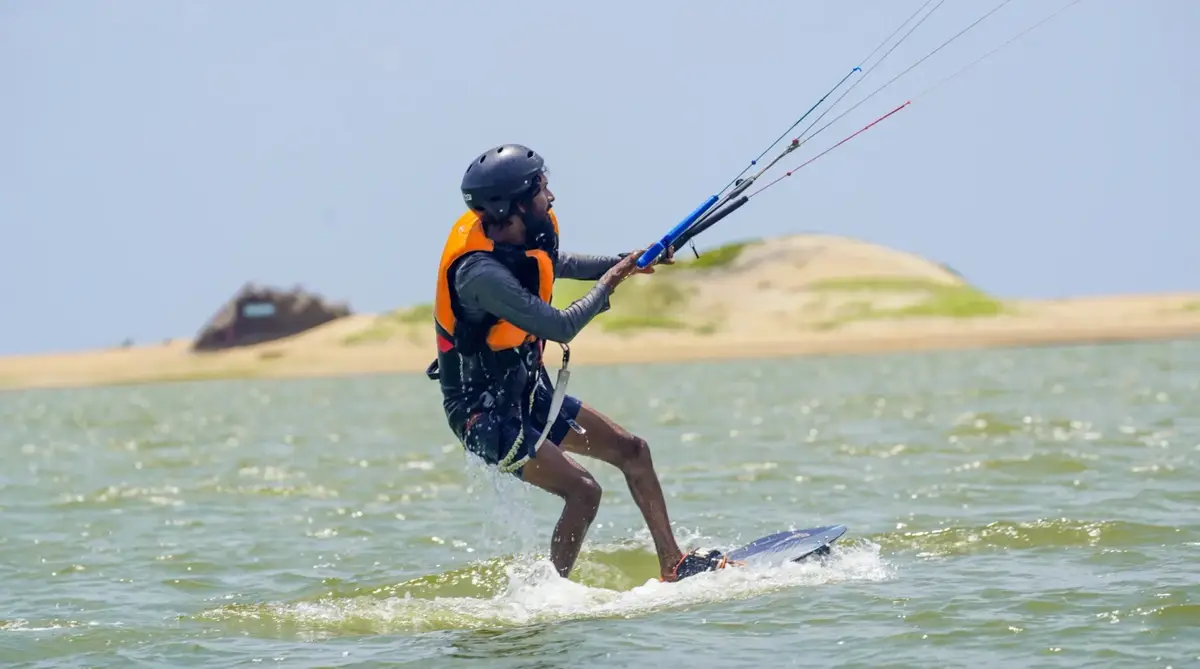
The best time to kitesurf in Thalawila is May to September for stronger southwest winds, or December to February for the lighter northwest season. Across the Kalpitiya area, summer winds range from 18 to 30 knots and winter winds from 15 to 20 knots. The water stays warm in both seasons. Beginners can take lessons in the shallow upper Kappalady lagoon; riders after stronger wind and longer sessions usually choose summer.
When is the wind season in Thalawila?
Thalawila shares the Kalpitiya peninsula’s two main kite seasons. The stronger southwest season runs from about mid-May to mid-October. The lighter northwest season runs from mid-December to mid-March. These dates describe the wider region, and wind at Kappalady lagoon can differ from conditions at other launches on the peninsula.
In summer, southwesterly winds across the region range from 18 to 30 knots. They often start earlier in the day and can carry on through much of the afternoon. Summer suits riders after stronger wind, longer sessions and seasonal trips such as Vella Island. Ask locally which launch best suits the wind direction on your dates.
The winter season is generally lighter, with winds around 15 to 20 knots across the Kalpitiya area. Wind often builds toward midday, leaving mornings free for other plans. December and March sit near the season’s edges; March has fewer kite days than the stronger summer months. For a first trip, leave room to move your lesson to a day with better conditions.
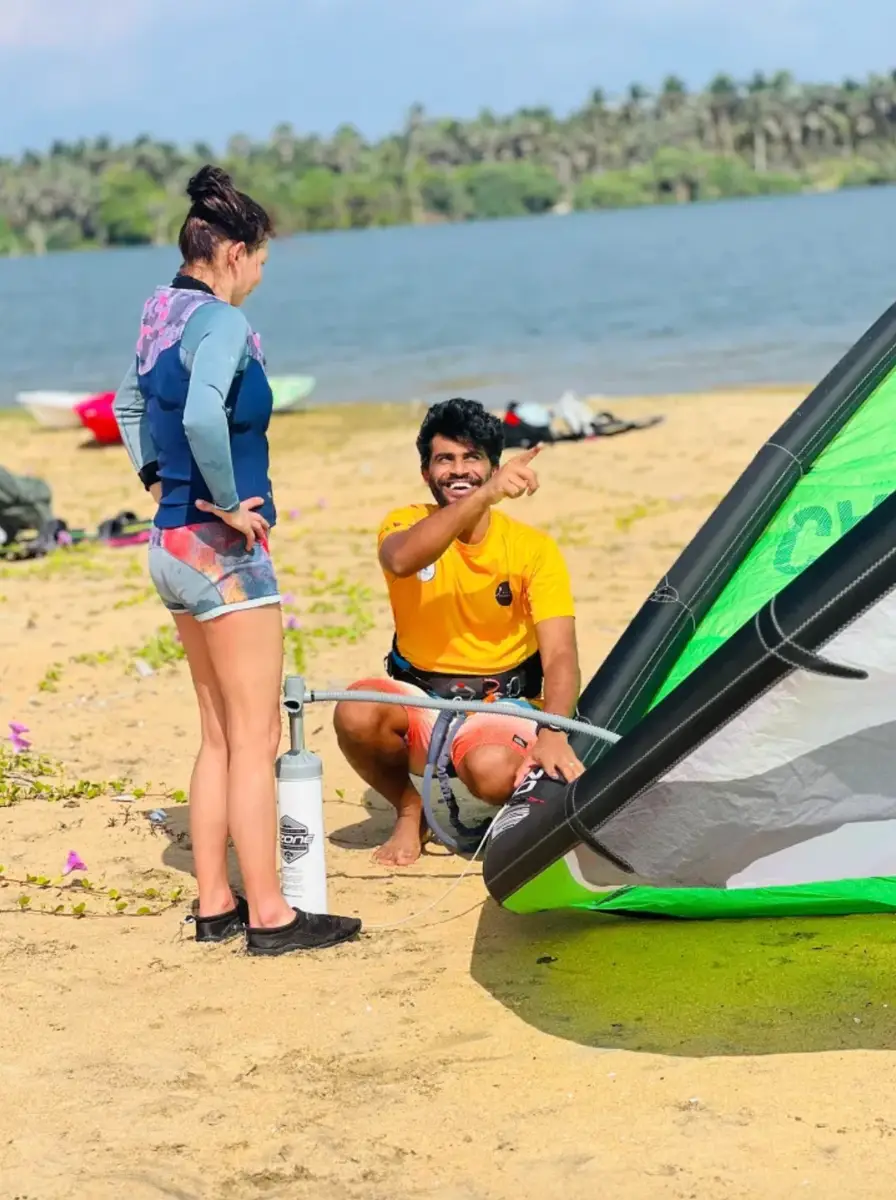
Kappalady lagoon is Kite Buddies’ teaching spot in Thalawila. The school is open daily from 09:00 to 17:00, so visitors can arrange a session in either season. Check the Thalawila kitesurfing spot guide for details about the lagoon and nearby launches, then send a request through the school profile.
What is Thalawila like month by month?
Across Kalpitiya, the stronger stretches are May to September and December to February. A kite day here means modelled wind of 12 to 35 knots for at least three daylight hours between 10:00 and 19:00, with gusts below 45 knots. The percentages below show how often that happened in Kalpitiya from 2017 to 2025. They help with choosing a travel window, but cannot guarantee conditions for a particular Thalawila session.
The share of kite days is highest from May through September, peaking at 99 percent in June. January and February also have favourable regional figures, at 65 and 69 percent. The figures fall in March and April, then rise again in May. Use them to pick a travel window, and ask the school about the lagoon and conditions on the day.
| Month | Wind | Water temperature | Crowds |
|---|---|---|---|
| January | 65% kite days | 27.5°C average | No data |
| February | 69% kite days | 27.8°C average | No data |
| March | 32% kite days | 29.0°C average | No data |
| April | 26% kite days | 30.1°C average | No data |
| May | 79% kite days | 29.4°C average | No data |
| June | 99% kite days | 28.3°C average | No data |
| July | 91% kite days | 27.5°C average | No data |
| August | 91% kite days | 27.3°C average | No data |
| September | 89% kite days | 27.7°C average | No data |
| October | 48% kite days | 28.3°C average | No data |
| November | 26% kite days | 28.6°C average | No data |
| December | 50% kite days | 28.0°C average | No data |
Each wind figure counts days with at least three hours between 12 and 35 knots during daylight hours from 10:00 to 19:00. The percentages cover 2017 to 2025 and refer to Kalpitiya. Water figures are monthly average temperatures for Kalpitiya. Monthly visitor counts for Thalawila are unavailable, so the crowds column is marked “No data.”
June to September is the strongest stretch in the regional wind record. For a winter trip, January and February have more kite days than March. October still has kite days, though the historical share is lower than in the core summer months. Use these patterns to choose your dates, then check the specific launch with Kite Buddies.
Which months are best for beginners in Thalawila?
January and February are sensible months for a beginner’s winter trip to Thalawila, while June through September fall in the stronger summer season. Lessons take place in the shallow upper section of Kappalady lagoon, where Kite Buddies teaches. The right month depends on how much wind you want and the instructor’s assessment of the conditions that day.
Winter winds across the region are around 15 to 20 knots, lighter than summer’s 18 to 30 knots. They also tend to build toward midday, leaving the morning more flexible. That timing can suit learners who want a gradual first session and an unhurried start. Allow several days in Thalawila, since the wind varies.
Summer has the more dependable historical kite-day record, but stronger wind can feel demanding for a first-timer. Book instruction instead of choosing a kite size or launch on your own. Kite Buddies teaches on Kappalady lagoon, where a local instructor can pick a suitable area as conditions change. The flat lagoon water gives learners room to practise basic control.
If your dates are fixed, keep more than one possible lesson slot open during your stay in Thalawila. This helps in March, April, October and November, when fewer days meet the kite-day definition than in the main season months. The Kite Buddies profile explains how to request a session, and the Sri Lanka kitesurfing page gives the wider regional picture.
How warm is the water and what should you wear?
Kalpitiya’s monthly average water temperatures range from about 27.3°C to 30.1°C. April has the warmest average, while August is the coolest in the monthly figures. The water stays warm through both kite seasons, so most visitors can ride in swimwear or board shorts with a rash guard instead of packing a full wetsuit.
A long-sleeved rash guard protects your shoulders and arms during a session on Kappalady lagoon. Use high-factor sunscreen and reapply it during a long day outside. You spend plenty of time in the sun while kitesurfing, and the shallow lagoon offers little shade on the water. A hat is useful before and after riding, when you are away from the kite.
Water temperature figures vary by method. Monthly averages run from 27.3°C to 30.1°C, while surface estimates for Kalpitiya rounded to whole degrees range from 28°C to 31°C. Both ranges point to warm water across Thalawila’s wider region. Swimwear, a rash guard and sun protection cover the usual needs.
Bring a reusable water bottle and drink between sessions at Thalawila. A towel and a dry change of clothes help after a lagoon lesson, especially if you plan to return to your accommodation before dinner. Kite Buddies teaches in English and Tamil, so you can ask the instructor about clothing and safety before launching.
What can you do on a day without wind?
A windless day in Thalawila can be a rest day, a trip around the Kalpitiya peninsula or a chance to see the coast from a different angle. Marine wildlife tours in Kalpitiya are most active from November to April. That overlaps with the lighter northwest kite season and transition months, when a morning trip may fit around an afternoon wind window.
Ask locally about a dolphin or whale-watching trip before setting out. Boat activity depends on sea conditions and the season, so confirm departure and return times in person. In winter, afternoon wind may build after a calm morning. Leave enough flexibility to return to Kappalady lagoon if a lesson or ride becomes practical later in the day.
For a quieter plan near Thalawila, walk around the village or visit St Anne’s Church, a local landmark with an annual feast around July 26. July falls in the stronger southwest kite season, so an early visit can leave the middle of the day open for riding. Dress for the sun and carry water.
The wider peninsula has lagoons, sandbanks and ocean-side spots, each with its own access and conditions to check. A calm day at Kappalady lagoon does not mean another launch will work. Ask a local operator about suitable transport and current access. A short trip to nearby Kalpitiya may suit the day’s plan.
How do you book a lesson in Thalawila?
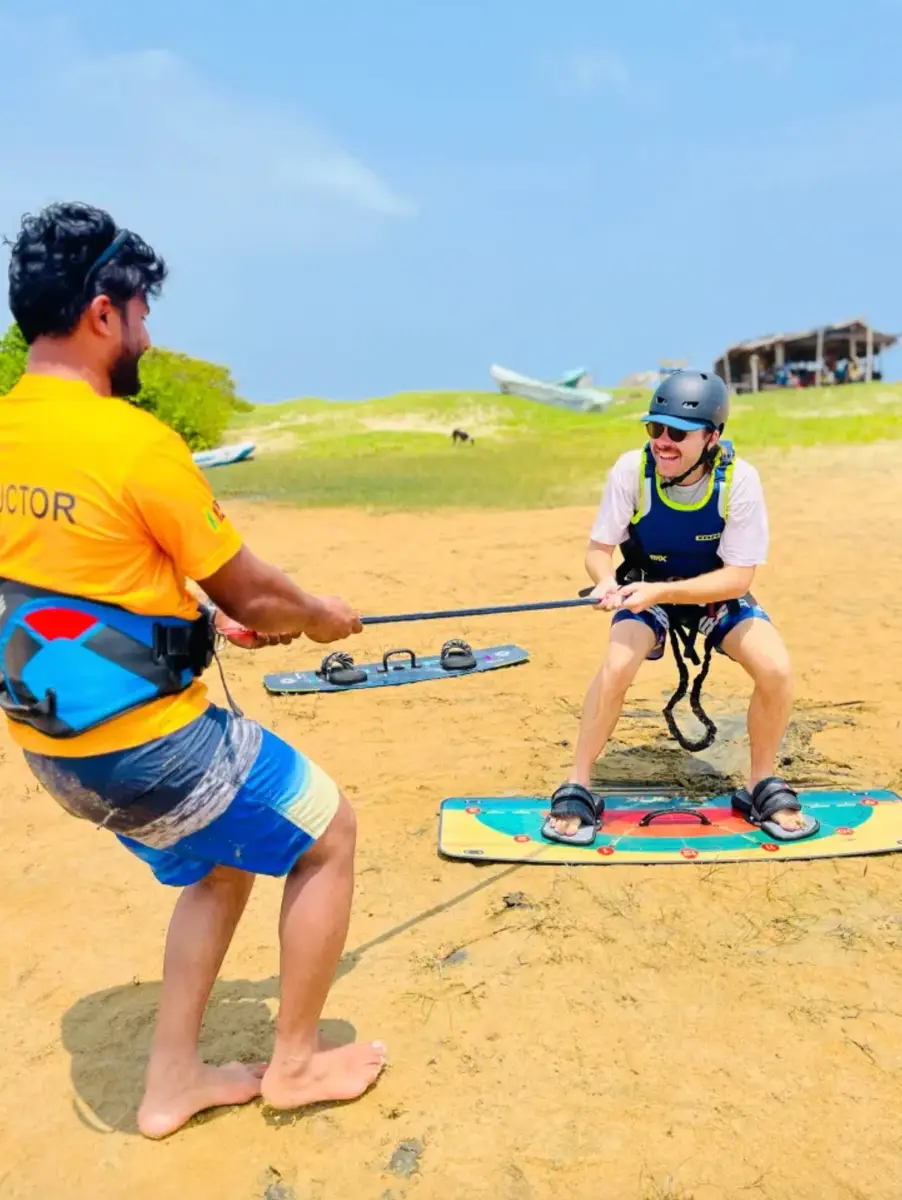
Kite Buddies teaches on Kappalady lagoon in Thalawila, with lessons available daily from 09:00 to 17:00. To arrange a lesson through kitesurfing.me, send a booking request, wait for the school to confirm it, then pay at the school. The school can check the date and lesson details before confirming.
When you request a lesson, include your preferred date, the number of people and your experience level. Say if you are a complete beginner or returning after a break, so Kite Buddies can direct your request to the right session. Equipment is included in bookable lessons. The school uses Ozone and Nobile equipment and has storage for guests’ own gear.
The school teaches in English and Tamil, which helps when discussing the lagoon launch, wind and safety instructions. Once your request is confirmed, ask where to meet and what time to arrive. Summer wind often starts earlier, while winter wind commonly builds toward midday, so the best session time varies by season.
Before sending a request, choose a few possible session times if your travel dates allow. The school can then suggest a suitable time on Kappalady lagoon. Read the practical details in our Thalawila spot guide and the separate guide to kitesurfing lessons in Thalawila, then send your request through the Kite Buddies profile.
Is June a good month to kitesurf in Thalawila?
June falls in the stronger southwest season for the Kalpitiya peninsula. In the wider region, 99 percent of June days from 2017 to 2025 met the kite-day definition of at least three daylight hours with wind from 12 to 35 knots and gusts below 45. Kite Buddies teaches on Kappalady lagoon in Thalawila; ask the school which launch and time suit your dates.
Does Thalawila have wind in December?
December marks the return of the northwest season around Kalpitiya. In the wider region, 50 percent of December days from 2017 to 2025 met the kite-day definition, based on modelled wind. The regional winter season generally runs from mid-December to mid-March, and the wind often builds toward midday.
Can I kitesurf in Thalawila without a wetsuit?
Kalpitiya’s monthly average water temperatures range from about 27.3°C to 30.1°C. A wetsuit is generally unnecessary for sessions on Kappalady lagoon. Pack swimwear or board shorts, a rash guard and strong sun protection. A long-sleeved top covers your shoulders while you ride.
Is October still part of the summer kite season?
The southwest season across Kalpitiya usually runs to mid-October. In the wider region, 48 percent of October days from 2017 to 2025 met the kite-day definition, below the central summer months. Thalawila may still have kiteable days, so ask Kite Buddies about conditions at Kappalady lagoon for your dates.
What should I plan for a calm morning in Thalawila?
Winter wind around Kalpitiya often builds toward midday, leaving a calm morning for breakfast, a village walk or a locally arranged wildlife boat trip. Marine wildlife tours operate mainly from November to April. Confirm boat conditions and return time before leaving, then check whether afternoon wind suits Kappalady lagoon.