Best Time to Surf in Selong Belanak: Months Guide
Find the best time to surf in Selong Belanak with 12 months of wave and water data, lesson prices, weather notes and practical travel tips.
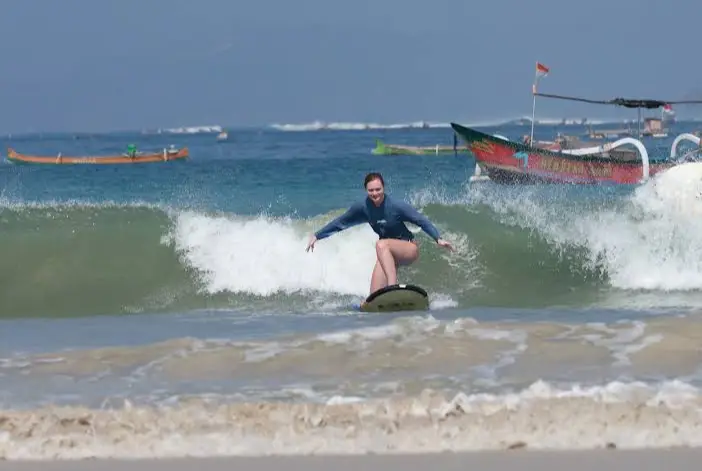
The best time to surf in Selong Belanak, Indonesia, is February to April or November for beginners seeking smaller, manageable days. The beginner ranking uses two years of modelled wave and wind data; individual days and years can differ. April to October brings the main swell season for surfers exploring south Lombok.
Key takeaways: February, March, April and November have the most beginner-suitable days in the two-year model. April has 20 such days and sits near the start of the drier season. Check actual conditions before a lesson, and confirm the price and equipment with the school.
When is the best time to surf in Selong Belanak?
Selong Belanak has surf all year, with April to October generally treated as the main swell season. May to September is the drier core of that period. For beginners, the two-year model identifies February, March, April and November as the months with the most suitable wave and wind days.
Those two windows suit different plans. Pick April if you want a high modelled count of beginner days near the start of the drier season. If your main aim is to explore stronger waves elsewhere on the south coast, the main swell season gives you a broader period to consider.
South and southwest swells reach the west-southwest-facing bay, where the headlands soften their arrival. Waves break left and right over sand. Mid tide is a useful starting point, and north, northeast or east winds blow offshore here. Watch the water at the beach before deciding whether conditions suit you.
The drier months, especially May to September, generally bring consistent south-coast swell in Indonesia. Selong Belanak's sheltered beach break gives learners a place to practise in whitewater, while nearby reefs can be more demanding. The Selong Belanak surf spot guide has more detail on the bay and its breaks.
A seasonal pattern cannot tell you what will happen during your particular week. Leave room in your plans for a change of lesson time, especially if you have only just started surfing. A school can look at the beach conditions and help you choose a session for your experience.
What is Selong Belanak like month by month?
Selong Belanak's monthly model ranges from 7 beginner-suitable days in August to 20 in April. It uses two years of wave and wind data, so treat the counts as a guide to seasonal patterns. Average sea temperatures range from 26.9°C in August to 29.4°C in December.
The wave-height figures are monthly model estimates, not a forecast or a promise of breaking-wave size at the beach. April's modelled typical height is 1.3 metres. A first-time surfer should still look for smaller whitewater near shore and ask an instructor to assess the conditions on the day.
July and August are generally busy dry-season months in Selong Belanak. The rainy season usually runs from November to March or April, and can bring quieter beach days. Water temperatures in the table are monthly averages. A warm average does not tell you how windy or rainy a particular session will be.
| Month | Typical modelled wave height | Water temperature: monthly average |
|---|---|---|
| January | 1.2 m | 29.1°C |
| February | 1.3 m | 28.9°C |
| March | 1.3 m | 29.1°C |
| April | 1.3 m | 29.3°C |
| May | 1.4 m | 28.8°C |
| June | 1.5 m | 28.0°C |
| July | 1.4 m | 27.2°C |
| August | 1.4 m | 26.9°C |
| September | 1.5 m | 27.3°C |
| October | 1.4 m | 28.4°C |
| November | 1.3 m | 29.3°C |
| December | 1.3 m | 29.4°C |
Leave space around lesson groups whenever you visit.
The table helps with packing and picking a month, but it cannot select your lesson time. Check a current forecast closer to your trip, then look at the breaking waves in person. The wider Indonesia surf guide is useful if you plan to visit more than one coast.
Which months are best for beginners in Selong Belanak?
February, March, April and November are the strongest choices for beginners in Selong Belanak by the model's share of suitable days. It counts 19 days in February, 19 in March, 20 in April and 19 in November. April also falls near the start of the drier season.
The counts combine modelled wave and wind conditions. They help you choose a month, but they do not guarantee a lesson on any particular day. February's 19 days represent more than 60% of a 28-day month. August has 7 suitable days in the same model, so allow flexibility if you visit then.
Start at Selong Belanak Beach, where the sandy bottom and slow waves suit first lessons. Stay clear of the rocks at both ends of the bay and give other boards room. The Selong Belanak beach break guide explains the setting before you choose where to enter the water.
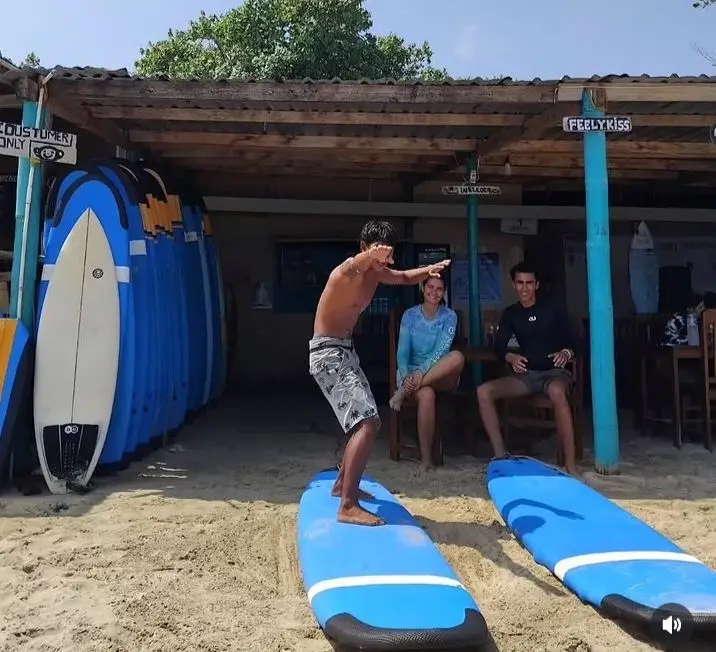
kitesurfing.me lists 3 schools teaching surfing at Selong Belanak. Ask about group size and equipment when you request a lesson, particularly if you are travelling with a child or have never stood on a board. One listed school also has a local lesson profile where you can start your enquiry.
For a stronger wave, experienced surfers can look west to Mawi, a shallow reef break with currents and sharp coral. Inside Gerupuk is a boat-accessed reef option for improvers. At Tanjung Aan, check wave size and water depth before paddling over reef. Ask locally about the day's access and conditions at each spot.
Your experience matters more than the month alone when choosing among those breaks. A sheltered sandy beach is a sensible place for a first lesson; a reef calls for more care with depth and access. If the surf looks beyond your ability, wait for another session or ask an instructor for advice.
How warm is the water at Selong Belanak?
Water at Selong Belanak averages 26.9°C in August and 29.4°C in December. Boardshorts or a swimsuit and a rash vest usually suit a surf session in these temperatures. The vest also adds a layer against the sun and rubbing from the board during a lesson.
The monthly average is 28.9°C in February, rises to 29.3°C in April, then falls to 27.2°C in July. It returns to 29.3°C in November. Pack for warm water in every season, and bring a dry layer for the ride back after a session in wet weather.
At the sandy centre of Selong Belanak Beach, a soft-top or longboard suits the slower waves. Ask the school about equipment when you request your lesson, rather than assuming a board is included. If you bring your own, tell your driver its length before arranging the journey to the beach.
Nearby reef breaks present a different bottom underfoot from the sandy centre of Selong Belanak. Check the access and depth locally before choosing one for an independent surf. If you are still learning to control your board, discuss your options with an instructor who can see the conditions.
What can you do on a flat day in Selong Belanak?
On a flat day, walk Selong Belanak's crescent beach, eat at a local warung or drive to Kuta Lombok. Kuta is roughly 30 to 45 minutes away by road and has more places to eat. Watch the tide when walking towards the rocky ends of the beach.
The bay has beachside eateries and green hills behind the sand. At low tide, more sand is exposed for a walk; as the water rises, the dry strip narrows. Watch the water around the rocky points and turn back when the route looks awkward. Take your rubbish away when you leave.
Allow roughly 30 to 60 minutes by car from Lombok International Airport, depending on your destination and road conditions; confirm the journey time and board space with your driver. If you want a base close to the sand, read the guide to staying near Selong Belanak.
A flat spell is also a good time to sort out transport for the next session. If you are travelling with several boards, tell the driver how many there are as well as their lengths. Ask where you will meet after surfing, particularly if your plans depend on the tide.
Staying near the beach can make it easier to check the water before a lesson. If you prefer Kuta Lombok as a base, allow for the road journey when arranging your session. The Selong Belanak accommodation guide covers another option for planning where to stay.
How do you book a lesson in Selong Belanak?
To book a Selong Belanak lesson, send a request through the Ari Surf Lombok profile. The school confirms the request, and you pay at the school. Its listed 2-hour surf lesson costs EUR 250 per person. Share your dates and experience when you send the request.
The same school lists a 3-hour private lesson for EUR 300 per person and a 3-hour kids' lesson for EUR 400 per person. Ask what each lesson includes before booking. For a child, include their age and any previous surf experience so the school can advise on the session.
The 3 schools listed on kitesurfing.me give travellers several places to enquire about Selong Belanak lessons. A family planning an April trip can use the model's 20 beginner-suitable days as a seasonal clue, then ask a school about its actual dates and the right lesson for each person's ability.
- Choose a 2-hour, private or kids' lesson from the listed options and confirm what the price includes.
- Send your Selong Belanak dates, surfing experience and any questions about boards with your request.
- After the school confirms, arrange your journey and pay at the school.
If you stay in Kuta Lombok, allow about 30 to 45 minutes for the drive to Selong Belanak. A car can carry a surfboard and take you to other south-coast beaches. Confirm board space before setting out, especially if several people are travelling with equipment.
Before you settle on a date, check the meeting point and ask how the school handles unsuitable conditions. Give yourself time to reach the beach without rushing. You can also browse surf lesson destinations if Selong Belanak is one stop on a longer trip.
How should I read a Selong Belanak surf forecast?
Read a Selong Belanak surf forecast for wave height, swell direction, wind and tide together. South and southwest swell reaches the bay, while north through east winds are offshore. Mid tide is a useful starting point. Watch several sets at the beach and ask local staff about currents.
When should I avoid rainy Selong Belanak weather?
Choose May to September for the drier core of the year in Selong Belanak. The rainy season generally runs from November to March or April. February and March still have high modelled counts of beginner-suitable surf days, so bring a rain jacket and keep lesson dates flexible.
What does a 12-second swell period mean at Selong Belanak?
A 12-second swell period means roughly 12 seconds pass between successive swell waves at a fixed point. At Selong Belanak, read that figure alongside swell height, direction, wind and tide. The sheltered bay can soften incoming swell, while nearby reef breaks can respond differently to the same offshore conditions.
Are there sharks near Selong Belanak in Lombok?
Sharks live in waters around Lombok, and blacktip reef sharks have been recorded at Gili Petelu in East Lombok. That study concerns a different area from Selong Belanak and does not establish how often sharks occur in the bay. Ask people working on the beach about current local advice.
What should surfers avoid in Selong Belanak?
Surfers at Selong Belanak should avoid the rocks at both ends of the bay and leave space around swimmers and lesson groups. Give a surfer already riding a wave room, and keep control of your board. On a scooter journey from Kuta Lombok, wear a helmet and follow local road rules.