
Best Time to Surf in Tamarin: A Guide to May and June
The best time to surf in Tamarin depends on your level. Plan around 17 modeled reef days in June, warm water and bay lessons.
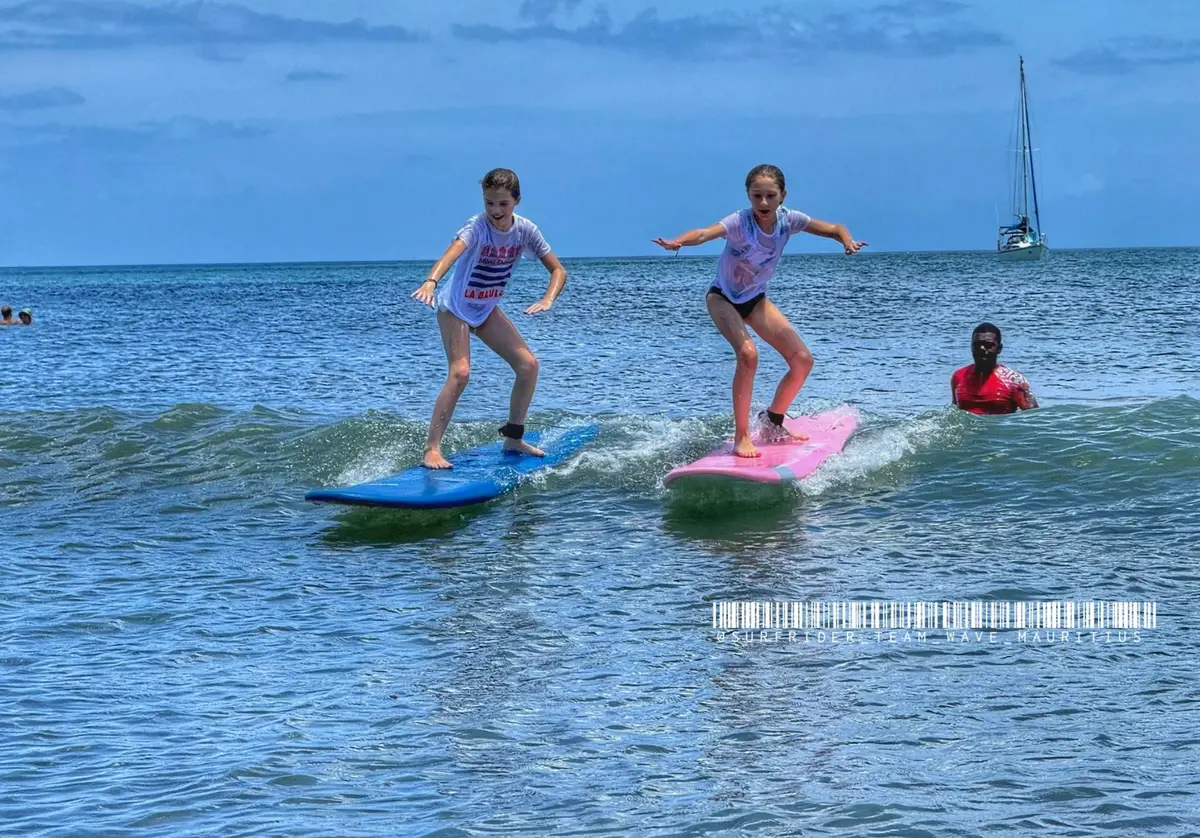
The best time to surf in Tamarin, Mauritius, is May, June or September for experienced surfers seeking the reef's typical 1 to 3 metre waves. Beginners can take lessons in the sandy inner bay when waves and currents suit them. The right date for a first lesson depends more on the day's conditions than on the reef's monthly count.
Key takeaways: Experienced surfers can consider May, June or September for modeled reef consistency. Beginners should ask about suitable conditions in the inner bay. June has 17 modeled rideable reef days, but the count is not a forecast or a measure of lesson conditions.
When is the best time to surf in Tamarin?
May to September is Tamarin's main winter surf season. In a two-year model of the reef, June has about 17 rideable days, September has 15 and May has 14. The reef's typical 1 to 3 metre waves suit experienced surfers. Check the swell, wind and tide again when you arrive.
South to southwest swell reaches the open bay, while easterly wind blows offshore across the west-facing coast. Dal, on the southern side, is a left over reef. Its main break favors mid to high tide. Use the surfing guides to get familiar with the terms before checking the day's conditions.
Black Stone breaks to the right over rocky reef beside the northern side of Tamarin Bay. Check the tide, rocks and entry from shore before paddling out. Both reef breaks call for confident surfing and care around other people. Watch several sets, notice where surfers enter and leave, and give those already riding waves room.
A promising month gives you more chances to find a suitable session; it cannot guarantee waves on your travel dates. Leave some room in your schedule if surfing the reef is your main goal. For the break's setting and lesson options, see the Tamarin surf spot guide.
What is Tamarin like month by month?
June has the highest modeled count at Tamarin's reef, with 17 rideable days, followed by September with 15 and May with 14. The figures describe reef conditions across two years. In the same model, water ranges from about 24°C in September to 29°C from February through April.
The monthly counts combine wave and wind data for the reef break. They can help experienced surfers choose travel dates, while the actual waves depend on the swell, wind and tide during a visit. April has 11 modeled reef days, while October has nine and November has ten.
January through March have lower counts, with three, five and two days respectively. That does not mean the inner bay has the same pattern. If you want lessons, ask the school about your dates instead of using the reef figures to predict the waves you will learn on.
| Month | Modeled rideable reef days | Modeled water temperature |
|---|---|---|
| January | 3 days | 28°C |
| February | 5 days | 29°C |
| March | 2 days | 29°C |
| April | 11 days | 29°C |
| May | 14 days | 28°C |
| June | 17 days | 26°C |
| July | 12 days | 25°C |
| August | 9 days | 25°C |
| September | 15 days | 24°C |
| October | 9 days | 25°C |
| November | 10 days | 26°C |
| December | 8 days | 28°C |
These counts include days rated rideable, not necessarily good; they describe the reef and do not predict beginner lesson conditions.
Which months suit beginners in Tamarin?
Beginners can look for lessons in Tamarin's inner bay throughout the year, on days when waves and currents match their ability. The sandy bay is a different setting from Dal's reef. The school listed here runs 1.5-hour bay lessons and can discuss conditions for your dates.
A smaller day in the inner bay gives a new surfer a chance to practise paddling and standing. Tell the school whether you have surfed before and ask where the lesson will take place. Conditions can change, so ask again close to the session and follow the instructor's advice at the beach.
On kitesurfing.me, a 1.5-hour bay lesson costs 25 EUR for four, 30 EUR for three or 35 EUR for two. A private bay lesson costs 50 EUR. See the bay lesson choices for the group options, or check the Tamarin lesson request form for current availability.
- Tamarin Public Beach and inner bay: beginners can practise in whitewater with an instructor when conditions suit their level.
- Dal: experienced surfers ride a left over coral reef, with the main break favoring mid to high tide.
- Black Stone: experienced surfers can look for a right over rocky reef beside the northern side of the bay.
The reef and the inner bay serve different surfers, even though they share the same coastline. A high reef count is useful if you have the experience to surf there. For a first lesson, the better question is whether your instructor expects manageable waves and currents at the teaching spot.
How warm is Tamarin's water?
Tamarin Bay's modeled water temperature is about 29°C in February and 24°C in September. Boardshorts or a swimsuit with a rash vest suit the warm water. For a longer winter session, pack a thin wetsuit top and choose the layer that feels comfortable to you.
The model shows water cooling through winter, to about 26°C in June and 25°C in July and August. It rises to about 26°C in November and 28°C in December. Other long-term coastal averages differ, so treat these temperatures as a packing guide rather than a forecast.
Tamarin weather follows Mauritius' warmer, wetter summer and cooler winter pattern. The Tamarin region receives about 1,200 mm of rain in an average year. Pack sun protection and a light rain layer, then check local weather information close to your dates. A light layer also helps between winter sessions.
A rash vest gives useful sun coverage during a 1.5-hour lesson. If you tend to feel cold in the water, bring a thin wetsuit top even when the monthly average looks warm. Ask the school what to bring before your lesson, especially if you plan to travel with a small bag.
What can you do on a flat day in Tamarin?
On a flat day in Tamarin, walk along the public beach, visit the nearby salt pans or explore the Black River area. Flic-en-Flac is another base, about 12 km away by road. A car makes it easier to travel along the west coast with a board.
The salt pans are visible from the main coastal road near Tamarin. You can also use a quiet day to watch how waves reach Dal and Black Stone. Look for the reef, the rocks and the route surfers take back out before considering a later session. Dal is south of the bay and Black Stone is beside the northern rocks.
A base near Tamarin Public Beach makes it easier to look at the bay before deciding whether to surf. With a car, Flic-en-Flac is another option to consider. The guide to staying near Tamarin covers both bases and the practical choices for a surf trip.
A flat day can also be useful for planning a lesson. Check the forecast with your instructor and ask whether another time would suit your level. If you have your own board, use the time to check your equipment and plan a safe route to the beach.
How do you book a lesson in Tamarin?
Send a booking request for a Tamarin lesson, wait for the school to confirm it, then pay at the school. The marketplace lists one school teaching surfing in Tamarin. Bay lessons last 1.5 hours and reef lessons last 2 hours. Ask about conditions for your dates before choosing.
The school's 2-hour reef lesson costs 45 EUR for two or 60 EUR for a private lesson. Choose the sandy bay for an introduction and discuss your experience before requesting a reef session. The surf school lesson page sets out the available options.
Arrange a taxi or rental car from the airport and confirm space for your board before travel. Give the driver or rental company your board dimensions when you book. Near the beach, use public access and leave room for swimmers. Keep your board under control on shore as well as in the water.
When you send a request, include the number of people in your group and their surfing experience. Ask the school to confirm the meeting point, time and price for your chosen session. The Tamarin accommodation guide can help you pick a base before arranging transport.
Where can I find the current surf report for Tamarin Bay?
Check a current Tamarin surf forecast before leaving, then watch the bay from shore. Read swell height and direction alongside period, wind and tide. Dal's reef and the sandy inner bay can break differently on the same swell. The monthly table describes past modeled conditions, not today's report.
What does a 12-second swell period mean in Tamarin?
A 12-second swell period is the time between successive swell waves approaching Tamarin. Read it alongside swell height, direction, wind and tide rather than using it alone to choose a break. At Dal, watch several sets from shore and judge the breaking waves against your experience.
Do tall or short surfers have an advantage in Tamarin?
Surfers of different heights can learn in Tamarin's sandy inner bay. Choose a board that supports your size and ability, then practise paddling and standing in suitable conditions. The listed school runs 1.5-hour bay lessons, including a private option for 50 EUR. Tell the instructor about your experience when booking.
How should surfers share waves at Tamarin?
At Tamarin, give priority to the surfer closest to the breaking part of the wave. Watch the lineup before paddling out, take turns and keep control of your board. Dal and Black Stone break over reef, so allow room for other surfers and check your route from shore.
How do I get a surfboard to Tamarin from the airport?
Arrange a taxi or rental car from the airport and confirm space for your board before travel. Give the driver or rental company the board's dimensions when booking. If you stay near Tamarin Public Beach, you can check the inner bay close to your base before setting out.