Best Time to Surf in Weligama: A Monthly Guide
The best time to surf in Weligama runs from November to April. Choose your month, check the forecast and plan a lesson from 40 USD.
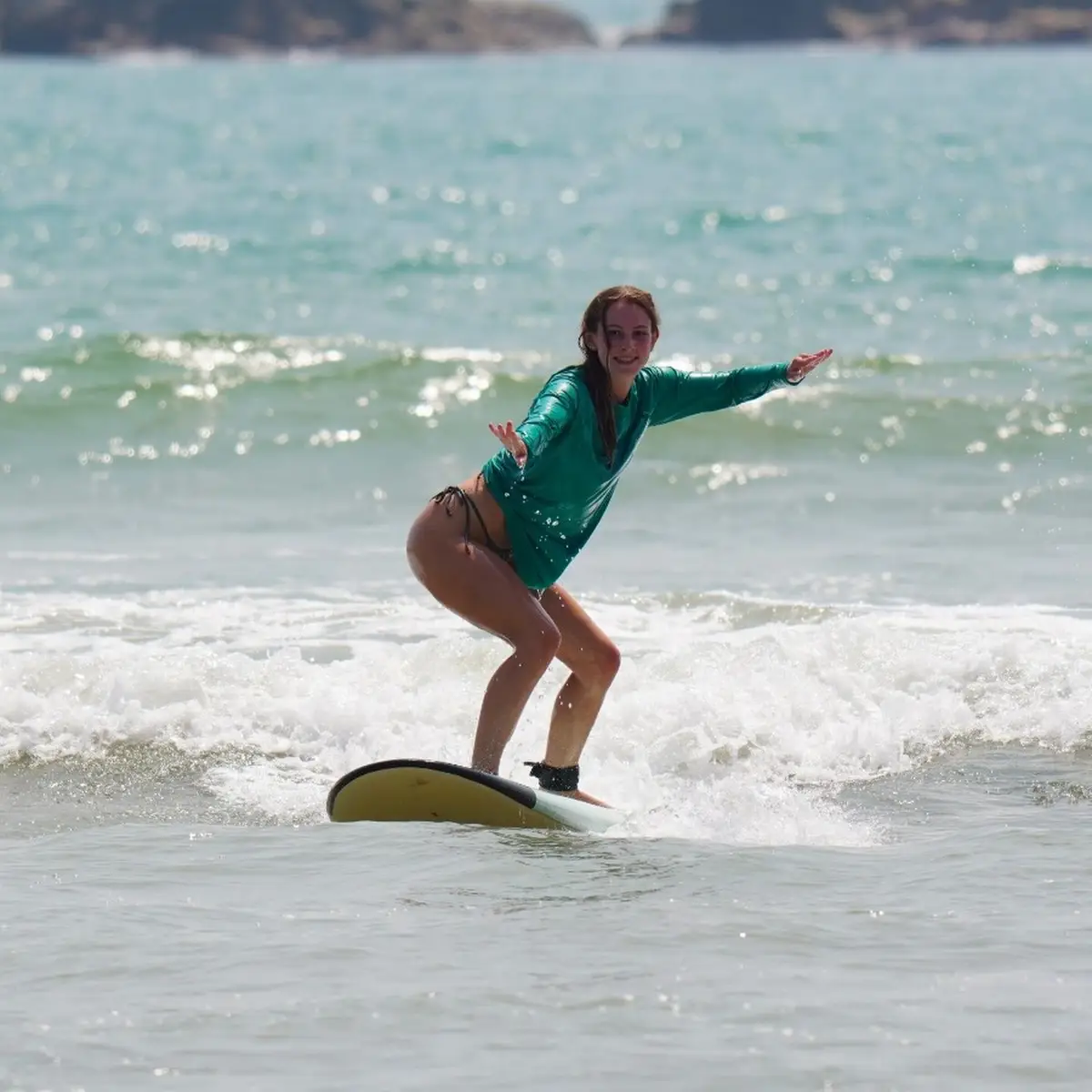
The best time to surf in Weligama, Sri Lanka, is generally November to April, with December to March often the most consistent stretch. The bay has a sandy inside area where beginners can practise in whitewater. Larger days give improving surfers more options, but the conditions and the best part of the beach change.
When is the best time to surf in Weligama?
The Weligama surfing season generally runs from November to April, with December through March the strongest choice for a trip built around surfing. April sits at the end of that window, and conditions can change as the southwest monsoon approaches. A season gives you better odds, not a promise of waves.
Choose December to March for the core season; choose November or April if your dates are flexible; from May to October expect more variable south-coast conditions. Weligama weather tends to bring more wind and rain during the southwest monsoon. The east coast has a different seasonal pattern, and some surfers head to Arugam Bay during those months.
During the south-coast season, mornings often bring lighter winds before sea breezes pick up later in the day. An early session can also leave time to rest when the sun is strongest. Check the Weligama spot guide for the layout of the bay, then look at the day's forecast before settling on a session time.
If your trip falls over Christmas or New Year, expect a busy beach and book with some room to move. November and April may suit a less crowded trip, provided you can change plans when the weather shifts. If you are exploring other places to ride, the surfing destinations page is a starting point.
What is Weligama like month by month?
Weligama has its most dependable south-coast surf window from November to April, while May to October is more variable. The water stays warm throughout the year: monthly averages range from 27.6°C in July and August to 29.8°C in April. The table can help you pick travel dates, then check conditions nearer departure.
January to March sit within the core season, while October is a transition month. Crowd descriptions are seasonal estimates, so a holiday week can feel busier than another week in the same month. The seasonal surf descriptions are broad travel guidance, not a daily forecast or a count of surfable days.
| Month | Seasonal surf conditions | Water temperature | Crowds |
|---|---|---|---|
| January | Peak season, consistent swells | 27.8°C average | Busy |
| February | In season, often good conditions | 28.2°C average | Peak-season crowds |
| March | In season, consistent waves | 29.1°C average | Easing late in month |
| April | Season's end, waves early in month | 29.8°C average | - |
| May | Southwest monsoon, often choppy | 29.0°C average | Quieter season |
| June | South-coast off-season | 28.2°C average | Quieter season |
| July | Onshore winds, variable conditions | 27.6°C average | Quieter season |
| August | South-coast off-season | 27.6°C average | Quieter season |
| September | Off-season, mixed conditions | 28.0°C average | Quieter season |
| October | Transition, conditions start improving | 28.4°C average | - |
| November | Season begins, cleaner conditions | 29.0°C average | Fewer than peak months |
| December | Peak season begins, consistent swells | 28.3°C average | Busy, especially holidays |
The water figures are monthly averages from the preceding ten years, so the sea may feel warmer or cooler during your visit. Weligama can work with swell around 0.3 to 1.4 metres; check the day's conditions before entering. The range describes swell that can work at the spot, rather than an average or a guarantee of suitable waves.
For a short stay, give yourself more than one possible surf day if you can. That matters most at the edges of the season, when wind and rain can change your plans. A longer stay also gives beginners time to rest between lessons and return to skills that felt awkward on the first day.
Which months are best for beginners in Weligama?
December to March is the clearest choice for a first surf trip to Weligama, because those months sit within the most consistent part of the season. November and April can also suit beginners with flexible plans. In any month, ask an instructor to choose a section that fits your experience and the day's waves.
Start on the sandy inside of Weligama Bay, where broken waves let you practise standing up without paddling into the outside lineup. Sandbanks move, so the easiest section can shift along the beach. On a bigger day, some waves close out across the sandbank and may be too difficult for a first session.
Surfers ready to paddle beyond the whitewater can look for a suitable peak farther out in Weligama Bay. Nearby Midigama has reef breaks including Lazy Left, Lazy Right and Plantation Point, which call for more experience and care around the reef. Mirissa has a sandy section and a separate reef point. Ask locally about entry and conditions before choosing either.
Busy mornings need extra care, especially in December and January. Hold on to your board, leave room around other learners and follow your instructor's choice of practice area. Give people already riding a wave space, and look both ways before paddling for one. A quiet patch of water is useful only if its waves suit your ability.
The Weligama lesson guide explains what a beginner session involves. You can also check the school profile and lesson details before choosing dates. A few days in town gives you a chance to adjust a lesson time, practise again and take a break if your shoulders need one.
How should you read the Weligama surf forecast?
Read the Weligama surf forecast on the day for swell direction and size, wind and tide, then check the beach before entering. Weligama can work with swell around 0.3 to 1.4 metres, including south to southwest swell. That range alone cannot tell you whether a particular wave will suit a beginner.
Swell direction tells you where the incoming energy travels from. A southwest swell can reach the bay, while local sandbanks affect how those waves break. Swell size describes the incoming sea state, not the exact height of every breaking wave. Watch several sets from shore and ask an instructor where learners should enter.
Wind matters too. A north wind blows offshore at Weligama and can help keep waves clean, while onshore wind can make the surface choppy. Morning winds are often lighter, but check the forecast for your actual session. Rain, wind and a rising swell can change the beach after a calm-looking start.
Weligama Bay can work at high tide, but shifting sandbanks change the waves; ask an instructor which section is suitable. Check the tide time alongside the wind and swell, then look at how the waves break where you plan to enter. High tide by itself does not make a session safe or unsuitable.
Swell period is the time between waves, measured in seconds. A 12-second period is one forecast reading, not a rule that says Weligama will be safe or good for every surfer. Read it alongside size and direction, and remember that sets can bring larger waves. If you are unsure, stay on shore and ask for local advice.
How warm is the water and what should you wear?
Weligama water temperature averages about 27.6°C to 29.8°C across the year, so most visitors can surf in swimwear and a rash guard. April has the warmest monthly average, while July and August have the coolest. Those figures describe monthly averages, so the water on your visit may differ.
A long-sleeved rash guard helps protect skin from sun and rubbing against the board. Bring water-resistant sunscreen, a hat for time on shore and drinking water for after your session. Reef booties can be useful at nearby reef breaks; Weligama Bay has a sandy bottom. Ask about your chosen entry, especially after heavy rain or when the water looks discoloured.
You do not need to pack a thick wetsuit for most sessions in the bay. If you tend to feel cold, a thin surf top gives extra coverage. Before buying or bringing equipment, check what your lesson includes: the listed beginner session includes a board and rash guard as well as coaching.
What can you do on a flat day in Weligama?
On a flat day in Weligama, rest or explore the south coast without moving your base. Mirissa lies southeast, while Midigama and Ahangama are west. Galle Fort, a UNESCO World Heritage Site, is about 40 minutes west by road, and Koggala is known for its stilt fishermen. Allow extra travel time if rain slows traffic.
How do you book a lesson in Weligama?
To book a Weligama lesson, send a request for your preferred date, wait for the school to confirm it and pay at the school. One listed beginner lesson lasts 2 hours and costs 40 USD. A request starts the booking process; it does not by itself guarantee that your preferred time is available.
The listed choices are a beginner lesson for 40 USD, lasting 2 hours; a group course for 100 USD, with 3 lessons over 6 hours; and a private course for 180 USD, with 5 lessons over 10 hours. The beginner lesson includes a board, rash guard and coaching. The school has an ISA-certified team.
Choose the single lesson if you want an introduction and have limited time. The group course gives you several sessions to revisit what you learn, while the private course suits a longer stay with more time for instruction. Ask the school about availability and the course details before making plans around a particular session.
The seven schools listed on kitesurfing.me give travellers several starting points for a Weligama booking. The prices above apply to the choices on the listed Weligama school profile, rather than to every school. Send your experience level and preferred dates with your request, particularly if you are visiting during busy December or January.
If you prefer a morning session, mention that in your request and leave room for the school to suggest another time. Wind, swell and sandbanks can change the choice of practice area. Read the guide to learning in Weligama for more on lessons, and use the Weligama Bay spot page to get your bearings.
If you bring your own board to Weligama, tell your transfer provider its length before booking and confirm there is room for it. A padded board bag helps protect it in transit. If you plan to travel by train or another shared service, check its current luggage rules first; the included lesson board avoids that extra arrangement.
Keep the school's confirmation handy and check where to meet before you leave for the beach. If you want to look beyond Weligama on the same trip, browse the surf destinations on kitesurfing.me. For questions about equipment or the payment arrangement, contact the school through your booking request before the lesson.
Can you surf Weligama outside November to April?
Yes, Weligama Bay can have surf outside the November to April season. From May to October, southwest monsoon wind and rain make south-coast conditions more variable. Leave room to change your plans, check the forecast on the day and ask an instructor which part of the bay suits your level.
Are January and February too crowded for a first lesson in Weligama?
January and February are busy in Weligama, but crowds do not rule out a first lesson. Ask your instructor where to practise and consider an early session. Keep hold of your board and leave space around other surfers, especially in the sandy inside area where many people learn.
What swell size can work in Weligama?
Weligama can work with swell around 0.3 to 1.4 metres; check the day's conditions before entering. That is a workable range for the spot, not an observed average or a promise of beginner waves. Wind, swell direction and shifting sandbanks all affect how the waves break.
Is April still a good month for Weligama surf?
April can be a good month for Weligama surf, particularly early in the month, but it is the tail end of the south-coast season. Some season descriptions end in March. Keep your dates flexible and ask locally about conditions as the southwest monsoon approaches.
What is the best month to surf in Sri Lanka if you are staying in Weligama?
For a Weligama stay, choose a month from December to March for the most consistent part of the south-coast season. January is one option, although the bay is busy. Sri Lanka's east coast follows a different seasonal pattern, so the best month depends on which coast you plan to visit.