
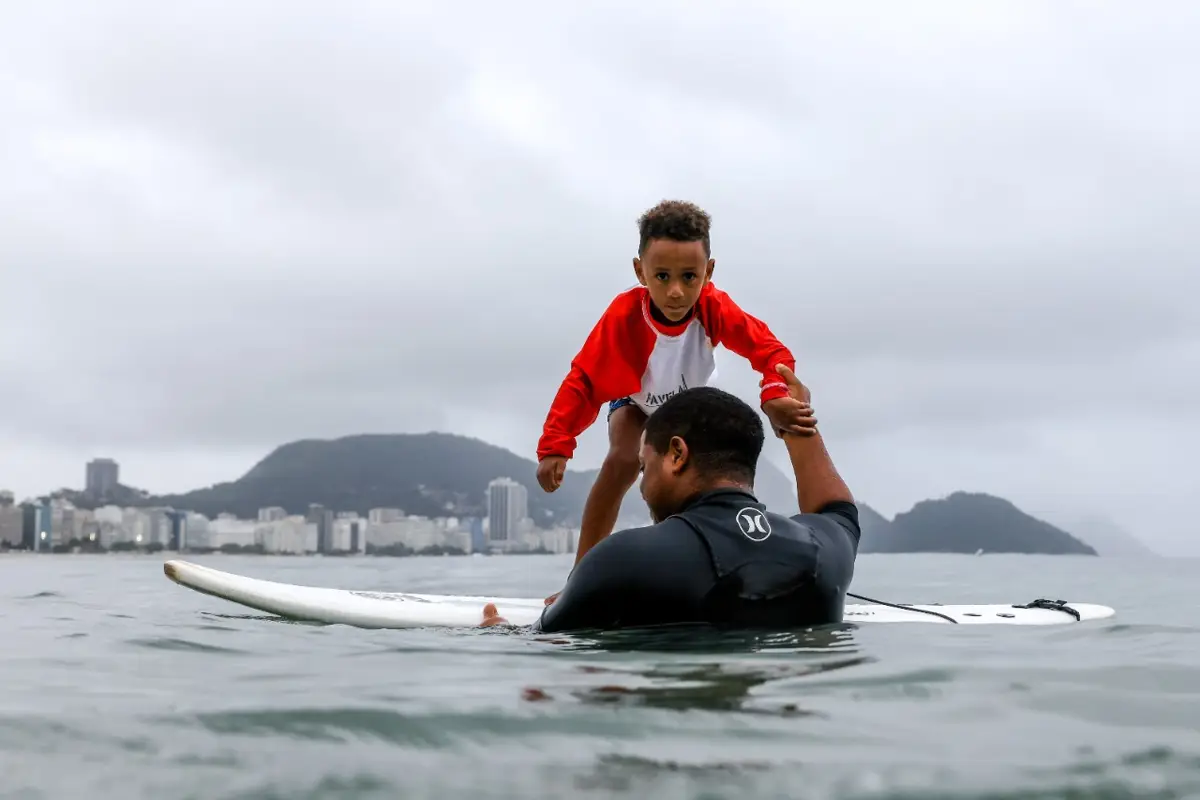
Brazil has 3 surfing spots with 13 schools. You can book lessons in Rio de Janeiro (from R$150), Armação dos Búzios (from R$140) and Salvador (from €50). Best months: Mar to Aug.
Book surfing in Rio de Janeiro
Surfing lessons in Rio de Janeiro
Pick a course, choose your dates and send it straight to the school. Nothing to pay today.
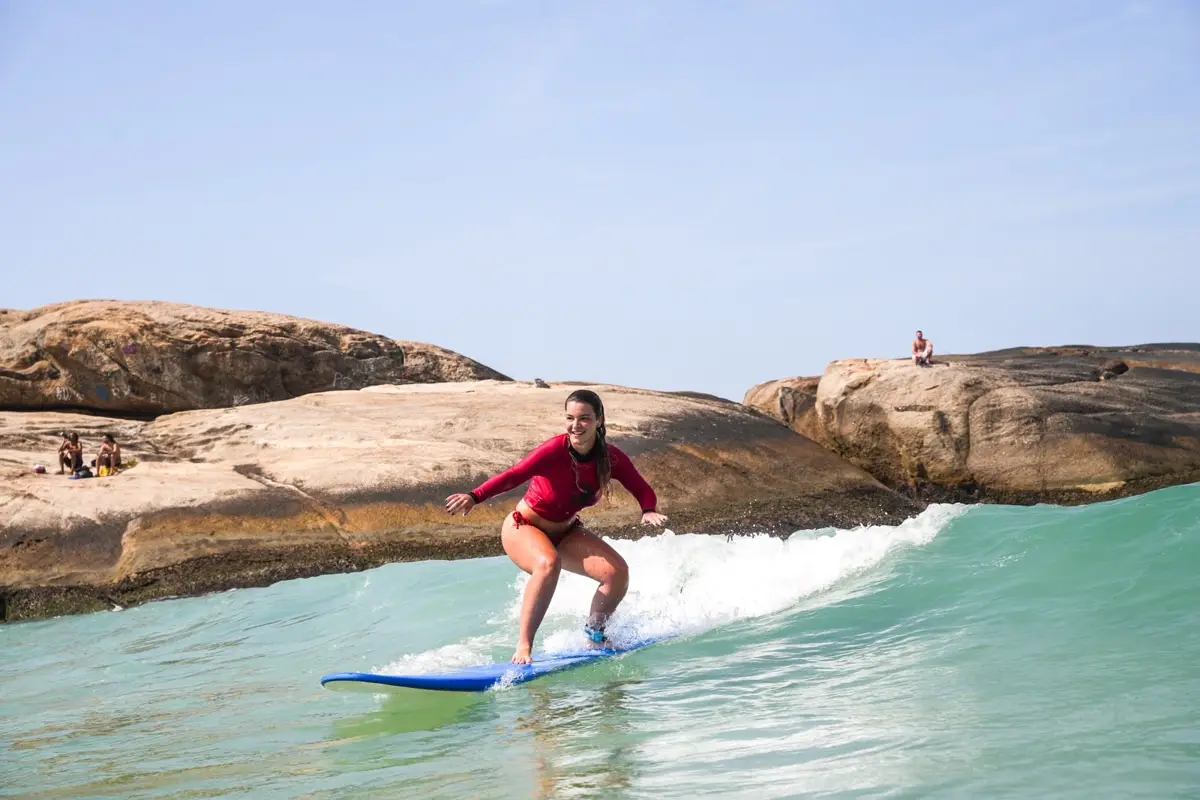
Book surfing in Armação dos Búzios
Surfing lessons in Búzios
Pick a course, choose your dates and send it straight to the school. Nothing to pay today.
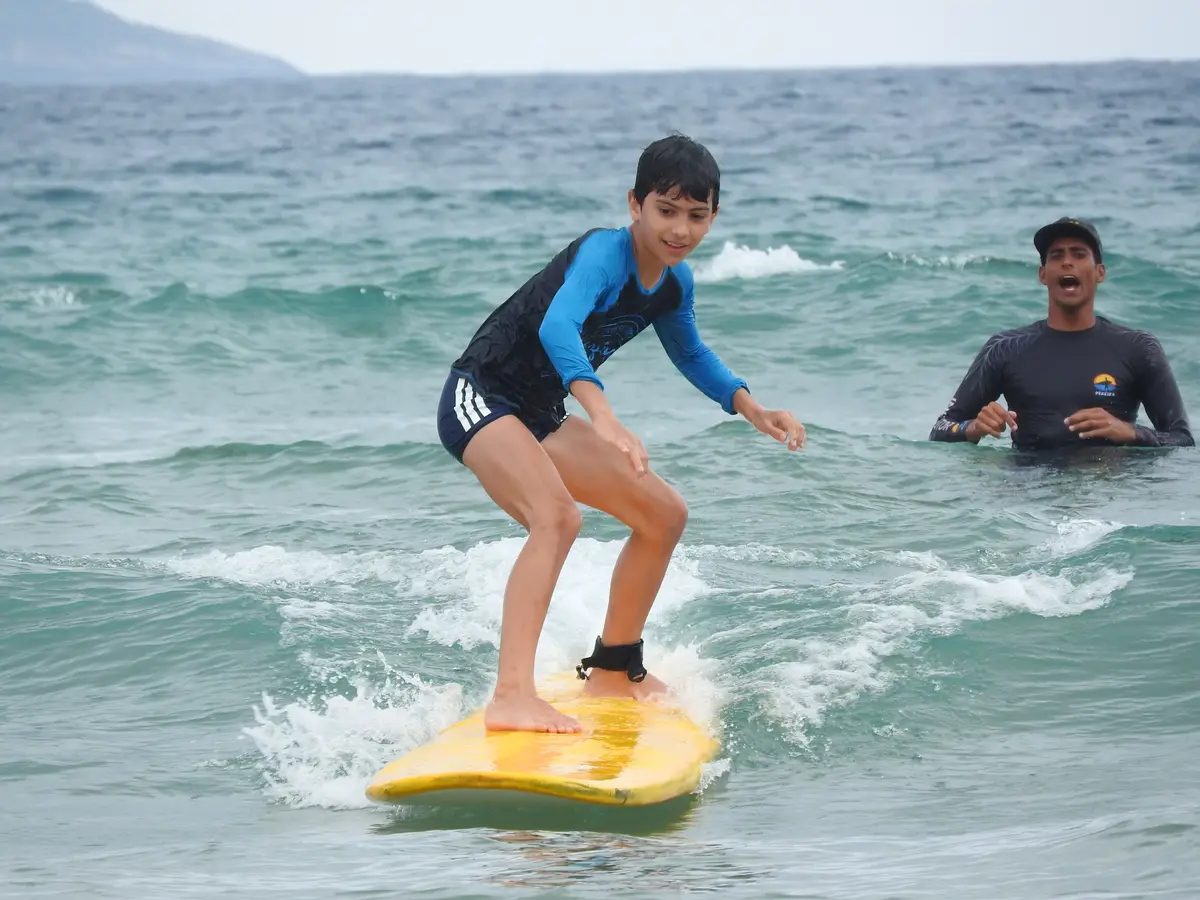
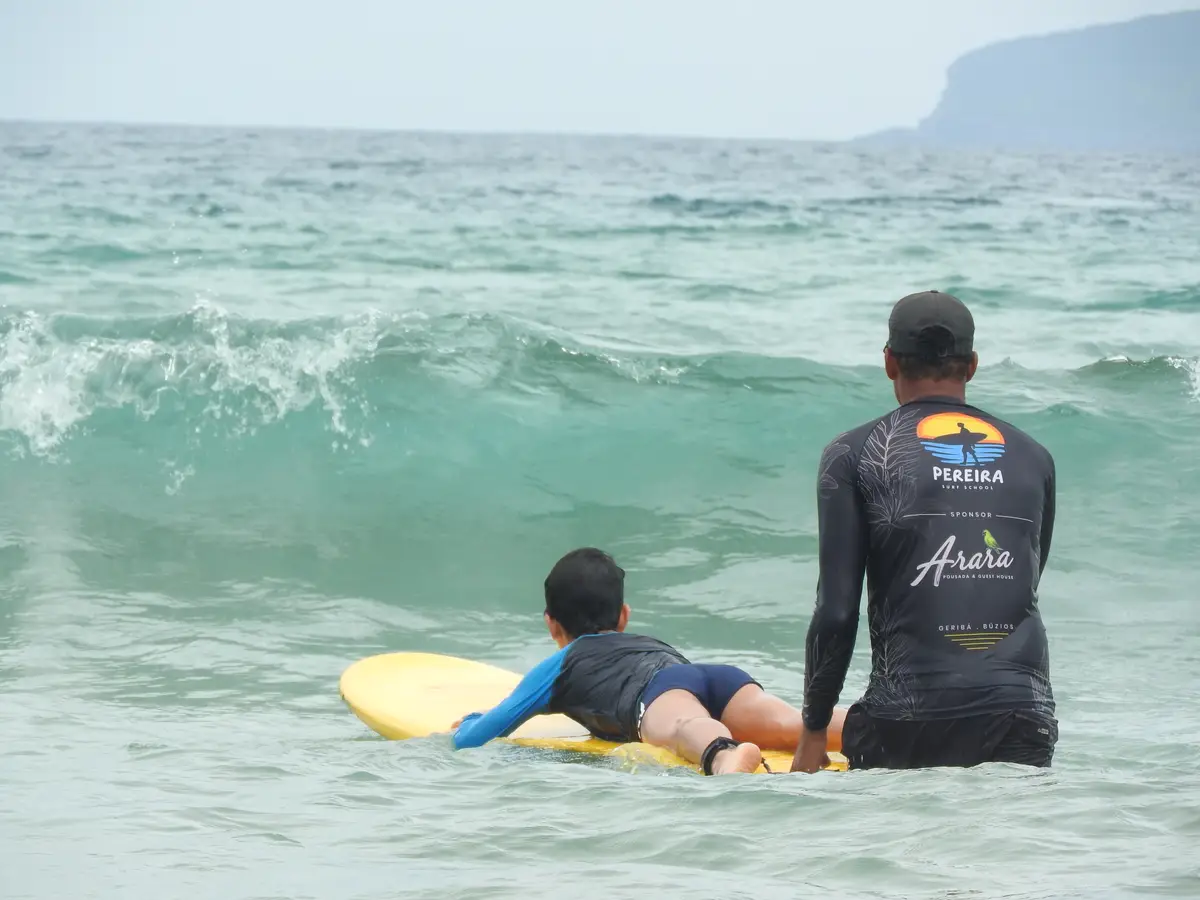
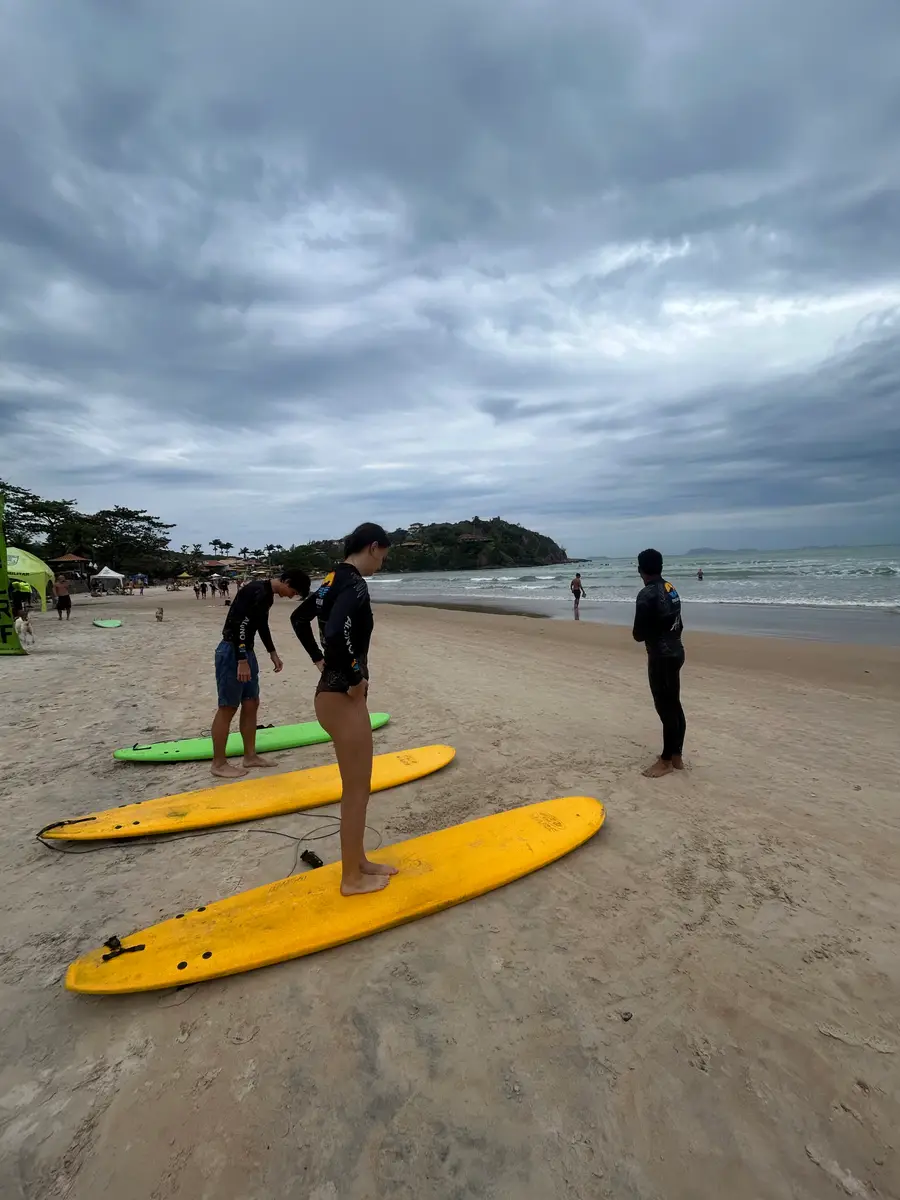
Book surfing in Salvador
Surfing lessons in Salvador
Pick a course, choose your dates and send it straight to the school. Nothing to pay today.
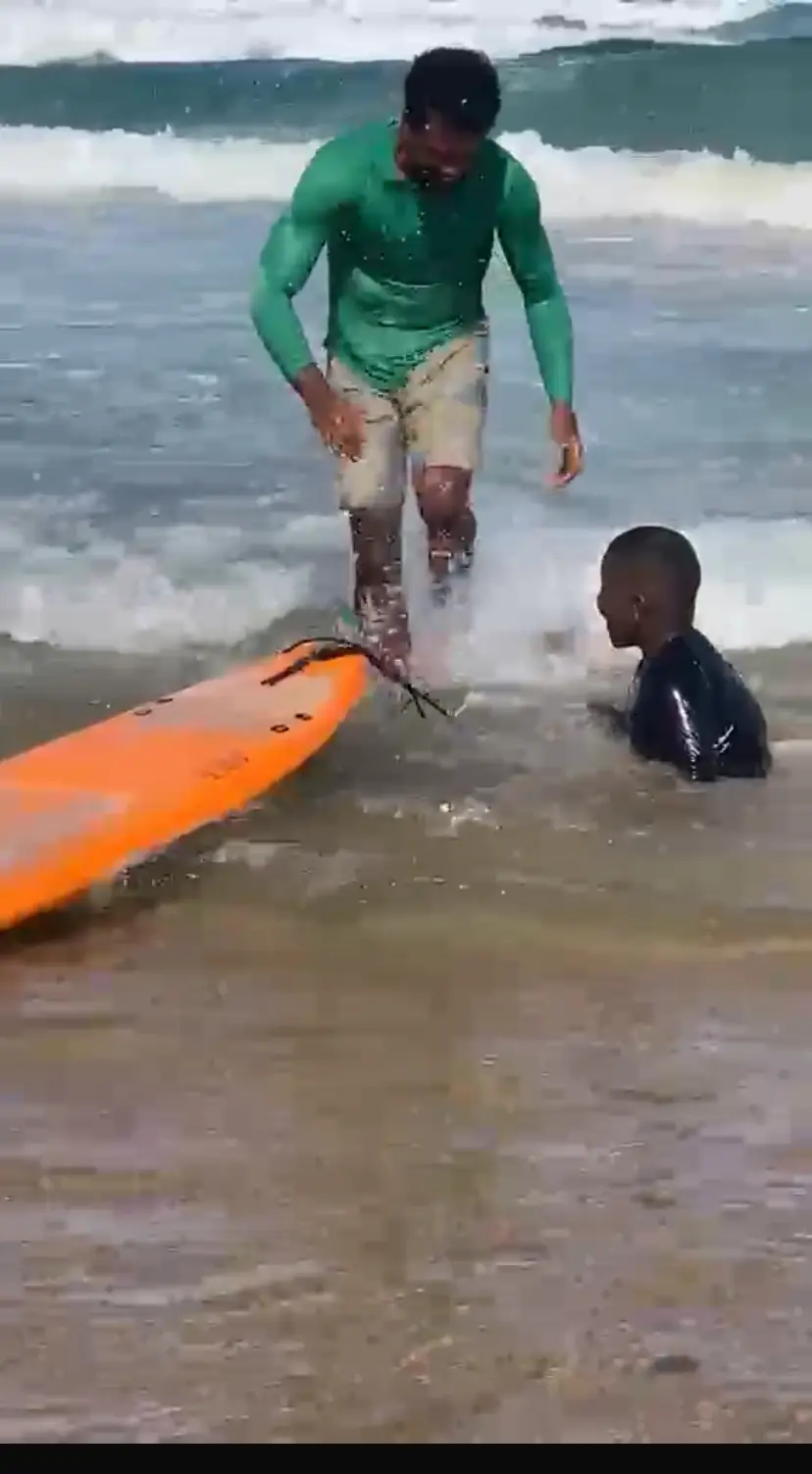
Surfing in Brazil at a glance
Surfing in Brazil ranges from city beaches in Rio de Janeiro and Salvador to powerful breaks in Saquarema and Fernando de Noronha. For a first trip, choose a beach and session that match your ability rather than relying on a nationwide season. Kitesurfing.me lists 40 schools teaching surfing in Brazil, including seven in Rio de Janeiro, five in Itacaré and three in Florianópolis. March to August is a starting point for southern swells in the southeast and south; Fernando de Noronha has a different northern-swell season.
Brazil has about 7,500 km of Atlantic coastline, with destinations spread across several regions. Rio de Janeiro, São Paulo, Florianópolis and Ilhéus are useful gateways for mainland itineraries, while Fernando de Noronha has its own airport. Distances are large, so trips spanning regions often involve domestic flights and onward road transfers.
- Rio de Janeiro, Saquarema and Armação dos Búzios make a practical road itinerary within Rio de Janeiro state.
- Salvador combines a Bahia city stay with Atlantic beaches including Stella Maris and Jaguaribe.
- Geribá has exposed beach-break peaks; beginners should seek small whitewater with an instructor.
- Itaúna, Joaquina and Cacimba do Padre can produce powerful surf for experienced surfers.
- Fernando de Noronha has a separate environmental fee and park access rules for certain attractions.
- Across seven schools listed here with published beginner-course prices, the median is 140 BRL per hour.
When is the best time for surfing in Brazil?
Brazil has distinct regional surf seasons. In January and February, Fernando de Noronha receives northern swells; February historically brings clean, surfable conditions about 49% of the time at Cacimba do Padre. March begins a useful window for southern swells in the southeast and south. From April to October, Itacaré can receive bigger waves; in April, Itacarezinho historically has clean, surfable conditions about 38% of the time. In May, the corresponding figures are about 30% at Arpoador in Rio de Janeiro and 38% at Maresias. In June, Joaquina in Florianópolis has clean, surfable conditions about 28% of the time. July and August remain useful months to investigate southern swells, while Itacaré's historical water temperature is 25 to 26°C in August and September. October closes the bigger-wave window around Itacaré, and November and December bring the return of Fernando de Noronha's northern-swell season. These historical figures describe individual breaks, not a forecast or a guarantee of suitable waves.
| Spot | Jan | Feb | Mar | Apr | May | Jun | Jul | Aug | Sep | Oct | Nov | Dec |
|---|---|---|---|---|---|---|---|---|---|---|---|---|
| Rio de Janeiro | ||||||||||||
| Salvador | ||||||||||||
| Armação dos Búzios | ||||||||||||
| Saquarema | ||||||||||||
| Maresias | ||||||||||||
| Florianópolis | ||||||||||||
| Itacaré | ||||||||||||
| Fernando de Noronha |
The best spots for surfing in Brazil
| Spot | Water | Level | Best months | Why go |
|---|---|---|---|---|
| Rio de Janeiro | Beach breaks | All levels, by beach | May | Rio de Janeiro, Brazil, puts surfing alongside a major city stay. Arpoador and Ipanema offer accessible beach sessions, while Barra da Tijuca provides a longer stretch of coast. Arpoador historically has clean, surfable conditions about 30% of the time in May. Beginners should arrange instruction in small whitewater and avoid the crowded takeoff near the rocks. Seven schools are listed here. |
| Salvador | Atlantic beach breaks | All levels, by conditions | May, Aug to Sep | Salvador, Brazil, is a Bahia city base with Atlantic surf beaches such as Jaguaribe and Stella Maris. Choose it for urban culture as well as time on the coast. Three schools are listed here; beginners should ask an instructor to select a manageable beach and session. |
| Armação dos Búzios | Exposed beach break | All levels, by conditions | Sep | Armação dos Búzios, Brazil, offers a smaller coastal-town base east of Rio de Janeiro. Geribá faces the Atlantic and has several sand-bottom peaks, while other beaches around the peninsula are calmer. Beginners should take a lesson in small whitewater. Two schools are listed here. |
| Saquarema | Exposed beach break | Intermediate to advanced | Mar to Aug | Saquarema, Brazil, is about 122 km by road from Rio de Janeiro. Its Itaúna beach break can deliver powerful waves and suits confident surfers when the swell rises. Autumn and winter are useful starting points for waves. Check the currents and observe the lineup before entering; the town also works as a stop on a Rio state road trip. |
| Maresias | Exposed beach break | By conditions and experience | May | Maresias, Brazil, is an exposed beach break on the São Paulo coast. Powerful waves and a busy lineup reward experienced surfers, while learners should seek a small day and arrange instruction. Historical conditions are clean and surfable about 38% of the time in May. Maresias is a road-trip choice for travellers based in São Paulo state. |
| Florianópolis | Beach breaks | All levels, by beach | Jun | Florianópolis, Brazil, is an island base with beaches facing different directions. Exposed Joaquina can have strong waves and rip currents; beginners can ask an instructor about Barra da Lagoa on a manageable day. At Joaquina, historical conditions are clean and surfable about 28% of the time in June. Three schools teaching surfing in Florianópolis are listed here. |
| Itacaré | Beach and reef breaks | All levels, by beach | Apr to Oct | Itacaré, Brazil, is a warm-water Bahia base with several beaches and five schools listed here. Itacarezinho is exposed and can have rip currents. Beginners can ask an instructor about Praia da Ribeira when conditions are manageable. April to October can bring bigger waves; historical water temperatures are 25 to 26°C in August and September. |
| Fernando de Noronha | Beach and reef breaks | Intermediate to expert | Nov to Mar | Fernando de Noronha, Brazil, is an Atlantic archipelago with a northern-swell season generally running from November to March. Cacimba do Padre can produce powerful waves for experienced surfers. Historical conditions there are clean and surfable about 49% of the time in February. Visitors usually fly to the island and must budget for its environmental fee. |
Which Brazil spot suits your surfing level?
Complete beginner
In Rio de Janeiro, ask an instructor for small whitewater at Arpoador or Ipanema. Geribá in Armação dos Búzios and Barra da Lagoa in Florianópolis are other options on manageable days.
Improving, catching your own waves
Explore beach-break sections at Barra da Tijuca in Rio de Janeiro or Geribá in Armação dos Búzios. Pick a manageable day, watch the currents and leave room in the lineup.
Advanced, wave hunting
Investigate Itaúna in Saquarema, Joaquina in Florianópolis and Cacimba do Padre on Fernando de Noronha. Each can produce powerful surf, so assess the swell and entry before paddling out.
Travelling with non-surfers
Rio de Janeiro and Salvador offer city attractions alongside surf beaches. Armação dos Búzios has a smaller-town setting and calmer beaches elsewhere on its peninsula.
Getting to Brazil and between the spots
- Getting to Brazil
- For destinations in Brazil's Rio de Janeiro state, fly to Rio for Rio de Janeiro, Saquarema and Armação dos Búzios, then continue by road. São Paulo is a gateway for Maresias, Florianópolis airport serves the island, and Fernando de Noronha airport serves the archipelago. For Itacaré, fly to Ilhéus and arrange a road transfer or travel via the Ilhéus bus terminal. If travelling with oversized equipment, confirm that the airline and airport transfer can carry the packed bag, including its length and weight. Ask the transfer provider about the vehicle before paying for the flight.
- Airports
- FORFortaleza-Pinto Martins International AirportFor Cumbuco, Sao Goncalo do Amarante. Gateway for Cumbuco and the Ceará coast; arrange onward road transport.
- JJDJericoacoara Regional AirportFor Prea, Jericoacoara, Jijoca de Jericoacoara. Serves Preá and Jericoacoara; onward ground transport is needed.
- GIGRio de Janeiro-Galeão International AirportFor Rio de Janeiro. International gateway for Rio de Janeiro and road travel to Saquarema and Búzios.
- GRUSão Paulo/Guarulhos International AirportInternational gateway for São Paulo, road travel to Maresias and domestic connections.
- FLNFlorianópolis-Hercílio Luz International AirportAirport on Santa Catarina Island, serving the Florianópolis area.
- SSASalvador-Deputado Luís Eduardo Magalhães International AirportGateway for Salvador and onward travel in Bahia.
- FENFernando de Noronha AirportThe island airport, reached by domestic flight.
- IOSIlhéus/Bahia-Jorge Amado AirportFor Itacare. Gateway for Itacaré; arrange a road transfer or travel via the Ilhéus bus terminal.
- Between the spots
- In Brazil, road journeys depend on traffic and the starting address. Rio de Janeiro to Saquarema is about 122 km and roughly 2 hours; Rio to Armação dos Búzios is about 170 km and roughly 3 hours. From Ilhéus airport, allow around 1.5 hours by car or transfer to Itacaré via the BA-001. On Florianópolis island and the São Paulo coast, a car or arranged transfer helps reach different beaches. Domestic flights are useful between distant regions.
- Entry and visa
- Entry requirements for Brazil depend on nationality and passport type. British citizens travelling on a full British citizen passport can visit for tourism without a visa for up to 90 days; their passport must be valid for at least six months from arrival. Other travellers should check current Brazilian consular requirements for their nationality before booking.
- Money and costs
- Brazil's currency is the Brazilian real (BRL, symbol R$), subdivided into 100 centavos and issued by the Central Bank of Brazil. Cards and phone payments are widely accepted in cities and tourist towns, but some cash helps for small vendors, buses and transfers. Food and transport prices vary considerably by city and season.
- Climate and water
- Brazil stretches from the equator to well south of the Tropic of Capricorn, so conditions range from tropical in the north to temperate in the south. Around Itacaré in Bahia, historical seasonal water temperatures are 28 to 29°C from January to May and 25 to 26°C in August and September. In Ceará, long-term monthly means at Jericoacoara range from 26.9 to 29°C for water and from 6.1 to 14.7 knots for wind. These historical figures are not forecasts; conditions vary by location and day.
- Safety
- In Brazil, keep valuables and jewellery secure, especially on beaches and in busy cities. Criminals have used dating apps to target visitors, including through drink spiking and theft, and scams can involve requests to carry packages through airports. Avoid political rallies and large crowds. At beaches and waterways, check local conditions, tides, access and emergency arrangements before entering the water; arrange a safe return route when travelling away from your starting point.
Surfing in Brazil: your questions
Where are the best Brazil surfing spots?
Brazil surfing spots include Arpoador in Rio de Janeiro and Geribá in Armação dos Búzios for a range of abilities on suitable days. Experienced surfers can investigate Itaúna in Saquarema, Joaquina in Florianópolis and Cacimba do Padre on Fernando de Noronha. Itacaré offers several Bahia beaches. Choose for the day's conditions.
Where should I go surfing in Brazil for a first trip?
For a first surfing trip in Brazil, choose Rio de Janeiro for city life and lessons, or Armação dos Búzios for a smaller coastal base. Salvador adds a Bahia city option, while Itacaré offers warm water and several beaches. Ask an instructor to select manageable whitewater for your first session.
Is surfing in Brazil good for beginners?
Brazil is good for beginners when the beach and waves suit the lesson. In Rio de Janeiro, ask about small whitewater at Arpoador or Ipanema; in Florianópolis, ask about Barra da Lagoa. Geribá in Armação dos Búzios is another option on a small day with an instructor.
When is the best time to surf in Brazil?
March to August is a useful starting point for southern swells in Brazil's southeast and south. Around Itacaré, April to October can bring bigger waves. Fernando de Noronha generally receives northern swells from November to March. Stronger seasonal surf calls for a beach and session suited to your ability.
Where should I surf in Brazil in February or July?
In February, experienced surfers can investigate northern swells at Fernando de Noronha, Brazil. In July, look at Rio de Janeiro, Saquarema or Florianópolis for southern swells, or Itacaré for bigger-wave potential. Beginners should arrange an instructor who can choose manageable whitewater for the session.
How do I plan a Brazil surfing trip between spots?
A practical Brazil surfing trip links Rio de Janeiro, Saquarema and Armação dos Búzios by road. Saquarema is about 122 km from Rio, and Búzios about 170 km; allow roughly two and three hours respectively, plus traffic. For distant regions, consider domestic flights and arrange board-friendly transfers.
How do I travel to Fernando de Noronha with a surfboard?
For Fernando de Noronha, Brazil, confirm that both the airline and the airport transfer can carry your board bag, including its packed length and weight. Ask the transfer provider about the vehicle before paying for the flight. Budget for the island's environmental fee and a separate ticket for national park attractions.
Do I need a visa to surf in Brazil?
Brazil's visitor visa rules depend on your passport and nationality. British citizens travelling on a full British citizen passport can normally visit for tourism without a visa for up to 90 days. Check current Brazilian consular requirements for your passport, planned stay and any documents needed before departure.
What does a surf lesson cost in Brazil?
Among seven schools listed on kitesurfing.me with published beginner-course prices in Brazil, the median is 140 BRL per hour, with a range of 107 to 250 BRL. The typical course length is 1.5 hours. Check the current total and equipment inclusions before sending a request; the school confirms the lesson and you pay there.
Should I book a group, private or multi-day surf course in Brazil?
In Brazil, choose a group lesson for shared practice, a private lesson for individual attention, or a camp for several days of surfing. Published group or semi-private prices at five schools have a median of 100 BRL per hour. Seven private-lesson prices have a median of 150 BRL per hour.
How much does a surf camp in Brazil cost?
Among three schools listed here with published multi-day camp prices, the median is 1,500 BRL per course, with a range of 980 to 5,306 BRL. Camp lengths and inclusions in Brazil differ. Check the number of sessions, accommodation, equipment and current total before sending a booking request.
Do I need a wetsuit to surf in Brazil?
A wetsuit depends on where and when you surf in Brazil. Historical water temperatures around Itacaré are 28 to 29°C from January to May and 25 to 26°C in August and September. Florianópolis is cooler, especially in winter. Ask your school what to wear and whether equipment is included.
Is surfing in Brazil safe?
Surfing in Brazil calls for attention to currents, wave size and other surfers. Joaquina and Itacarezinho can have rip currents, and Itaúna can be powerful. Ask an instructor or lifeguard where to enter, stay within your ability and give priority to the surfer closest to the breaking peak.
Sources for this guide: Arpoador surf guide, Geribá surf guide, Maresias surf guide, Joaquina surf guide, Itacarezinho surf guide, Cacimba do Padre surf guide, Itacaré seasons and visitor conditions, Stella Maris beach, Rio de Janeiro to Saquarema by road, Rio de Janeiro to Búzios by road, Fernando de Noronha park tickets and beach access, Fernando de Noronha environmental preservation fee, Brazil entry requirements for British travellers, Wave riding etiquette, Itaúna surf guide, UK government travel advice: Brazil safety and security, Brazilian government: visa service, Coastline of Brazil, Climate of Brazil, Brazilian real, Ilhéus airport and onward travel to Itacaré, Getting to Jericoacoara: airport and road distances, Ceará tourism: Cumbuco access · Last checked November 2026.