
Escola de Surf Arpoador
VerifiedPortuguese- Beginner lesson
- R$200 (~€34)
Book lessons with Escola de Surf Arpoador.
7 schools in Rio de Janeiro teach surfing; lessons with Escola de Surf Arpoador start from R$150 (1 to 5 h · max. 3 per instructor). Best months: May to Oct.
Pick a course, choose your dates and send it straight to the school. Nothing to pay today.
Request a lesson from any school: we pass your request to them. How we sort
Surfing prices: ask the school
Request a lessonFrom the surfing prices schools in Rio de Janeiro publish; a figure appears only when at least three different schools publish a comparable price.
May to Oct, the best months for surfing here in our sourced spot guide.
Rio's main swell is a south-east to south groundswell, which surf-forecast.com names as the best swell direction at Arpoador, paired with an offshore wind from the north-north-east. Most of the southern-zone beach breaks work at any stage of the tide. Across Guanabara Bay in Niterói, Itacoatiara picks up a different, south-west groundswell that turns into faster, hollower waves, with the best wind there blowing from the north. Summer swells are smaller and more wind-affected everywhere, which is why most guides call it the off-season rather than unsurfable. Multiple independent sources place the main season between May and October, with July and August named most often as the peak: a Rio surf-forecast blog calls July and August the best months, a surf-spot directory names May-to-August as winter's best season, and a travel-activity guide separately rates July-August as having "the best waves of the year". The same travel guide and a Rough Guides feature on Rio both single out September and October as a strong secondary window, especially at Arpoador. November through February runs flatter and more wind-affected, though the inshore beginner waves at Arpoador and Ipanema still work.
Which swell is running changes the whole day: which break works, which board you take, and whether it is a beginner day at all.
South-east to south, with the most consistent form from the south-east swell · Arpoador and Ipanema face south-south-east; Barra da Tijuca and Prainha face more directly south. · boards A soft-top or funboard for first lessons at Arpoador, Ipanema or Barra da Tijuca; visiting surfers past beginner level usually rent or bring a standard shortboard.
The dominant swell for Rio's southern-zone city beaches, strongest and most frequent from May to October. It pairs best with an offshore wind from the north-north-east, though most of these beach breaks still work across a range of wind directions.
Best beaches: Arpoador, Ipanema, Barra da Tijuca, Macumba, Prainha
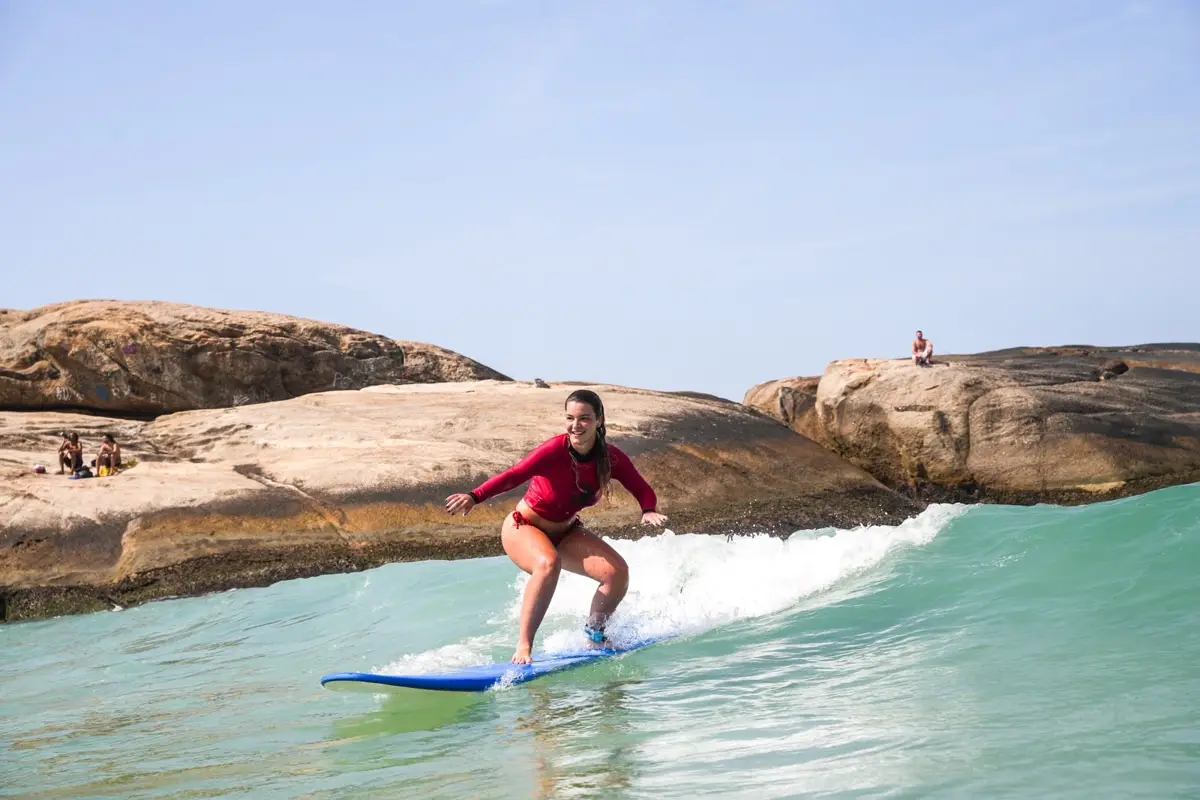
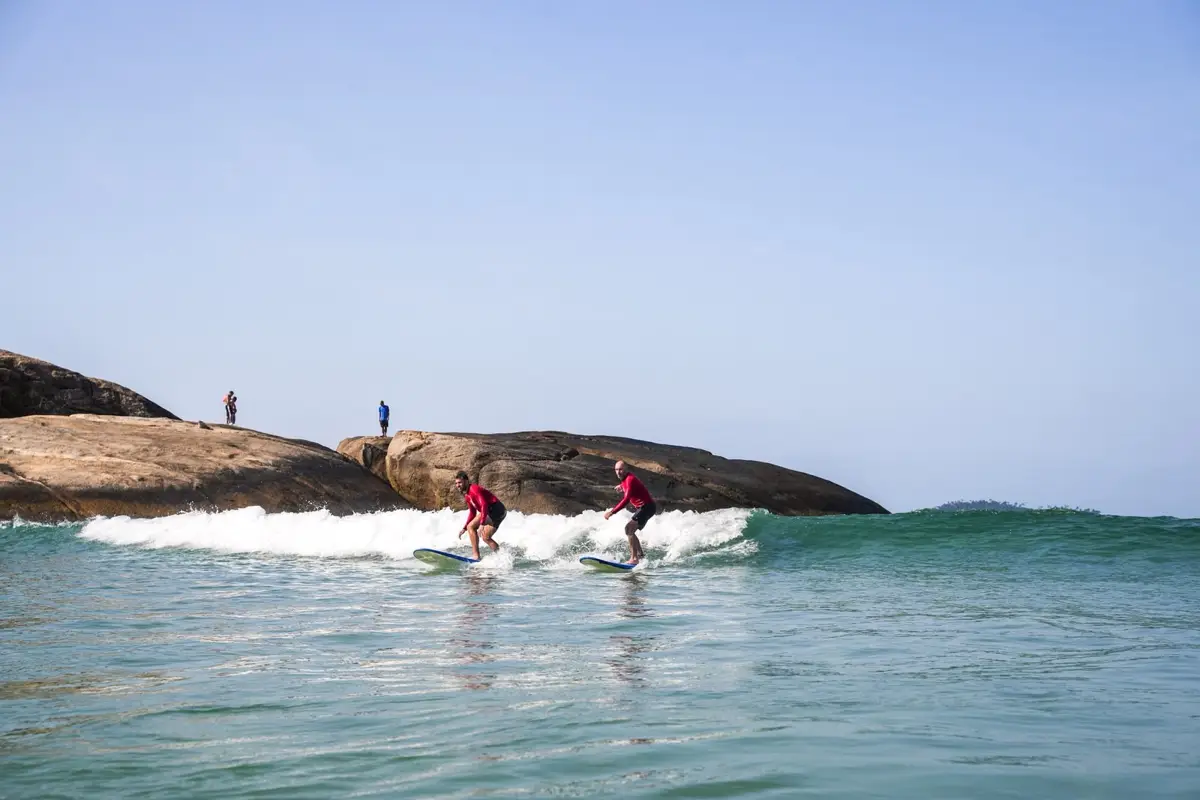
Arpoador's inside section and Ipanema next door hold small, manageable whitewater for first lessons even when the main swell outside is building.
South-west swell · Itacoatiara's reef and point faces open ocean swell more directly than the sheltered city-side beaches. · boards A shortboard built for a fast, hollow wave; this is not a beginner break or a rental-board session.
Crosses Guanabara Bay to reach Itacoatiara and the nearby Shock slab in Niterói, producing smaller but faster and more hollow waves than the city-side breaks, with real barrel potential on the right swell. The best wind there blows from the north.
Best beaches: Itacoatiara
Not for beginners. Itacoatiara is Rio's most advanced, most competitive lineup, and the Shock slab next to it is rated one of Brazil's heaviest waves.
No source publishes a day-by-day swell count for Rio as a whole, so these bands follow the one source found that rates every part of the year in its own words: a travel-activity guide's season table, which calls April-to-June 'regular swell, increasing strength', July-August 'the best waves of the year', September-October 'good conditions, pleasant water', and November-to-March 'weaker swell, warmer water'. July and August are scored highest (band 4) because a separate Rio surf blog and a surf-spot directory both independently name July-August or May-August as the season's best stretch, agreeing with the travel guide. May and June are scored a notch below as the building shoulder (surf-forecast.com separately names May the most consistent month at Arpoador). September and October keep the travel guide's 'good' rating; a Rough Guides feature adds that Arpoador's best swells often land in that window specifically. November, December, January and February are scored lowest because the Rio surf blog specifically calls November-to-February 'pretty flat', narrower than the travel guide's wider November-to-March low season; March is scored a notch above that flat run since no source names it as flat on its own.
Surfing in Rio de Janeiro means Arpoador first, the rocky point where Ipanema meets Copacabana and the city's best-known break, taught by local schools such as Escola de Surf Arpoador. Beginners get a gentler ride at Ipanema next door, while Prainha, Barra da Tijuca and Grumari further west hold more serious waves, and Itacoatiara, across Guanabara Bay in Niterói, is Rio's heaviest, most advanced wave. Winter, roughly May to October, brings the most reliable south-east swell, with July and August most often named as the peak.
7 beaches, each with its own character. Pick the one that fits your level; your school will choose the best one for the day's swell.
Sources: surf-forecast.com: Arpoador, surf-forecast.com: Prainha, surf-forecast.com: Itacoatiara, vialala.com: Surf in Rio de Janeiro, gringo-rio.com: Rio surf report, info and forecasts, Rough Guides: Surfing in Rio, Wikipedia: Arpoador, seatemperature.net: Ipanema sea temperature by month · Page updated .
Yes, with a local school at Arpoador's inside section or next door at Ipanema, where the waves stay small and manageable and instructors are close by.
Barra da Tijuca and Macumba give steadier, less crowded beach-break waves to build hours on once you can catch your own.
Arpoador's main peak, Prainha and the Postinho end of Barra da Tijuca all give real waves to progress on, especially May to October.
Prainha and Grumari on a bigger swell, and Itacoatiara across the bay in Niterói for Rio's fastest, hollowest wave and genuine barrels.
There's no surf-specific municipal ordinance for Rio's beaches, just general beach safety and city caution. Prainha and Grumari are not permanently lifeguarded, so a travel guide recommends surfing them with company rather than alone; Arpoador, Ipanema and Barra da Tijuca are busier, more closely watched beaches. Theft is the most commonly flagged risk for visitors on the sand: leave valuables and jewellery at your accommodation, keep an eye on your things at all times, and avoid the beaches after dark. Crowded, competitive lineups (Arpoador at sunset, Itacoatiara most days) call for ordinary surf etiquette and extra patience with the locals who surf there daily.
Rules can change season to season — always confirm current zoning with your school or local signage. Last checked October 2026. Source: nowinrio.com.
With Escola de Surf Arpoador, lessons start from R$150 (1 to 5 h · max. 3 per instructor).
Roughly May to October, with July and August named most often as the peak. A travel guide rates July-August as the best waves of the year, and a Rio surf blog separately names the same two months as its pick. September and October are a strong secondary window, especially at Arpoador.
Arpoador's sheltered inside section and Ipanema next door, where local schools such as Escola de Surf Arpoador teach. Both hold smaller, more manageable whitewater than the exposed main peaks, with instructors and other surfers close by.
Schools teaching surfing in Rio de Janeiro list Portuguese, English, Spanish.
Yes, with care. The lineup gets crowded and competitive, especially around sunset, and Wikipedia notes a rip tide along the rocky point with a very small take-off zone. Stay aware of other surfers, keep valuables off the beach, and avoid the sand after dark.
Yes, though the swell is smaller and more wind-affected from November to February. Arpoador's and Ipanema's inshore waves still work for a beginner lesson; surfers chasing bigger, more powerful waves get more out of the May-to-October season instead.
Roughly 19-25°C from June to September, warming to the low-to-high 20s°C from December to March, based on long-term monthly averages for Ipanema. Most surfers wear boardshorts or a rash guard year-round, with some choosing a thin spring suit in winter.
Prainha and Grumari in the western zone hold bigger, quieter waves than the city-centre beaches. Itacoatiara, across Guanabara Bay in Niterói, is rated Rio's heaviest, most advanced wave, with genuine barrels on the right south-west swell.