
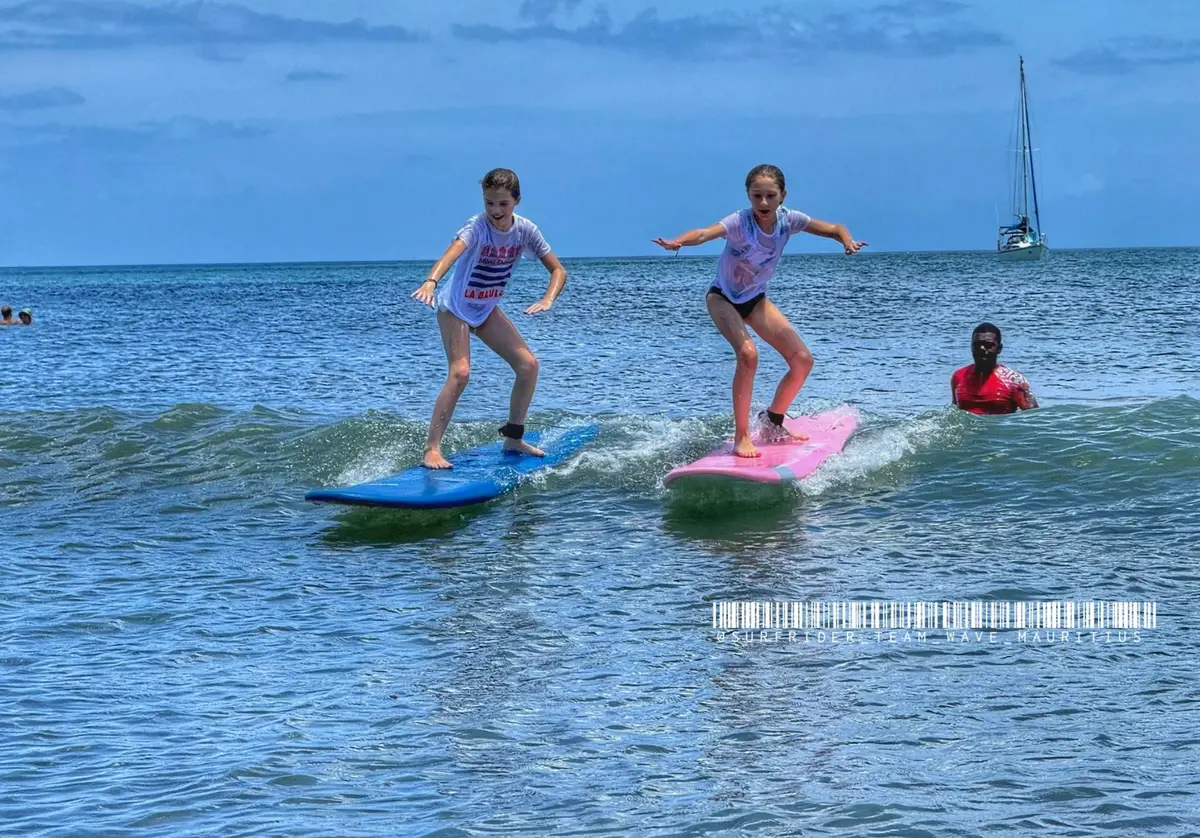
Surfing in Mauritius
4 schools in 2 places1 spot guideBest months May to Oct
We list 4 surfing schools in 2 places in Mauritius; 1 spot has its own guide below. You can book lessons in Tamarin (from €25). Best months: May to Oct.
Book surfing in Tamarin
Surfing lessons in Tamarin
Pick a course, choose your dates and send it straight to the school. Nothing to pay today.
Surfing in Mauritius at a glance
Surfing Mauritius is centred on Tamarin Bay in the west and the reefs off Le Morne in the southwest, with southern swells strongest from May to October. Tamarin is the practical choice for beginners when waves are small, while Manawa and One Eye demand strong reef experience. Kitesurfing.me lists 4 schools teaching surfing in Mauritius: 3 in Le Morne and 1 in Tamarin. Base yourself near Tamarin for beach lessons, or near La Gaulette and Le Morne for access to the outer reefs. A car or a board-friendly taxi makes it easier to move between them.
Mauritius is an Indian Ocean island with coral reefs, sheltered lagoons and beaches around much of its coast. Its warm coastal climate and mix of coastal and inland landscapes support a wide range of activities throughout the year.
- Tamarin Bay offers beach lessons when the swell is moderate.
- Manawa and One Eye are exposed reef breaks off Le Morne.
- Tamarin sea temperatures average about 23 to 28°C through the year.
- The airport to Le Morne takes about 1 hour by car.
- A 1.5-hour Tamarin lesson for two costs €35 per person.
When is the best time for surfing in Mauritius?
From May to October, southern swells reach the west and southwest coasts, including Tamarin and Le Morne. The southeast trade winds can make exposed breaks challenging, so check wind and tide with someone familiar with the spot. November to April is warmer and brings smaller, more variable surf; the cyclone season usually runs from November to May.
| Spot | Jan | Feb | Mar | Apr | May | Jun | Jul | Aug | Sep | Oct | Nov | Dec |
|---|---|---|---|---|---|---|---|---|---|---|---|---|
| Tamarin Bay | ||||||||||||
| Le Morne | ||||||||||||
| Manawa | ||||||||||||
| One Eye | ||||||||||||
| Îlot Sancho |
The best spots for surfing in Mauritius
| Spot | Water | Level | Best months | Why go |
|---|---|---|---|---|
| Tamarin Bay | Beach break and reef | Beginner to advanced | May to Oct | Tamarin Bay, Mauritius, is the most straightforward base for first lessons when the swell is moderate. The bay has a beach break and more demanding waves around Dal and Black Stone. Surfrider Team Wave Mauritius teaches beginners in the bay and offers reef coaching for progressing surfers. |
| Le Morne | Lagoon and offshore reef | Intermediate to expert | May to Oct | Le Morne, Mauritius, gives experienced surfers access to offshore reef breaks beneath the peninsula. The area has several waves, including Manawa and One Eye, with different levels of exposure. Choose a break with local advice, and arrange boat access where needed. |
| Manawa | Offshore coral reef | Advanced | May to Oct | Manawa, off Le Morne in Mauritius, is a powerful outer reef break that picks up southern swell. It has longer waves than the fast sections at One Eye, but its distance from shore and strong currents make it a choice for experienced surfers. Boat access is often useful. |
| One Eye | Shallow coral reef | Expert | May to Oct | One Eye, off Le Morne in Mauritius, is a fast, hollow left breaking over shallow coral. Strong currents, urchins and powerful waves make it an expert spot. Watch the lineup and seek local advice before entering; it is not a place for a first reef session. |
| Îlot Sancho | Exposed reef | Experienced | May to Oct | Îlot Sancho, on the south coast of Mauritius, is an exposed reef surfing area that receives southern swell. It suits experienced surfers comfortable judging reef depth, currents and entry points. Travel from the west coast with local knowledge and check conditions before paddling out. |
Which Mauritius spot suits your surfing level?
Complete beginner
Start with a coached session in Tamarin Bay when the swell is moderate. The beach offers a more accessible introduction than the offshore reefs.
Improving surfer
Tamarin Bay offers room to practise, while guided reef coaching helps experienced improvers learn to read coral breaks and currents.
Advanced surfer
Manawa and the reefs around Le Morne offer powerful southern swell. Choose the break and access route to match your reef experience.
Expert
One Eye offers fast, hollow waves over shallow reef, with strong currents and a demanding lineup.
Getting to Mauritius and between the spots
- Getting to Mauritius
- Most international visitors arrive at Sir Seewoosagur Ramgoolam International Airport (MRU), in the southeast near Mahébourg. Taxis and rental cars are direct ways to reach coastal bases. Public buses connect the airport with Mahébourg and other towns. If travelling with equipment, check board-bag allowances with your airline and vehicle capacity with your transfer provider before booking.
- Airports
- MRUSir Seewoosagur Ramgoolam International AirportFor Le Morne, Cap Malheureux, Mahébourg, Grand Gaube. The main international airport is near Mahébourg. Transfer times vary by destination and traffic; confirm the route and luggage capacity with your provider.
- Between the spots
- A rental car or taxi offers flexibility between Mauritius's coastal bases. Travel times vary by route and traffic, so check the journey when planning. Buses connect towns, including airport services to Mahébourg, but cross-island trips may require changes. Confirm vehicle capacity in advance if carrying bulky equipment.
- Entry and visa
- Many visitors can enter Mauritius without arranging a visa in advance, while permitted stays and requirements depend on nationality and travel purpose. Check the official Mauritius immigration information for your nationality before travelling, and confirm passport, return-ticket and accommodation requirements.
- Money and costs
- The currency is the Mauritian rupee (MUR). Cards are widely used in tourist areas, while cash is useful for buses, small shops and local services. ATMs are easy to find in towns and resort areas, and daily costs vary substantially with accommodation, transport and meals, so use a current destination budget guide to set a trip budget.
- Climate and water
- Mauritius has a warmer, more humid summer from about November to April and a cooler, breezier winter from May to October. Coastal daytime temperatures are commonly around 24 to 30°C across the year. Coastal sea temperatures average about 24°C from July to September and about 28 to 29°C in February.
- Safety
- Pay attention to currents, tides, reefs and boat traffic around Mauritius's coast, and ask locally about safe access and conditions. Summer weather can bring heavy rain and tropical cyclones, especially from January to March. Follow official weather and safety notices before heading out.
Surfing in Mauritius: your questions
Is it safe to swim in Mauritius?
Swimming in Mauritius is safest in sheltered, calm areas away from reef passes and breaking surf. Tamarin Bay can have currents and powerful waves, especially during a large swell. Follow beach warnings, ask locally about the day's conditions and avoid swimming alone or near river mouths after heavy rain.
When is the best time for surfing Mauritius?
May to October is the main surf season in Mauritius, when southern swells reach Tamarin and Le Morne. More powerful winter waves favour experienced surfers, while beginners should select a manageable day in Tamarin Bay. Surf is also possible outside those months, with warmer water and more variable swell.
Which Mauritius surfing spots are best for beginners?
Tamarin Bay is the strongest starting point for beginners in Mauritius, especially when the swell is moderate. Surfrider Team Wave Mauritius offers 1.5-hour beginner lessons in the bay. The outer reefs at Le Morne, including Manawa and One Eye, require substantially stronger surfing and ocean skills.
Where should I surf in Mauritius in July?
In July, start with Tamarin Bay for a lesson or choose the Le Morne reefs if you have the experience to handle powerful swell. July sits within the main southern swell season. Check wind, tide and wave size before choosing an entry, and use local guidance for offshore reefs.
How do I get between Mauritius surfing spots with a board?
A rental car or a taxi arranged for surfboards is the simplest way to travel between Tamarin and Le Morne in Mauritius. Tell the driver your board length when booking, or confirm that your rental has suitable racks. Buses serve the west coast, but check board acceptance before relying on one.
How do I reach the surf from Mauritius airport?
From Sir Seewoosagur Ramgoolam International Airport, code MRU, allow about 1 hour by road to Le Morne. Arrange a rental car or transfer before arrival if you carry a surfboard, and confirm space for its bag. Tamarin is another west coast base for lessons and access to the bay.
How much do surf lessons in Mauritius cost?
In Tamarin, Surfrider Team Wave Mauritius lists a 1.5-hour bay lesson for two at €35 per person, or €70 for the pair. A private bay lesson is listed at €50, while a two-person reef lesson is €45 per person for 2 hours. Confirm the current price when requesting dates.
What is the water temperature in Mauritius by month?
Average sea temperatures at Tamarin are about 28°C in January, February and March; 27°C in April and 26°C in May. They fall to 25°C in June, 24°C in July, 23°C in August and September, then rise to 24°C in October, 25°C in November and 27°C in December.
Do I need a wetsuit to surf in Mauritius?
A rash guard is useful for sun protection in Mauritius, and a thin wetsuit or wetsuit top adds warmth during longer winter sessions. Tamarin's average sea temperature falls to about 23°C in August and September. Personal comfort and wind exposure matter when choosing what to wear.
Do I need a visa for a surf trip to Mauritius?
Visa requirements for Mauritius depend on your passport. British citizens can visit without a visa for up to 60 days and must be able to show onward or return travel. Check the entry rules for your nationality before booking, and complete the Mauritius All in One travel form before arrival.
What local rules should surfers follow in Mauritius?
At Tamarin and Le Morne, give priority to the surfer closest to the breaking part of the wave and avoid paddling into another person's path. Watch the lineup before entering, take turns and respect local surfers. On reef breaks, ask about currents, safe channels and the exit before paddling out.
Sources for this guide: Mauritius surf spots and reef conditions, Mauritius surf travel and reef hazards, Tamarin, Manawa and One Eye surfing, Tamarin monthly sea temperatures, Getting around Mauritius, Mauritius entry requirements for British citizens, Mauritius safety and cyclone season, Learning to surf in Tamarin, Government of Mauritius, geography and climate, Airport Terminal Operations, public bus services, Mauritius Passport and Immigration Office, travel requirements, Mauritius Passport and Immigration Office, visa requirements, U.S. Department of State, Mauritius travel advisory, Mauritius Meteorological Services, eastern region climate data, Plan Mauritius, monthly climate guide · Last checked November 2026.