
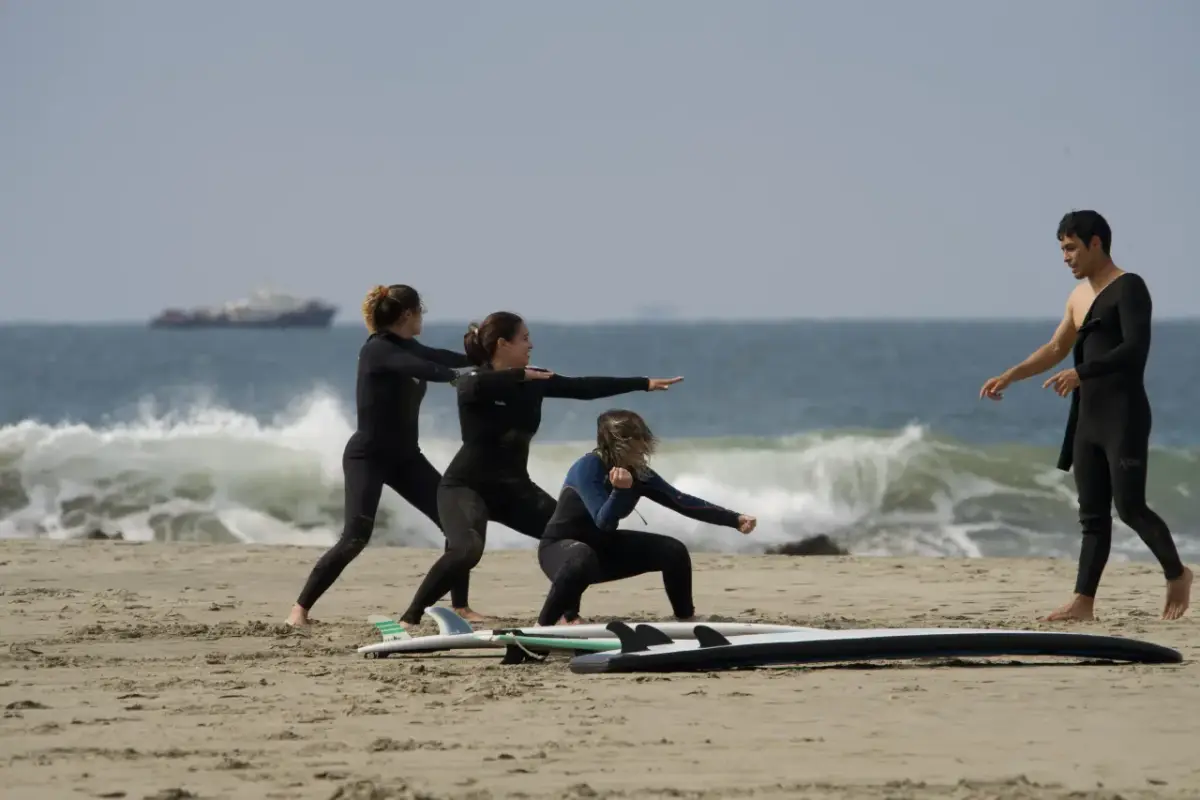
Surfing in Peru
2 schools in 2 places1 spot guideBest months Apr to Sep
We list 2 surfing schools in 2 places in Peru; 1 spot has its own guide below. You can book lessons in Lobitos (from PEN 90). Best months: Apr to Sep.
Book surfing in Lobitos
Surfing lessons in Lobitos
Pick a course, choose your dates and send it straight to the school. Nothing to pay today.
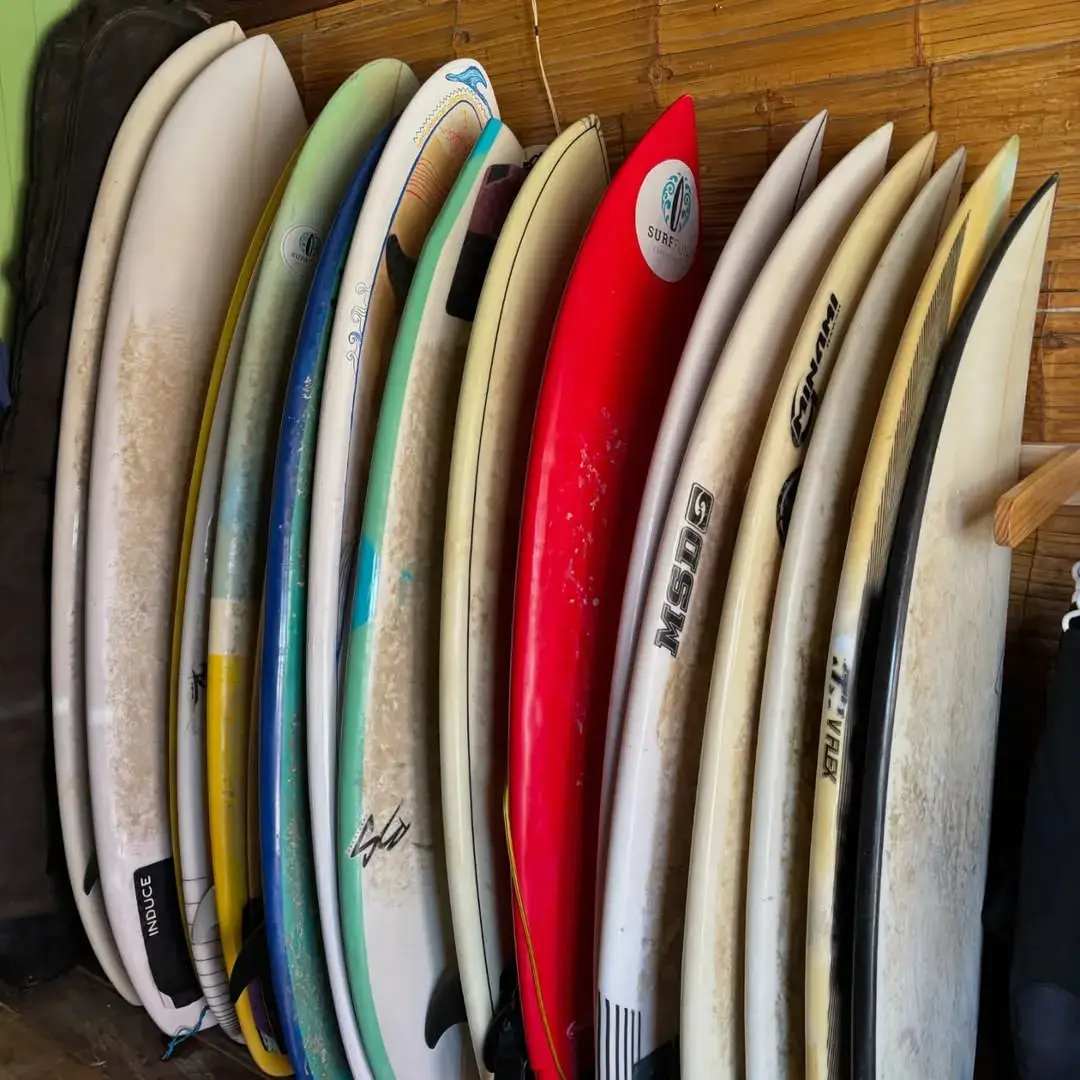
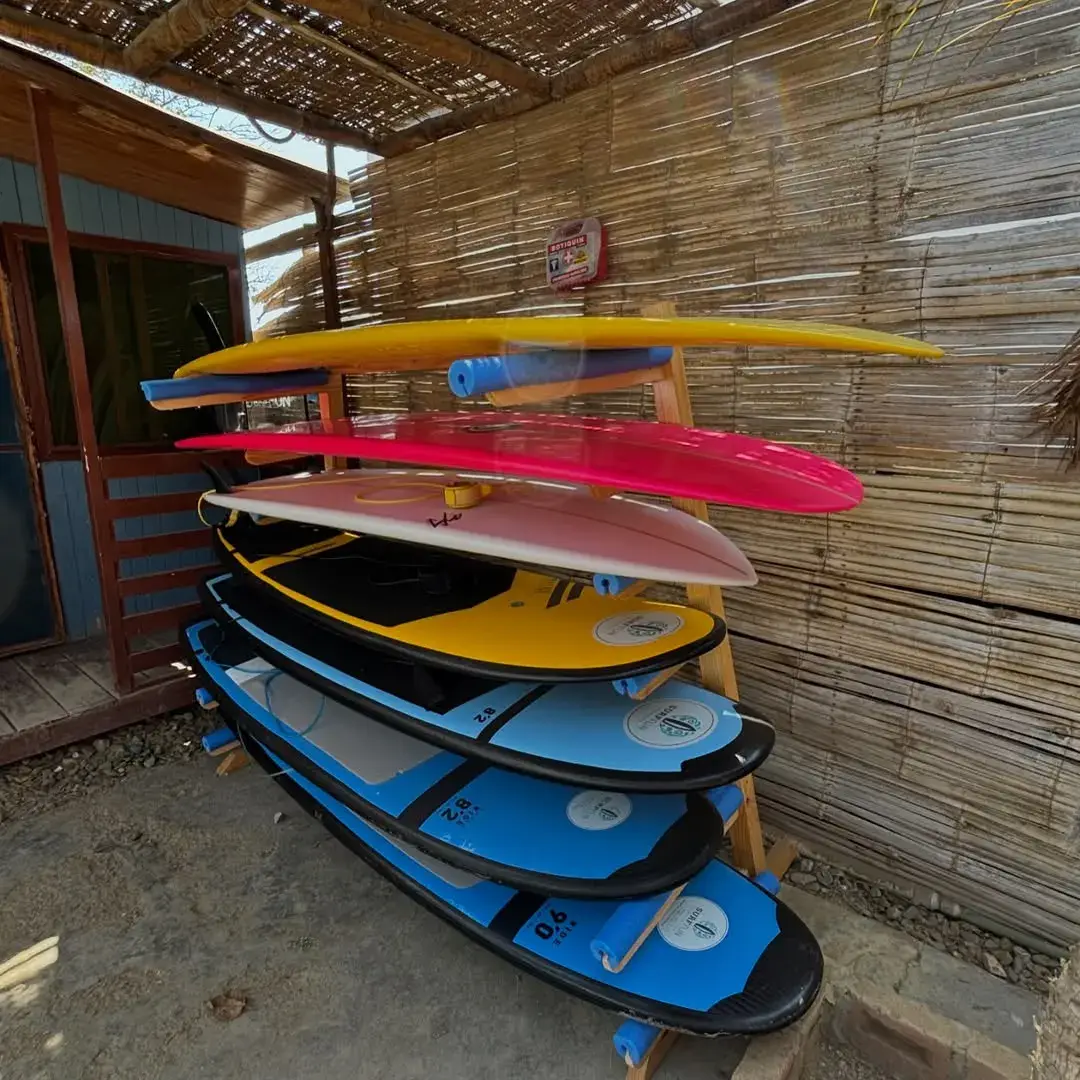
Surf gear rental in Lobitos
Rent from the school on the beach. Pick the day and send the booking request, the school confirms.
Surfing in Peru at a glance
Peru's best surfing is on the north coast, where long left-hand points break from April to September, the southern-hemisphere winter. December to March brings smaller, friendlier waves for beginners. Lobitos has a school and several lefts, Huanchaco and Mancora suit learners, Pacasmayo is for upper intermediate surfers and up, and Chicama is for advanced surfers. Water is warmest at Mancora and coldest near Lima, and a 3/2 mm wetsuit is recommended at Lobitos.
Peru's Pacific coast is a desert strip about 1,600 km long between the Ecuador and Chile borders, cooled by the Humboldt Current. The north coast around Piura and Trujillo is warmer and sunnier than the coast around Lima, and it is where most coastal trips are based. Lobitos in Piura Region is a small village of 1,312 people on that northern coast.
- A school in Lobitos charges S/90 for a private lesson of 60 to 75 minutes with equipment, and S/70 per class in a 10-class group package
- Wetsuits are needed in about 90 percent of places, and a 3/2 mm suit is recommended at Lobitos
- Water in the far north runs 21 to 25 degrees Celsius, while Chicama drops to around 16 in July and August
- Huanchaco was approved as a World Surfing Reserve in 2012, the first in Latin America
- Pick one base: Lobitos for lefts and a school, Huanchaco or Mancora for learners, Chicama for the long ride
When is the best time for surfing in Peru?
Peru is rarely flat, but the coasts differ on timing. The Surf Atlas puts the best Lobitos surf from April to September, when southern swells light up the left points, with smaller waves from December to March. Perfect Wave Travel names March to July as the most consistent period in the far north and March to November for the south swells near Lima. Beginners can pick the smaller December to March window, and advanced surfers should aim for April to July.
| Spot | Jan | Feb | Mar | Apr | May | Jun | Jul | Aug | Sep | Oct | Nov | Dec |
|---|---|---|---|---|---|---|---|---|---|---|---|---|
| Lobitos | ||||||||||||
| Mancora | ||||||||||||
| Huanchaco | ||||||||||||
| Chicama | ||||||||||||
| Pacasmayo | ||||||||||||
| Punta Hermosa and San Bartolo |
The best spots for surfing in Peru
| Spot | Water | Level | Best months | Why go |
|---|---|---|---|---|
| Lobitos | Left points, reef | Intermediate, lessons for beginners | Apr to Sep | A small village with several lefts. La Punta is a consistent left point that suits intermediates, while Batieras and El Hueco are heavier and for advanced surfers. Surf Fun Experience teaches here, and winter from April to September has the biggest swell. |
| Mancora | Point and beach breaks | Beginner to intermediate | Apr to Sep | The only tropical surf town in Peru, with warm water and a mellow left point. The town beach suits beginners to intermediates, Pocitas is quieter, and Punta Ballenas is a fickle slab for advanced surfers. Lobitos is about an hour away by road. |
| Huanchaco | Peaky beach breaks | Beginner to intermediate | Apr to Sep | A beach near Trujillo with soft, consistent waves, open to all swells. It is the birthplace of the totora reed boats, was approved as a World Surfing Reserve in 2012, the first in Latin America, and has hosted the Longboard World Championships since 2010. |
| Chicama | Long left point | Advanced | Mar to Jul | Famous as one of the longest left-hand waves in the world, with five sections and rides of up to 1.5 km according to one guide, though other sources claim more. Boats carry surfers to the take-off. It is for advanced surfers, and winter water drops to around 16 degrees Celsius. |
| Pacasmayo | Long left point | Upper intermediate and up | Mar to Jul | A long and powerful left that is described as suitable for upper intermediate and advanced surfers. Perfect Wave Travel gives wave sizes of 3 to 10 feet, so it is a serious wave for those who have outgrown the beginner breaks further north. |
| Punta Hermosa and San Bartolo | Left and right beach breaks | Beginner to intermediate | Mar to Nov | The usual surf towns south of Lima, with Punta Hermosa about 42 km from downtown. Lefts at Playa Senoritas and rights at Caballeros are cleaner than the beaches in Lima itself, and San Bartolo is beginner friendly. Water is colder than in the north. |
Which Peru spot suits your surfing level?
Complete beginner
Start at Mancora or Huanchaco, where the waves are gentlest. San Bartolo works if you are based in Lima. Surf Fun Experience in Lobitos gives individual and group lessons, but its main point suits intermediates. Smaller waves from December to March are easier for a first week.
Can stand up, working on turns
La Punta at Lobitos is a consistent left point where you can work on cutbacks and sit on the shoulder for mellower lines, and Mancora's main point is the mellow alternative.
Advanced surfers
Chicama and Pacasmayo give long, powerful lefts, and Batieras and El Hueco at Lobitos are heavier, with the biggest swell between April and September. El Hueco has shallow rock, so go with a local on your first session.
Travellers on a short trip
Distances are long, so choose one region rather than trying to see Mancora, Chicama and Lima in one week. With a week, fly to Talara and base yourself at Lobitos or Mancora.
Getting to Peru and between the spots
- Getting to Peru
- Almost all international flights arrive at Lima's Jorge Chavez airport (LIM). From there, domestic flights on JetSmart, LATAM and Sky Airline reach Talara, Piura and Trujillo, which are the three gateways to the northern coast. Book the domestic leg on the same trip, because the north coast is a long way from Lima by road.
- Airports
- LIMJorge Chavez International Airport, LimaFor Lobitos. The international gateway, about 11 km north-west of historic Lima and 17 km from Miraflores. Domestic flights continue to Talara, Piura and Trujillo.
- TYLCapitan FAP Victor Montes Arias Airport, TalaraFor Lobitos. The small airport of Talara, the town just south of Lobitos. Flights from Lima on JetSmart, LATAM and Sky Airline.
- PIUPiura airportFor Lobitos. Flights from Lima on JetSmart and Sky Airline. Lobitos is about 110 km from Piura city.
- TRUTrujillo airportFlights from Lima on JetSmart, LATAM and Sky Airline. Chicama town is about 33 km north of Trujillo city, and Huanchaco is on the coast near the city.
- Between the spots
- Distances are large, so base yourself in one region per trip: the far north, the Trujillo area or Lima. In the far north, Lobitos is about 1.2 hours by road from Mancora, and from Talara you can take a shared minivan or rent a car. Chicama town is about 33 km north of Trujillo city. Plan time between regions around domestic flights from Lima rather than long bus rides.
- Entry and visa
- UK passport holders do not need a visa for tourism and are normally allowed up to 90 days in any 180-day period. The passport must be valid for at least 6 months after arrival. Entry is recorded digitally at international airports. Rules differ by nationality, so check the official source for your own passport before you book.
- Money and costs
- The currency is the Peruvian sol (PEN, symbol S/), divided into 100 centimos. Local businesses quote in soles, and many local businesses list prices in soles, so carry some cash for small villages.
- Climate and water
- The Humboldt Current keeps the sea cooler than the latitude suggests, and water off Lima drops to about 14 degrees Celsius in September. The far north is warmer at 21 to 25 degrees Celsius. A fog called garua covers the southern coast from May to November, while December to April is mostly sunny. Rain is rare, under 30 mm a year along most of the coast, though El Nino years can bring floods to the north.
- Safety
- The sun is stronger than it feels, even on cloudy days, so use sunscreen. Water near Lima is described as polluted, which makes the cleaner beaches south of the city the better choice. Check local advice for the area you will stay in before you book.
Surfing in Peru: your questions
When is the best time to surf in Peru?
April to September is the main swell window on the north coast, when southern swells light up the left points. December to March has smaller waves that suit beginners, and Perfect Wave Travel names March to July as the most consistent stretch in the far north. Advanced surfers should aim for April to July.
Where is the best place in Peru for beginners to surf?
Huanchaco and Mancora are the best first choices, with soft or mellow waves. San Bartolo is the beginner option near Lima. Lobitos also has a school, Surf Fun Experience, that teaches individual and group lessons, although its main point suits intermediates. Learners get the easiest conditions between December and March.
Do I need a wetsuit to surf in Peru?
Yes in most places, about 90 percent of them. A 3/2 mm suit is recommended at Lobitos, especially in winter. The far north is warmer at 21 to 25 degrees Celsius, and Mancora can need no suit for part of the year. Chicama drops to around 16 degrees in July and August.
How much do surf lessons cost in Peru?
At Lobitos, Surf Fun Experience charges S/90 for one private lesson of 60 to 75 minutes with equipment. A package of 5 group lessons costs S/400 and 10 cost S/700, and a day of board and wetsuit hire is S/40. These prices were checked in November 2026.
Which airport do I fly into for surfing in northern Peru?
Fly into Lima (LIM), then take a domestic flight to Talara for Lobitos, Piura for the far north or Trujillo for Huanchaco and Chicama. Lobitos is about 110 km from Piura and Mancora is about 1.2 hours from Lobitos by road, so fly to the one nearest your base.
Is Chicama suitable for beginners?
No. Chicama is a long left-hand point wave that guides rate for advanced surfers, and boats carry surfers to the take-off point. Its water is also cold in winter, around 16 degrees Celsius in July and August. Beginners are better off at Huanchaco or Mancora, then moving on once they ride confidently.
How many Peruvian surf regions can I fit into one week?
One. The best-known waves sit hundreds of kilometres apart, and the north coast is reached by domestic flights from Lima. With a week, fly to Talara and base yourself at Lobitos or Mancora, about 1.2 hours apart by road, and add Chicama or Huanchaco only on a longer trip.
Sources for this guide: The Surf Atlas: Peru surf, The Surf Atlas: Lobitos surf, The Surf Atlas: Mancora surf, Perfect Wave Travel: Peru surf guide, Surf Fun Experience: lessons and prices in Lobitos, Wikipedia: Huanchaco, surf-forecast.com: Peru surf breaks, Wikipedia: Climate of Peru, FCDO travel advice: Peru entry requirements, Wikipedia: Jorge Chavez International Airport, Wikipedia: Capitan FAP Victor Montes Arias International Airport, Wikipedia: Peruvian sol, Wikipedia: Lobitos, Wikipedia: Chicama · Last checked November 2026.