
Windsurfing in Spain
50 schools in 33 places1 spot guideBest months Apr to Sep
We list 50 windsurfing schools in 33 places in Spain; 1 spot has its own guide below. You can book lessons in Corralejo (from €65). Best months: Apr to Sep.
Book windsurfing in Corralejo
Windsurfing lessons in Corralejo
Pick a course, choose your dates and send it straight to the school. Nothing to pay today.
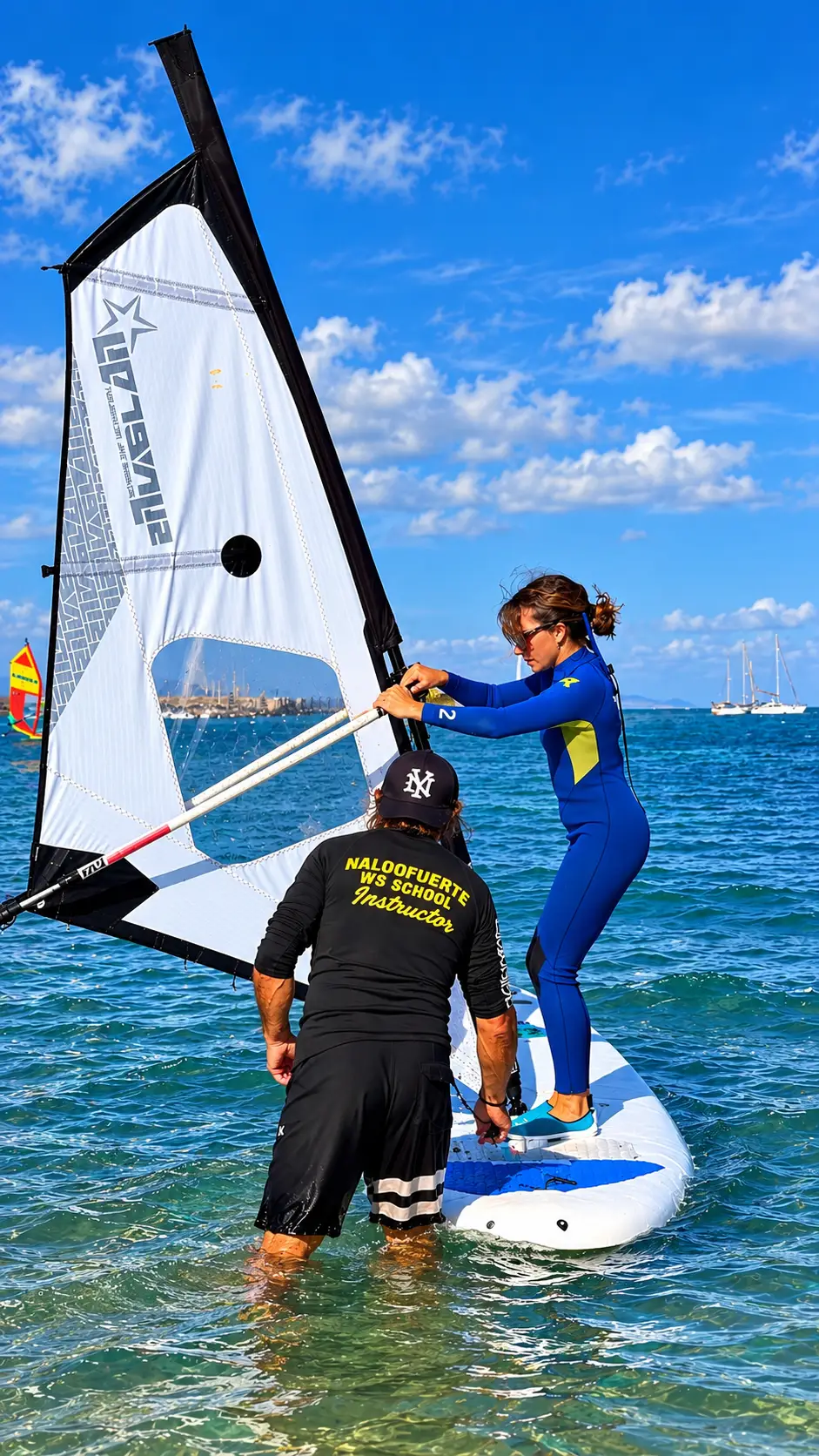
Windsurfing in Spain at a glance
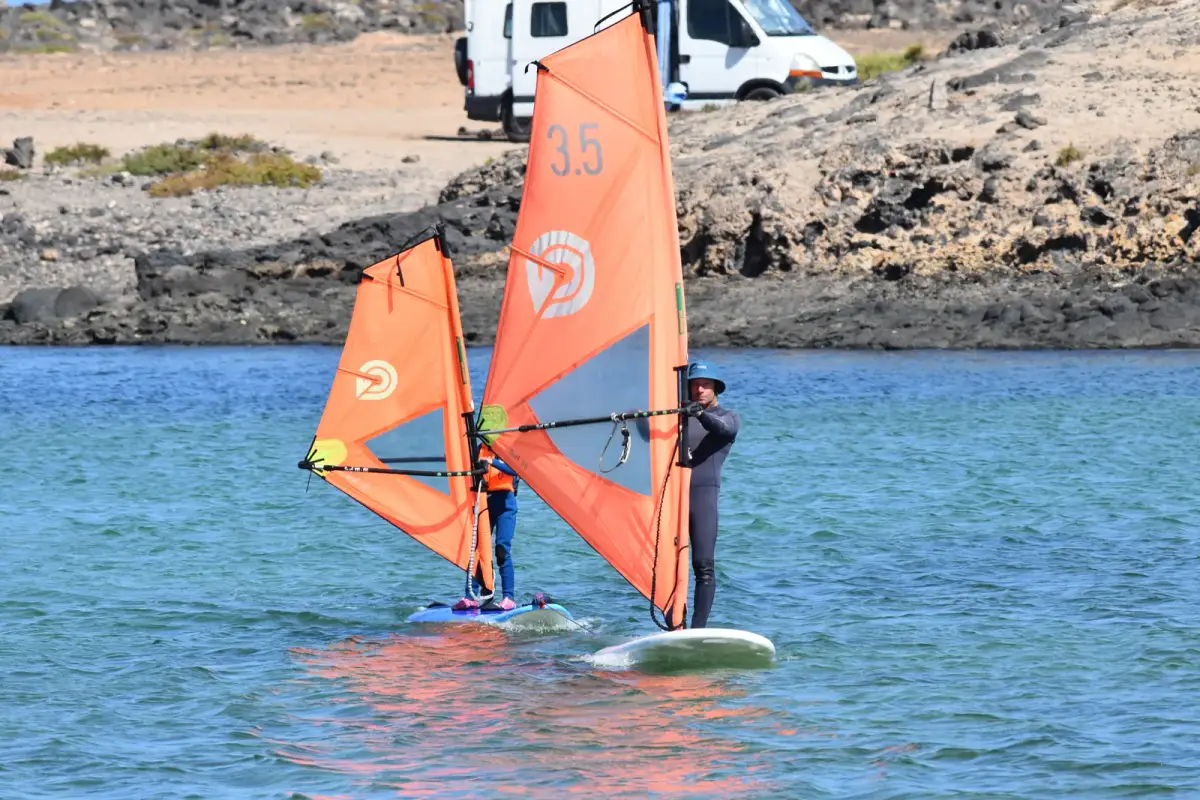
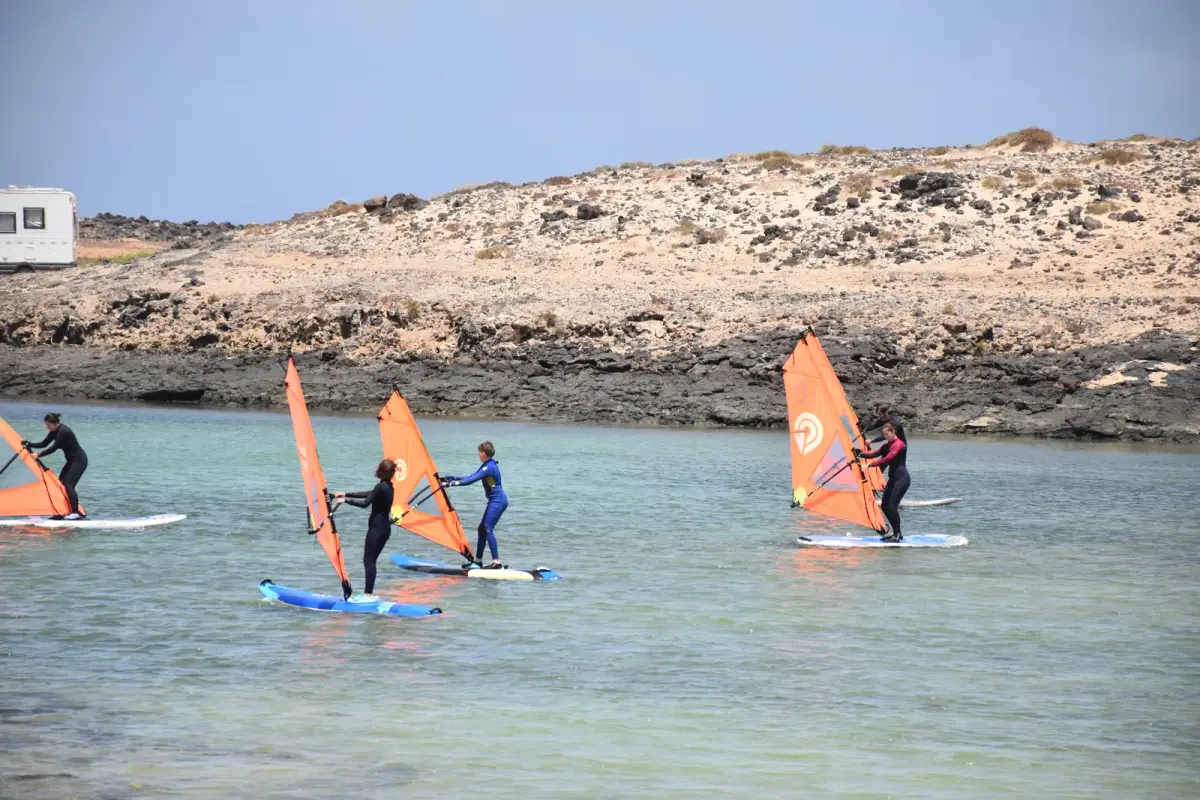
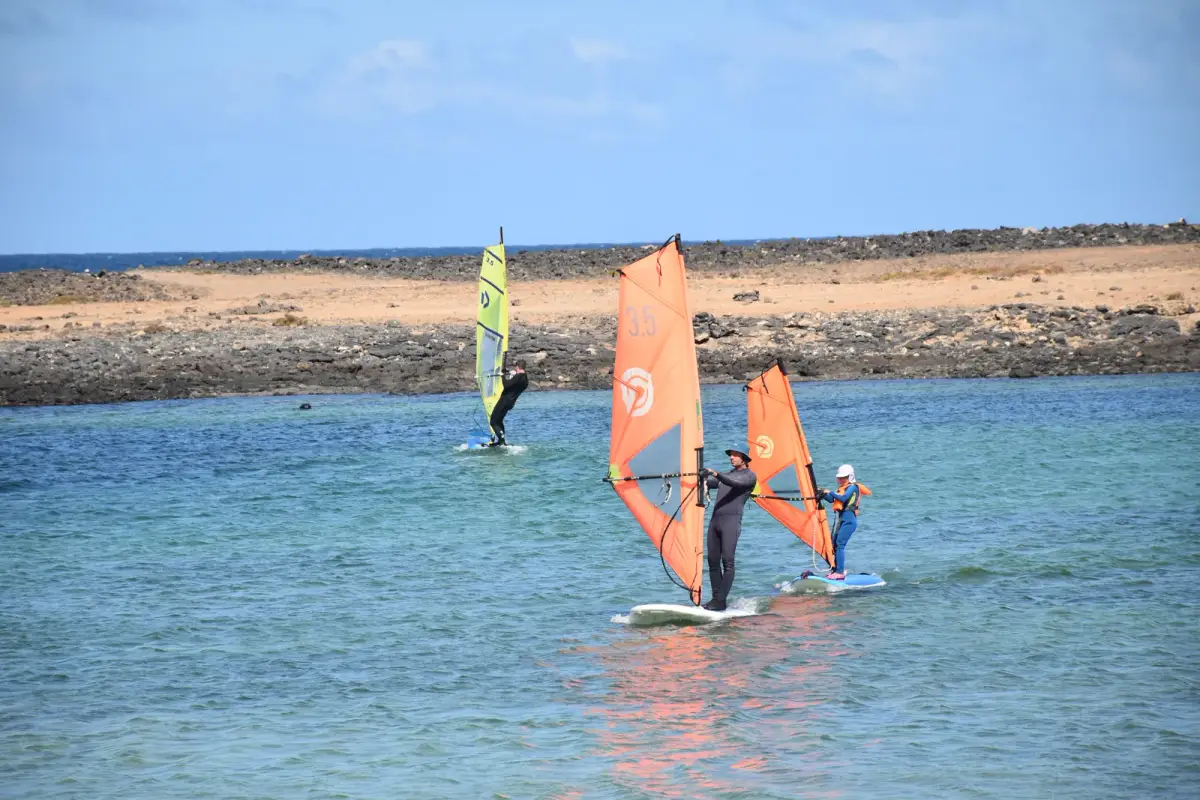
Windsurfing in Spain offers sheltered learning water and challenging Atlantic wave spots. Start with Corralejo or a suitable sheltered area near Costa Calma for lessons; experienced riders can look at Pozo Izquierdo, El Médano and Tarifa when conditions suit. Summer often brings the most consistent trade winds to the Canary Islands, while Tarifa's Levante and Poniente winds can change quickly. Kitesurfing.me lists 49 schools teaching windsurfing in Spain.
Spain's coastal regions span the Atlantic coast, Mediterranean coast, Balearic Islands and Canary Islands. Choose one region as a base and allow time for local transfers, especially when travelling between islands or carrying bulky equipment. Airports, train services and ferries offer different routes depending on your destination.
- Corralejo has four schools listed on kitesurfing.me; sheltered water makes it a useful place to ask about a first lesson.
- Long-term monthly mean wind ranges from about 10 to 14 knots in Corralejo and 10 to 13 knots in Tarifa; these are averages, not forecasts.
- The schools listed here include four in Corralejo and three in El Médano.
- Pozo Izquierdo on Gran Canaria offers strong wind, chop and sometimes large waves, with a demanding lava-stone entry.
- Sotavento hosts a summer windsurfing World Cup; dates and disciplines vary by year.
- For Spain windsurfing spots on the Mediterranean, Los Alcázares offers an alternative base on the Mar Menor.
When is the best time for windsurfing in Spain?
The Canary Islands often have their most consistent trade winds in summer. Tarifa has two principal winds, Levante and Poniente, and conditions can change quickly. Check the forecast and ask the school about your dates.
| Spot | Jan | Feb | Mar | Apr | May | Jun | Jul | Aug | Sep | Oct | Nov | Dec |
|---|---|---|---|---|---|---|---|---|---|---|---|---|
| Corralejo | ||||||||||||
| Tarifa | ||||||||||||
| Pozo Izquierdo | ||||||||||||
| El Médano | ||||||||||||
| Sotavento (Costa Calma) |
| Spot | Jan | Feb | Mar | Apr | May | Jun | Jul | Aug | Sep | Oct | Nov | Dec |
|---|---|---|---|---|---|---|---|---|---|---|---|---|
| Corralejo: wind (kn) | 11 | 11 | 12 | 12 | 13 | 13 | 14 | 13 | 11 | 10 | 11 | 10 |
| Corralejo: water (°C) | 19 | 18 | 18 | 19 | 20 | 21 | 22 | 23 | 23 | 23 | 22 | 20 |
The best spots for windsurfing in Spain
| Spot | Water | Level | Best months | Why go |
|---|---|---|---|---|
| Corralejo | Sheltered, shallow water | Beginner to intermediate | Jun to Sep | Corralejo, on Fuerteventura in Spain's Canary Islands, has sheltered water that can suit a first lesson. The marketplace lists four windsurfing schools here. Summer trade winds are often steadier, while November to March can be quieter. Ask your school where it teaches and whether the day's conditions suit your experience. |
| Tarifa | Open sea, two winds | Depends on conditions | Apr to Jun, Sep to Oct | Tarifa, Spain, can suit different levels when the beach, wind and instructor match the rider. Offshore Levante requires particular care; Poniente approaches from the opposite direction. The marketplace lists seven windsurfing schools in Tarifa; ask the school which beach and wind direction suit your level. |
| Pozo Izquierdo | Chop, rocky lava entry | Advanced | Jun to Sep | Pozo Izquierdo, on Gran Canaria in Spain, is a demanding spot for experienced riders. Local acceleration can bring winds up to 50 knots. Pozo can be choppy without swell and develop large waves when swell arrives; its lava-stone entry is demanding. Nearby Bahía de Formas offers flatter water for speed and slalom. |
| El Médano | Shore break, chop | Intermediate to advanced | Jun to Sep | El Médano, on Tenerife in Spain, has three schools listed here. Long-term measurements put El Médano's monthly mean wind at about 11 to 14 knots across the year; individual sessions can be much windier. Nearby Granadilla Harbour has calmer water, although access at Playa del Medio is rocky. Ask locally about access and conditions. |
| Sotavento (Costa Calma) | Lagoon and open water | Beginner to advanced | Apr to Sep | Sotavento, on Fuerteventura in Spain, has a long lagoon and open-water areas near Costa Calma. Ask a school to select a sheltered area for a first lesson; more experienced riders can ask about the open lagoon and nearby Matas Blancas. Conditions and water depth change, so check before launching. |
| Los Alcázares | Coastal lagoon | Ask a local school | Not specified | Los Alcázares, on Spain's Mediterranean coast, sits beside the Mar Menor and offers an alternative to the Atlantic islands. The marketplace lists two windsurfing schools there. Ask about lesson areas, local launch rules and the day's conditions before choosing equipment or entering the water. |
Which Spain spot suits your windsurfing level?
Complete beginner
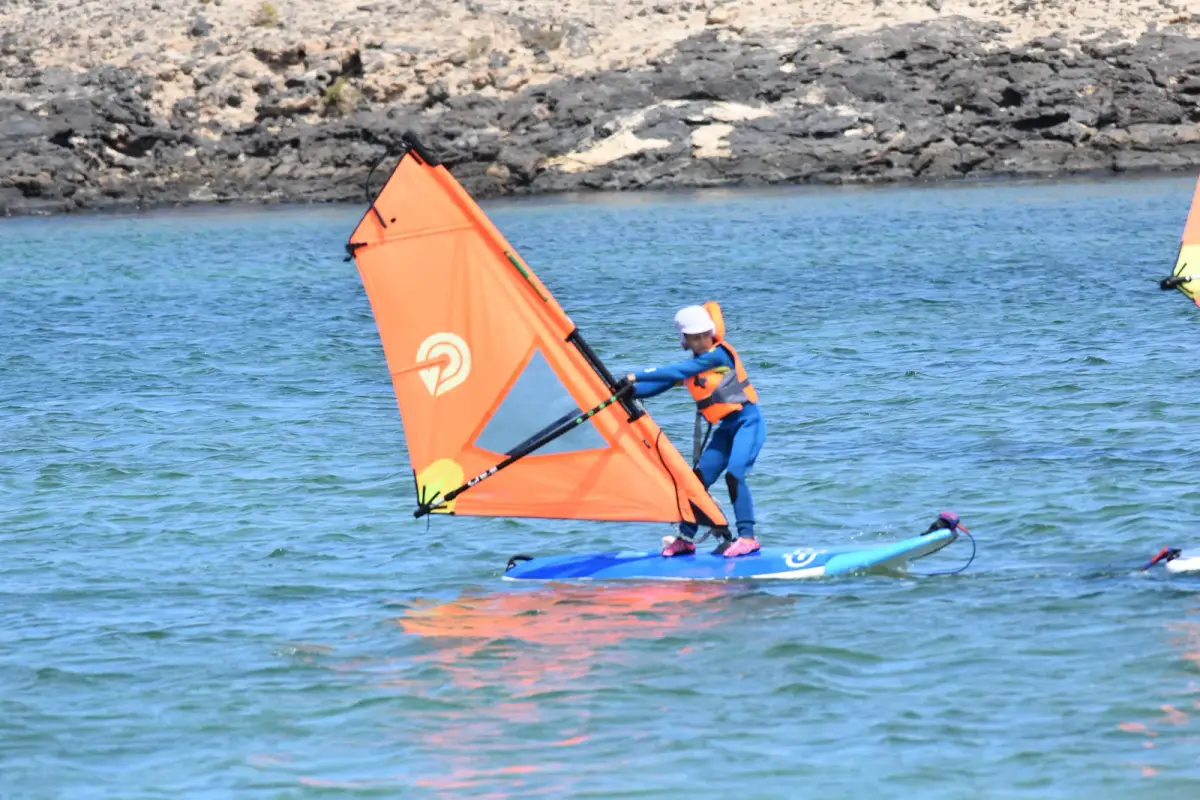
In Spain, ask schools in Corralejo or near Costa Calma about sheltered first-lesson areas. Other locations may also offer suitable instruction. Wind and water conditions change, so let the instructor choose the beach and session for your ability.
Intermediate
Intermediate riders in Spain can ask about Playa del Medio near El Médano or Bahía de Formas near Pozo Izquierdo. Both offer calmer water than their better-known neighbours in some conditions. Playa del Medio has rocky access, so check locally before entering.
Advanced wave or speed sailor
Advanced riders in Spain can consider Pozo Izquierdo for strong wind, chop and sometimes large waves, or Tarifa when its conditions match their skills. Ask locally about Matas Blancas and Bahía de Formas for speed sailing, and check access before rigging.
Visiting Tarifa
Tarifa in Spain has seven windsurfing schools listed in the marketplace. Ask the school which beach and wind direction suit your level. Offshore Levante calls for particular care, and even experienced sailors should check the forecast, launch area and available support.
Getting to Spain and between the spots
- Getting to Spain
- For Somo, look at Santander airport. For Zarautz and Mundaka, check San Sebastián and Bilbao airports. Jerez is an option for El Palmar; Lanzarote serves Famara, and Fuerteventura serves Lajares. Check current transfer options and board-bag terms before booking. For Dénia, look at Alicante or Valencia; for Corralejo, fly to Fuerteventura; for El Médano, use Tenerife South. Gibraltar, Málaga and Jerez are options for Tarifa. Madrid and Barcelona offer onward train or domestic flight connections. Check that a rental car can accommodate your equipment and confirm arrangements with your provider.
- Airports
- SDRSeve Ballesteros-Santander AirportFor Somo. An option for Somo. Check the current route and transfer time around Santander Bay.
- EASSan Sebastián AirportFor San Sebastian, Zarautz. An option for San Sebastián and Zarautz, and an alternative for Mundaka.
- BIOBilbao AirportFor Zarautz, Mundaka. An option for Mundaka and Zarautz. Check the current road route and transfer time.
- GIBGibraltar AirportFor Tarifa. Gibraltar Airport is an option for Tarifa. Check the current driving route, border-crossing time and rental-car terms before booking.
- AGPMálaga-Costa del Sol AirportFor Marbella. A gateway for Marbella and an alternative for Tarifa and Chiclana de la Frontera.
- XRYJerez de la Frontera AirportFor Chiclana de la Frontera, El Palmar. An option for El Palmar, Chiclana and Tarifa. Check the current driving route and transfer time.
- LEIAlmería AirportFor Almeria.
- ALCAlicante-Elche AirportFor Denia. Alicante and Valencia are options for Dénia. Check the current road route and transfer time from each airport.
- RMURegión de Murcia Airport (Corvera)For Los Alcazares. Los Alcázares is on the Mar Menor, a drive from the airport. Alicante is an alternative.
- BCNBarcelona-El Prat AirportFor Barcelona. Castelldefels and Badalona are within driving distance; check your route and traffic.
- GROGirona-Costa Brava AirportFor Sant Pere Pescador.
- REUReus AirportFor Sant Carles de la Rapita. An option for the southern Ebro Delta.
- FUEFuerteventura AirportFor Corralejo, Costa Calma, El Cotillo, Lajares. An option for Corralejo, Costa Calma, El Cotillo and Lajares. Check the current driving route and transfer time for your destination.
- TFSTenerife South AirportFor El Medano. Close to El Médano; check the current route and transfer time.
- LPAGran Canaria AirportFor Maspalomas.
- ACELanzarote AirportFor Caleta de Famara. An option for Caleta de Famara. Check the current road route and transfer time.
- FAOFaro Airport (Portugal)For Isla Canela. Across the Portuguese border from Isla Canela. Check the driving route and rental-car cross-border terms.
- Between the spots
- High-speed trains connect Madrid with Barcelona and Málaga; journey times vary by service, so check the current timetable before booking. A hire car can make local transfers easier, especially with bulky equipment. Travel between the Canary Islands by domestic flight or ferry; journey times and practical routes depend on the islands.
- Entry and visa
- Entry requirements for Spain depend on your nationality, passport and reason for travel. Check current official Spanish guidance before booking, including visa requirements, permitted length of stay and passport validity. If you need a visa or other documents, allow enough time to obtain them before departure.
- Money and costs
- Spain uses the euro (EUR). Cards are widely accepted, though some cash can help with parking machines and purchases in rural areas. Food and drink prices vary by location and venue, so check menus when planning your budget.
- Climate and water
- Spain's Mediterranean coast has mild winters and hot summers, while Atlantic Andalusia is generally a little cooler and the Canary Islands remain mild. Long-term measurements put Tarifa's monthly mean water temperature at roughly 16 to 22°C, while Fuerteventura is roughly 18 to 23°C across the year. These averages do not predict conditions on a particular day.
- Safety
- Spain's beaches can have hidden rocks, sudden depth changes and strong currents, particularly on Atlantic-facing or unsupervised stretches. Follow beach flags and signs, and ask a lifeguard or local provider about hazards. A red flag means do not enter the water. Keep valuables out of sight at airports, car parks and busy tourist areas, and dial 112 in an emergency.
Windsurfing in Spain: your questions
When is the best time for windsurfing in Spain?
Summer often brings the most consistent trade winds to Spain's Canary Islands, especially from June to September. Tarifa has Levante and Poniente winds, and conditions can change quickly. Long-term monthly means in Corralejo range from about 10 to 14 knots, but an individual session can be windier.
Where should a beginner windsurf in Spain?
In Spain, Corralejo and a suitable sheltered area near Costa Calma are useful places to ask about a first lesson. Corralejo has four schools listed in the marketplace. Tell the instructor your experience and ask where lessons take place, what equipment is included and which conditions are suitable.
Where can advanced windsurfers go in Spain?
Advanced riders in Spain can consider Pozo Izquierdo on Gran Canaria, El Médano on Tenerife, Tarifa and the open water near Sotavento. Pozo's locally accelerated wind can reach up to 50 knots, and swell can produce large waves. Choose a spot for the actual forecast and your experience.
How do I get between Spain's windsurfing regions?
Tarifa in Spain is reached via mainland airports such as Gibraltar, Málaga or Jerez, followed by a road transfer. Fly or take a ferry between the Canary Islands where a suitable route exists. Mainland trains connect major cities, while a car can help with the last leg and equipment.
Do I need a visa to windsurf in Spain?
Visa-exempt visitors, including many travellers from the United States, United Kingdom, Canada and Australia, can normally visit Spain and the wider Schengen area for up to 90 days in any 180-day period. Eligibility and passport requirements depend on nationality and circumstances, so check current official guidance before booking.
How much do lessons cost in Spain?
Across 23 schools in Spain with published beginner-course prices, the median is 29 euros per hour and the range is 9 to 70 euros. Choose a lesson and send a request on kitesurfing.me; the school confirms availability and you pay at the school. Spain uses the euro.
What wetsuit do I need to windsurf in Spain?
Water temperature and wind chill vary across Spain's islands and seasons. Long-term measurements range from about 18 to 23°C in Corralejo and 19 to 24°C in El Médano. Bring or ask the school for a wetsuit suited to the day's conditions; booties can help on rocky entries.
Is windsurfing in Spain safe for beginners?
A sheltered lesson area in Spain can make learning easier, but wind, tides and currents change. Ask the school to choose a suitable location and follow local beach flags and instructions. Avoid open water or offshore wind without appropriate skills and support, and check the forecast before each session.
What launch rules apply at Spain's beaches?
Launch rules in Spain depend on the beach and season. Before rigging, check the current local launch zones, seasonal bathing-area restrictions, beach flags and school instructions for your chosen beach. Ask the local authority or your school if signs are unclear, and keep clear of swimmers and other beach users.
What other lesson prices are listed in Spain?
Among schools in Spain with published prices, group or semi-private lessons have a median of 32 euros per hour across 10 schools, and private lessons have a median of 65 euros across 12. Intermediate coaching has a median of 35 euros across five schools; advanced coaching is 37 euros across 10.
Sources for this guide: Windfinder: Fuerteventura wind statistics, Windfinder: Tarifa wind statistics, PWA World Tour: 2026 Gran Canaria Gloria Windsurf World Cup, Surf Magazin: Pozo, Vargas and Co, the best windsurfing spots on Gran Canaria, Surf Magazin: El Medano on Tenerife, wingfoil spot for advanced surfers, Adventure Sports Holidays: guide to Spain windsurfing holidays, Hello Canary Islands: windsurfing on Playa de Sotavento, Spain.info: sporting events in Spain, Spain Ministry of Foreign Affairs: conditions for entry into Spain, UK government: Spain travel advice, safety and security, Wikipedia: Climate of Spain, SeaTemperature.org: Tarifa sea temperature, Weather2Travel: Fuerteventura climate guide, Spain.info: AVE high-speed train, Wikipedia: Binter Canarias, seatemperature.info, 10-year average · Last checked November 2026.