Best Time to Kitesurf in Kalpitiya: Month Guide
Find the best time to kitesurf in Kalpitiya with 12 months of wind and water data, lesson prices, travel advice and local tips.
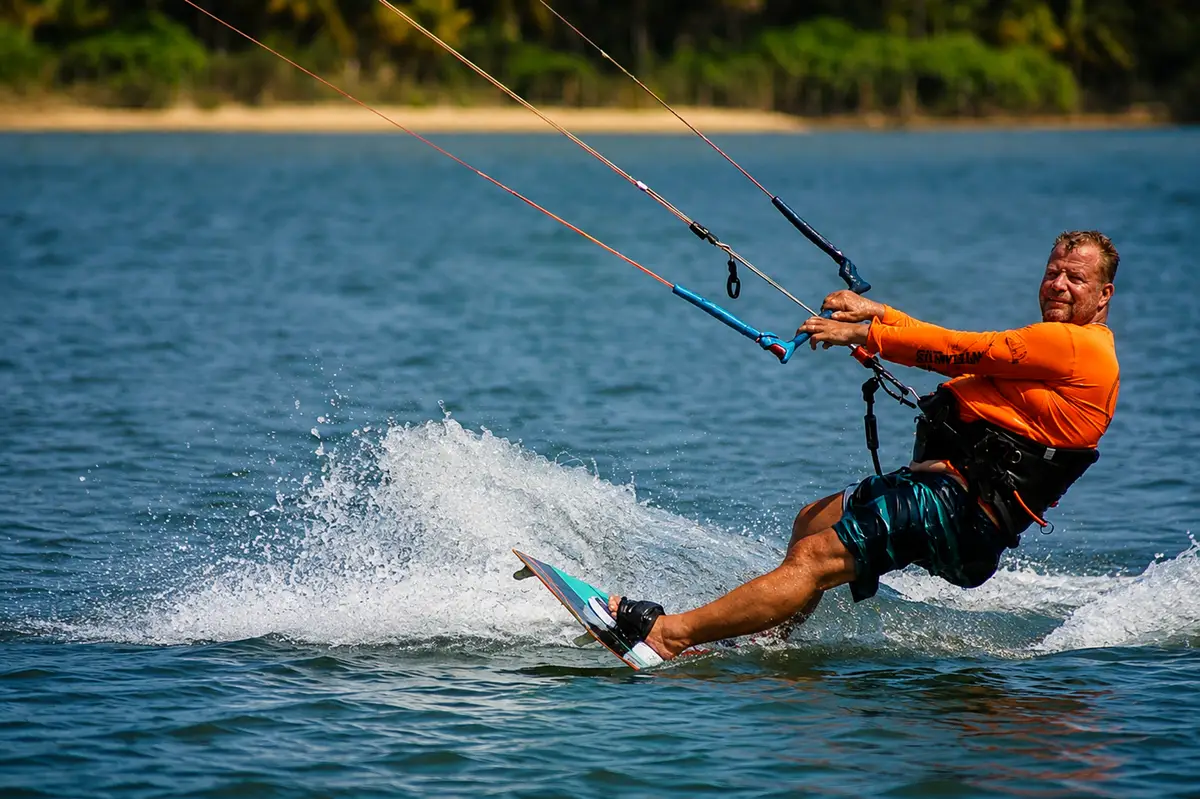
The best time to kitesurf in Kalpitiya, Sri Lanka, is May to September, when the southwest wind commonly reaches 15 to 30 knots. June to September has the strongest historical kite-day figures. January and February bring a lighter winter season for learners and independent riders who prefer less wind.
Key takeaways: Choose June to September for the strongest historical wind pattern in Kalpitiya. January and February usually have lighter winter wind. Monthly water averages range from 28 to 31 °C. A private lesson starts at €50 for one hour.
When is the Kalpitiya wind season?
The main Kalpitiya wind season runs from May or mid-May to September or October, with southwest winds commonly reaching 15 to 30 knots. A lighter northern wind season runs from mid-December to February or March. January and February are the strongest choices within that winter window.
Summer wind crosses the peninsula before it reaches parts of Kalpitiya Lagoon, so it can be gusty on the water. The open coast and offshore sandbars receive more exposed wind. In winter, wind commonly reaches 15 to 20 knots and builds around midday. Ask locally about the day's conditions before choosing your launch.
For a longer stay, June through September gives you the strongest run of historical kite-day estimates. January and February suit a trip built around lighter wind and warm water. The Sri Lanka kitesurfing guide can help you plan a longer route, while the Kalpitiya kite beach guide covers the lagoon and coast.
The edges of each season need more flexibility. May can bring the start of the southwest wind, while October's historical figure falls well below September's. In winter, a later start to the wind may leave your morning free. Keep lesson times flexible and check the forecast close to your trip.
What do Kalpitiya wind statistics show month by month?
June has the highest modelled share of kite days in Kalpitiya at 99%, while April and November each have 26%. The table shows the share for every month alongside average water temperatures. These historical figures help with choosing travel dates, but they cannot tell you what wind will arrive on a particular day.
A modelled kite day has at least three daylight hours of 12 to 35 knots between 10:00 and 19:00, with gusts up to 45 knots. The figures describe 2017 to 2025 and are not a forecast.
The modelled share drops from 69% in February to 32% in March. It rises to 79% in May and stays at 89% or above from June through September. Water figures are monthly surface averages for 2023 to 2025. A qualifying day can still include conditions unsuitable for your experience or equipment.
| Month | Modelled kite days | Average water temperature |
|---|---|---|
| January | 65% | 28 °C |
| February | 69% | 28 °C |
| March | 32% | 30 °C |
| April | 26% | 31 °C |
| May | 79% | 31 °C |
| June | 99% | 29 °C |
| July | 91% | 29 °C |
| August | 91% | 29 °C |
| September | 89% | 29 °C |
| October | 48% | 29 °C |
| November | 26% | 29 °C |
| December | 50% | 28 °C |
When is the best time to kitesurf in Kalpitiya for beginners?
January and February are useful months for beginners in Kalpitiya who prefer lighter winter wind, commonly 15 to 20 knots. May to September brings more frequent strong wind and plenty of teaching time. In either season, start in the shallow areas of Kalpitiya Lagoon with instruction and boat support.
The main lagoon is about 2.5 km long and has a sandbank between the water and the Indian Ocean. Its shallow sections give learners a place to practise, but summer gusts and other riders still call for careful kite control. Ask your instructor where to launch, how the rescue boat works and where your lesson will have enough space.
Kappalady Lagoon, south of Kalpitiya, has shallow, flat water in a smaller area. It suits coached beginners and riders learning to go upwind, though space becomes more limited when busy. The guide to Kalpitiya kite beach explains access and the choice between lagoon and ocean.
- Kalpitiya Lagoon: choose shallow water and supervised instruction for a first lesson.
- Kappalady Lagoon: practise on flat water and leave room for fishing activity.
- Donkey Point: choose the ocean waves once you can handle a surf launch and ride back upwind.
- Vella Island: arrange a boat and rescue plan for the remote sandbar, roughly 20 km north of Kalpitiya Lagoon.
Your level matters as much as the month. A beginner can ask for a sheltered teaching area and boat support, while an independent rider may want more room to practise upwind riding. For a remote trip, agree on the return and rescue plan before leaving shore. Conditions and access can change during a stay.
How warm is Kalpitiya water and what should you wear?
Kalpitiya water averages about 28 °C in January and February and reaches 31 °C in April and May. Boardshorts or a swimsuit are usually enough for the water. Pack a long-sleeved rash guard for sun protection, plus footwear if you want protection from sharp shells in the lagoon.
From June to November, the monthly water average in the Kalpitiya dataset is about 29 °C. A rash guard helps cover skin during long practice sessions, when learners spend time standing in shallow water. Bring dry clothes for the road back from the launch and keep drinking water with you for the day.
Pack kite sizes for the season and your weight rather than relying on one size for every rider. The stronger May to September wind makes a smaller kite useful, while a larger kite can help in lighter winter conditions. Ask locally about the launch and wind before rigging, particularly when moving from the sheltered lagoon to Kalpitiya's exposed coast.
If you are taking lessons, ask the school what equipment it supplies before packing your bags. The private lesson listing is a place to send your dates and experience level. You can also ask how the instructor selects equipment when the wind changes during a session.
What can you do in Kalpitiya on a day without wind?
From November to March, Kalpitiya is a base for boat trips to look for dolphins and whales off the northwest coast. The town also has a Dutch fort, while Puttalam Lagoon and the peninsula offer places to explore by road or boat. Ask local operators about sea conditions before arranging a trip.
A quiet day also gives you time to explore the fishing town and plan a visit to Wilpattu National Park. The Eluwankulama entrance is roughly 60 to 90 minutes from Kalpitiya by road. Allow separate time for the journey and the park visit, and arrange transport with a driver who knows your intended entrance.
March, April and November have the lowest modelled kite-day shares, at 32%, 26% and 26% respectively. Those months suit an itinerary with room for activities away from the kite launch. The guide to kitesurfing across Sri Lanka can help you place Kalpitiya within a longer trip around the island.
A low historical share does not rule out a good session, just as a high share cannot guarantee one. If riding is your main reason for travelling, leave some room in your schedule. Ask your school about lesson timing once you arrive, and check the forecast before committing to a boat trip.
How do you book a lesson in Kalpitiya?
Send a request to KiteZone Kitesurfing School on kitesurfing.me, then wait for the school to confirm it. You pay at the school in Kalpitiya. A private one-hour lesson costs €50, while a three-hour lesson costs €150. Share your dates and experience when you request a place.
The school lists a six-hour private course for €300 and a nine-hour private course for €390. The longer option gives you more instruction time across your stay. Ask how the hours can fit around the season and local wind, and check the meeting point and boat support before you travel.
Kitesurfing.me lists three schools teaching kitesurfing in Kalpitiya. For a short visit, the one-hour private lesson is a starting point. The six- and nine-hour options give you more time with an instructor. A nine-hour course also needs more room in your itinerary, so discuss scheduling with the school.
The listed prices give you a starting budget for instruction. Ask the school what each course includes and how it handles a day when conditions prevent a lesson. If you plan to ride independently as well, tell the instructor where you have ridden before and what you want to practise.
What is Kalpitiya weather like during the kite season?
Kalpitiya stays warm through both kite seasons. Monthly water averages range from 28 °C in January to 31 °C in May. Pack strong sun protection for long sessions on open water, plus a light layer for windy evenings on the beach.
How strong is Kalpitiya wind in winter?
Kalpitiya's winter wind commonly reaches 15 to 20 knots and often builds around midday. January and February are the leading winter months, with modelled kite-day shares of 65% and 69%. The main lagoon has shallow areas for lessons, while Navy Point is an option for more experienced riders.
Is October part of the Kalpitiya kitesurfing season?
The southwest Kalpitiya kitesurfing season can extend into October. October has a modelled kite-day share of 48%, down from 89% in September. Give an October trip some flexibility and use the Kalpitiya beach and lagoon guide to plan where you might ride when conditions allow.
How do I reach Kalpitiya with a kite bag?
A road transfer from Bandaranaike International Airport to Kalpitiya takes roughly three to four hours. Tell the driver how many kite and board bags you have, and request a car or van with enough space. A bus or train toward Puttalam followed by a local connection is another route.
What local rules should kiters follow in Kalpitiya?
At Kalpitiya Lagoon, give fishing boats and nets room and keep the channel toward the ocean clear. At Kappalady, ask about the current arrangement for sharing the lagoon with fishers. Before visiting Navy Point, confirm the boat landing, launch access and rescue arrangements with a local operator.