Kalpitiya Kite Beach Guide: 6 Launches to Know
Find your Kalpitiya kite beach among 6 launches, with advice on lessons, wind, boat trips and getting there with your gear.
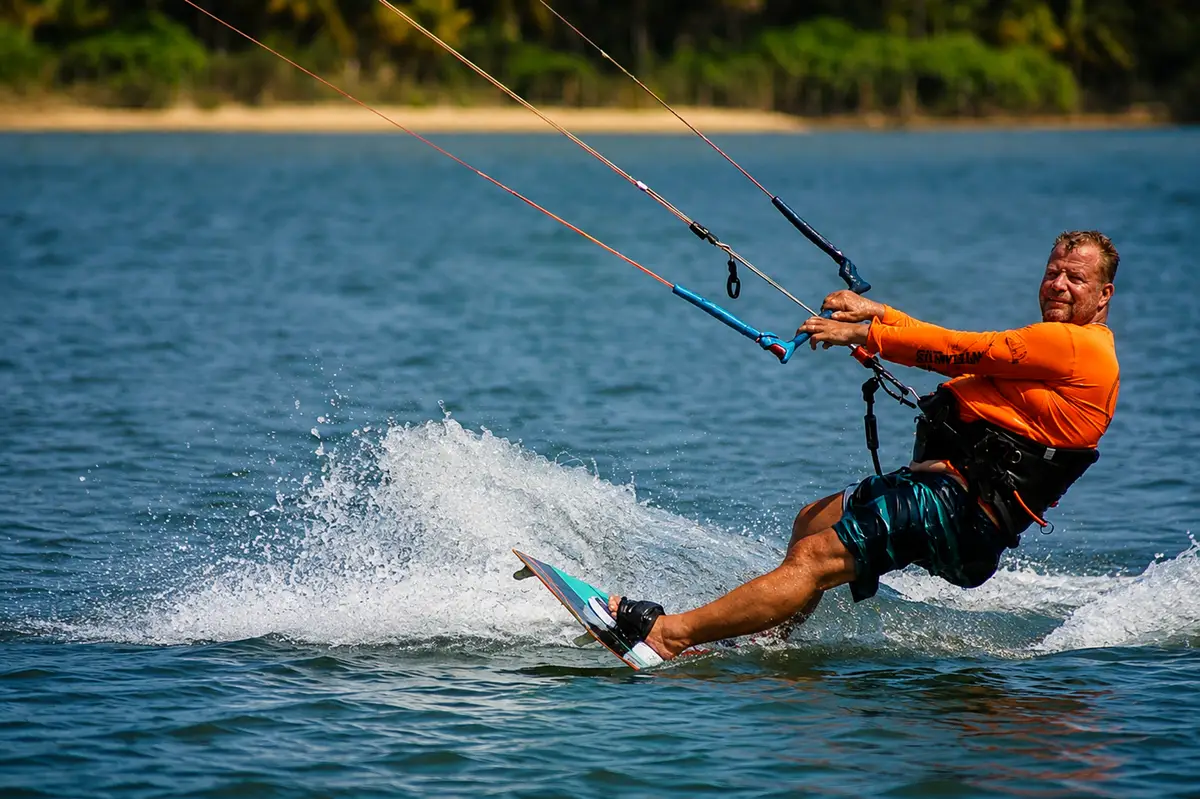
Kalpitiya kite beach in Sri Lanka is a good starting point for a trip built around flat water, lessons or waves. The main lagoon has room to learn, Kappalady has a smaller riding area, and Donkey Point faces the ocean. Confident riders can take a boat to Vella Island, about 20 km north of the lagoon.
Key takeaways: Start at Kalpitiya Lagoon if you need lessons or room to practise. Choose Kappalady for a smaller flat-water setting. Book a boat and agree on rescue before a Vella Island trip. June had a 99% historical modelled kite-day share, but that figure is not a forecast.
Where is Kalpitiya kite beach and how do you get there?
Kalpitiya's main kite launch is on the sandbank between the lagoon and the Indian Ocean. The town sits on Sri Lanka's northwest peninsula, roughly 3 to 4 hours by road from Bandaranaike International Airport. Before booking a room, ask how you will reach the sandbank with your equipment.
Some places around Kalpitiya Lagoon use a boat or vehicle to reach the launch. Ask where the transfer leaves, when it returns and whether your board bag will fit. A room beside the lagoon can still involve a separate trip to the sandbank. Tuk-tuks and arranged transfers can take you between town and local launches.
For an airport pickup, give the driver the number and length of your kite bags when you book. A car may suit a small load; ask for a van if your group has several bags. Confirm the pickup point and total fare in advance, including any charge for equipment.
Public transport is another option if you are comfortable moving your gear. Take a bus or train toward Puttalam, then make a local connection to Kalpitiya. Allow time to change vehicles and carry your own bags. The Sri Lanka riding guide can help if Kalpitiya is one stop on a longer trip.
Which Kalpitiya beach has flat water or waves?
Kalpitiya Lagoon and Kappalady have shallow areas and flat water, while Donkey Point faces the Indian Ocean and its waves. Vella Island, about 20 km north of the main lagoon, is a flat-water trip for experienced riders. Dream Spot has flatter water on one side of its sandbar and small waves on the other.
The main lagoon can turn choppy as the wind builds, so expect the surface to change during a session. In summer, southwest wind crosses land before it reaches parts of the lagoon and can be gusty. Kappalady is smaller, which makes it easier to find your way around but leaves less space when lessons and other riders share the water.
| Launch | Water | Riding level | Access |
|---|---|---|---|
| Kalpitiya Lagoon | Shallow areas, flat to choppy | Beginner to advanced | Sandbank launch, with boat or vehicle transfer from some bases |
| Kappalady Lagoon | Shallow and flat | Beginner to intermediate | Smaller lagoon south of Kalpitiya |
| Donkey Point | Ocean waves | Intermediate to advanced | Exposed coast south of the main lagoon |
| Vella Island | Flat water | Intermediate to advanced | Boat trip, about 20 km north of the main lagoon |
| Dream Spot | Flat water and small waves | Intermediate to advanced | Sandbar near the lagoon system's opening |
| Navy Point | Flat water | Intermediate to advanced | Northern peninsula, with boat access and local arrangements |
At Donkey Point, look at the surf before setting up and arrange local safety support. You should be comfortable launching through waves and riding back upwind. Conditions and access can change, so ask a local operator where to enter and land on the day. For other coastal stops, see the guide to kitesurfing in Sri Lanka.
Which Kalpitiya launch suits your riding level?
Kalpitiya Lagoon is a practical first choice for beginners because its roughly 2.5 km length includes shallow sections and space for instruction. An instructor can help you manage gusts and other water users. Independent beginners should already have enough kite control to keep clear of people and return safely to shore.
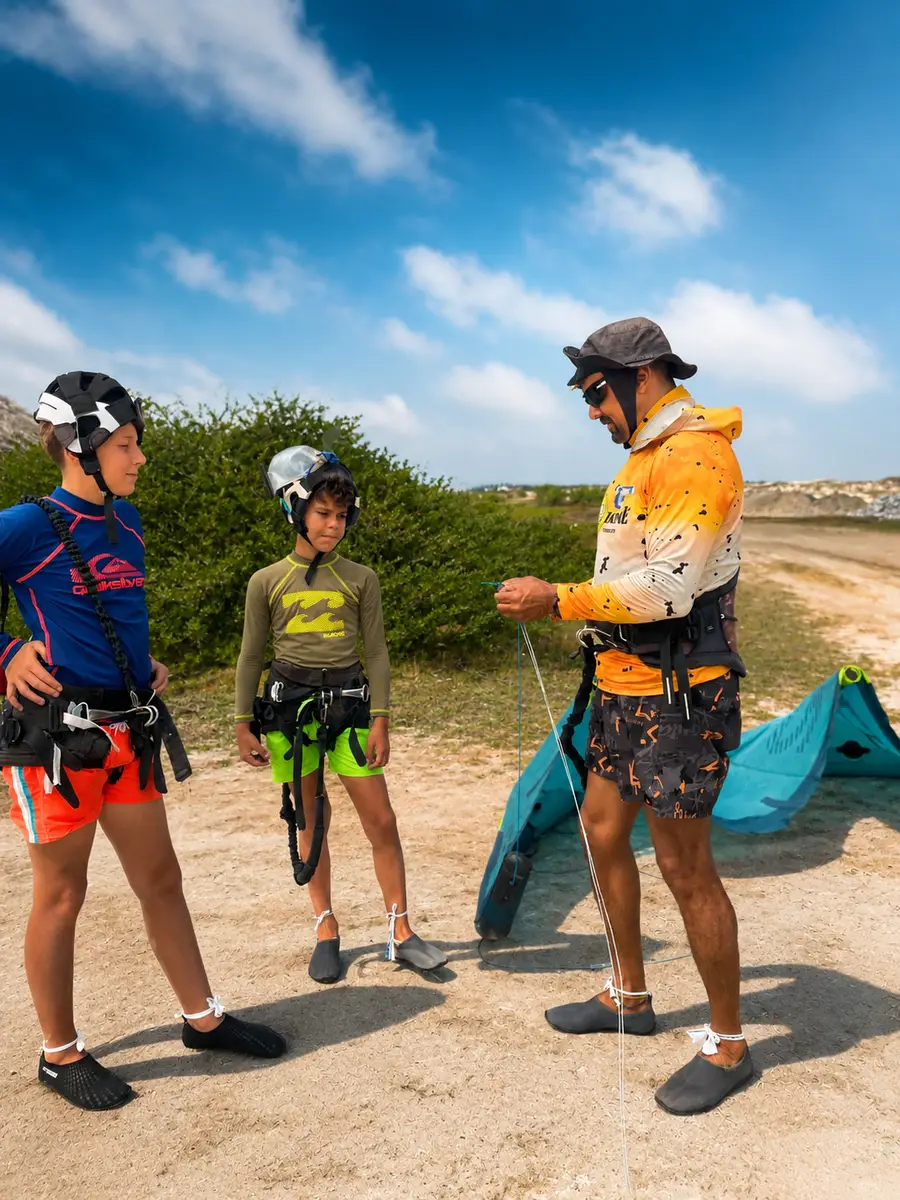
Before your first lesson in Kalpitiya, ask where the instructor teaches and how boat support works. Shallow water can make it easier to stand and relaunch, but it does not remove the need for supervision. Consider footwear for sharp shells. Look for fishing boats and nets before launching, and keep the channel toward the ocean clear.
If you can stay upwind, Kappalady gives you a compact place to practise turns. The main lagoon gives a mixed group more room, while Donkey Point adds a surf entry. Vella Island and Dream Spot call for more independence and a clear rescue plan. Tell the boat operator about your recent riding experience before joining an island trip.
Do not judge a launch by water depth alone. Ask where learners set up, how instructors handle a dropped kite and what happens if you cannot get back. The private lesson options give you a starting point for asking those questions before you travel.
How do Kappalady and Kalpitiya Lagoon differ?
Kappalady is a smaller lagoon south of Kalpitiya, with shallow, flat water and a quieter setting for a beach day. The main lagoon is about 2.5 km long and gives riders more room. Where you stay matters too: check whether you can walk to the launch or need a transfer.
A base beside Kappalady can make sense if you want easy access to a compact riding area. Confirm the route to the water and where you can set up your kite. The lagoon fills sooner than the main riding area, so leave space for lessons and other riders. Wait for a clear stretch before launching or practising a turn.
One local arrangement has described riding at Kappalady until 5 pm to leave time for fishing. Ask about the current practice when you arrive, rather than assuming the same hours apply throughout your stay. Give fishing boats and nets room, and follow the launch advice you receive locally.
The main lagoon works well for a group with different plans for the day. Before booking accommodation in Kalpitiya, check when its sandbank transfer runs and whether someone can return early. That matters if one person wants a short lesson while another hopes to stay on the water longer.
Which island spots can you reach from Kalpitiya?
Vella Island is a flat-water boat trip about 20 km north of Kalpitiya Lagoon. Dream Spot is a sandbar destination near the lagoon system's opening, with flatter water on one side and small ocean waves on the other. Both suit confident riders who can stay upwind and have arranged support.
Vella's distance from Kalpitiya changes how you plan a session. Arrange the boat before leaving, agree on who will provide rescue and ask how the group will communicate on the water. Wind can blow offshore there, so discuss the riding boundary with the crew. Take drinking water and sun protection, and agree on the return time.
At Dream Spot, ask which side of the sandbar suits the day's conditions and where the support boat will wait. A rider who enjoys flat water may not want to cross into the ocean swell. Check the plan for returning to the boat before launching, especially if members of your group have different levels of experience.
Navy Point lies at the northern tip of the Kalpitiya peninsula and is a flat-water choice for northern winter wind. It is near a naval area, so confirm the permitted launch and landing with a local operator. Do not assume access is the same as at the main lagoon; make the boat and local arrangements before setting out.
Where can you book lessons in Kalpitiya?
Kitesurfing.me lists 3 schools teaching kitesurfing at Kalpitiya. KiteZone Kitesurfing School lists a private 1-hour lesson for €50 and a 3-hour lesson for €150. Send a booking request through the marketplace, wait for the school's confirmation and pay at the school. Check the meeting point before you travel.
The school also lists a private 6-hour course for €300 and a 9-hour course for €390. The longer course gives you more instruction time at a lower hourly rate: about €43 per hour for nine hours. Ask how the school divides those hours and what happens if wind prevents a planned lesson.
A one-hour session may fit a short stay or help you assess your starting point. If you want several sessions, ask the school what it recommends for your experience and dates. The number of hours alone cannot promise a riding level. Check whether equipment and boat support are included before you decide.
Use the KiteZone booking page to send your level and preferred dates. Ask where you will meet and how you will reach the lesson area. If your trip includes other parts of the country, the Sri Lanka spot overview provides a wider starting point for planning.
For Kalpitiya travel dates, the stronger southwest season generally runs from May or mid-May to September or October. January and February are leading winter choices. A modelled kite day has at least three daylight hours of 12 to 35 knots between 10:00 and 19:00, with gusts up to 45 knots. These figures describe 2017 to 2025 and are not a forecast.
| Month | Historical modelled kite-day share |
|---|---|
| January | 65% |
| February | 69% |
| March | 32% |
| April | 26% |
| May | 79% |
| June | 99% |
| July | 91% |
| August | 91% |
| September | 89% |
| October | 48% |
| November | 26% |
| December | 50% |
June has the highest historical share at 99%, followed by July and August at 91%. April and November each have 26%, while February reaches 69%. Use those figures to choose a travel window, then check a current forecast closer to departure. The Kalpitiya wind season guide explains how the two seasons affect a trip.
For a course in Kalpitiya, leave room in your itinerary for the weather as well as the booked hours. The schools listed here can advise on available dates and scheduling. A high historical share describes past modelled days across several years; it does not guarantee wind on the particular days you visit.
Can beginners learn to kitesurf in Kalpitiya?
Yes. Kalpitiya Lagoon has shallow sections and a sandbank launch suited to lessons. Book instruction with boat support and tell the school about any previous kite experience. Gusts, other riders, fishing boats and nets still need attention. The Kalpitiya lesson page lists private sessions and course lengths.
How much does a private kite lesson in Kalpitiya cost?
A private one-hour lesson in Kalpitiya costs €50 with KiteZone Kitesurfing School. Its three-hour lesson costs €150, while six and nine hours cost €300 and €390. Send a request through the marketplace, wait for the school to confirm it and pay at the school. Ask what equipment and support the price includes.
What should I pack for kitesurfing in Kalpitiya?
Kalpitiya water averages roughly 28 to 31 °C across the year, so many riders use boardshorts or a swimsuit. Take a long-sleeved rash guard for sun protection and consider footwear for sharp shells in the lagoon. If you bring a board bag, tell your transfer driver its length and reserve enough space.
When is the wind strongest around Kalpitiya?
Kalpitiya's southwest summer wind commonly reaches 15 to 30 knots, with the main season running from May or mid-May to September or October. Winter wind is often around 15 to 20 knots. January and February are leading winter choices. The season-by-season Kalpitiya guide has more detail for choosing dates.
Can I visit Kalpitiya without hiring a car?
Yes. Tuk-tuks and arranged transfers connect Kalpitiya accommodation with local launches, and boats serve island spots. Check whether your accommodation runs a sandbank transfer and when it returns. From Bandaranaike International Airport, a private road transfer takes roughly 3 to 4 hours. Tell the driver about your kite bags when booking.