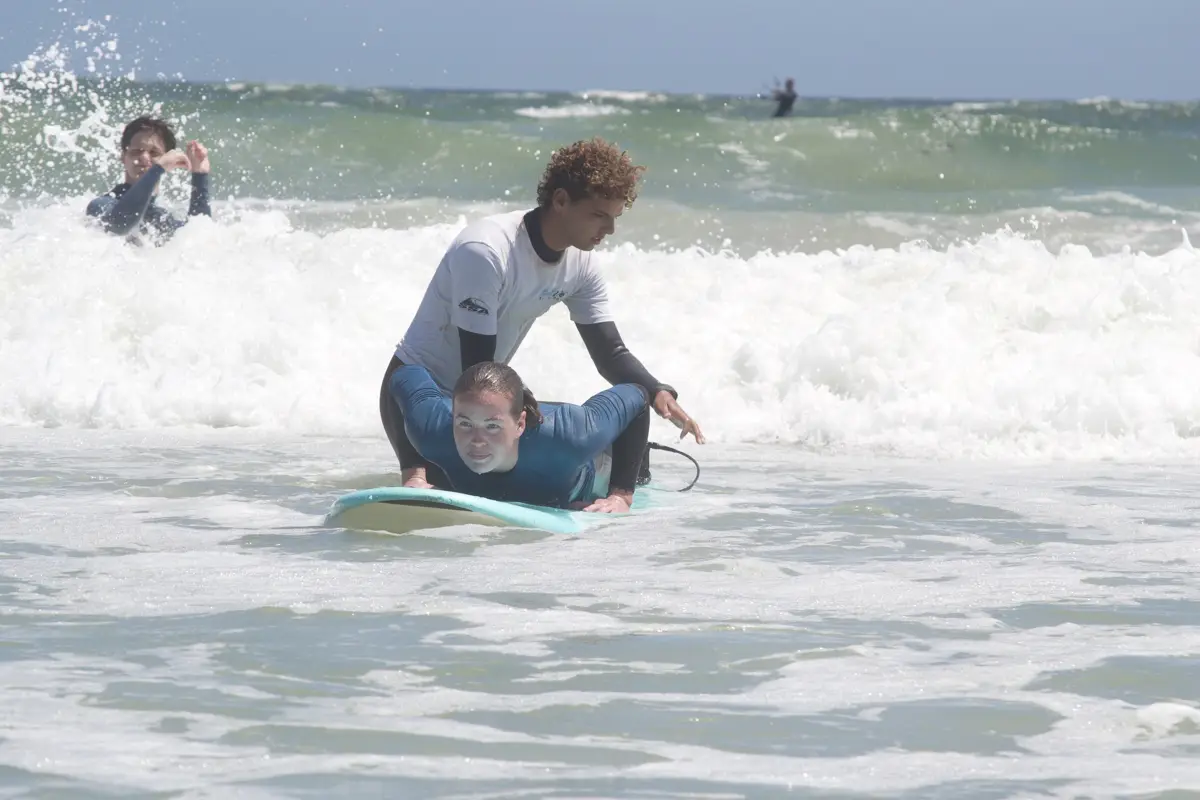
Best Time to Surf in Cape Town: Swell Season by Month
November to February is the easiest Cape Town surf window; May to September brings the biggest swell. The month-by-month breakdown, by beach and by level.
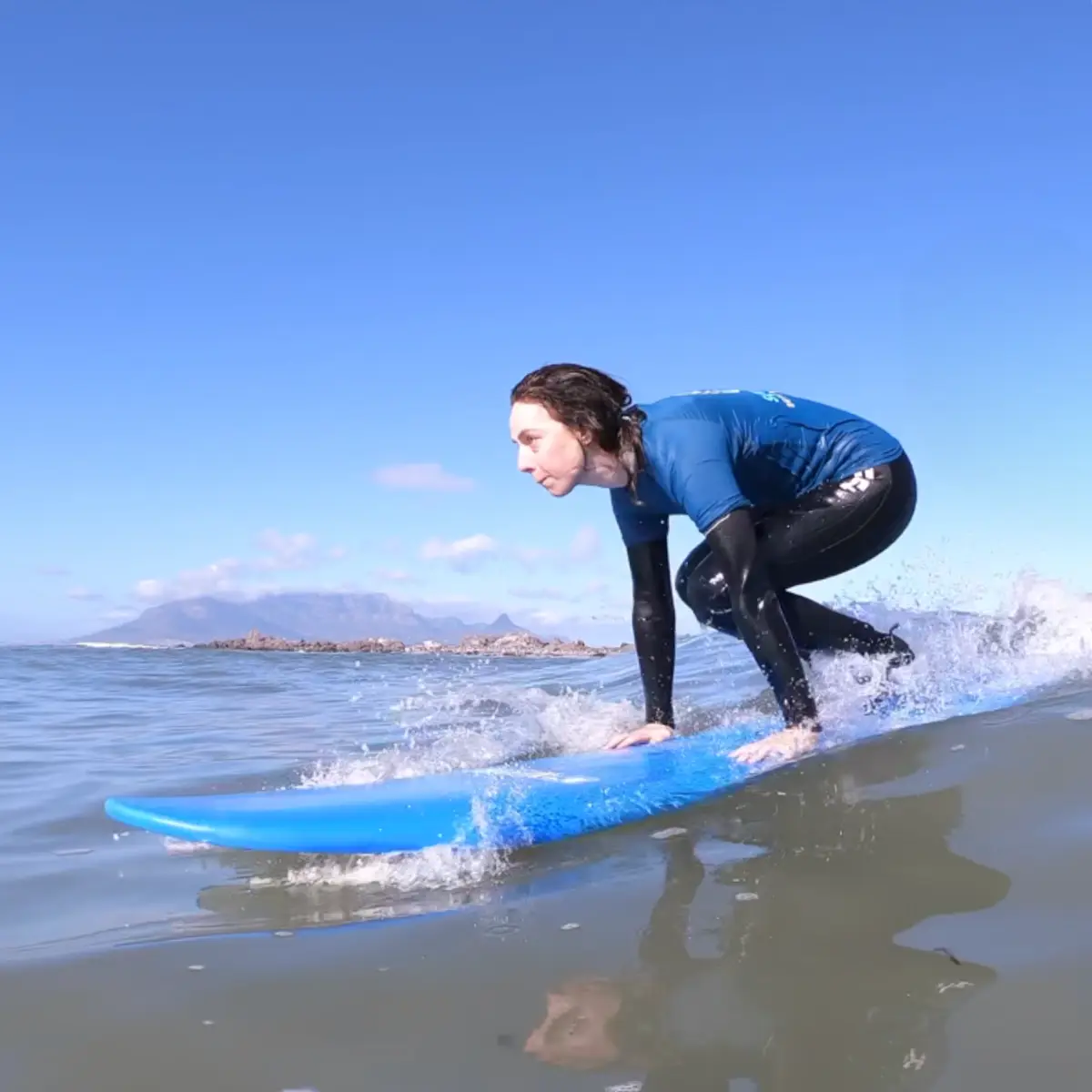
The best time to surf in Cape Town depends on what you want. November through February brings the smallest, most consistent swell and the warmest water, which is why most beginner lessons happen then. May through September brings the biggest swell of the year, lighting up advanced breaks that barely work in summer. Cape Town surfs year-round; the question is which season suits your level.
Why does Cape Town have two different surf seasons?
Cape Town's waves come from South Atlantic groundswell, and the two southern-hemisphere seasons send very different swell. Summer carries a smaller, more consistent south-easterly groundswell; winter carries bigger, more powerful south-west to west swell generated by Atlantic storm systems, according to thesurfatlas.com. Neither season is a true off-season here: it's a choice between size and ease, and the right answer depends on how many waves you've already caught.
That same south-easter also powers the Cape Doctor, the thermal wind behind Cape Town's kitesurfing scene up at Blouberg. In summer it often blows the Atlantic surf beaches onshore and choppy by afternoon, which is one reason the morning session matters here and why the sheltered False Bay side holds up better once the wind fills in.
Cape Town surf conditions by month
Breakfinder.surf's own month-by-month score for Cape Town rates January, February, November and December highest for ease and consistency, and June, July and August lowest. That index favours what suits most visiting surfers, mainly beginners and intermediates, not raw wave size. The table below breaks down what each stretch of the year actually feels like in the water.
| Months | Swell | Water temp | Good for |
|---|---|---|---|
| November to February | Smaller SE groundswell, the most consistent window of the year | Up to around 20°C at Muizenberg, cooler on the Atlantic side | Beginners and intermediates, the easiest window to book around |
| March, April | Transitional, still mostly small with occasional bigger pulses | Cooling from the summer peak | Flexible travellers; still largely beginner-friendly |
| September, October | Transitional, swell starting to build toward winter size | Still cold from winter | Intermediate surfers happy to work with a bit more power |
| May to September | Biggest SW-W swell of the year, from Atlantic storm systems | Coldest months, roughly 12-15°C on the Atlantic side | Advanced surfers chasing size at breaks like Dunes and Dungeons |
Which months are best for beginners?
November to February, according to both breakfinder.surf's scoring and thesurfatlas.com's season overview, which separately describes summer as better for beginners and kids. Smaller, more forgiving whitewater and the warmest water of the year make this the easiest stretch to start in, especially at Muizenberg, the region's classic learn-to-surf beach.
March and April extend that window reasonably well: the swell is still mostly small, crowds thin out from the summer peak, and lessons remain straightforward to book. Treat May onward as advanced territory rather than a quieter version of summer.
Cape Town's biggest swell: the winter window
Winter, roughly May to September, brings Cape Town's biggest swell, driven by Atlantic low-pressure systems rather than the gentler summer pattern. Dedicated breaks such as Dunes on Noordhoek Beach and the tow-in-only Dungeons off Hout Bay only really come alive in this window, according to cometocapetown.com and thesurfatlas.com.
This isn't a season to learn in at most of those spots. The swell is bigger, the water is at its coldest of the year, and several of the breaks it powers need real experience reading rips and rocks. If you already surf and want to see Cape Town at its most powerful, this is the window; if you're after a first lesson, stick to summer.
Is the water really that cold, and does it change by beach?
Yes, and the two coastlines differ a lot. The Atlantic side runs cold year-round on the Benguela Current, roughly 12-18°C depending on season. Muizenberg, on the warmer False Bay side, runs noticeably milder, reaching around 20°C in summer according to Daily News's report on Cape Town's warmer beaches, which is part of why it's the easier place to learn.
- A 3/2mm or 4/3mm wetsuit covers most summer sessions at Muizenberg.
- A thicker 4/3mm or 5/4mm, plus boots, is the standard for the colder Atlantic side and for winter anywhere.
- Reef booties help at rockier Atlantic breaks like Llandudno.
- A leash is worth checking twice in winter: a bigger swell means a longer swim back if it snaps.
Which beach suits which level, by season?
Muizenberg and Big Bay work for beginners nearly year-round, since both have sections that stay manageable even when the swell picks up elsewhere. Long Beach at Kommetjie and Llandudno reward intermediate surfers on a clean day in any season. The most advanced breaks, Dunes and Dungeons, are really a winter-only proposition, and Dungeons specifically needs a boat and a crew, not a solo paddle-out.
| Level | Best beaches | Best season |
|---|---|---|
| Beginner | Muizenberg, Big Bay | November-February, extends reasonably into March-April |
| Intermediate | Long Beach (Kommetjie), Llandudno, Big Bay | Year-round on a clean day; bigger and more rewarding May-September |
| Advanced | Llandudno, Dunes (Noordhoek), Dungeons | May-September for size; Dungeons is boat-access only from Hout Bay |
Want the full beach-by-beach breakdown, swell types and safety notes? See the Cape Town surf spot guide.
What about sharks when surfing in Cape Town?
Shark Spotters watch Muizenberg, Fish Hoek, Caves and St James every day of the year, with Clovelly, Glencairn, The Hoek and Monwabisi covered on weekends, public holidays and school holidays from September to April, according to the organisation's own FAQ. A white flag with a black shark symbol plus a siren means a shark is in the water right now; a red flag means one was recently seen nearby. Leave the water on either and ask the spotter on duty if you're unsure.
What can you do on a flat or stormy day?
A quiet swell day in Cape Town is rarely a wasted one. Table Mountain, the winelands around Stellenbosch and Franschhoek, and the city's own beaches and markets are all within an hour of Muizenberg or Big Bay, so a flat morning is an easy excuse to sightsee instead of chasing a forecast that isn't delivering.
If big winter swell has the main Atlantic breaks blown out or too heavy for your level, Muizenberg and Big Bay on the sheltered side are the usual fallback, since they tend to stay more manageable than the exposed Atlantic breaks further south. A storm that cancels a lesson outright is rare; it's more often a question of which beach the school picks for the day, not whether you surf at all.
Booking a lesson around the swell
Once you've picked a window, the next question is where to book. Our guide to learning to surf in Cape Town covers lesson formats and current prices at Surf Life Surf School, the partner school teaching at Bloubergstrand. If you're building a wider water-sports trip, Cape Town's wing foiling and kitesurfing seasons run on the wind rather than the swell, so they don't follow the same calendar as surfing.
Whichever months you land on, book your Cape Town surf lesson with a little flexibility either side. Swell is seasonal here, not guaranteed on any single day, and a spare day or two is the simplest way to make sure a quiet morning doesn't cost you the trip.
What is the best month to surf in Cape Town?
November through February is the easiest window: smaller, more consistent swell and the warmest water of the year, best for beginners and intermediates. Experienced surfers chasing the biggest waves should look at May to September instead, when Atlantic storm swell lights up the more serious breaks.
Is there surf in Cape Town in winter?
Yes, more than in summer. Winter, roughly May to September, brings the biggest swell of the year from Atlantic storm systems, powering advanced breaks like Dunes and the tow-in-only Dungeons. It's bigger, colder and better suited to experienced surfers than beginners.
How cold is the water for surfing in Cape Town?
It depends on the beach. The Atlantic side runs about 12-18°C depending on season, while Muizenberg on the False Bay side runs noticeably warmer, up to around 20°C in summer. Most surfers wear at least a 3/2mm or 4/3mm wetsuit, thicker in winter.
Is Cape Town surf good for beginners?
Yes, especially November to February. Muizenberg's gentle whitewater and warm-for-Cape-Town water, plus Big Bay's all-level sand-bottom break, make the summer months the easiest time for a first lesson, with Shark Spotters watching the beach every day of the year for extra peace of mind.
What about sharks when surfing in Cape Town?
Shark Spotters watch Muizenberg, Fish Hoek, Caves and St James every day of the year, with a flag and siren system for an active sighting. A white flag with a black shark symbol and a siren means leave the water now; a red flag means one was recently seen nearby.