Best Time to Surf in El Tunco: A Month-by-Month Guide
Find the best time to surf in El Tunco with 12 months of wave and water data, lesson prices, weather advice and tips for choosing a break.

The best time to surf in El Tunco, El Salvador, is April to October for consistent south and southwest swell. For a first lesson, November to February generally brings smaller swells, though the right day and break still depend on current conditions. La Bocana typically breaks at 1 to 3 meters and suits experienced surfers, while small days at El Sunzal and El Sunzalito can suit learners.
Key takeaways: Choose April to October for more consistent swell at La Bocana. For a first lesson, look for smaller days from November to February and ask an instructor where to surf. The school listed here charges 60 USD for a one-hour beginner lesson.
When is the best time to surf in El Tunco?
April to October is the strongest stretch for consistent surf in El Tunco, with south and southwest swells reaching La Bocana and El Sunzal. La Bocana's modeled record estimates 23 rideable days in April and 27 in June. Experienced surfers seeking more powerful waves should consider May and June.
The larger swell season overlaps with the wetter part of the year. Rain generally falls from May to October, while November to April brings drier weather and more offshore winds. At La Bocana, north and northeast winds blow from land and can smooth the wave faces. Check the wind as well as the swell before choosing a session.
November to February generally brings smaller swell, which can suit surfers who prefer less power. March is a transition month, with 18 modeled rideable days at La Bocana. The El Tunco surf spot guide explains the breaks and their hazards if you are deciding where to paddle out.
The season helps you pick travel dates, but it cannot tell you what the waves will look like on arrival. Watch the sets from shore and check the entry. At La Bocana, pay attention to the river-mouth current and rocks below the takeoff. At El Sunzal, look at both the outside point and the smaller inside section.
What is El Tunco like month by month?
El Tunco has warm water all year, while La Bocana's estimated rideable days rise from 7 in January to 27 in May, June and July. These figures describe an advanced break, so use them to judge seasonal consistency. They do not show how many days will suit a beginner.
The table uses estimates from two years of wave and wind model data at La Bocana. A rideable day is a modeled count, not a wave-height measurement or a promise of good conditions. Water temperatures come from a separate archive and describe monthly averages offshore near El Tunco.
La Bocana has a busy lineup, but reliable monthly crowd counts are unavailable. El Tunco village can be lively on weekend evenings. If easy access to the right-hand point matters to you, consider staying closer to El Sunzal. For transport and a day-by-day plan, see the El Tunco surf trip itinerary.
| Month | Estimated rideable days at La Bocana | Average offshore water temperature |
|---|---|---|
| January | 7 days | 27.7 °C |
| February | 8 days | 27.7 °C |
| March | 18 days | 28.1 °C |
| April | 23 days | 28.9 °C |
| May | 27 days | 29.5 °C |
| June | 27 days | 29.3 °C |
| July | 27 days | 29.3 °C |
| August | 23 days | 29.4 °C |
| September | 24 days | 29.3 °C |
| October | 21 days | 29.1 °C |
| November | 19 days | 28.8 °C |
| December | 9 days | 28.3 °C |
The April to October estimates favor consistency at La Bocana. They say less about whether the waves will be manageable for a first lesson. A powerful day at La Bocana can send smaller waves toward another section of the coast. Ask an instructor to assess the break, entry and other surfers before you enter.
If you can travel only in August or September, plan around both the swell and the rain. August has 23 estimated rideable days at La Bocana and September has 24, but neither figure predicts your particular week. Leave room to change your session time or choose a smaller break when conditions call for it.
Which months are best for beginners in El Tunco?
November to February generally brings smaller swells to El Tunco and is a useful period for a first surf trip. Look for a small day at El Sunzalito or a suitable inside section at El Sunzal. An instructor can choose the entry and wave size for your experience.
El Sunzalito is a beach break between El Sunzal and La Bocana, commonly surfed around high tide. El Sunzal's long right can also suit learners when the swell is small. The point becomes more demanding as waves grow, so watch the outside sets before carrying your board down to the water.
Learners can still find a suitable session between April and October with local guidance and a smaller section. La Bocana's fast left, boulders and river-mouth currents make its main peak a place for experienced surfers. Punta Roca, east at La Libertad, is another powerful break with rocks near the takeoff.
- For a first lesson, ask about small inside waves at El Sunzalito or El Sunzal.
- If you are improving, look at El Sunzal's long right when the point is a manageable size.
- If you are experienced, assess La Bocana's fast left, boulders and busy takeoff from shore.
The one-hour beginner surf lesson with Bichos Boya costs 60 USD and includes a board, transport and personalized instruction. Tell the school about your swimming and surfing experience when you request a lesson. The instructor can use that information, along with the day's conditions, to choose a session.
A smaller forecast does not remove the need to check the water. Ask where to enter and where to return to shore before you paddle out. If the sets look beyond your ability, wait or choose another activity. For a broader introduction to choosing lessons and breaks, see the surfing guides.
How warm is the water in El Tunco and what should you wear?
El Tunco's offshore sea temperature averages 27.7 °C in January and February and reaches 29.5 °C in May. Boardshorts or a swimsuit and a rash vest are practical throughout the year. A vest also helps protect your skin from the board during repeated paddling.
These figures describe nearby open water, so the temperature at the beach can differ. Pack sun protection for time on shore and consider a hat for the walk to the water. A rash vest with sleeves gives more coverage during a long session. Bring drinking water for time spent watching the waves, too.
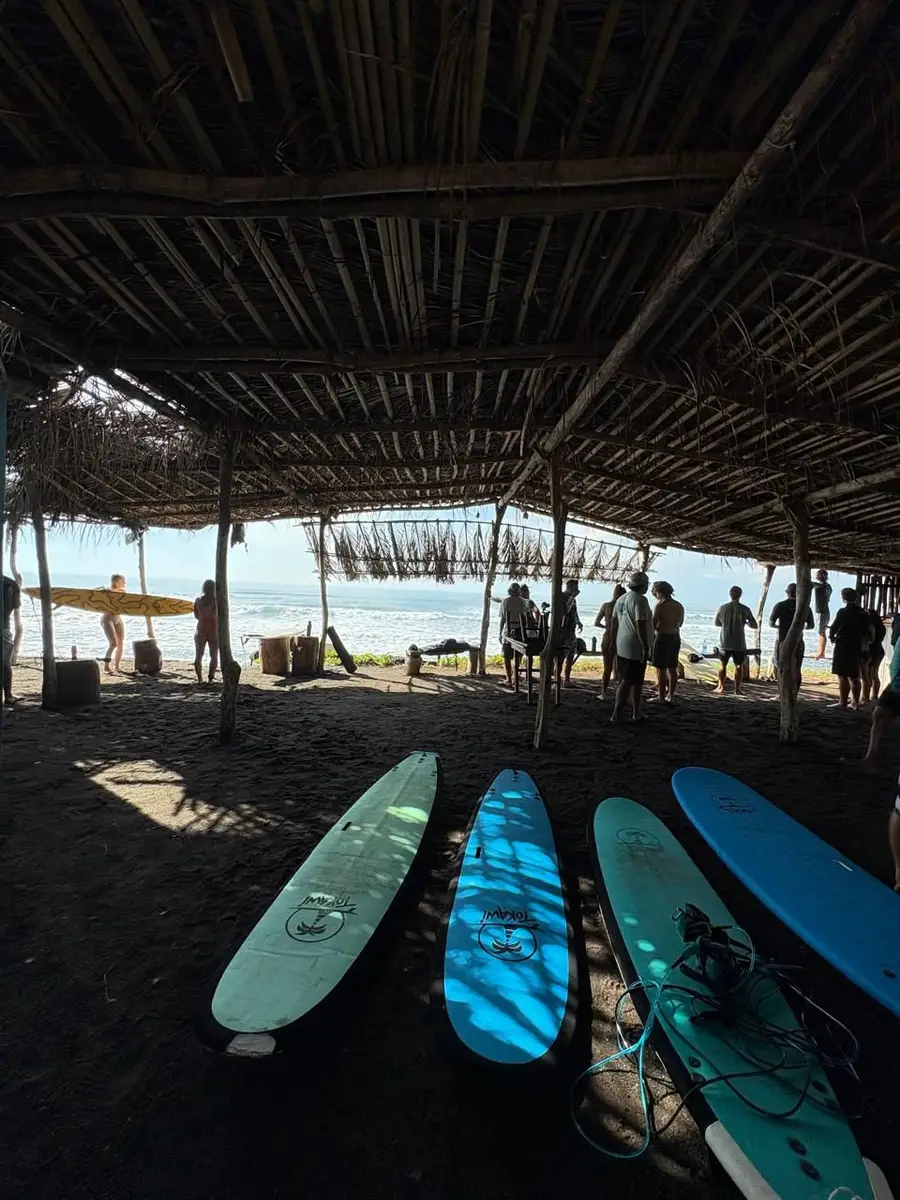
Bring sandals for the cobblestone beach between El Tunco and El Sunzal. Check the tide and entry before carrying your board across the stones. Leave footwear clear of the water. On a larger day, take time to watch how other surfers handle the rocks and shore break before choosing your own route.
A board bag helps protect your equipment on the journey. The transfer from El Salvador International Airport to El Tunco takes approximately 25 to 45 minutes. When arranging a shuttle or private transfer, give the driver your board's length and confirm that it fits before booking. Ask about any charge for carrying it.
If you are taking a lesson, check what the school supplies before packing a board. The listed beginner lesson includes one, as well as transport to the surf spot. You may still want your own rash vest and sandals for the beach. Confirm the meeting place and what to bring when the school responds.
What can you do on a flat day in El Tunco?
On a flat day in El Tunco, walk the black-sand beach, visit the village restaurants or consider an inland trip to Tamanique. Ask locally about trail access, conditions and a guide before setting out. During the May to October rainy season, keep plans flexible if conditions change.
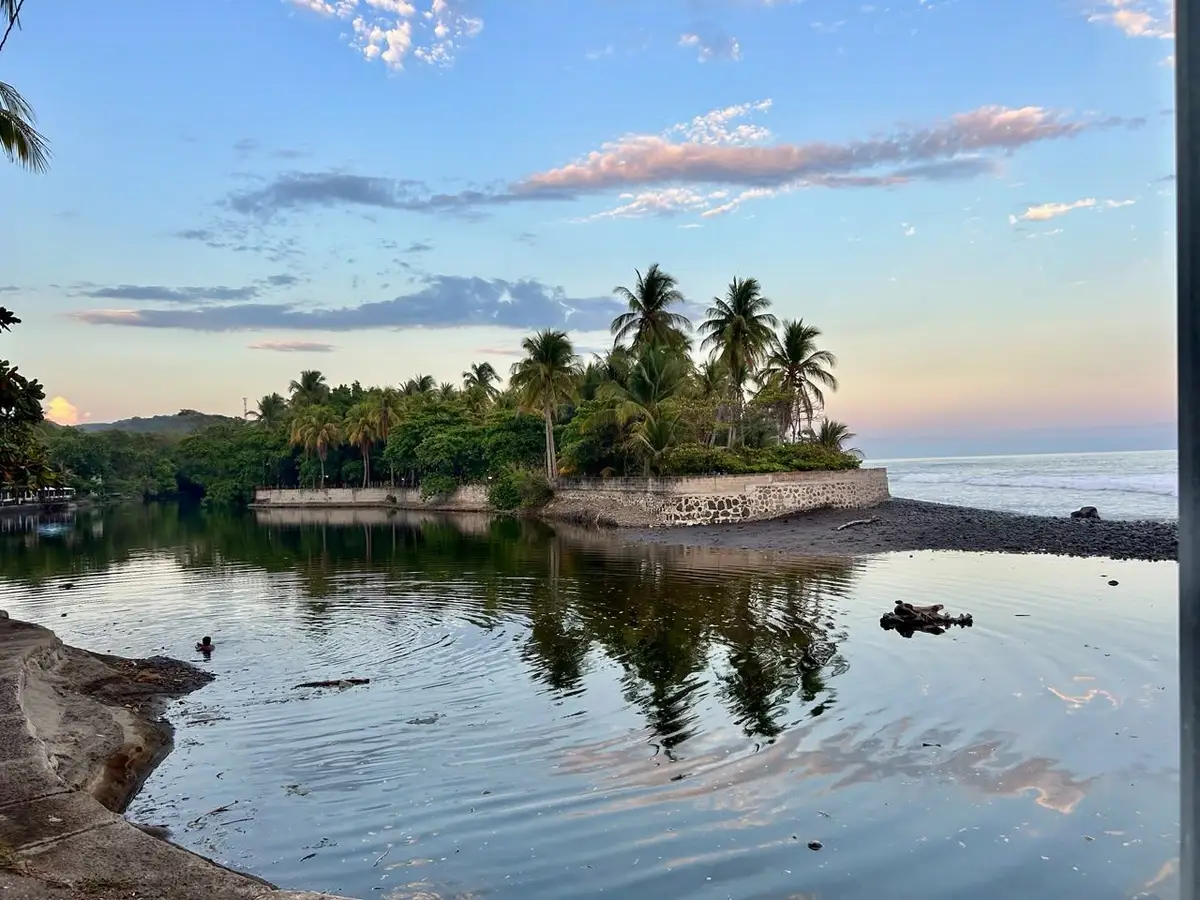
For a shorter outing, stay near the village and look for El Tunco's pig-shaped offshore rock. A walk along the shore also helps you see how El Sunzal and La Bocana differ. Take water and suitable shoes for the cobblestones, and check the tide before crossing sections close to the sea.
Puerto de La Libertad lies east of El Tunco and has a seafood market. A car is useful for exploring beyond the village, while buses and transfers also connect the coast. The wider El Salvador surfing guide covers more places along the Pacific if you want to explore beyond your base.
Rain can affect an inland day, especially on trails around Tamanique. Ask about access before leaving and choose footwear with grip. Back in El Tunco, a quiet day is a chance to rest and check your equipment. You can also use the time to look at the next forecast and talk through options with an instructor.
If you want to see another surf town, the El Zonte surf guide can help you plan a visit along the coast. Check conditions at the specific break before treating it as an alternative for a flat day. A different beach may respond differently to the same swell.
How do you book a lesson in El Tunco?
To book an El Tunco lesson, send a request on kitesurfing.me, wait for the school to confirm it, then pay at the school. A one-hour beginner lesson costs 60 USD. It includes a surfboard, transport to the surf spot and personalized instruction suited to your experience.
The marketplace lists one school teaching surfing in El Tunco. Its one-hour intermediate lesson also costs 60 USD and includes coaching on technique, positioning and wave selection. A surfboard is included if needed, and the lesson includes transport to the surf spot. Describe what you already feel comfortable doing when you request a place.
A three-hour guided surf trip is listed at 75 USD. Include your preferred dates and experience in the request so the school can suggest a suitable arrangement. For a first lesson, mention any concerns about swimming, paddling or entering over rocks. Check the details in the confirmation before making other plans around the session.
At El Sunzal's point, give the surfer already riding a wave room and paddle back clear of the riding line. At La Bocana, leave space at the fast takeoff and wait your turn. The surfer closest to the breaking part of the wave has priority. Watch the lineup first if you are unsure where to sit.
Before fixing your dates, revisit the guide to El Tunco's breaks for their different hazards. If you want to add excursions or arrange a board transfer, the El Tunco itinerary planner can help organize those details around your surf days. Keep some room in the plan for changing conditions.
How should you read an El Tunco surf forecast?
Read an El Tunco surf forecast alongside the tide, wind and your chosen break. South to southwest swell reaches La Bocana, while north or northeast wind blows offshore there. Check the expected wave size and period, then watch the actual sets and entry from shore before paddling.
What is El Tunco weather like during surf season?
El Tunco weather is generally wetter from May to October and drier from November to April. The wetter months overlap with the stronger south-swell season, so a surf trip may include both powerful waves and rain. Pack a light rain layer for inland outings and keep your schedule flexible.
Can you swim at Playa El Tunco?
Yes, you can swim at Playa El Tunco when local conditions suit your ability. Waves, rocks and Pacific currents require care, particularly near the river mouth. Ask locally about the safest area, follow lifeguard instructions and stay out when red or black flags are displayed.
Is El Tunco a good surf town in El Salvador?
Yes, El Tunco is a useful surf base in El Salvador because several breaks sit close to the village. El Sunzal has a long right, El Sunzalito has a beach break, and La Bocana has a fast left. Restaurants and places to stay are close to the beach.
What does 100 USD cover for surfing in El Tunco?
On kitesurfing.me, a one-hour beginner or intermediate lesson is listed at 60 USD, leaving 40 USD for other costs. A three-hour guided surf trip is listed at 75 USD. Send a request through the Bichos Boya booking page, wait for the school to confirm it, then pay at the school.