Best Time to Surf in Galle: November to April Guide
Find the best time to surf in Galle, with 12 months of water temperatures, beginner beaches and lesson prices for planning your trip.
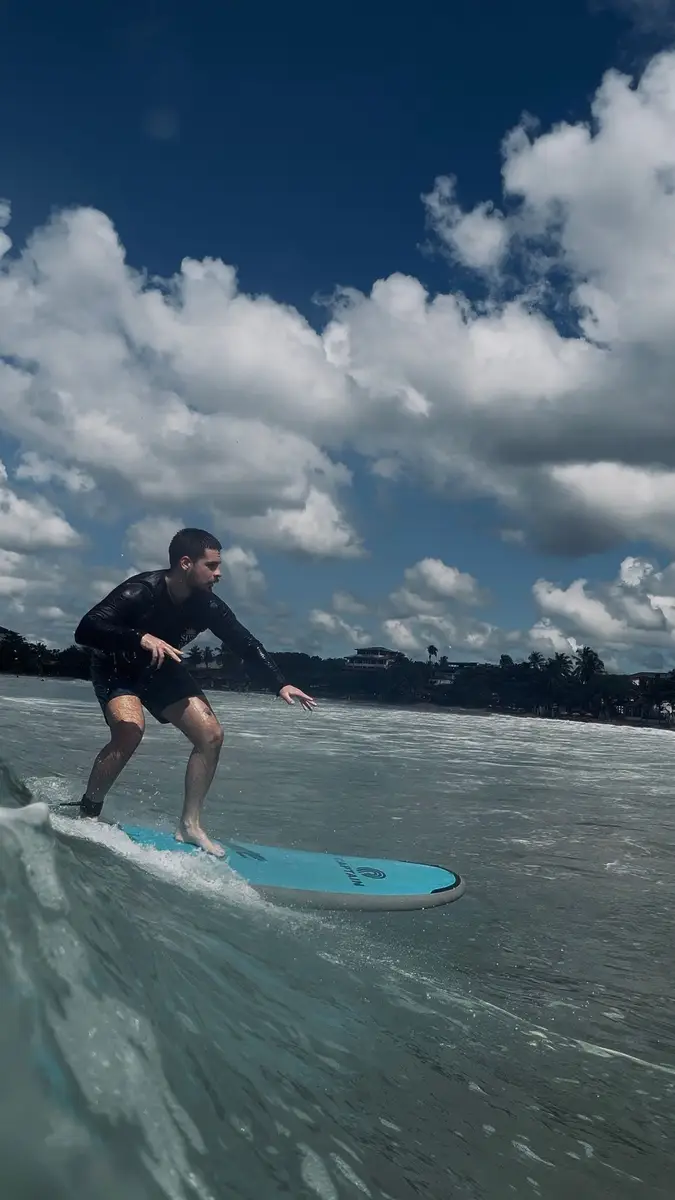
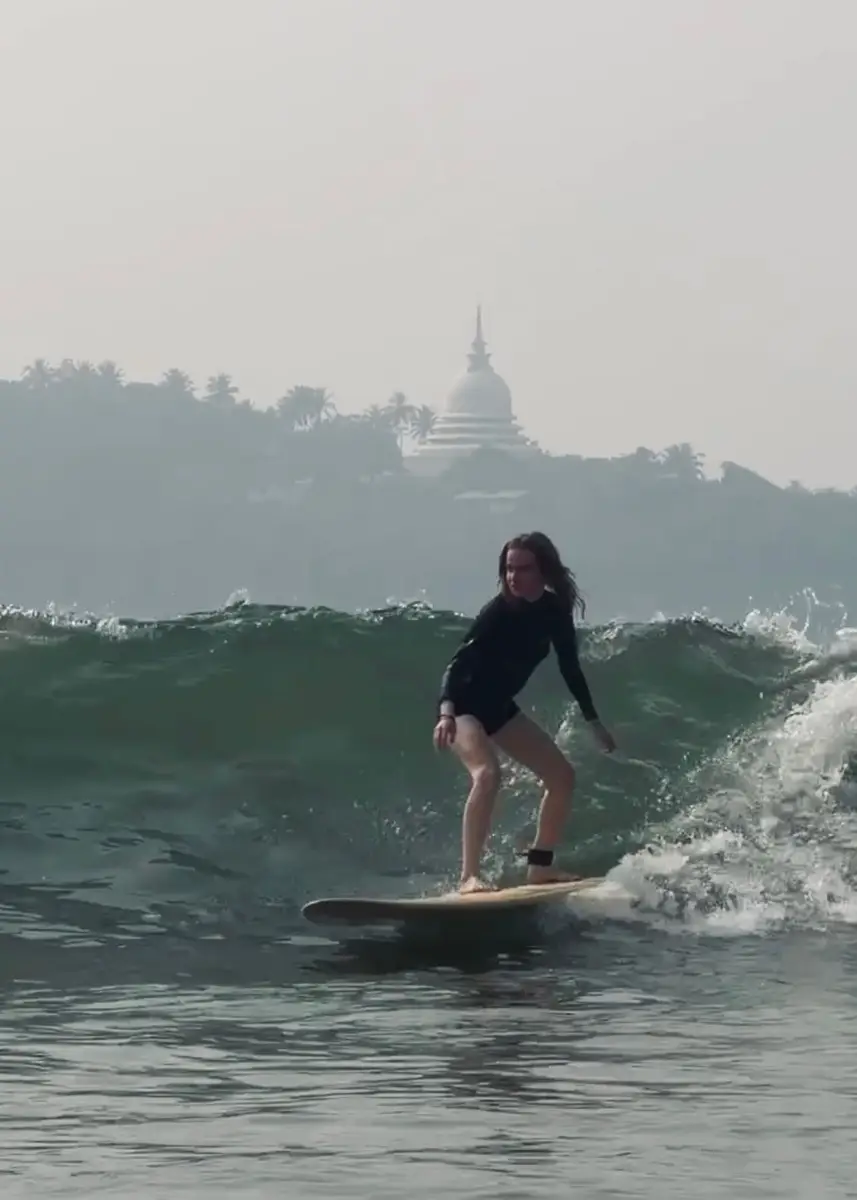
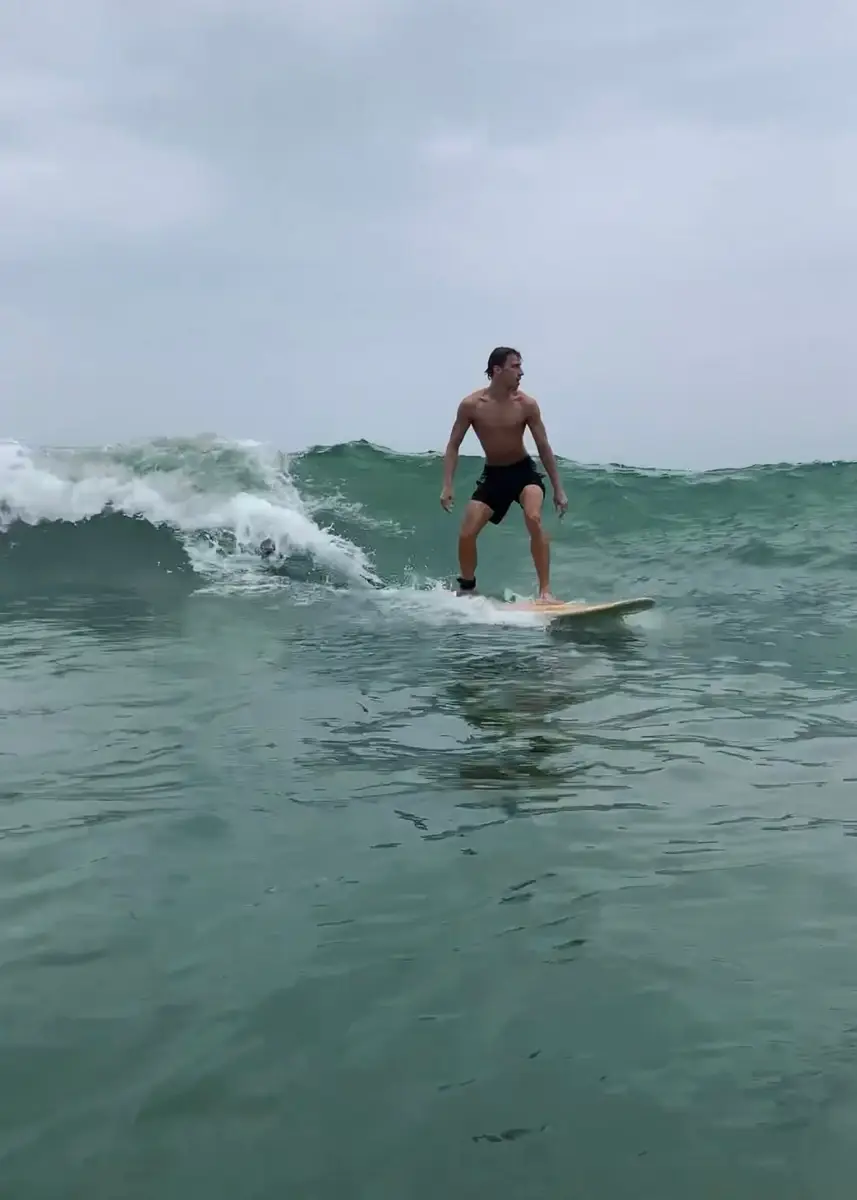
The best time to surf in Galle, Sri Lanka, is November to April, the main season for the south coast. Dewata's sheltered bay is a practical place to start, while nearby reefs call for more experience. Leave room in your plans to choose each session according to the day's wind and waves.
Key takeaways: Choose November to April for the main Galle surf season. Start at Dewata if you are learning, and ask an instructor where to enter. Aloha Sun Surf lists lessons and packages at 26 to 90 EUR; Jumani Surf School & Smoothie Bar at 30 to 135 USD; Surf Gang Dewata Surf School at 30 to 135 USD; and Tiki Tide Surf School at 35 to 55 EUR.
When is the best time to surf in Galle?
November to April is the main surf season around Galle, with December to March at its core. South and southwest swells reach the coast, and north to northeast winds suit its south-facing breaks. Dewata's bay softens incoming swell, while exposed reefs receive more of its energy.
May through October brings the southwest monsoon, with wind and rougher conditions on the south coast. Dewata can still have surf, but shelter alone does not make every session suitable. Watch the water from shore and ask a local instructor which area fits your experience that day.
Galle weather matters away from the water too. January and February are relatively dry, although the city gets rain throughout the year. Pack a light rain layer even in the main season. The Galle surf spot guide has more detail on the local beach and nearby reefs.
For a trip during the southwest monsoon, consider Arugam Bay on Sri Lanka's east coast. Its surf season runs from April or May to October, with July to September known for strong waves. The Sri Lanka surfing overview can help you plan a trip that takes in both coasts.
A season tells you when to plan, not what the waves will do on a particular morning. Before setting out, check the forecast and look at the break itself. Wind, tide and swell direction can change how a beach feels, even when the offshore forecast looks much the same.
What is Galle surf like month by month?
Galle's main surf season runs from November to April, while its sea stays warm throughout the year. Historical monthly water averages range from 27.4°C in July and August to 29.7°C in April. The table helps with packing; it cannot predict the waves on your travel dates.
January and February combine the main surf season with relatively dry weather in Galle. March and April remain inside the seasonal window and have the warmest water averages in the table. November and December offer another choice if your trip falls near the start of the south coast season.
From May into October, plan around the southwest monsoon and check conditions before each session. Crowds vary by break and day. Dewata has lesson groups, while Weligama's teaching areas can be busy. At Kabalana's The Rock, experienced surfers share a reef takeoff area, so give other boards room.
| Month | Water temperature: historical monthly average |
|---|---|
| January | 27.6°C |
| February | 28.3°C |
| March | 29.2°C |
| April | 29.7°C |
| May | 29.0°C |
| June | 28.3°C |
| July | 27.4°C |
| August | 27.4°C |
| September | 27.9°C |
| October | 28.7°C |
| November | 28.7°C |
| December | 28.2°C |
October is a transition into the main south coast season. If you are booking your first surf trip and can choose your dates, November to April gives you the clearer seasonal window. Once you arrive, choose a beach for its water depth and your experience, as well as the day's conditions.
Which months suit beginners in Galle?
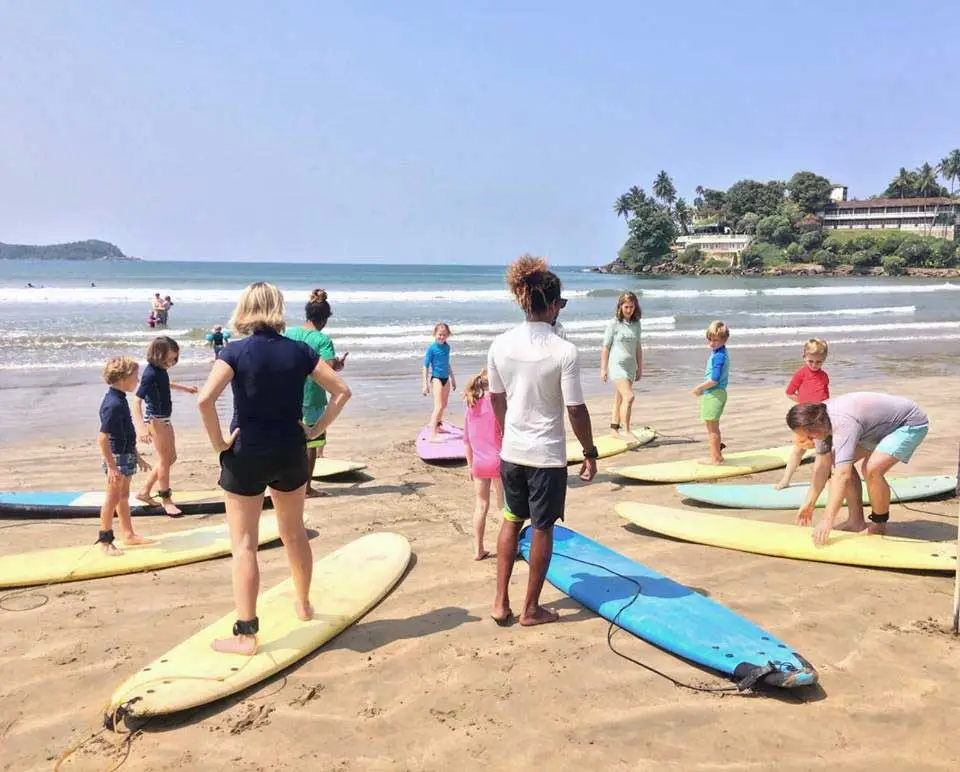
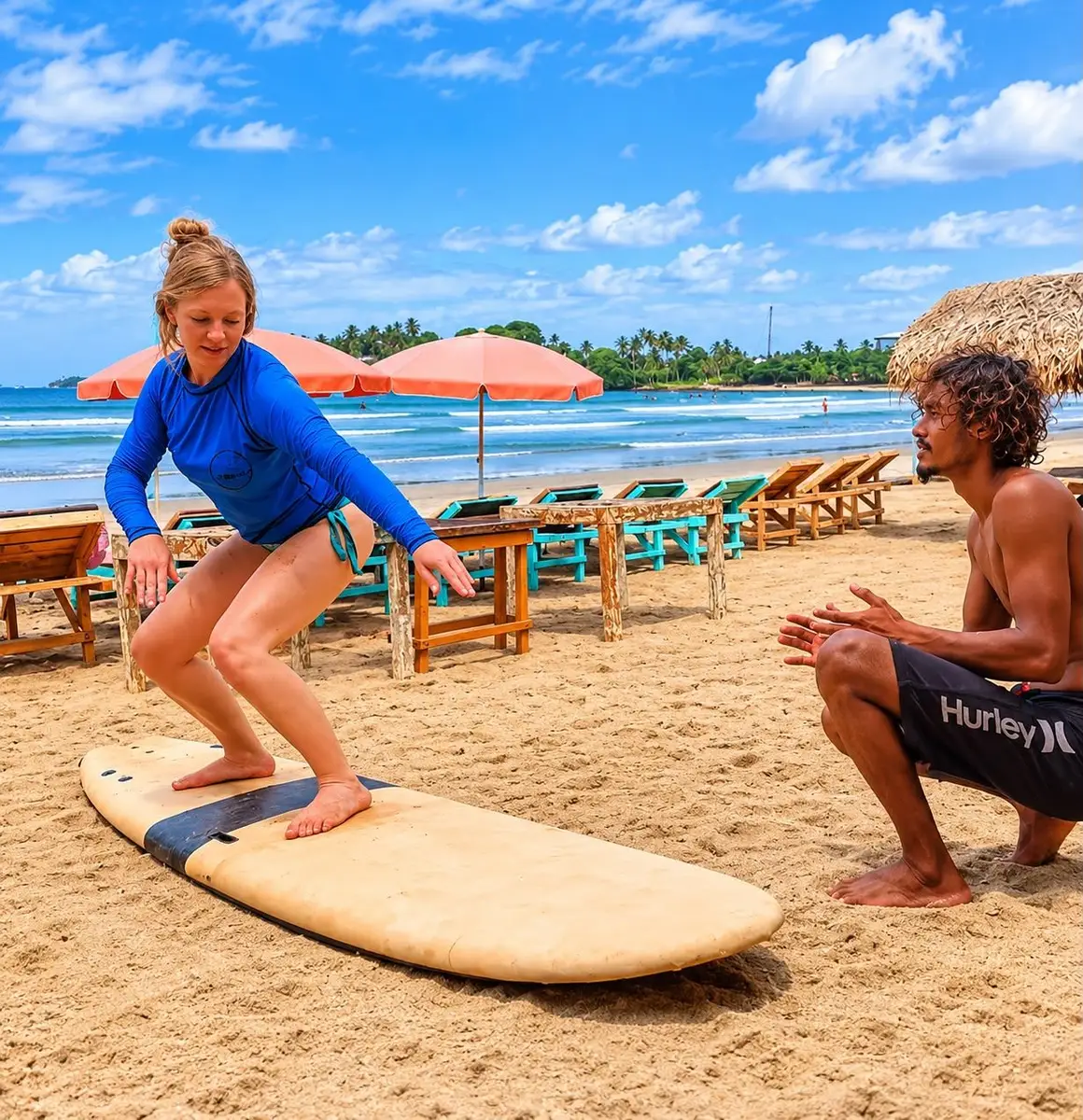
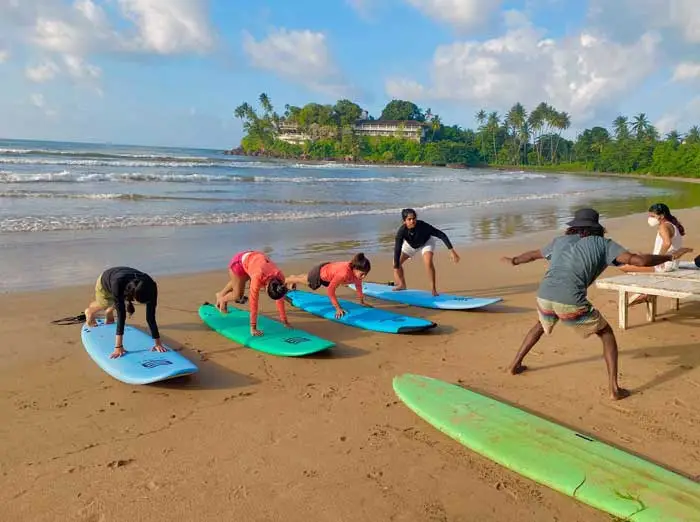
November to April gives beginners the main south coast surf season, with Dewata Beach as a practical starting point near Galle. Its sandy bottom and sheltered bay suit early lessons. Start in manageable whitewater, where you can practise standing before moving into unbroken waves.
A spot guide gives Dewata a surf-height range of 0.5 to 1.5 metres. Ask an instructor to choose a suitable area and session for the day's conditions. Keep hold of your board, leave space for swimmers and other lesson groups, and watch for rocks towards the beach's eastern end.
Weligama Bay, east of Galle, is another sandy option for learners. Kabalana has a beach break where beginners can practise in manageable whitewater. Its separate offshore reef, The Rock, calls for more experience: shallow coral and a busy takeoff make it a different prospect from the sand closer to shore.
- Dewata: choose the sheltered sandy beach for a first lesson close to Galle.
- Weligama Bay: use the sandy beach break for repeated practice and watch for other boards.
- Kabalana beach: practise in manageable whitewater and keep clear of The Rock reef.
- Unawatuna Point and The Rock: leave the rocky or shallow reef waves to experienced surfers.
At any Galle break, give the surfer closest to the breaking part of the wave priority. Avoid taking off in front of someone already riding, and paddle clear of their path. These habits matter in Dewata's lesson areas as well as at the reef peaks farther east.
If you want another sandy teaching area during your stay, read the Weligama surf guide before setting out. Wherever you practise, tell your instructor what you have done before. A first lesson and a session on unbroken waves call for different choices of board and water.
How warm is Galle's water and what should you wear?
Galle's average monthly sea temperature ranges from 27.4°C in July and August to 29.7°C in April. Boardshorts or a swimsuit work for warm-water sessions, and a rash vest adds sun protection. Lesson equipment varies by booking, so check what is included and ask the school what it recommends wearing.
The sea averages 27.6°C in January and 28.3°C in February, two relatively dry months in Galle. By March, the monthly average reaches 29.2°C. These figures describe historical averages, so use them for packing and check the actual water and weather when you arrive.
For a Dewata lesson, take a towel, drinking water and sun protection that stays on in the water. The sand gives you room to practise the pop-up before entering the sea. If you bring your own board, pack a leash and check its attachment before paddling out among other surfers.
How do you reach Galle with a surfboard?
A car from Bandaranaike International Airport to Galle takes about two hours outside rush hour via the expressways. Allow extra time for traffic, especially around Colombo. When booking a transfer, give the driver your board bag's length and confirm that the vehicle has room for it and your luggage.
The coastal train runs from Colombo Fort to Galle. Check permission and space for a board before choosing rail, and allow time to get from the airport to the station. If you book a lesson with equipment included, you can travel without a board and collect it at the school.
What can you do on a flat day in Galle?
On a flat day in Galle, walk the ramparts and streets of Galle Fort, then return to Dewata when conditions suit your plans. The old town and its fortifications sit beside the harbour. Its buildings and walls record Portuguese, Dutch and British periods of occupation.
A day away from the board also leaves time to explore Unawatuna, east of Galle along the coast road. If you are staying in the fort, a tuk-tuk can take you towards Dewata without needing a car for the whole trip. Agree on space for a board before setting off with one.
If the water is suitable, use a quiet session at Dewata to practise paddling and board handling. On another day, check Kabalana's beach before committing to the half-hour journey east with gear. The Galle accommodation guide covers the choice between the fort, Dewata and Unawatuna.
A flexible itinerary makes a short surf trip easier to manage. You can visit the fort when the sea is unsuitable and save a lesson for a better session. If you are still choosing a destination, browse the surfing lessons and spots available for other places as well.
How do you book a surf lesson in Galle?
Aloha Sun Surf lists a 1.5-hour adult lesson for 26 EUR, three-day packages for kids at 42 EUR and adults at 60 EUR, each lasting 4.5 hours, and a five-day adult package for 90 EUR over 7.5 hours. Each includes a surfboard, wetsuit, theory and practice.
Jumani Surf School & Smoothie Bar lists 1.5-hour beginner and intermediate or advanced lessons for 30 USD and 40 USD, including transfer and an instructor. Its three-lesson package costs 75 USD for 4.5 hours, and its five-lesson package costs 135 USD for 7.5 hours; both include an instructor.
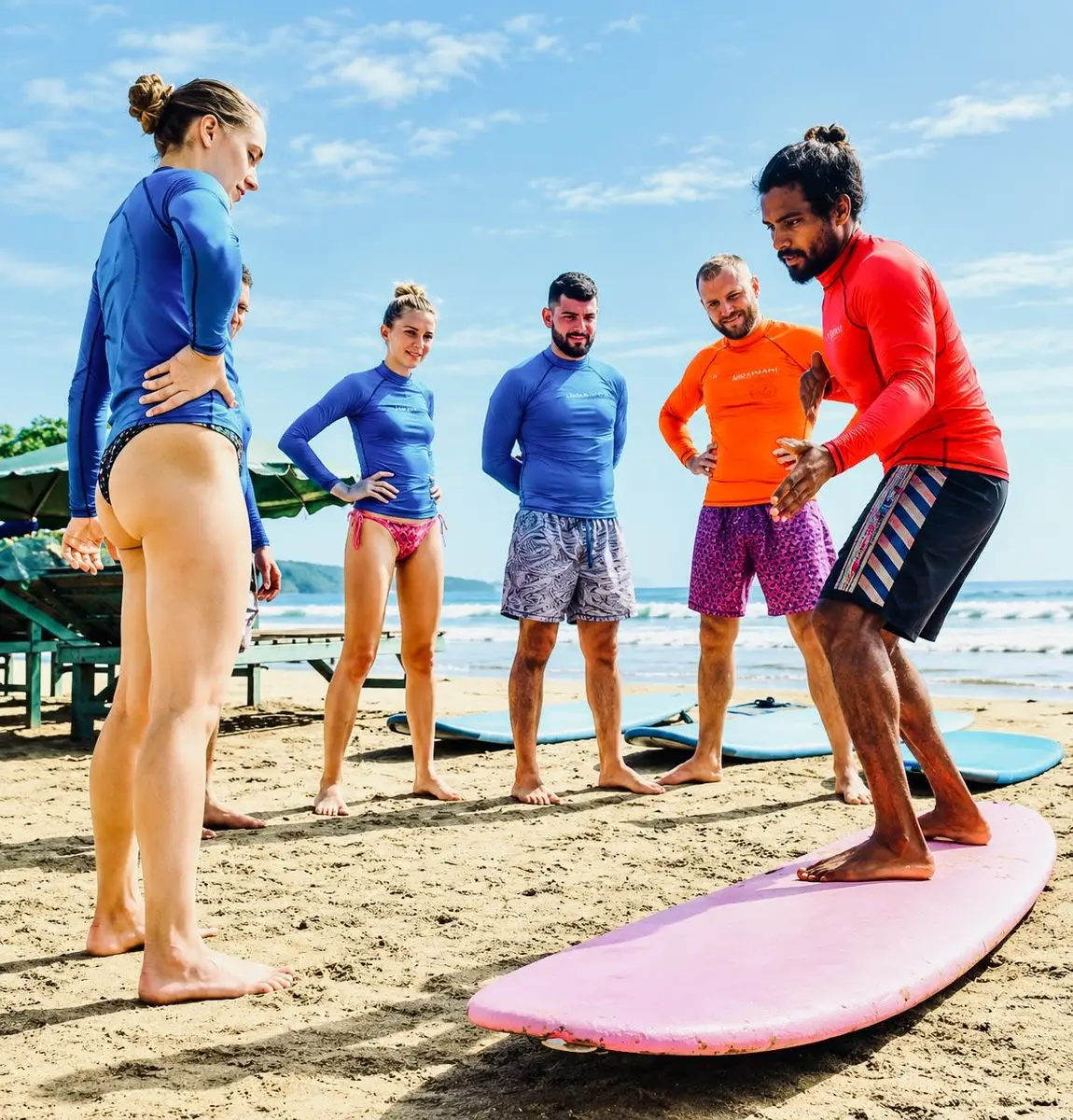
Surf Gang Dewata Surf School lists a 1.5-hour lesson for 30 USD with theory, briefing, warm-up, land practice, 60 minutes in the ocean and video analysis. It also lists a 1.5-hour lesson for 40 USD and a package of 5 lessons over 7 hours for 135 USD.
Tiki Tide Surf School lists 1.5-hour private lessons for 35 EUR in English, 45 EUR in Russian, or 55 EUR with photo, video and analysis. Each includes a board, leash, wax, rash guard, face zinc, instructor and soft drinks. Send your dates and experience, wait for confirmation, then pay at the school.
Can you surf in Galle, Sri Lanka?
Yes, you can surf in Galle at Dewata Beach and at reef breaks along the nearby coast. Dewata's sheltered sand suits learners, while Unawatuna Point and Kabalana's The Rock call for experience. November to April is the main south coast season. See the Galle surfing guide for individual breaks.
When is Arugam Bay's surf season for a trip from Galle?
Arugam Bay's surf season runs from April or May to October, with July to September known for strong waves. It is on Sri Lanka's east coast, while Galle is on the south coast. For a trip during the southwest monsoon, check the Sri Lanka surf seasons before choosing a base.
What does a 12-second swell period mean near Galle?
A 12-second swell period means successive wave crests pass a fixed point 12 seconds apart. Around Galle, read that number alongside swell direction, height, wind and tide. Sheltered Dewata and the exposed reef at Kabalana receive the ocean differently, so the same offshore swell produces different waves at each.
Is Galle worth visiting for a surf trip?
Yes, Galle is worth visiting if you want beach sessions close to a historic coastal city. Dewata's sandy surf is near the old town, and Galle Fort has streets and ramparts to explore between sessions. Kabalana is about half an hour east by road, with a beach break and a separate reef.
Is Galle or Colombo better, and how many days should you stay?
Galle is the more practical base for a south coast surf trip, with Dewata nearby and Kabalana farther east. Allow three to five days for sessions and time in the fort. You can choose a single lesson or a longer package and leave room in your plans for the day's conditions.