Best Time to Surf in Lajares: A Guide to the Months
The best time to surf in Lajares depends on your level. Explore monthly waves, beaches and lesson prices, including a €55 group lesson.
The best time to surf in Lajares, Spain, is November to February if you want the strongest seasonal wave expectation. Nearby El Cotillo has a published working wave-size range of roughly 0.6 to 1.9 m, with larger surf possible. Beginners should choose a suitable beach and small conditions, whatever the month.
Key takeaways: November to February has the highest wave-expectation ratings at El Cotillo. Beginners need a suitable beach on the day in any season. Kitesurfing.me lists 2 schools teaching surfing at Lajares, with a group lesson listed at €55 for 2 hours.
When is the best time to surf in Lajares?
November to February has the highest wave-expectation ratings at El Cotillo, about 8 km west of Lajares. Experienced surfers looking for Atlantic swell can plan around those months. Beginners can also take winter lessons, provided an instructor chooses a beach and conditions that suit their ability.
Lajares is inland, between Fuerteventura's west and north coasts. Your choice of beach matters as much as your choice of month. West or northwest swell reaches the exposed sandbanks at El Cotillo. Along the north shore, volcanic reefs add hazards that call for greater experience and careful entry.
March, April and October sit in the middle band for El Cotillo's wave expectation. May to September have lower ratings, though individual days can still bring substantial waves. Summer can also be flat. If you have fixed travel dates, allow several days for lessons and ask the school how it selects a beach.
The published wave range describes conditions in which El Cotillo works, not the height you will find on a particular day. Check the current forecast and beach conditions before entering the water. The Lajares surf spot guide describes the nearby breaks and the experience they demand.
What is Lajares like month by month?
Near Lajares, El Cotillo's highest monthly wave-expectation ratings occur in January, February, November and December. Its sea averages 18°C in February and 23°C in September and October. Use these seasonal figures to pick travel dates, then check the actual conditions before each session.
The table groups monthly wave-expectation ratings into low, middle and high bands across the rating's range. A rating describes the prospect of waves, not whether the surf will suit a beginner. Water temperatures are monthly averages at El Cotillo. Crowds vary by beach and day, so leave time to choose an alternative.
| Month | El Cotillo wave expectation | El Cotillo average water temperature |
|---|---|---|
| January | High | 19°C |
| February | High | 18°C |
| March | Middle | 19°C |
| April | Middle | 20°C |
| May | Low | 20°C |
| June | Low | 21°C |
| July | Low | 22°C |
| August | Low | 22°C |
| September | Low | 23°C |
| October | Middle | 23°C |
| November | High | 21°C |
| December | High | 20°C |
October is worth considering if warm water matters to you and you want a higher seasonal wave-expectation rating than in summer. The sea averages 23°C that month. November brings the rating into the high band, while the listed water average falls to 21°C. Neither figure tells you what a particular day's surf will be like.
For the highest wave-expectation band, look at November through February and prepare for cooler water. January averages 19°C and February 18°C at El Cotillo. If you are arranging a longer stay, the Lajares surf trip guide covers the practical side of using the village as a base.
A lower rating can be useful when weighing dates, but it cannot tell you whether a lesson will run at a particular beach. Ask about alternatives before booking, especially if you can surf on only one day. The guide to surfing in Spain can help if you are considering another part of the country.
Which months are best for beginners in Lajares?
May to September have the lowest wave-expectation ratings at El Cotillo, but a low rating does not guarantee small or safe waves. Summer can also be flat. Ask an instructor to select a suitable beach on the day. Allow several days around Lajares if your schedule permits.
Piedra Playa at El Cotillo is a sandy beach break with left and right peaks. Small whitewater can suit a first lesson, but rising swell can make the shorebreak and currents demanding. Watch the water with your instructor before entering, and be ready to use another beach if conditions are too strong.
Flag Beach, south of Corralejo, is another option for beginners when conditions are suitable. It has rocky patches, so booties can help protect your feet. Punta Blanca has a relatively gentle north-coast reef wave, but its rock, sea urchins and currents make local guidance useful. Neither location is automatically suitable on every day.
El Burro is an intermediate option with a sand and volcanic reef bottom. The Bubble, near Majanicho, has a fast take-off over shallow reef and suits advanced surfers. Read the break descriptions around Lajares before choosing a spot, then check the conditions in person and stay within your ability.
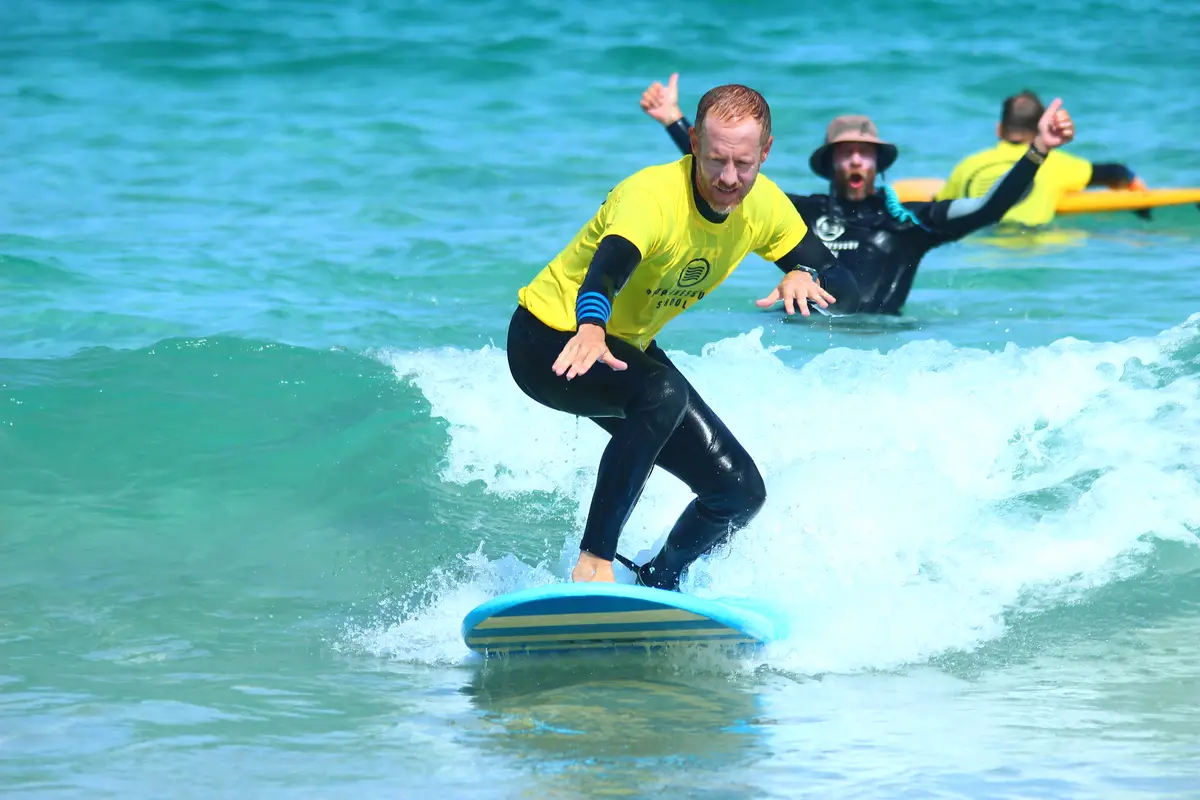
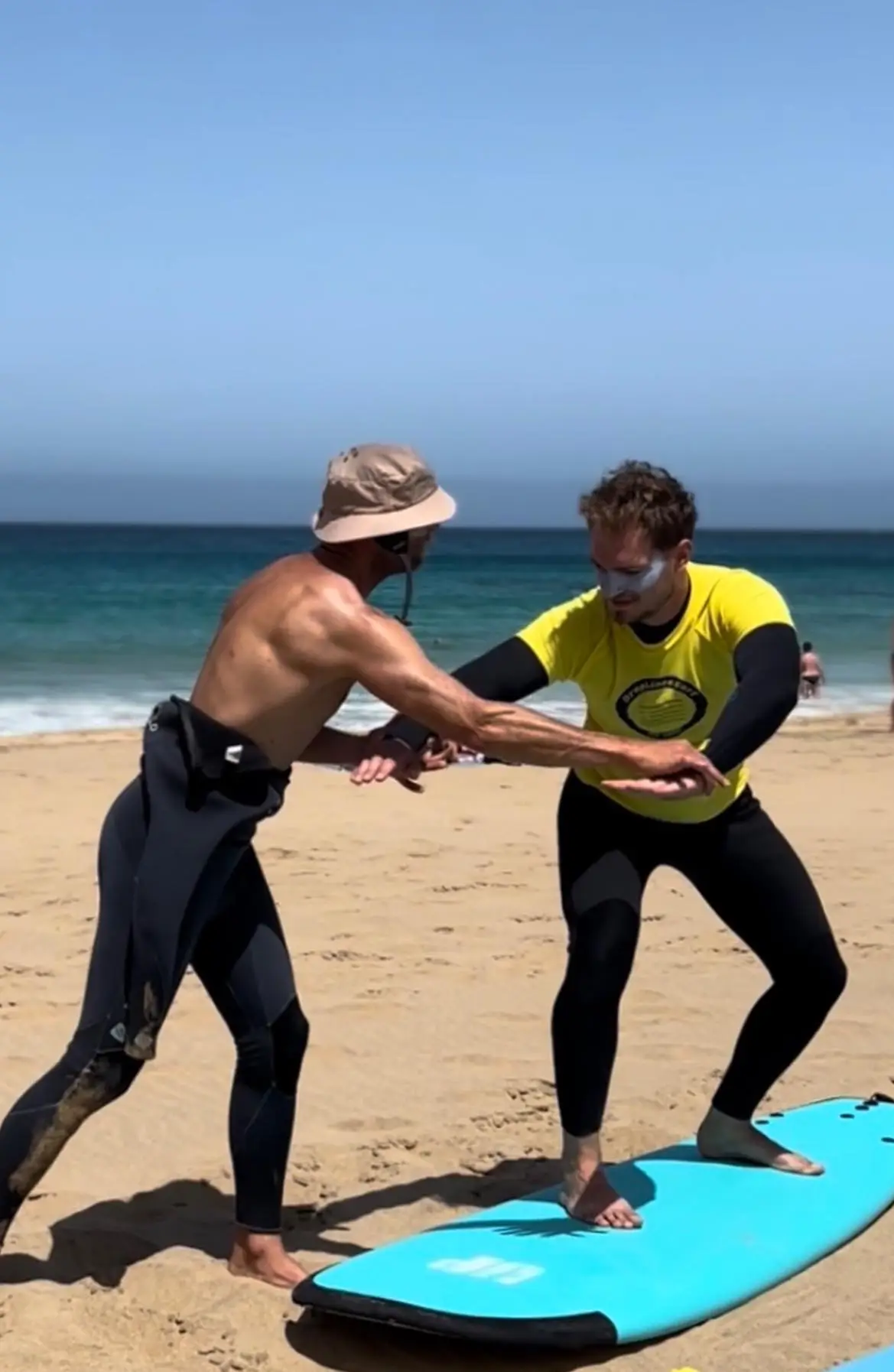
For a first session, a group lesson gives you an instructor who can choose the beach. The listed lesson with Droplinessurf School includes transport, a board, a wetsuit and booties. Semi-private and private formats cost more but give you alternatives if you prefer more individual attention.
How warm is the water around Lajares?
The sea at El Cotillo averages about 18°C in February and reaches 23°C in September and October. A 3/2 mm wetsuit is a practical choice for surfing from Lajares. Booties also protect your feet at breaks with volcanic rock, including Punta Blanca and El Burro.
The monthly average at El Cotillo rises from 20°C in April to 21°C in June and 22°C in August. It returns to 20°C in December. Those figures describe the sea, not how warm every session will feel. Wind and time spent sitting on a board can make a difference.
Bring a dry layer for the journey back to Lajares after a session. For the beach, pack swimwear, a towel, drinking water and sun cream. If you book a lesson with equipment included, check what the school supplies before bringing your own wetsuit or board. Booties are useful where the bottom is rocky.
If you bring your own board, a hire car makes it easier to carry gear between the village and different coasts. Check airline and vehicle rules for board length before booking. If you plan to use a bus, check its board-carriage rules too. The Lajares travel guide covers more of the trip.
What can you do on a flat day in Lajares?
On a flat day near Lajares, walk the roughly 5 km Calderón Hondo circuit. The route starts near the village and leads towards a volcanic crater about 70 m deep. Allow around 1.5 to 2 hours, wear sturdy shoes and carry water and head protection.
There is little shade on the Calderón Hondo route, and the crater rim can be windy. Take enough water and keep to the marked path. On a clear day, the high ground gives views towards the north coast, Lobos and Lanzarote. A small daypack is easier to carry than a bag of beach gear.
You could also visit El Cotillo, about 8 km west of Lajares, or the fishing village of Majanicho to the north. A quiet day by the water gives you time to watch how waves and currents move. Conditions can change, so observe again before your next session rather than relying on what you saw earlier.
If your trip includes another island, the Caleta de Famara surf guide covers a Lanzarote option. For ideas beyond the Canary Islands, browse surf destinations in Spain. Keep your plans flexible: a flat day at one beach may call for a different activity or advice from your school.
How do you book a lesson in Lajares?
Kitesurfing.me lists 2 schools teaching surfing at Lajares. A listed 2-hour group lesson costs €55 and includes a board, wetsuit, booties, insurance and transport to the beach. Send a request with your dates and experience; the school confirms it, and you pay at the school.
The €55 group lesson is a way to try one session before committing to a package. Tell the instructor if you have never surfed, or if you have surfed before but want help choosing a suitable beach. The listed equipment and transport mean you do not need to bring a board for the lesson.
The same school lists a 2-hour semi-private lesson for €75 and a private lesson for €120. Private lessons include video analysis. Choose according to how much individual attention you want and ask about the day's beach choice. You can see the listed lesson options before sending a request.
For a longer Lajares stay, the five-class group package costs €240 for 10 hours. Five semi-private classes cost €340, and five private classes cost €550. The packages include equipment, insurance and beach transport; the private package also includes video analysis. Check availability for your dates before making the request.
The group package costs €48 per class when you take all five, while the single group lesson costs €55. That makes the package worth considering if you already know you want several sessions. If your plans are less certain, ask the school about scheduling and its terms before choosing a package.
Give the school enough detail to help it plan: your dates, your experience and the lesson format you prefer. You can also ask what happens if conditions do not suit your level. For other destinations and lesson ideas, browse the surfing marketplace while planning your trip.
- Choose a group, semi-private or private lesson for your Lajares stay.
- Send your preferred dates and experience level with the booking request.
- Wait for the school to confirm, then pay at the school.
What is Lajares weather like for a surf holiday?
Lajares weather is mild. Nearby El Cotillo's monthly average air temperature is around 18°C in January and 24°C in August. The coast can be windy, especially in summer. Pack sun protection for the beach and a dry layer for the journey back to the village after surfing.
Can you surf near Lajares in August?
Yes. August has a low wave-expectation rating at El Cotillo, and the sea averages about 22°C. El Burro near Corralejo gives intermediate surfers an east-coast option with shelter from northerly trade winds. Its sand and volcanic reef bottom calls for confidence around rock and a check of the day's conditions.
Is December suitable for a first surf lesson in Lajares?
December has a high wave-expectation rating at El Cotillo, while the sea averages about 20°C. A first lesson from Lajares can still work if an instructor finds suitable small waves. Ask the school how it selects a beach, wear the supplied wetsuit and follow its advice about entering the water.
How do you reach Lajares with a surfboard?
Fly to Fuerteventura Airport and take a hire car or taxi to Lajares. Airport bus 3 serves Puerto del Rosario, where you can change for onward transport. Check board-carriage rules before using buses. A car also makes it easier to carry a board to El Cotillo and the north shore.
What beach rules should surfers follow near Lajares?
At beaches near Lajares, follow posted signs and lifeguard instructions. A red flag means stay out of the sea, and a yellow flag calls for caution. At Flag Beach, check local signs for current watersports and bathing zones and give bathers space. Ask locally about entry and currents before surfing a reef.