Best Time to Surf in Mui Ne: A Month-by-Month Guide
Mui Ne runs two surf seasons on two coastlines: bigger northeast-monsoon waves November-March, smaller southwest-monsoon waves June-September.
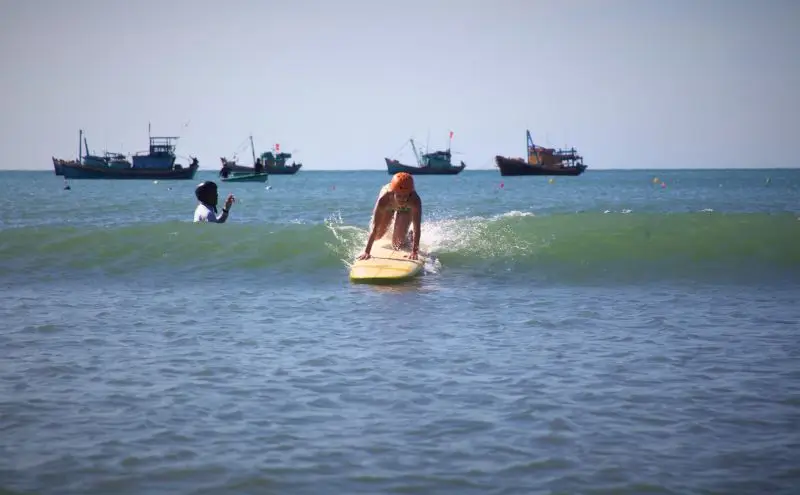
The best time to surf in Mui Ne is November to March. That's the strongest stretch of the northeast monsoon, which pushes swell into the town's eastern beaches. A second, calmer season runs June to September on the opposite, southwest-facing beaches. Mui Ne effectively has two surf seasons, not one, so some beach usually has waves for most of the year.
When is the best time to surf in Mui Ne?
November through March is named most often. The northeast monsoon that drives Mui Ne's bigger swell runs roughly October to May. But surf-forecast.com's own October figures show that single month is often blown out or too small. That's why guides single out November-March as the more reliable run inside that wider window.
Why does Mui Ne have two different surf seasons?
National Geographic's own account of the wind here splits the year in two: a southwest monsoon from June to September, and a northeast monsoon the rest of the year. Each wind pushes swell onto a different coastline. Mui Ne's surf doesn't follow one single calendar the way most single-facing breaks do.
UW Kite Surf, one of two kitesurfing.me partner schools teaching surf lessons here, describes the split in its own season notes. The northeast monsoon brings strong wind and bigger, choppier waves to beaches like Bai Ong Dia and Hon Rom. The southwest monsoon brings calmer, warmer water to Malibu and the beaches further west. UW Kite Surf and Vietnam Surftrip both teach around this split rather than at one fixed beach, moving to whichever side has waves that day.
Mui Ne's surf season, month by month
No source publishes a complete rideable-surf percentage for every month at Mui Ne. The table below follows UW Kite Surf's own two-beach-cluster season guide. It's cross-checked against surf-forecast.com's hard October figures and National Geographic's wind-pattern account. Treat it as a season description, not a day-by-day forecast.
| Months | Typical conditions | Who it suits best |
|---|---|---|
| Nov-Mar | Peak of the northeast monsoon; the stretch most guides name as best | Intermediate and advanced surfers, plus beginners at sheltered Bai Ong Dia |
| Oct | Inside the monsoon window but inconsistent; surf-forecast.com measures only about 8% clean days (43% blown out, 49% too small) | Check a live forecast rather than planning around this month alone |
| Jun-Sep | Southwest monsoon; smaller, warmer waves on the west-facing beaches, per UW Kite Surf's own notes | Beginners, and anyone who wants the calmest water of the year |
| Apr | The gap between the two monsoons; named by neither school's season list | The year's flattest stretch; not worth planning a trip around |
How warm is the water, and what should you pack?
Sea temperature at Mui Ne runs from around 25°C in January-February up to 28-29°C from April through October, based on weather2travel.com's long-term monthly averages. That's warm enough that no wetsuit is needed at any time of year. A rash vest is as much gear as most surfers pack for the water.
Pack a rash guard for sun protection and for the odd cooler morning in the December-to-February stretch, plus reef-safe sunscreen. Add reef shoes if you plan to surf the rocky, breakwater-sheltered sections at Little Buddha or Hon Rom. Board shorts or a swimsuit cover the rest of the year comfortably.
Is Mui Ne's surf crowded, and what about the kitesurfers?
Mui Ne is better known internationally for kitesurfing than for surfing, and both sports share the same stretch of beach. Expect kites and lines in the water. That's especially true once the afternoon wind fills in and the kite schools' busiest hours start.
That's one more reason most surf sessions here happen in the morning. The water is calmer before the wind builds, and the kite schools are quieter too. Little Buddha and Malibu have enough room that crowding from other surfers is rarely the issue; a few other surf schools work the same stretch of coast too, usually without a fixed base of their own. Sharing the lineup with kites is the bigger adjustment for visitors used to a surf-only beach.
Which months suit beginners, and which suit advanced surfers?
Beginners do best in the southwest monsoon months, June to September. Malibu and the beaches near it stay small, warm and forgiving through that window. Bai Ong Dia also works for beginners through the northeast monsoon, just with slightly more size and wind to manage.
Advanced surfers get the most out of November to March. Little Buddha's outside section carries real size in that window. On a genuine swell of 5 ft or more, Hon Rom's rocky point wraps into a proper left too. See our Mui Ne surfing guide for the full breakdown by beach and level.
What to do if the swell is small or the wind is wrong
Mui Ne's two coastlines catch different winds. A flat day on one side doesn't always mean a flat day everywhere. If the northeast-facing beaches look small or blown out, ask your instructor whether the southwest-facing side has anything working, and vice versa in the other season.
A lesson at Bai Ong Dia or Malibu rarely gets cancelled for lack of waves. Both schools pick the beach that's actually working that day rather than committing to one fixed spot in advance. If you came specifically for size and the forecast is against you, that's the trade-off of a wind-driven break. Check a live forecast before locking in a trip around one exact week.
Getting to Mui Ne, and when to book around the season
Phan Thiet still has no working commercial airport as of late 2026. Construction on its civil-aviation terminal only began in April 2026, with 2027 named as the developer's own target, so don't plan a trip around flying in locally just yet. Most visitors fly into Ho Chi Minh City's Tan Son Nhat International Airport (SGN) instead. From there it's a roughly 200 km drive that takes 3.5 to 4.5 hours depending on traffic.
Booking around the season matters more for advanced surfers chasing size than for beginners. A first lesson works in any month. If you specifically want the bigger November-to-March swell, or a shot at Hon Rom, build a few extra days into the trip. The forecast won't always cooperate on your first attempt.
Surf lessons across the season
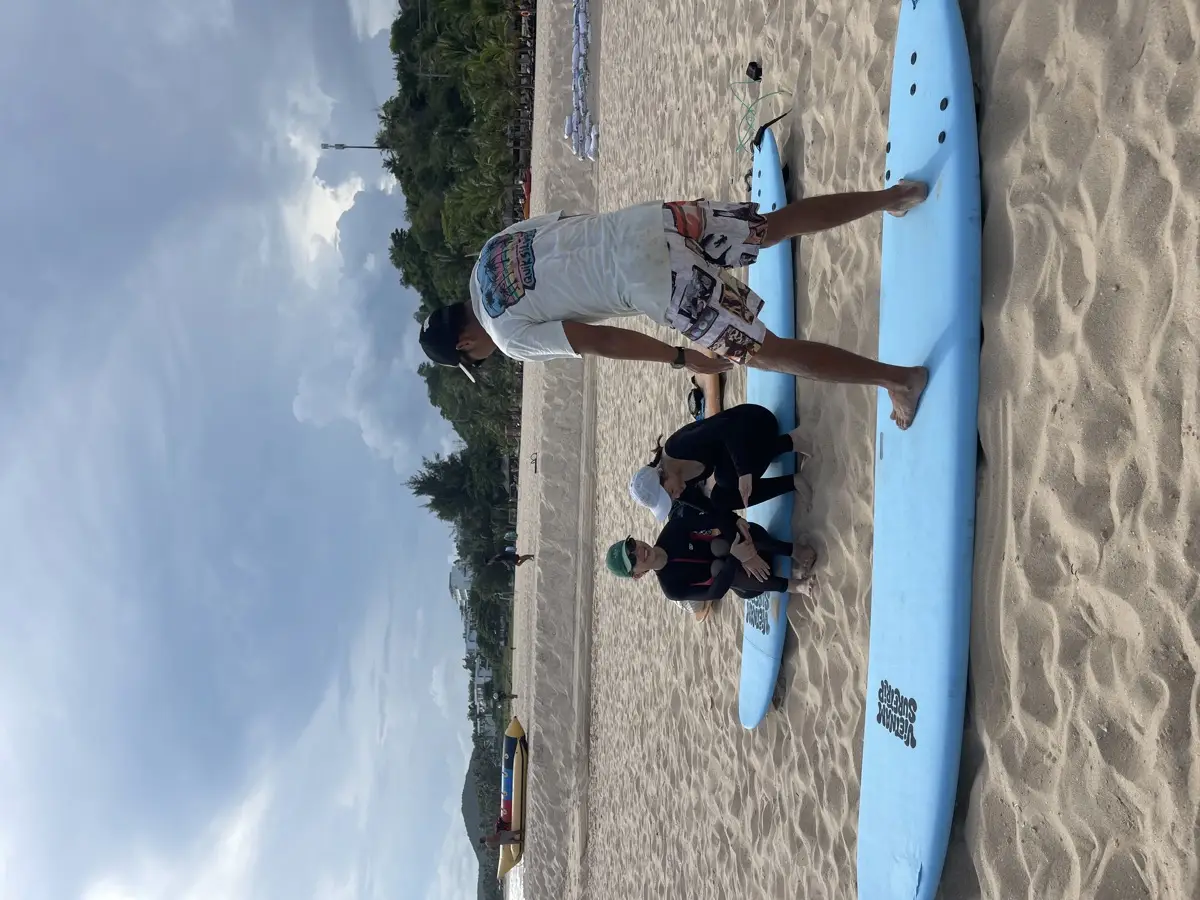
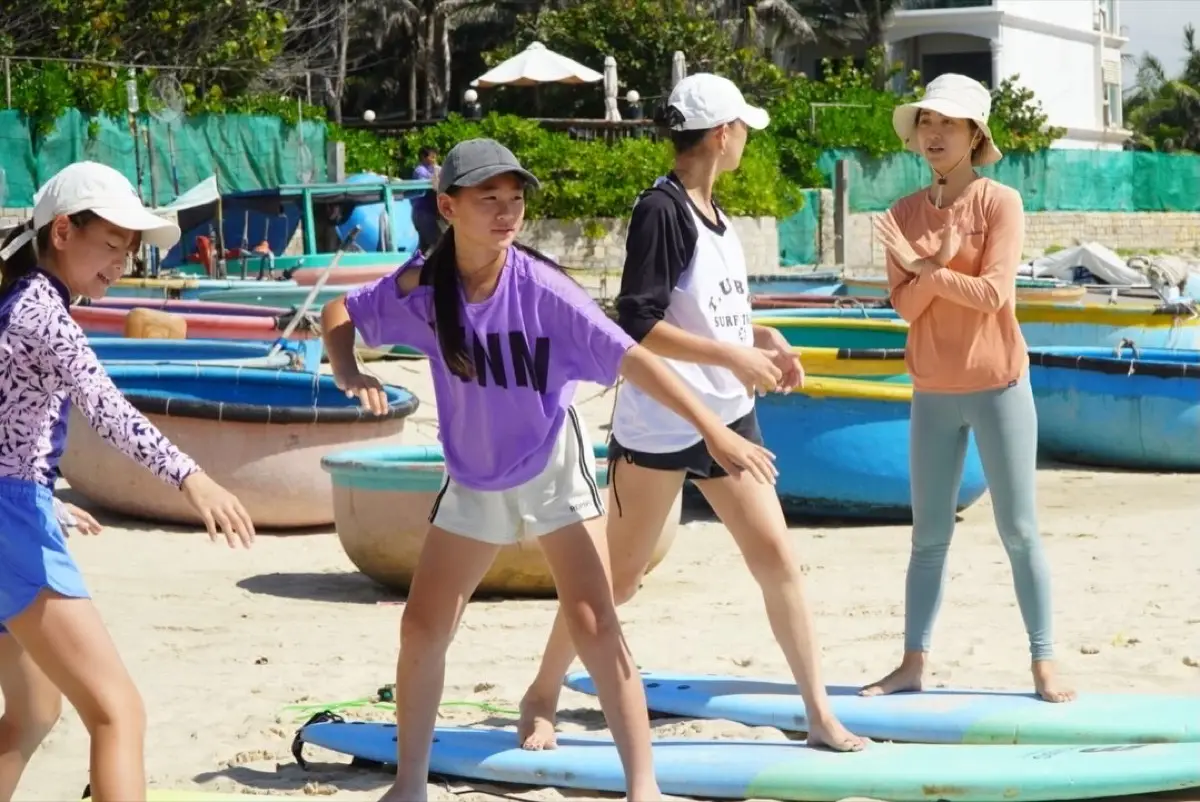
Lesson format doesn't change much by season at either partner school. UW Kite Surf runs private, one-on-one lessons with a coach who moves between beaches depending on the day's waves. Vietnam Surftrip teaches at Bai Ong Dia in small groups or one-on-one, with video analysis included on the private option.
What changes is which beach you end up at and how warm the water feels. For course formats and prices, see learning to surf in Mui Ne. Booking on kitesurfing.me works the same way whatever month you pick. You send a request, the school confirms, and you pay the school directly.
What is the best time to surf in Mui Ne?
November through March is named most often, inside a wider October-to-May northeast monsoon window. Surf-forecast.com's own October data shows that single month is often blown out or too small, so November-March is the more reliable stretch. June to September brings a separate, calmer southwest monsoon season that suits beginners well.
Is Mui Ne good for beginner surfers?
Yes, at the right beach. Malibu and Bai Ong Dia both have gentle, forgiving waves close to shore, and both kitesurfing.me partner schools here teach beginners. The southwest monsoon months (June-September) bring the calmest, warmest water of the two seasons, which both schools name as the easier window to learn in.
Do I need a wetsuit to surf in Mui Ne?
No. Sea temperature stays between roughly 25°C in January-February and 28-29°C from April through October, per weather2travel.com's long-term averages. A rash vest or t-shirt covers sun and the occasional cooler morning; reef shoes help at the eastern reef and breakwater sections.
Which beach should I surf in Mui Ne?
Beginners should head to Malibu or Bai Ong Dia, both sheltered, forgiving beach breaks. Intermediates get more out of Little Buddha's outside section when it's working. Hon Rom, a rocky point at the town's east end, only turns on with a genuine 5 ft-plus swell and suits advanced surfers only.
Is it safe to surf alongside Mui Ne's kitesurfers?
Mui Ne is better known internationally for kitesurfing than for surfing, and the same beaches host both. Expect kites and lines in the water, especially once the afternoon wind builds; most surf sessions happen in the morning anyway, before the wind picks up and before the kite schools' busiest hours.
How do I get to Mui Ne without a nearby airport?
Fly into Ho Chi Minh City's Tan Son Nhat International Airport (SGN) and continue by car, a roughly 200 km, 3.5-to-4.5-hour trip. Phan Thiet's own airport has no commercial flights as of late 2026; construction on its civil terminal only began in April 2026, with 2027 named as the developer's own target.