Best Time to Surf in Santa Teresa: Month Guide
Find the best time to surf in Santa Teresa with 12 months of water temperatures, seasonal swell advice and lesson prices for your trip.
The best time to surf in Santa Teresa, Costa Rica, is generally December to April for smaller waves and drier weather, or May to November for stronger southern swells. Beginners should still check the conditions each day. More experienced surfers can use the monthly figures below to plan around the waves they want.
Key takeaways: December to April usually brings smaller surf and drier weather. June has 17 modelled rideable days and stronger typical waves. For a first lesson, ask an instructor about Playa Carmen or Playa Hermosa de Cóbano on a small day.
When is the best time to surf in Santa Teresa?
Santa Teresa has surf throughout the year. December to April usually brings drier weather and smaller waves, while May to November brings more rain and stronger southern swells. June, August and October are recommended for intermediate surfers in the local wave and wind model, though conditions vary from day to day.
A first-time surfer looking for whitewater practice can start with the dry season. These are seasonal tendencies, not a forecast: even in the dry season, check the day's swell, currents and tide with an instructor before entering. An experienced surfer seeking more power can plan around the green season and pick a break after checking conditions.
Santa Teresa faces the Pacific and receives swells from the south, southwest and northwest. A larger swell can change the character of each beach: Playa Carmen may feel softer, while the exposed central beach can produce faster peaks. The Santa Teresa surf spot guide describes the breaks and their skill levels.
Santa Teresa weather follows a dry season from roughly December through April and a green season from May through November. September and October are especially wet. Allow extra time on rough roads during rainy months, and carry a light rain jacket for the trip to the beach or your accommodation.
What is Santa Teresa like month by month?
Santa Teresa's modelled rideable-day count rises from 4 days in February to 17 in June. Average water temperatures stay between 27.8 and 29.0°C across the year. Dry-season visits bring more competition for accommodation, particularly around Christmas, New Year and Easter, while the green season is generally quieter.
The rideable-day figures below come from three years of wave and wind model data. They describe the model's rating for the spot, not the number of days suitable for a first lesson. A powerful day may count as rideable while calling for skills beyond those of a beginner.
June has the highest modelled count at 17 days, while August, September and October each have 13. Use those figures to choose a broad travel window, not to predict a particular week. Once you arrive in Santa Teresa, watch the sets and check the current before choosing where to paddle out.
| Month | Swell: modelled rideable days | Water temperature: monthly average | Crowds |
|---|---|---|---|
| January | 5 days | 27.9°C | Busy dry season |
| February | 4 days | 28.2°C | Busy dry season |
| March | 5 days | 28.5°C | Busy dry season |
| April | 5 days | 28.9°C | Busy around Easter |
| May | 12 days | 29.0°C | Generally quieter |
| June | 17 days | 28.6°C | Generally quieter |
| July | 11 days | 28.5°C | Generally quieter |
| August | 13 days | 28.4°C | Green season |
| September | 13 days | 28.3°C | Quieter green season |
| October | 13 days | 28.1°C | Quieter green season |
| November | 10 days | 27.9°C | Generally quieter |
| December | 6 days | 27.8°C | Busy around holidays |
Holiday dates matter as much as the month. Santa Teresa becomes busy over Christmas, New Year and Easter week, when ferries can also have long queues. Reserve accommodation early for those periods and leave room in your itinerary for the crossing from Puntarenas to Paquera.
Which months suit beginners in Santa Teresa?
December to April is a useful window for beginners in Santa Teresa because waves are generally smaller and the weather is drier. On a small day, ask an instructor to assess the current at Playa Carmen or Playa Hermosa de Cóbano and choose a suitable section for your lesson.
Playa Carmen sits at the southern end of Santa Teresa, near the main crossroads. Its sandy peaks are often softer than those on the central beach. Mid to rising tide is a useful starting point, although the best section depends on the day's sandbars and waves. Check the water with your instructor before carrying a board in.
Playa Hermosa de Cóbano lies north of Santa Teresa and has a broad sandy beach. On smaller days, its rolling waves can suit a first session. Check the full name when arranging transport: this Playa Hermosa is different from the beach of the same name near Jacó.
For faster waves, experienced surfers can look at La Lora on the central beach. Suck Rock and Mal País Point add rocky, powerful breaks for advanced surfers. The break-by-break Santa Teresa guide explains where to find them and why the same beach can suit different abilities on different days.
Give swimmers and lesson groups space at Playa Carmen. Wear a leash, wait your turn and give priority to the surfer closest to the breaking peak. Watch several sets from shore before entering, especially when a larger swell makes the current stronger. If you cannot identify a safe entry, ask an instructor.
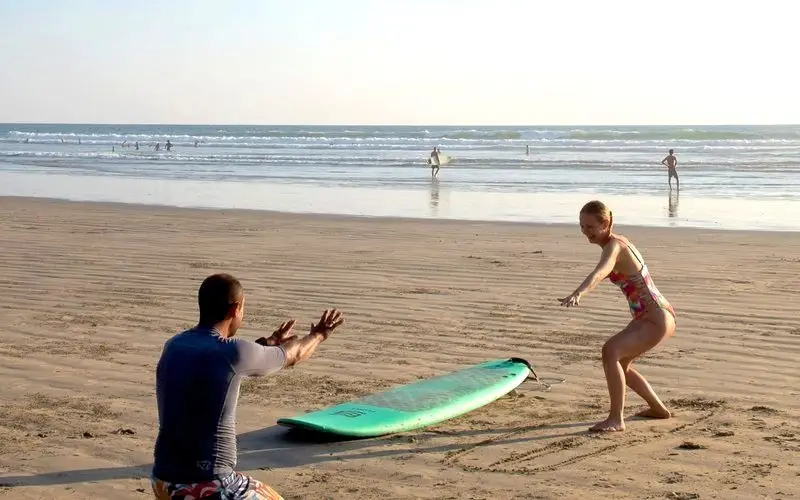
A lesson gives you help with both the beach choice and the basics of sharing a wave. Tell your instructor whether you have surfed before and how comfortable you are in moving water. The surfing guide can help you prepare for a first session before you travel.
What is Santa Teresa's water temperature?
Santa Teresa water temperature averages range from 27.8°C in December to 29.0°C in May. Boardshorts or a swimsuit and a rash vest generally suit the warm water all year. The monthly averages help with packing, but the temperature on a particular day can differ from the average.
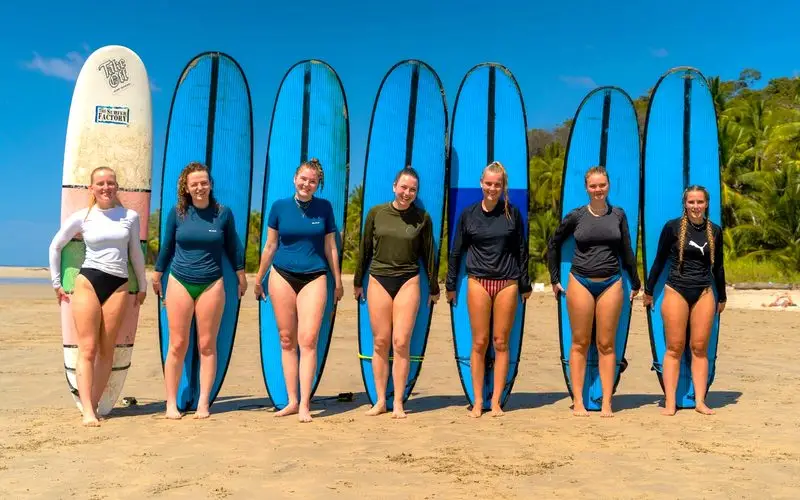
For a Santa Teresa beach session, pack a hat and sunscreen for time on shore. Take Off Surf School includes organic sunscreen and a soft-top board in its group and private lessons. Reef booties can be useful at rocky breaks, where experienced surfers should check both the entry and exit.
Keep a dry layer for the ride back, particularly during the May to November rainy season. A waterproof bag can protect a phone and other belongings on a wet journey. If you plan to take a lesson, ask the school what it supplies before making room for extra equipment in your luggage.
What can you do on a flat day in Santa Teresa?
On a flat day in Santa Teresa, visit Cabo Blanco or explore the coast around Mal País. The trail to Playa Cabo Blanco is about 4.2 km each way. Carry water, allow time for the return walk and check current access details before leaving town.
Cabo Blanco's visitor entrance is at the Cabuya station. The published visitor guide gives hours of 8 a.m. to 4 p.m. from Wednesday to Sunday, with an earlier entry cutoff for the beach trail. Check current opening arrangements before making the trip from Santa Teresa, since the walk back also takes time.
A slow surf day also gives you time to walk the Santa Teresa beach and look at its shifting sandbanks. From shore, notice where waves begin to break and where other surfers enter. Keep valuables with you and give the shorebreak room when walking near the water.
The southern Nicoya Peninsula has several places to use as a base. Playa Carmen puts shops and beach access near the crossroads, while central Santa Teresa places the main beach peaks close to the road. For accommodation ideas, see the Santa Teresa surf hostel guide.
If your itinerary has room for another destination, explore the Costa Rica surf destinations before choosing your next stop. You can also read about the beaches and breaks near Jacó or plan time in Tamarindo. Check the local forecast at each stop rather than assuming conditions match Santa Teresa.
How do you book a lesson in Santa Teresa?
To book a Santa Teresa lesson, send a request for Take Off Surf School through kitesurfing.me. The school confirms the request, and you pay at the school. Its group and private lessons each last 1.5 hours and include a soft-top surfboard.
The Group Surf Lesson costs 80 USD and has one instructor for up to three students. The Private Surf Lesson costs 90 USD and gives one student an instructor. Both include organic sunscreen and a PDF surf guide book. The private lesson costs 10 USD more if you want individual attention.
Kitesurfing.me lists two schools teaching surfing in Santa Teresa. For a first visit, share your experience and preferred dates in your request so the school can respond with a suitable arrangement. Bring swimwear and a rash vest, and ask where to meet before travelling to the beach.
A lesson can also help a returning surfer adjust to Santa Teresa's beach breaks. Sandbars and currents change, and the same beach can feel different with a new swell or tide. Browse surfing in Costa Rica if your trip includes another part of the coast.
If you are choosing between the listed lessons, think about how much time you want with an instructor. A group of up to three can suit travellers happy to learn alongside others. A private session gives one student an instructor for the full 1.5 hours. Confirm availability and meeting details with the school.
How should I use a Santa Teresa surf forecast?
Check the Santa Teresa surf forecast for swell size, direction, period, wind and tide shortly before a session. Then watch several sets from shore. Playa Carmen and the exposed central beach respond differently to the same swell, so choose a beach and conditions that match your ability.
How rainy is Santa Teresa in October?
October is one of Santa Teresa's wettest months, within the May to November green season. It also has 13 modelled rideable days in the monthly surf dataset, though that figure does not predict a particular visit. Pack for rain, allow extra road time and check the waves before entering.
How do I get to Santa Teresa with a surfboard?
From San José, travel through Puntarenas, take the ferry to Paquera and continue via Cóbano to Santa Teresa. Domestic flights also serve Cóbano Airport. Before booking a flight or transfer, check your board's length, baggage fees and available space with the operator, and allow time for the ferry crossing.
Where should intermediate surfers go in Santa Teresa?
Intermediate surfers can look at Playa Santa Teresa's beach peaks and La Lora when the swell fits their ability. Sandbanks shift along the main beach, and La Lora can produce fast, hollow sections. Watch several sets, assess the current and choose an entry point before paddling out.
What should I budget for a Santa Teresa surf lesson?
On kitesurfing.me, Take Off Surf School lists a 1.5-hour group lesson for 80 USD and a 1.5-hour private lesson for 90 USD. The group has one instructor for up to three students; the private lesson has one instructor per student. Both include a soft-top board, organic sunscreen and a PDF surf guide book. Send a request through kitesurfing.me, wait for the school's confirmation and pay at the school.