
Best Time to Wing Foil in Corralejo: Wind by Month
Corralejo's trade wind peaks from April to September, but a wing flies in far less of it than a kite or sail. Here's when that actually matters.
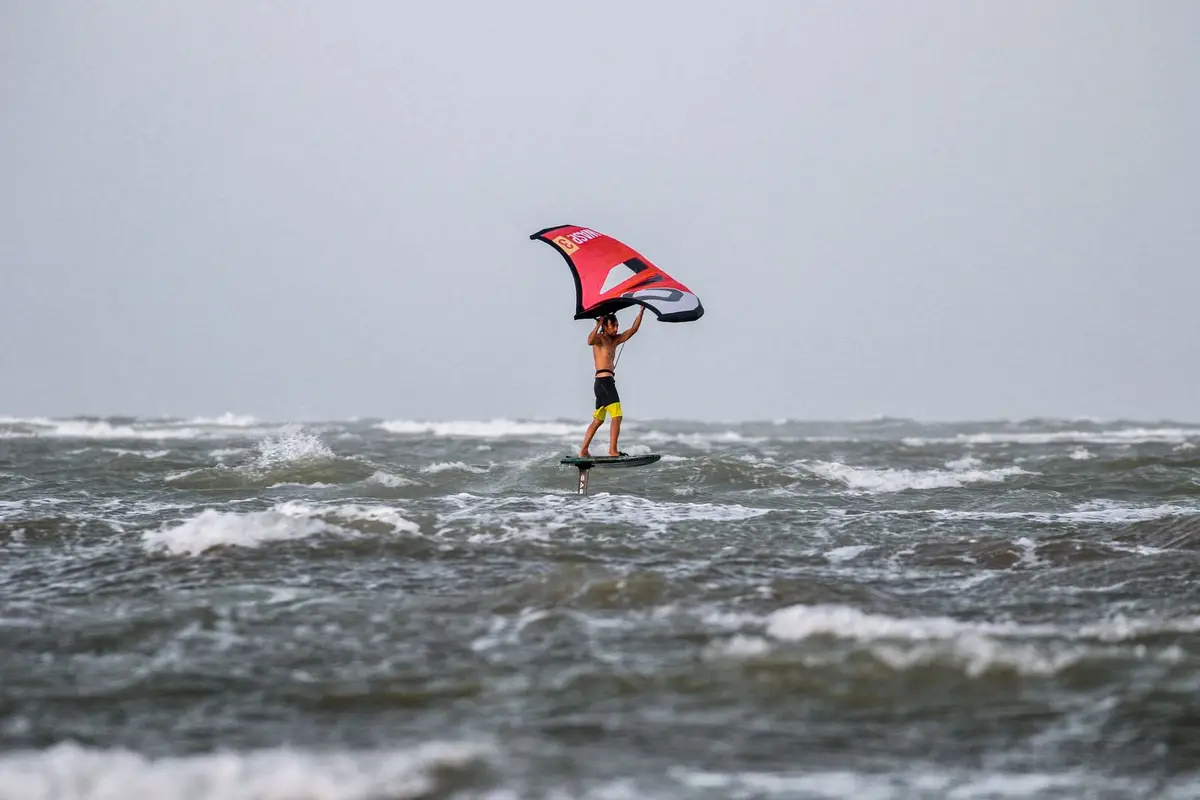
The best time to wing foil in Corralejo isn't the same answer as for kitesurfing or windsurfing at the same spot. A kite or a windsurf sail wants more power than a wing does, so while Fuerteventura's trade wind peaks from April to September, a 4 to 5 square-metre wing already flies in conditions that would leave a sail waiting. The real question here is less about a calendar month and more about how much wind the gear actually needs.
So When Should You Actually Book?
Gecko Windsurf School, the local partner here, won't commit to one best month: it describes conditions as good all year, just steadier through summer and quieter from November to March. Treat that as a floor, not a ceiling. fuerteventuraguide.com separately marks April through September as the stretch when the Alisios trade wind blows constantly rather than in fits and starts, the safer bet if your travel dates aren't flexible.
A Wing, a Sail and a Kite Don't Need the Same Wind
A beginner windsurf sail starts fighting you past roughly 20 knots; a wing is still comfortable at 25. Northern Water Sports' own sizing chart puts the sweet spot for a 4 to 5 square-metre wing at 14 to 25 knots, and a bigger 6 or 7 square-metre wing drags that floor down to 8 or even 5 knots. Fuerteventura's long-term airport average, measured by Windfinder, is 12 knots with gusts near 25, which sits inside a wing's workable band more reliably than inside a sail's.
That's the practical upside of booking wing foiling over windsurfing in a quieter month: a day too light to enjoy on a sail can still be a lesson day on the right size of wing. Gecko doesn't publish which sizes it keeps on hand, so mention your travel month when you book.
Why Corralejo's Wind Behaves Differently to the Rest of the Island
The Alisios blow for days at a stretch rather than switching on each afternoon the way a thermal breeze would. fuerteventuraguide.com notes that the north coast around Corralejo gets a calmer, steadier cut of that wind than the notoriously gusty south near Sotavento. That matters more to a learner than the raw average does: fewer sudden gusts to manage while you're still finding your balance on the foil.
Why There's No Month-by-Month Wind Chart Below
We looked for one. Windfinder's dedicated Corralejo page states plainly that no statistical data exists for that station, and its island-wide Fuerteventura airport figure is a single annual average, not twelve. The table further down pairs Gecko's own seasonal description with sea temperatures that are actually measured month by month, rather than inventing a wind rating this lagoon doesn't have.
Wind and Water Temperature, Month by Month
Sea temperature and wind don't peak together here. The water is warmest right as the trade-wind season is already winding down, and coolest exactly when the wind is at its lightest, so the table below is worth reading as two separate questions rather than one.
| Month | Trade wind (Gecko Windsurf School / fuerteventuraguide.com) | Average sea temperature |
|---|---|---|
| January | Lighter, less constant | 19.1°C |
| February | Lighter, less constant | 18.4°C |
| March | Lighter, less constant | 18.3°C |
| April | Picking up, trade season starts | 18.9°C |
| May | Steadier | 19.9°C |
| June | Steadiest | 21.0°C |
| July | Steadiest | 21.8°C |
| August | Steadiest | 22.5°C |
| September | Steadiest, trade season ends | 23.1°C |
| October | Transitional, weakest in the second half | 22.9°C |
| November | Lighter, weakest in the first weeks | 21.6°C |
| December | Lighter, less constant | 20.2°C |
Read the wind column as a season, not a forecast. Nobody rates this lagoon month by month, so the labels above describe a pattern Gecko and a regional guide agree on, not a count of windy days. Water temperature rarely forces a wetsuit choice either: most riders manage in a rash guard or shortie from April through November and switch to a full wetsuit once it drops under roughly 19°C, from December into March.
Does Winter Still Work for a Lesson?
More often than 'off season' suggests. Gecko's own description puts November through March at lighter, not windless, and a wing's comfortable floor sits well under what a sail needs. If a specific booked day genuinely has nothing to work with, the school moves the lesson rather than sending you out in dead air, at no extra cost either way.
What a No-Wind Day Looks Like Here
Gecko's policy for a true flat day is simple: reschedule rather than run a lesson nobody can actually fly in. If an entire day looks like a write-off, Corralejo itself gives you somewhere to spend it. The Corralejo Natural Park's dune field starts at the edge of town, and the harbour ferry to Isla de Lobos is a short drive away.
Booking several lessons as one package rather than as single classes is the better hedge against this: a lost day just folds into the days around it instead of costing you a second trip back.
When Does Booking Outside Peak Season Actually Pay Off?
22places.com puts Fuerteventura's busiest tourist stretch at June through August, which happens to line up with the trade wind's steadiest run: convenience and crowding arrive together. The quieter window the same guide names, April to June plus October and November, costs you some wind reliability by Gecko's own account, but a wing's lower threshold absorbs more of that loss than a kite or sail would.
What doesn't move either way is the lesson price. Essentials stays €330 and Progression stays €530 on Gecko's published list whatever month you book; see learning wing foiling in Corralejo for how those two packages differ. A quieter month changes your flight and hotel bill, not the school's rate card.
What to Bring Beyond What Gecko Provides
Course prices already cover the wing, board, foil, wetsuit and boots, so there isn't much gear to think about yourself. What's worth packing is mostly about comfort across a multi-day booking, not kit the lesson is missing.
- A base layer or rash guard to wear under the wetsuit the school hands you.
- Closed-toe water shoes: the lagoon bed near the shoreline is volcanic rock, not sand.
- High-SPF, reef-safe sunscreen, since a two-and-a-half-hour session leaves nowhere to hide from the sun.
- A dry pouch for your phone and keys if you're driving yourself rather than taking Gecko's pickup.
If you're new to foils specifically, not just new to wind sports, ask whether an impact vest is available for your first sessions. Gecko's site doesn't list one as standard kit, so it's worth raising when you book rather than assuming.
How Wing Foiling Fits Alongside Kitesurfing and Windsurfing Here
Corralejo runs three board sports off the same trade wind: kitesurfing mainly at Flag Beach, and windsurfing and wing foiling sharing the Playa del Río lagoon. What separates the best month for each isn't the wind direction, it's how much of that wind each sport's gear needs, which is why wing foiling tolerates a wider slice of the year than the other two.
If you're weighing this against kitesurfing elsewhere in Spain, our kitesurf course cost breakdown and regional kitesurf pricing cover that market separately, since the gear and course structure there aren't wing-specific. For the sail-powered version of this same question, the best time to windsurf in Corralejo walks through it.
For beaches, levels and local detail beyond wind alone, the Corralejo wing foiling page has the full guide; to check actual dates, go straight to the Gecko Windsurf School profile.
What is the best time to wing foil in Corralejo?
There's no single answer both our sources agree on. Gecko Windsurf School calls conditions good all year, steadier in summer; fuerteventuraguide.com narrows the island's trade-wind season to April through September. Because a wing flies in less wind than a sail or kite, more of the calendar than just the peak months is genuinely bookable.
Is there enough wind to wing foil in Corralejo during winter?
Usually, just less dependably. Gecko's own description puts November to March at lighter rather than absent, and a wing's comfortable range starts around 14 knots, below what a windsurf sail typically needs. A lesson that genuinely can't go ahead gets rescheduled free rather than run anyway.
How much wind does wing foiling actually need?
Roughly 14 to 25 knots on a 4 to 5 square-metre wing, per Northern Water Sports' sizing chart, with bigger wings working down to 8 or even 5 knots. Fuerteventura's long-term airport average sits at 12 knots with gusts near 25, which lands inside or close to that range most days.
How warm does the water get in Corralejo?
From about 18°C in January through roughly 23°C in September, per seatemperature.info's measured Corralejo averages. A rash guard or shortie under the wetsuit Gecko supplies covers most of the year; a full wetsuit matters more from December to March, when it drops closer to 18-19°C.
Does a wing foil lesson cost more in the busy summer months?
No. Gecko Windsurf School's published prices, €330 for the 3-lesson Essentials course and €530 for the 5-lesson Progression course, hold regardless of month. Travel and accommodation are what get cheaper outside June to August, per 22places.com, not the lesson itself.