
Kenya has 4 indexed kite spots across 6 schools.
Source: schools' own published rates · updated October 2026.
Book kitesurfing in Kenya
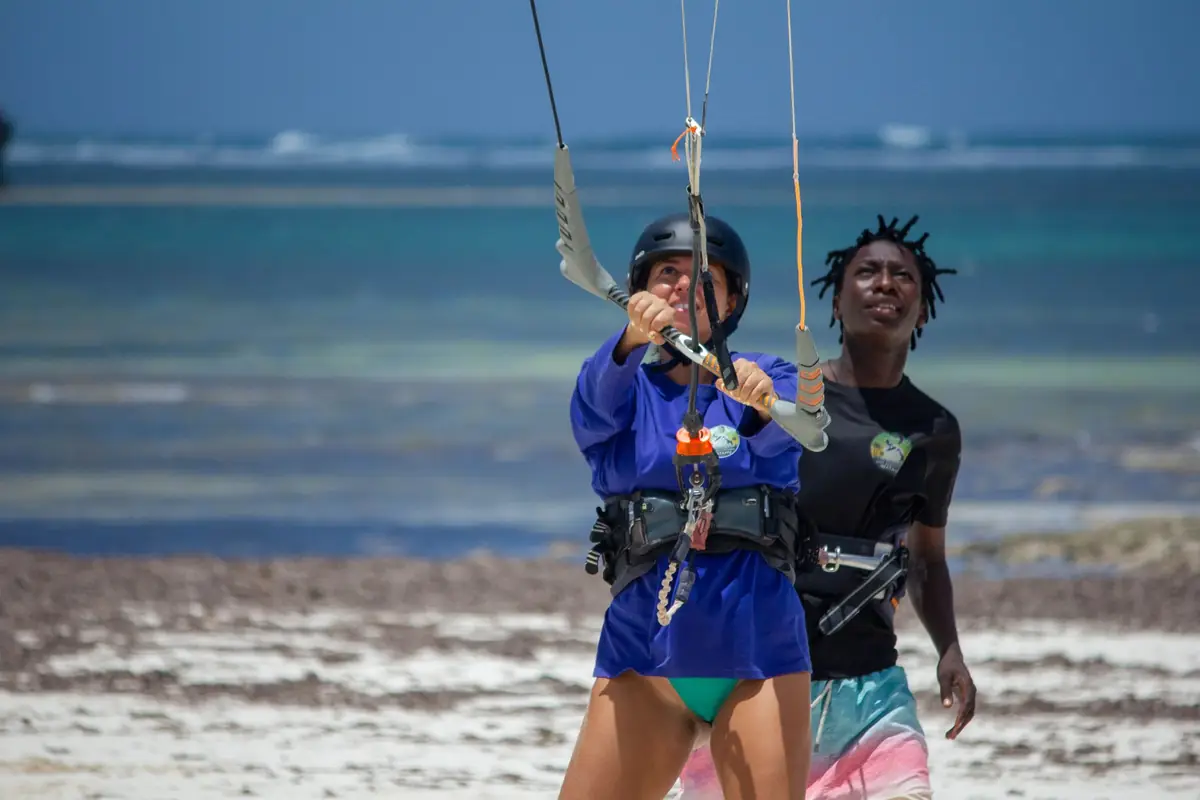
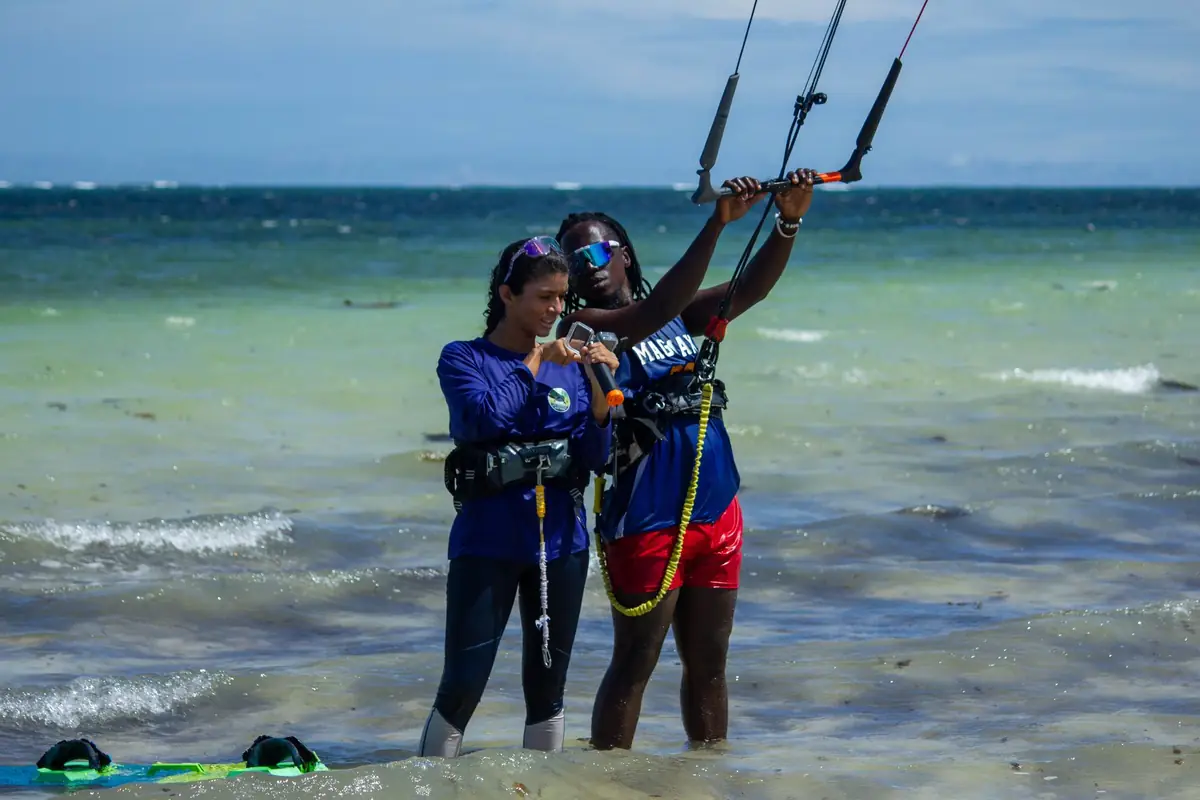
Kitesurfing lessons in Watamu
Pick a course, choose your dates and send it straight to the school. Nothing to pay today.
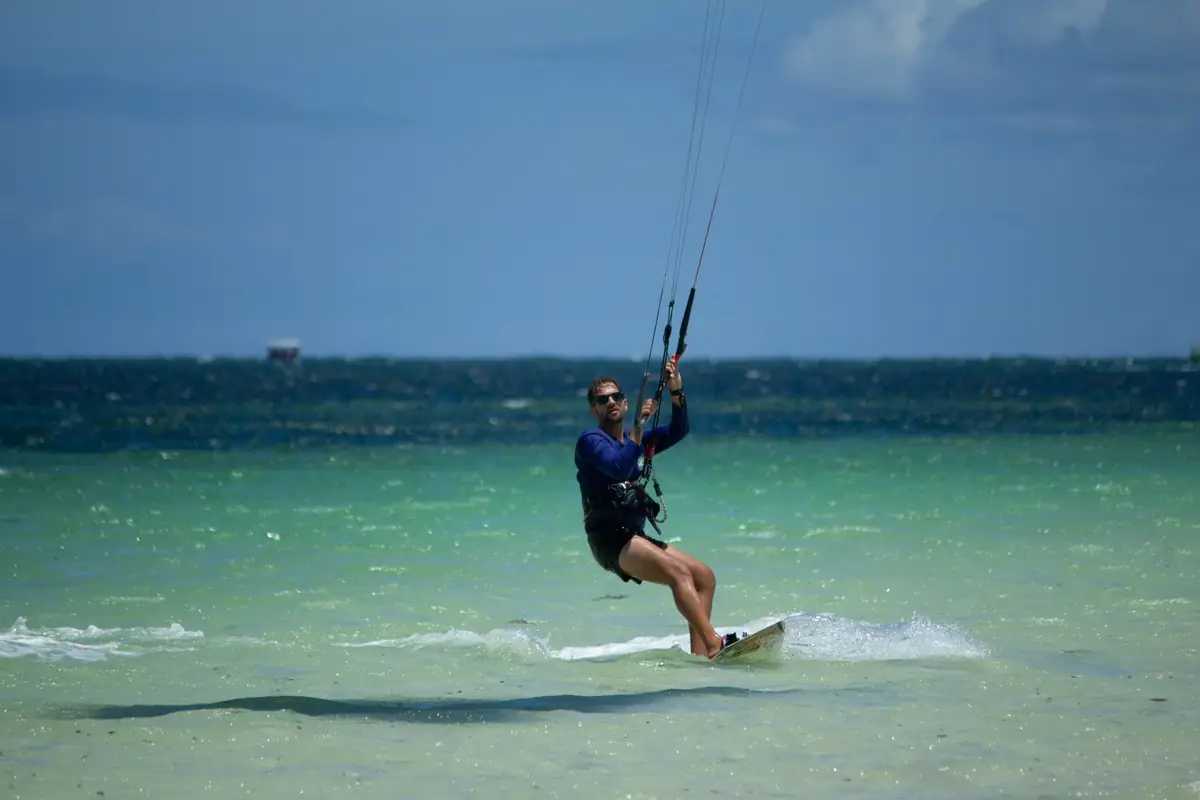
Kite camps in Watamu
A week with stay, meals and kite sessions. Pick your arrival date and send the booking request, the school confirms.
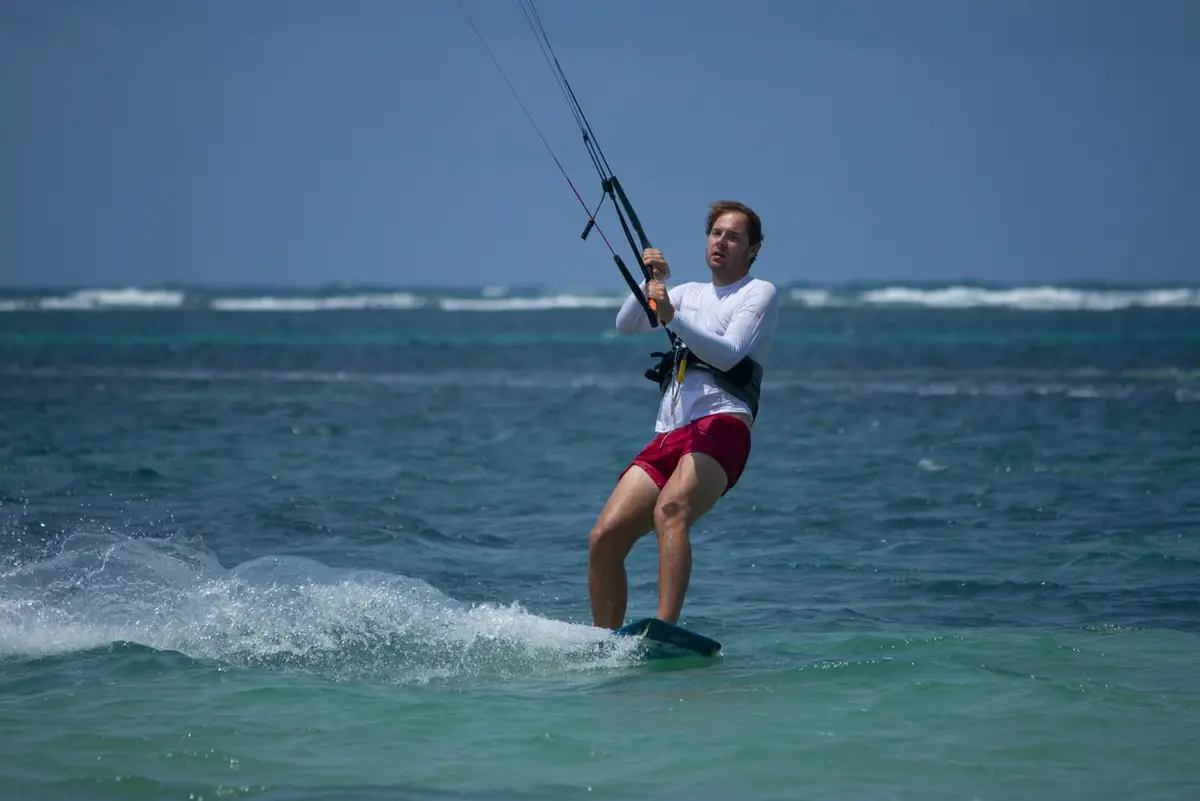
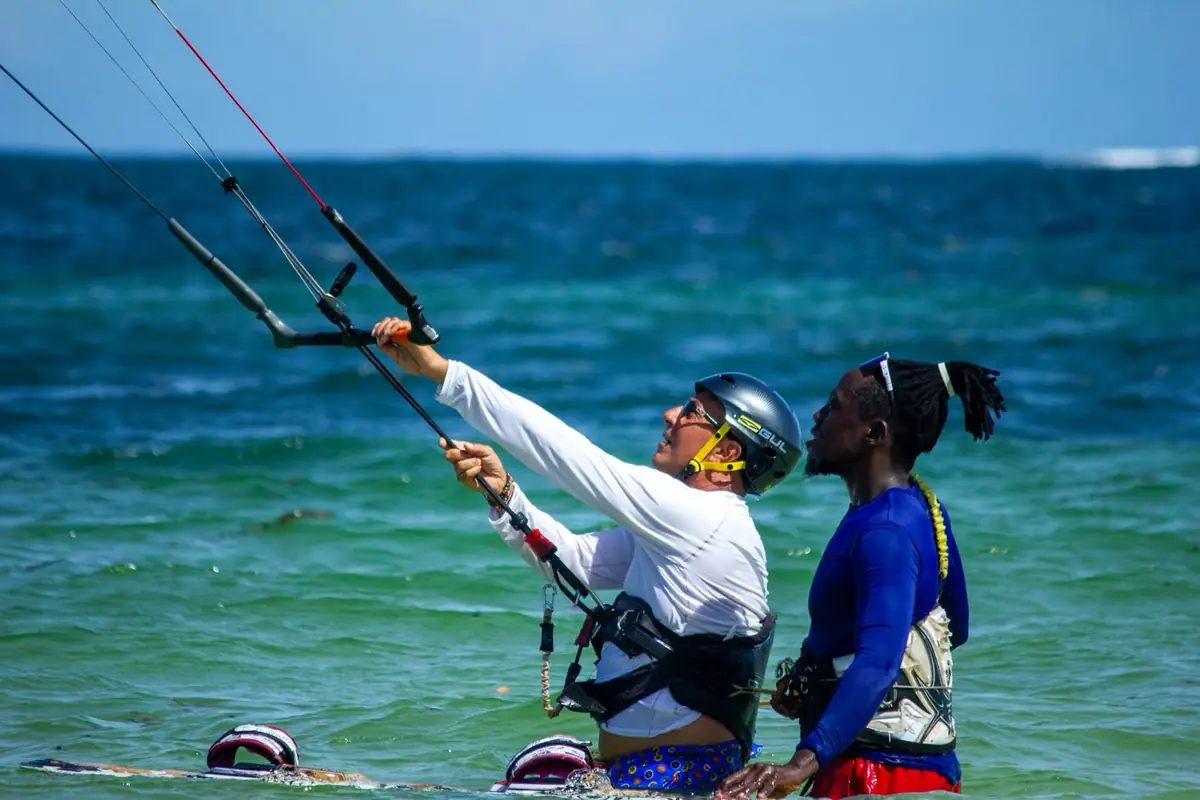
Kite gear rental in Watamu
Rent from the school on the beach. Pick the day and send the booking request, the school confirms.
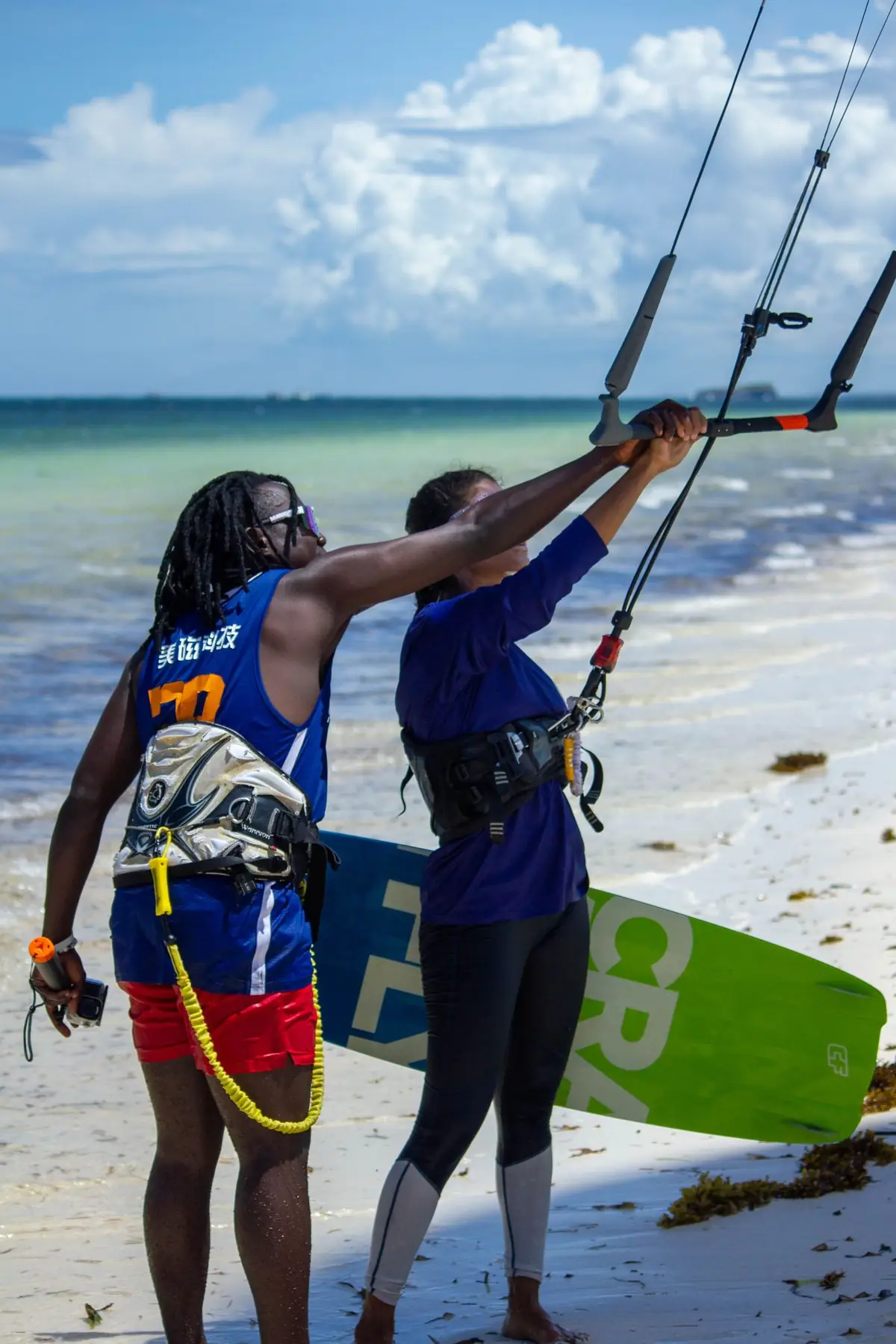
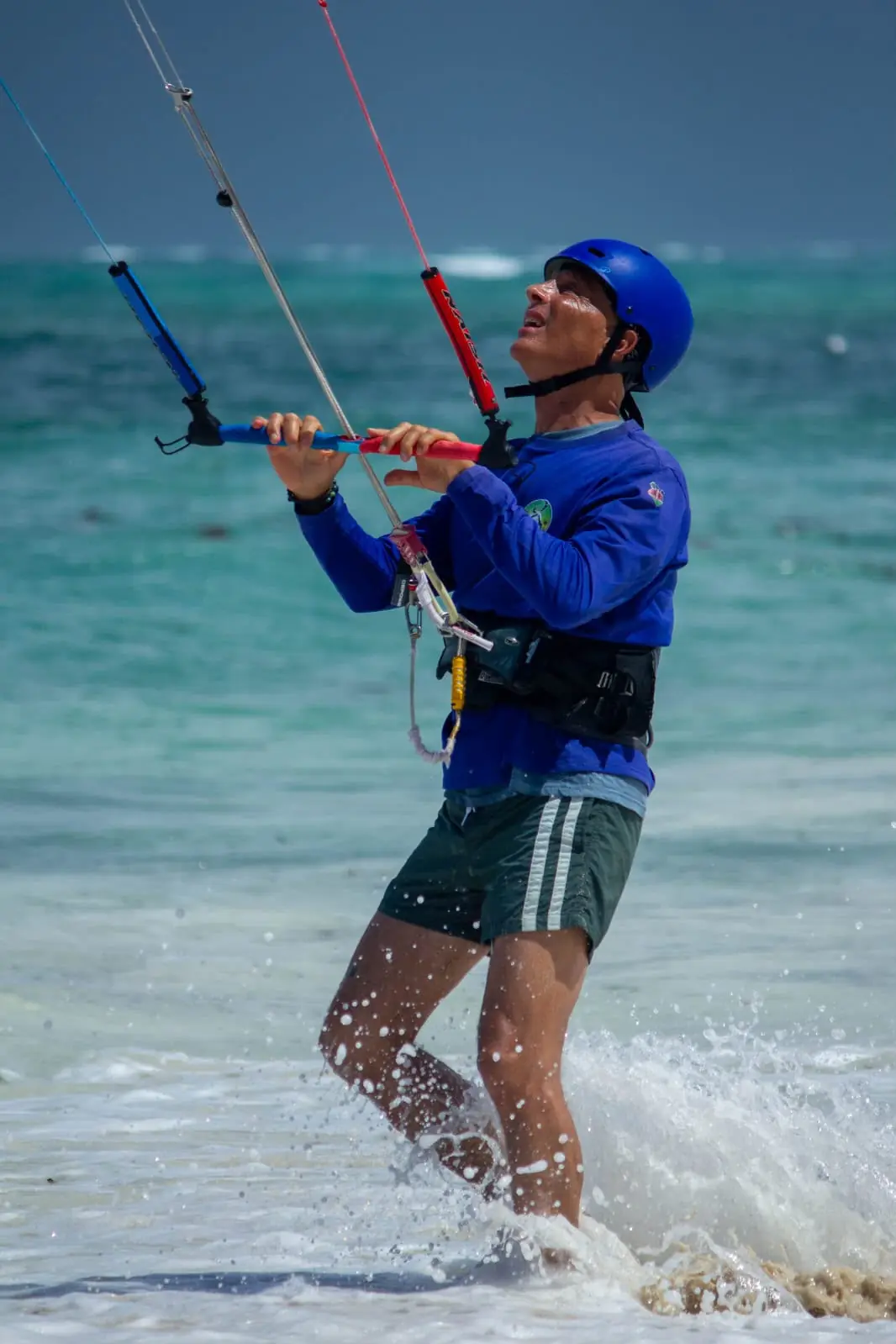
Kitesurfing in Kenya: when and where
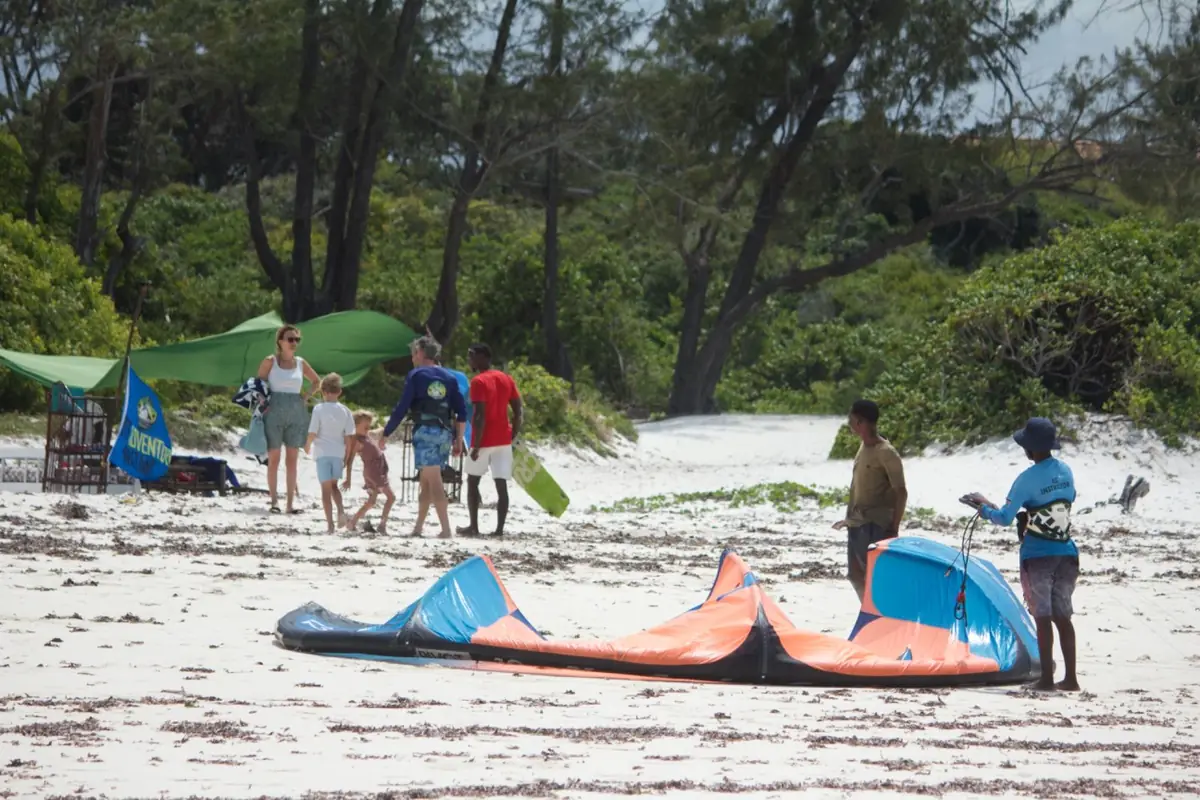
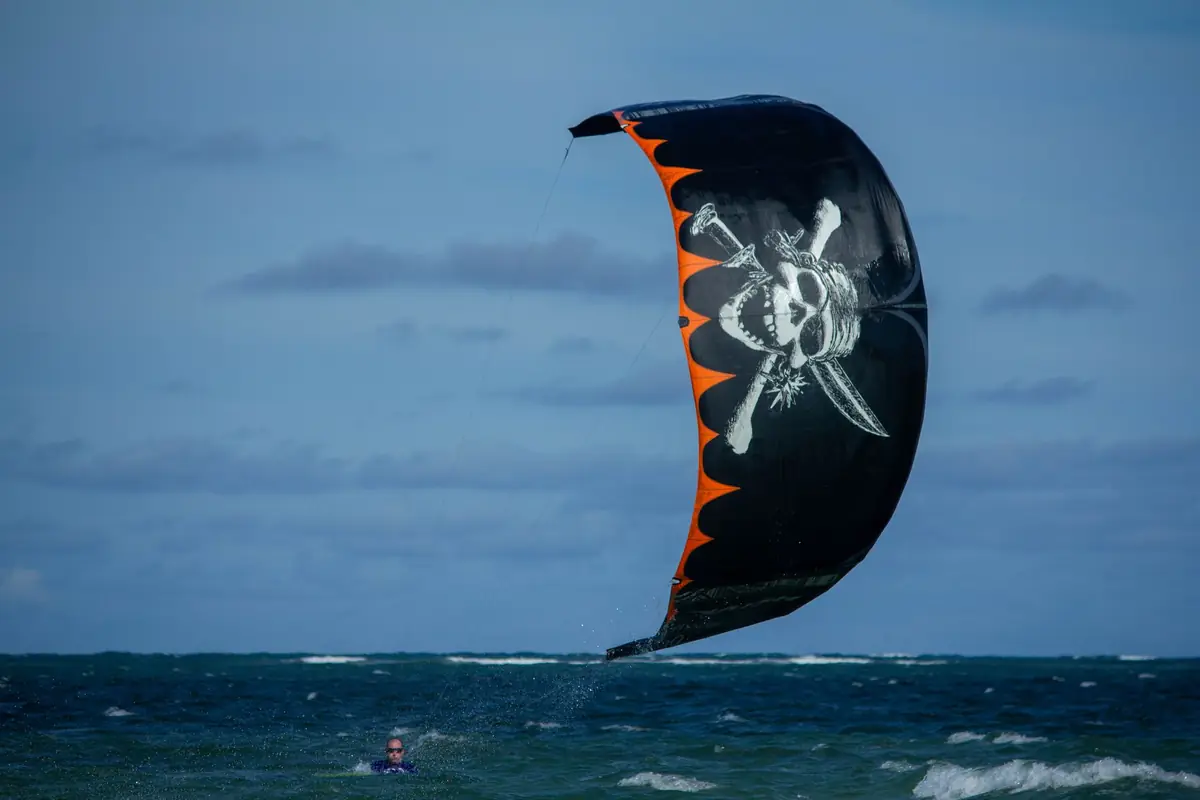
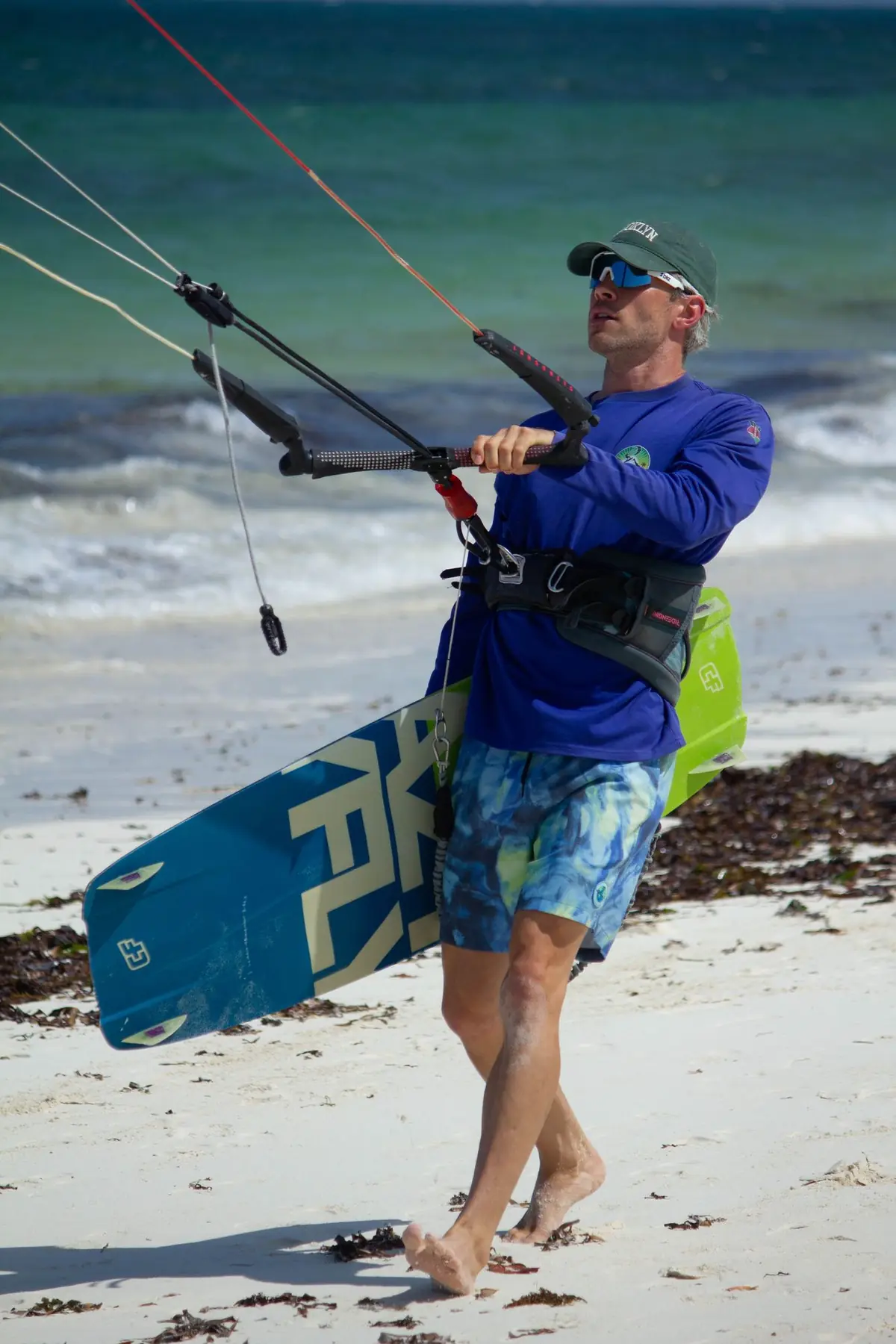
Watamu is a small town on Kenya's north coast, about 20 minutes by road from Malindi airport, with a long sandy bay protected by an offshore reef. Kiting here runs on two trade winds a year: the north-east Kaskazi from December into March or April, and the stronger south-east Kuzi from June to September. Tides shape every session. At low tide sandbars appear inside the reef and turn the bay into shallow flat water, which is when schools teach; at high tide the water is deeper and the reef waves about a kilometre out come into play. Water is warm all year, so most people ride without a wetsuit.
Two seasons: Kaskazi (December to March, some sources say into April) is the warm, steady one and the usual pick for learning, with water around 30 °C and no seaweed on the beach. Kuzi (June to September) blows harder and suits riders who already know what they are doing, but it is cooler and can bring seaweed. April to May is the rainy season and October to November are transition months; sources disagree on how much wind they bring, so plan around the two main seasons.
The full Watamu guide: wind by month, beaches, getting there →
Kite Adventures Watamu: courses, team and photos →
Best Time to Kitesurf in Kenya: Kaskazi vs Kusi Explained →
Learning to Kitesurf in Watamu: Lessons, Prices and What to Expect →
Kitesurfing in Kenya: common questions
When is the best time to kitesurf in Kenya?
In Watamu: Two seasons: Kaskazi (December to March, some sources say into April) is the warm, steady one and the usual pick for learning, with water around 30 °C and no seaweed on the beach. Kuzi (June to September) blows harder and suits riders who already know what they are doing, but it is cooler and can bring seaweed. April to May is the rainy season and October to November are transition months; sources disagree on how much wind they bring, so plan around the two main seasons.
Where can I book kite lessons in Kenya?
On kitesurfing.me you can book directly, with nothing to pay today: lessons, kite camps and gear rental with Kite Adventures Watamu in Watamu. Other kite spots in Kenya: Diani, Diani Beach, Kilifi.
How much does a kite lesson cost in Kenya?
In Watamu, Kite Adventures Watamu starts at €67 per person: Group kitesurf lesson (3 riders) from €67, Semi-private kitesurf lesson (2 riders) from €80, Private kitesurf lesson from €130.
Are there kite camps in Kenya?
Yes, in Watamu: Pro & Advanced Riders Camp (7 days, all-inclusive, €800 per person) and Beginner Kite Camp (7 days, all-inclusive, €1,250 per person). Included: airport transfer, accommodation, breakfast, lunch and dinner, safari at tsavo national park, dolphin trip & snorkeling, day trips, kite sessions with video & photo analysis, rescue boat.
How do I get to Watamu?
Malindi airport (MYD) is the closest, about 20 minutes by road, but usually means a connection through Nairobi. Mombasa (MBA) is about two hours by road and is often the cheaper flight. Tuk-tuks run between the kite spots along the bay for a few hundred shillings.
Where to kite in Kenya
All destinations →Find your place in Kenya.
Pick a spot above, or explore schools across the country by what you want to do.
Explore schools in Kenya