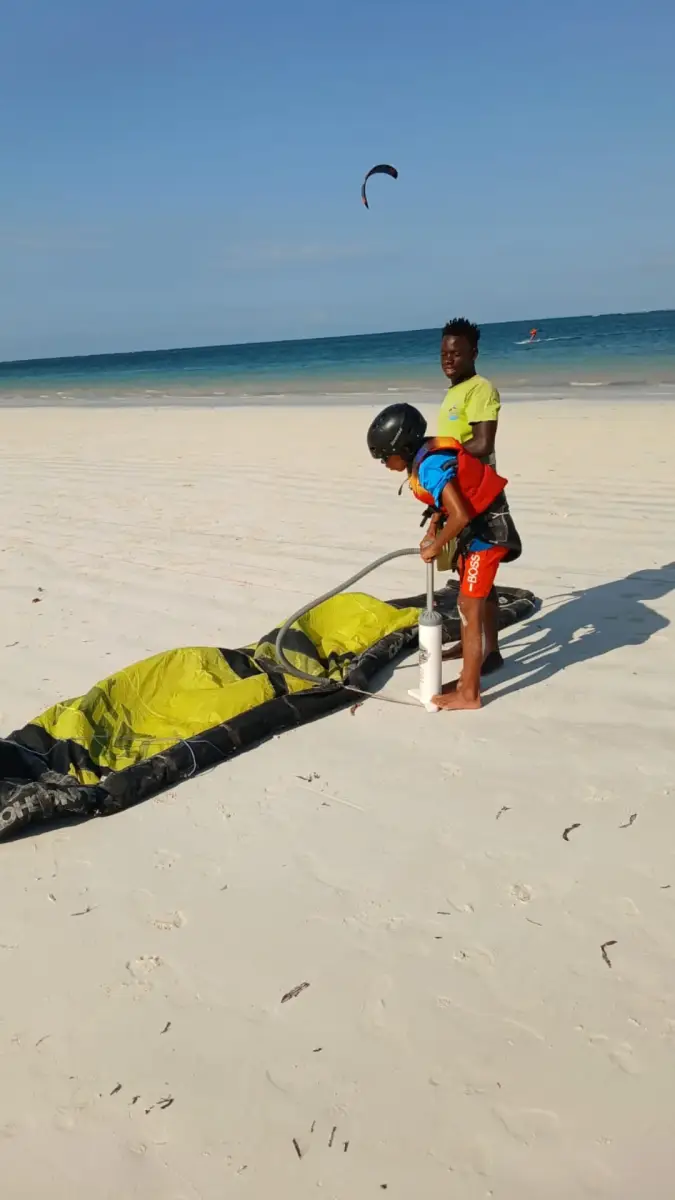
Best Time to Kitesurf in Diani Beach: Month-by-Month Guide
When to go kitesurfing in Diani Beach, Kenya: the Kaskazi and Kusi wind seasons month by month, which beach to pick and what to do on a flat day.
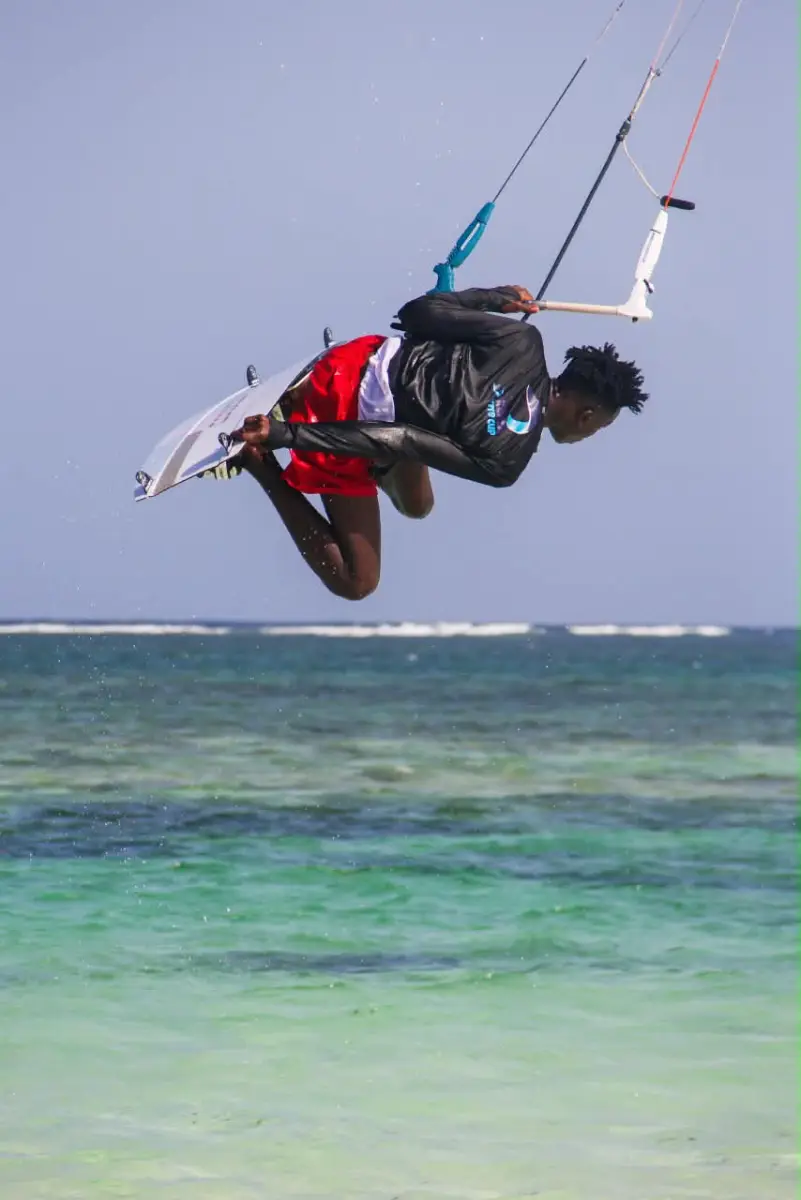
The best time to kitesurf in Diani Beach is December to March or June to September, Kenya's two trade-wind seasons. The Kaskazi blows warm from the north-east in the first window, at around 20 knots on average; the Kusi comes from the south-east in the second and can reach 25 to 30 knots. Here is how the months differ, which of Diani's five beaches suits each season, what the water feels like and what to do when the wind drops.
When is the best time to kitesurf in Diani Beach?
For most travellers, the Kaskazi is the easiest choice: it runs from December through March, with a warm north-east wind averaging around 20 knots once it fills in around mid-morning. The water is at its flattest then. Riders after more power and reef waves may prefer the Kusi, roughly June to September, when the south-east wind strengthens to 25 to 30 knots.
Diani's kite season, month by month
The two trade winds shape most of the year, with quieter weeks between them. The month-by-month guide below gives a practical sense of what to expect, including the uncertain shifts around April and May. Wind strength and season dates vary between descriptions, so use the table to choose a likely window, then check the forecast close to your trip.
| Month | Season | What to expect |
|---|---|---|
| January | Kaskazi | About 20 kn average, warm, a core season month |
| February | Kaskazi | About 20 kn average, warm, a core season month |
| March | Kaskazi | Still reliable, tailing off toward the rains |
| April | Rains / transition | Wind varies; the Kusi may start as early as April |
| May | Rains / transition | Wind may be building, but can remain quiet |
| June | Kusi | Season firmly in, strong and choppier |
| July | Kusi | Among the windiest months of the year |
| August | Kusi | Still firmly in season, strong south-east wind |
| September | Kusi | Reliable but easing off the June-August peak |
| October | Transition | Quietest stretch; usually not a windy month |
| November | Transition | Quietest stretch; usually not a windy month |
| December | Kaskazi | New season builds in |
Why do sources disagree on the exact season dates?
The Kaskazi and Kusi are the two named winds, and both are strong. Season dates vary slightly: the Kusi may begin in April, or it may not start until June. That difference matters if you are planning a trip at the edge of a season, but the broad pattern remains the same: two windy periods, with a quieter stretch around October and November.
Wind models show the same two peaks, with lighter conditions around October and November and the strongest winds around June and July. Their absolute wind speeds can be much lower than what riders experience on the beach. Treat the model as a guide to the shape of the year, and ask a local school about conditions before planning a session.
Which Diani beach works best in each season?
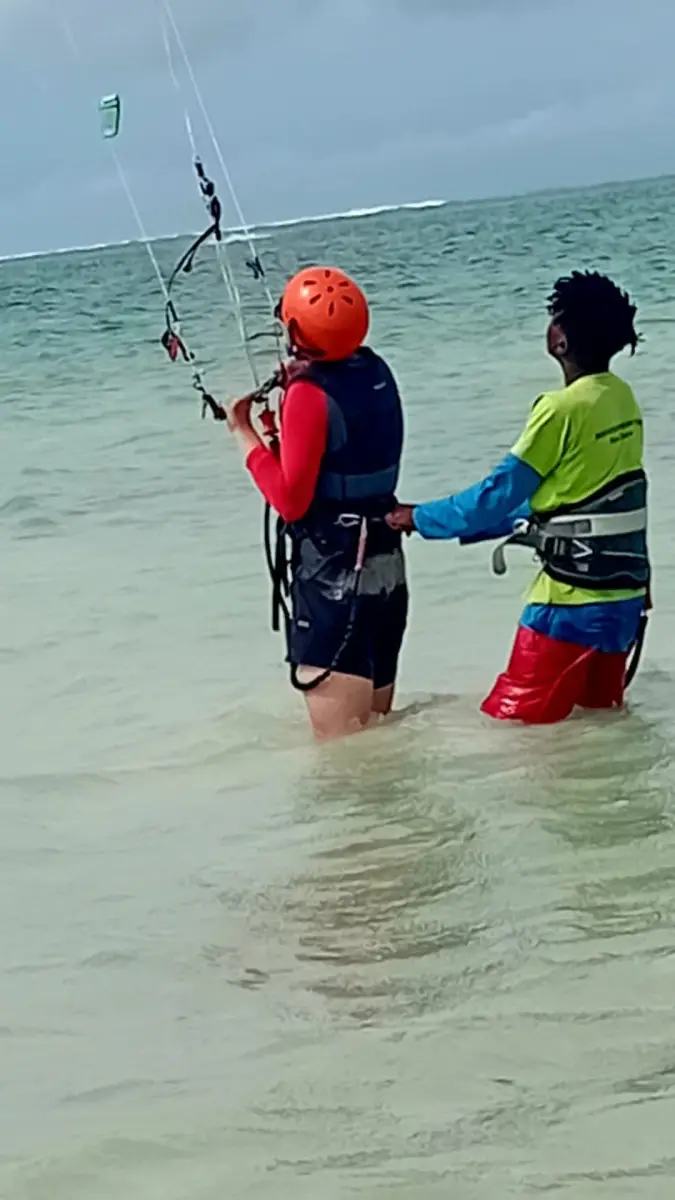
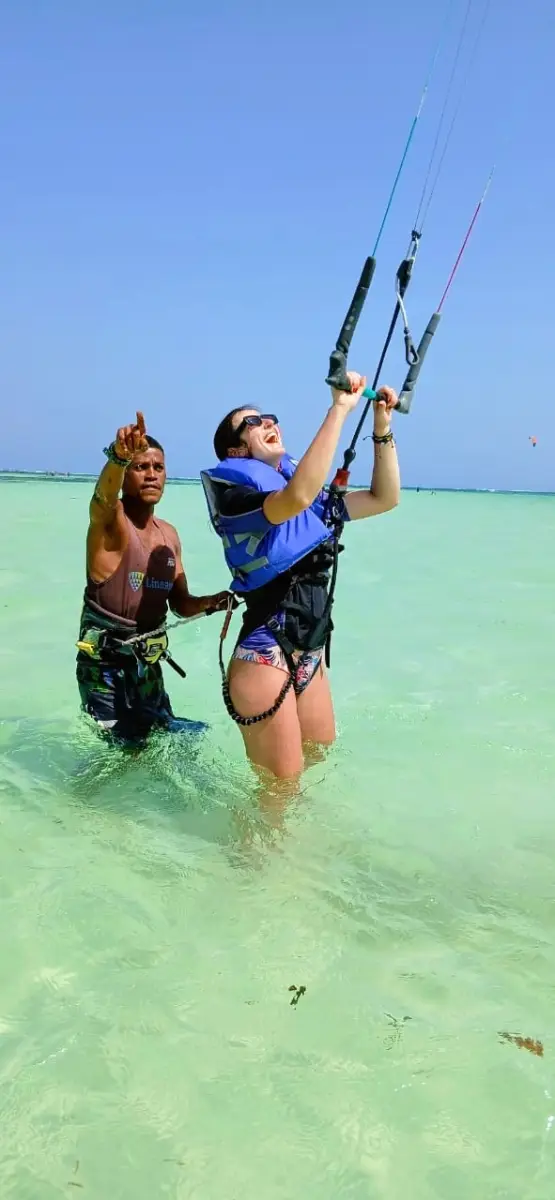
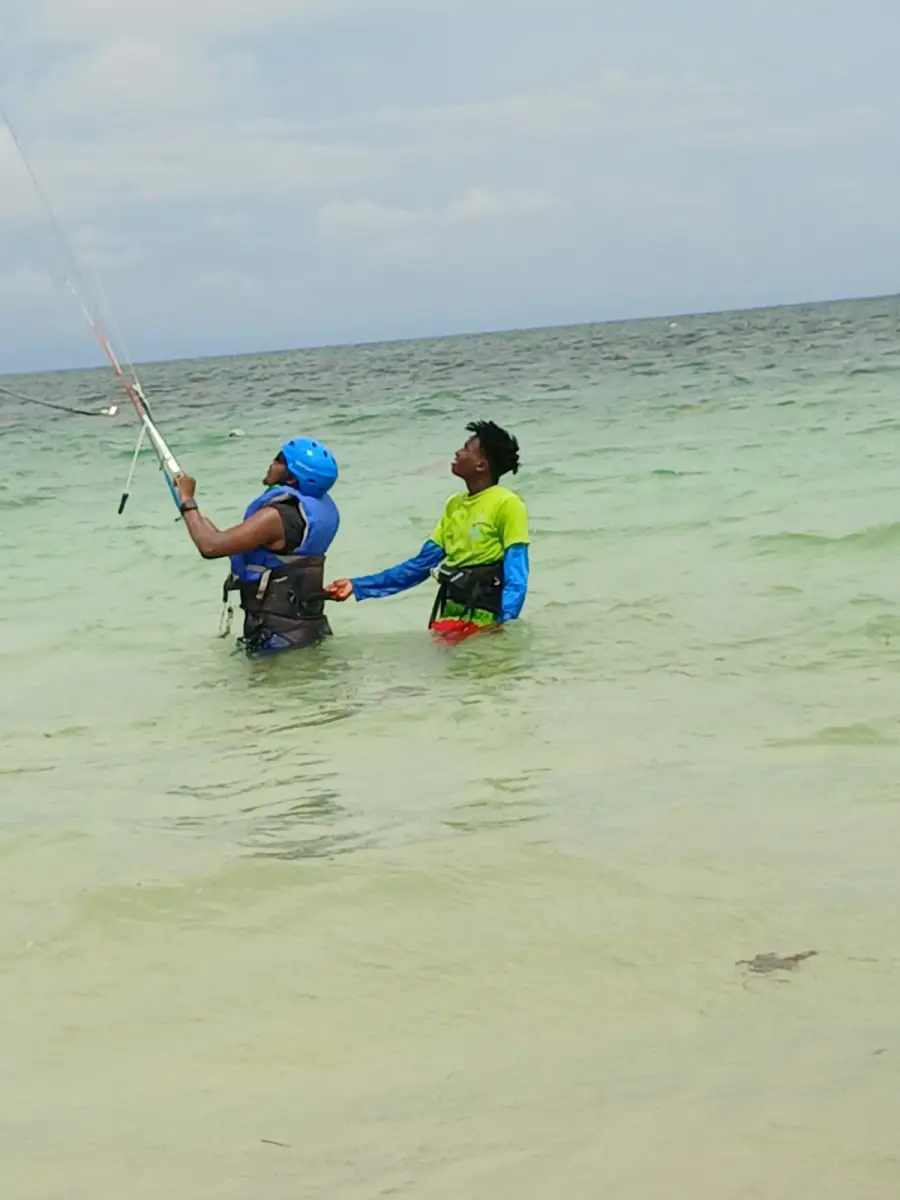
Galu/Kenyaways Kite Beach is the main teaching beach and works in both seasons. Neptune Sand Bar and Baobab Sandbar offer flatter, quieter alternatives nearby. Mlango, just north of Kenyaways, and Neptune Channel pass through reef gaps and are best known for waves, especially in the Kusi season when the south-east swell gets bigger.
- Galu / Kenyaways Kite Beach: flat lagoon close in, small waves further out, busiest spot in the cluster, with around 30 kites reported at peak times.
- Neptune Sand Bar: a quiet, flat turquoise lagoon, best at low neap tides.
- Baobab Sandbar: among the flattest water in the cluster, but shared with boats and snorkellers in high season.
- Mlango: a clean point break through a reef gap, with waves year-round that get bigger in Kusi season.
- Neptune Channel: a deeper channel for upwind and downwind riding, with waves on the outside and flatter water closer to the reef.
The tide matters as much as the month
The best tide for Galu/Kenyaways depends on what kind of session you want. Low-tide mornings can mean flatter water and fewer people, while mid to high tide is another good general window. Neptune Sand Bar is best at low neap tide. Check the tide table as well as the wind forecast, then ask your school which tide it has planned its session around.
Learning from scratch? See kitesurfing lessons in Diani Beach for how a course here works and what it costs with Reef Kiteboarding Centre.
Which months suit beginners, and which suit advanced riders?
January and February are good months for beginners. The Kaskazi is settled by then, and the water is at its warmest for the year. July and August bring stronger wind and bigger reef waves at Mlango and Neptune Channel, which suit riders who already kite independently. That extra power can make those months harder for a first lesson.
What to pack for kitesurfing in Diani Beach
Pack for sun and reef rather than cold water. The sea is warm all year, from about 26°C in August to about 29°C in April, so most riders are comfortable in boardshorts or a bikini. Bring reef shoes for the shallow lagoon at low tide, where coral and sea urchins can be underfoot, and add a rain layer if you are visiting in April or May.
- Boardshorts or a bikini, plus a rash guard for sun rather than cold water.
- Reef shoes or sandals for walking out over the shallow, low-tide lagoon.
- Strong reef-safe sun protection; the midday sun at this latitude is intense even on a windy day.
- A light rain layer if you are travelling in April or May.
When does Diani get busy, and when is it quieter?
More than 250 people were reported kiting along Diani's beaches during the festive season, when the Kaskazi overlaps with Christmas and New Year. July and August are also busy months for kiters and other visitors. April, May and November tend to be quieter and leave more room on the water, though the rain and less reliable wind make them a gamble if kiting is the main reason for your trip.
What to do on a flat or windless day in Diani Beach
A calm day leaves time to explore the coast. The reef and sandbars are easy places to snorkel, and Diani's palm-lined beach runs for roughly 17 kilometres. At its northern tip, the 16th-century Kongo Mosque is one of the last Swahili structures of its kind in the area. It makes a short cultural detour when the wind stays down.
Which airport should you fly into, and does the season change that?
Moi International Airport (MBA) in Mombasa is the main gateway. The drive south takes around 2 hours via the Likoni Ferry, or may be quicker via the newer Dongo Kundu Bypass. Ukunda Airport (UKA) is a small domestic strip about 5 km from the beach, making the last leg only a few minutes when a flight is available.
Neither airport changes its schedule with the kite season. Book flights around your travel dates, then use the forecast to plan each session after you land. If you are travelling during a quieter transition month, leave room in your itinerary for a windless day and check flight options before setting your plans.
Ready to book? See the full Diani Beach kite spot guide for every beach, or go straight to lessons with Reef Kiteboarding Centre.
How does Diani fit into Kenya's wider kite season?
Diani shares the same two trade winds as Kenya's other kite beaches further north, including Watamu and Kilifi. Its beach layout and reef gaps give it a different feel on the water. For the country-wide picture and how the seasons work at those other spots, see our best time to kitesurf in Kenya guide or the Kenya kitesurfing overview for every spot on the coast.
What is the single best month to kitesurf in Diani Beach?
January or February is a good choice, in the heart of the Kaskazi. The wind averages around 20 knots, and the water is near its warmest for the year. July and August can be windier during the Kusi, but those months suit riders who already kite independently more than first-timers.
Can I kitesurf in Diani Beach outside December-March and June-September?
You can try, but April, May, October and November are transition months, with rain and less reliable wind. April and May may bring a change toward the Kusi, though conditions can remain quiet. Accommodation is quieter then, which can suit flexible travellers, but avoid planning a fixed-date trip around wind alone.
Is Diani Beach crowded during kite season?
More than 250 kitesurfers were reported along Diani's beaches during the festive season, when the Kaskazi overlaps with Christmas and New Year. July and August are also busier, as the Kusi draws kiters and other visitors. If you are travelling in either window, book a lesson and a place to stay ahead.
What should I do in Diani Beach if there is no wind?
Go snorkelling around the reef and sandbars, which are easy to visit on a calm day. Diani's palm-lined beach stretches for roughly 17 kilometres, so there is room for a long walk too. The 16th-century Kongo Mosque at the northern tip is one of the last Swahili structures of its kind in the area.
Do I need a wetsuit for kitesurfing in Diani Beach?
Usually not. The sea is warm all year, from about 26°C in August to about 29°C in April, so most riders wear boardshorts or a bikini and a rash guard for sun. Reef shoes are more useful than a wetsuit for walking through the shallow lagoon at low tide, where coral and sea urchins can be underfoot.
How is Diani Beach different from Watamu for kitesurfing?
Both beaches get the Kaskazi and Kusi winds, but Diani's five named beaches sit around a reef about a kilometre out, with gaps at Galu/Kenyaways, Mlango and Neptune Channel, plus Neptune Sand Bar and Baobab Sandbar. Watamu's spots depend more on exposed sandbars at low tide. Both have warm water where most riders skip a wetsuit.