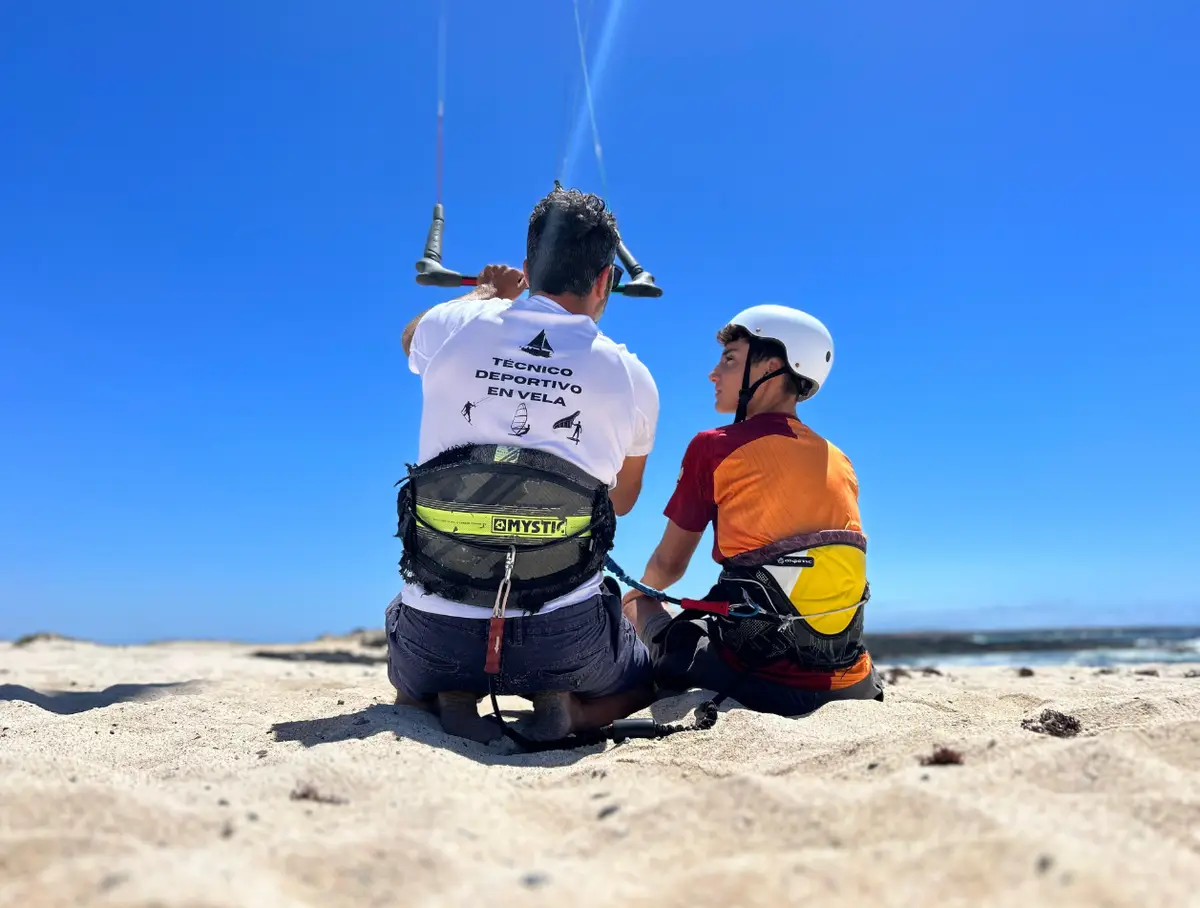
Best Time to Kitesurf in El Cotillo: Month by Month
The best time to kitesurf in El Cotillo is usually spring through summer, when north to northeast trades are stronger and Piedra Playa has smaller swell.
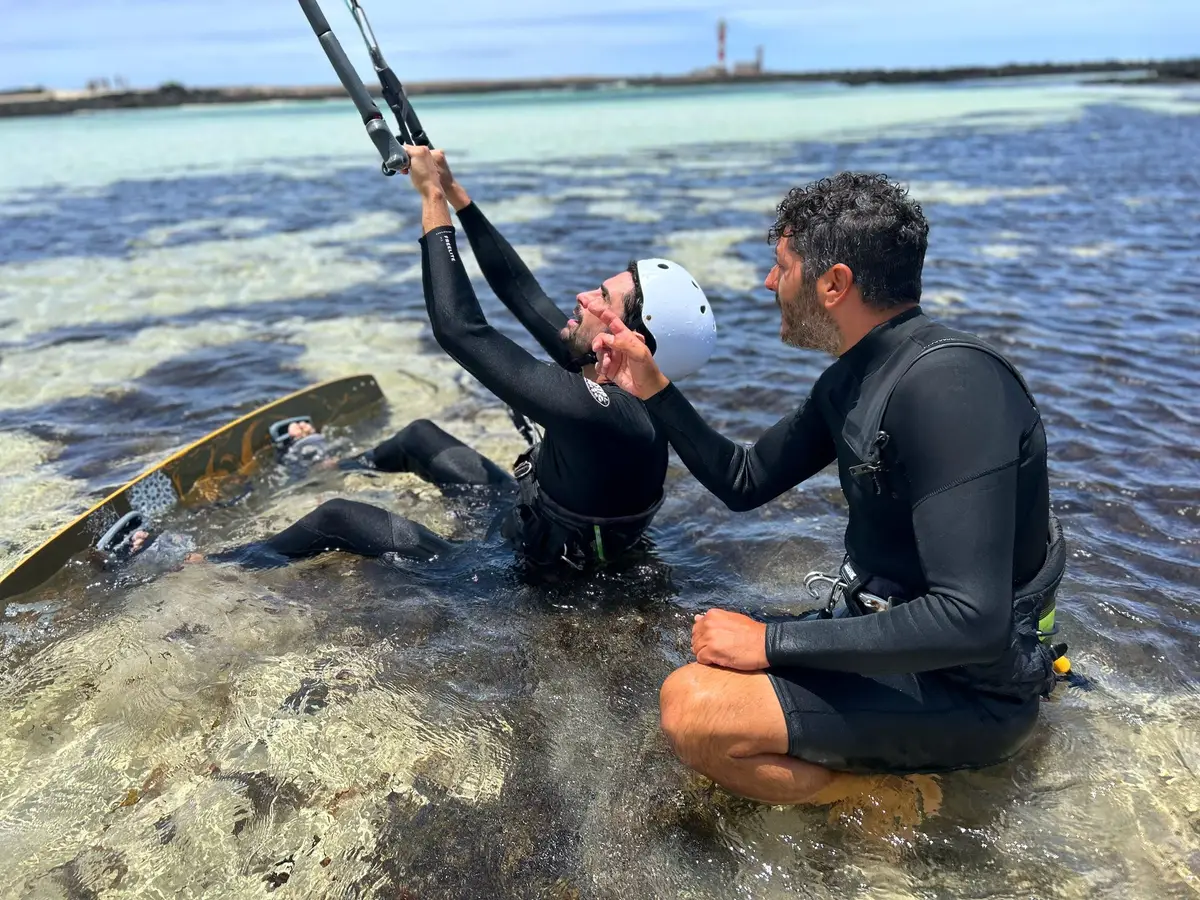
The best time to kitesurf in El Cotillo is generally April to September, with May to September bringing stronger, steadier trade winds. Expect a typical 15 to 25 knots, but Piedra Playa’s exposed shorebreak is better suited to experienced riders than beginners. Spring and summer bring smaller swell. If you are learning, plan for instruction.
When is the wind season in El Cotillo?
April to September is the main kite season in El Cotillo. The trade winds are stronger and more consistent from May to September, usually blowing 15 to 25 knots from the north to northeast. North or northwest winds also occur during the season. July and August have the highest monthly average wind speeds in the spot data.
Spring and summer bring smaller swell at Piedra Playa. Winter brings larger Atlantic swell and more demanding surf to this exposed coast. The warmer months suit riders looking for wind with more manageable waves, though Piedra Playa still calls for good kite control and close attention to wind direction.
Kiteable-day estimates offer another way to plan. From 2017 to 2025, 54 to 92 percent of days in each month met the model’s kite-day threshold. A kite day means at least three daylight hours with modelled wind of 12 to 35 knots between 10:00 and 19:00, with gusts up to 45 knots. The figures describe a model, not a promise of a session.
If kiting is the main reason for your trip, set aside several days during the stronger season and leave some room in your schedule. Read the El Cotillo spot guide for the beach layout and safety notes. For a wider island trip, start with the Spain kitesurfing guide.
What is El Cotillo like month by month?
July and August have the highest monthly average wind speeds, and the kiteable-day model also rates those months highest. It estimates at least 17 kite days in every month, using its own threshold. Sea temperatures range from 19°C in February to 23°C in September and October.
The monthly wind figures below show the estimated share of kite days, not the chance of getting a rideable session on the beach. The model counts days with at least three daylight hours of 12 to 35 knots from 10:00 to 19:00, allowing gusts up to 45 knots. Water temperatures are monthly estimates. Crowds appear only for months with reported seasonal detail.
| Month | Wind | Water temperature | Crowds |
|---|---|---|---|
| January | 59% kite days | 20°C | No data |
| February | 68% kite days | 19°C | No data |
| March | 71% kite days | 19°C | No data |
| April | 66% kite days | 20°C | No data |
| May | 71% kite days | 20°C | No data |
| June | 77% kite days | 21°C | No data |
| July | 92% kite days | 22°C | Busy season |
| August | 89% kite days | 22°C | Busy season |
| September | 73% kite days | 23°C | Busy season |
| October | 56% kite days | 23°C | No data |
| November | 55% kite days | 22°C | No data |
| December | 54% kite days | 21°C | No data |
Monthly figures help narrow down travel dates, but they are not beach observations. Monthly mean wind speeds are 10 to 15 knots, while the kiteable-day model counts daylight hours within its stated wind range. Each figure measures something different. Use local advice to decide whether it is safe to launch on the day.
Fuerteventura Airport’s climate normals show the island’s seasonal change in sunshine and air temperature. The station records 280 sunshine hours in May and 294 in July. Monthly mean air temperatures rise from 20.6°C in May to 24.6°C in August. These airport figures describe the wider island climate, not conditions at Piedra Playa.
Which months are best for beginners in El Cotillo?
May to September brings the strongest seasonal trade winds and smaller swell than winter at Piedra Playa. That pattern can help schools plan lessons, but the beach is still considered an intermediate to advanced spot. Beginners should book instruction and go to the location their school chooses for the day.
The El Cotillo lagoons, also called Los Lagos, have flatter water at suitable tides. They work best in spring and summer around mid to high tide, with north or northeast wind. Low tide exposes sand and rocks, and the area can get crowded in summer. Volcanic rocks make it unsuitable for beginners riding independently.
If you are new to kiting, contact Fly Kitesurf School before choosing dates and ask where lessons take place. The school can assess the day’s wind, tide and beach conditions. Use the best months for kitesurfing in El Cotillo as a starting point, then let the instructor account for your level.
July and August have high modelled kite-day shares and more reported beach use. For more room around the village, consider May, June or September, while keeping the same safety priorities. El Tostón Beach is close to the town centre and has low occupancy, making it another option for time by the water.
How warm is the water and what should you wear?
El Cotillo’s water is cool enough that most kite sessions call for thermal protection, even in summer. The annual range is about 18 to 23°C, while monthly estimates run from 19°C in February to 23°C in September and October. The figures come from different methods, so use them as a general guide to seasonal comfort.
A 3/2 mm full suit suits the coolest winter water. In warmer months, a shorty or thin top can work. Wind chill matters after a fall or while you are waiting on the beach, especially when the trade wind is blowing. Bring a warm layer for the walk back from Piedra Playa.
Monthly water estimates rise from 19°C in February and March to 22°C in July and August, then reach 23°C in September and October. Spring water stays cooler than the air on sunny afternoons. Pack a suit if you expect to spend repeated sessions in the water, and ask your school what thermal gear it includes.
At Fuerteventura Airport, average daily maximum air temperatures are 24.1°C in May, 27.3°C in July and 27.8°C in August. The beach can still feel cooler when wind blows across wet skin. A rash vest under your suit can reduce harness rubbing, and secure sun protection helps during long sessions.
Before packing, read the El Cotillo kitesurfing spot page for an overview of the launch, tide and beach. Riders heading to the north shore can also check Corralejo’s kitesurfing spots, where the beach setting differs from west-facing Piedra Playa.
What can you do on a day without wind?
A windless day, or one when conditions are unsuitable for kiting, is a good chance to explore the village and coastline on foot. Local sights include El Tostón Castle and the Traditional Fishing Museum. The castle sits beside El Tostón Beach, close to the village centre, so both are easy to fit into a short outing.
The sheltered bays and lagoons north of town feel different from exposed Piedra Playa. Los Lagos changes with the tide, and rocks appear at low water. Choose a safe bathing area and follow posted signs. These small swimming coves are popular in warm months and offer a quieter way to spend an afternoon.
For a longer beach walk, head south from El Cotillo towards Piedra Playa and Playa del Castillo. El Tostón Beach is close to town and accessible by road or bus. Piedra Playa is the long open beach south of the village. Check surf and current conditions before swimming.
If the wind is wrong for El Cotillo, spend the day in Corralejo or another part of Fuerteventura instead of assuming a nearby beach has safe kite conditions. The Corralejo spot guide can help with a separate plan. For other island areas, see the Spain kitesurfing page.
A low-wind day also suits a slow lunch in the fishing village, a coastal walk to the lighthouse or a visit to the museum. The Tostón lighthouse stands on Fuerteventura’s north-western tip, near the lagoons. Keep your kite packed where bathing areas or local signs restrict activity.
How do you book a lesson in El Cotillo?
Choose dates with the wind season in mind, then send a booking request through kitesurfing.me for a lesson with Fly Kitesurf School. The school confirms the request, and you pay at the school. Sending a request starts the booking process. The school’s confirmation tells you whether those dates are available.
Fly Kitesurf School offers a private kitesurf lesson that lasts two hours and costs 150 EUR. The lesson is one to one, with all equipment and insurance included. Advanced coaching for experienced riders lasts two hours and costs 140 EUR. It includes one-to-one coaching and insurance, and riders bring their own equipment.
When you send a request, include your preferred dates, experience and whether you need a beginner lesson or advanced coaching. This gives the school useful context to confirm the session and discuss a suitable teaching area around El Cotillo. See the Fly Kitesurf School profile for bookable options.
Avoid planning a trip around a single session. May to September is the strongest trade-wind window, but a stay of several days gives you more room to work around changing wind and surf. Read the local lesson guide to find out what a two-hour session covers.
Before travelling, check the route from Fuerteventura Airport to El Cotillo and decide whether you need a hire car to reach separate beaches. The airport is around 40 minutes away by road. If you are staying in Corralejo, allow extra transfer time to the west coast and confirm the meeting point with the school.
Can I kite in El Cotillo all year?
April to September is the main season, with stronger, steadier trade winds from May to September. The monthly model estimates at least 54 percent kite days in every month from 2017 to 2025. Winter sessions are still possible, though larger Atlantic swell makes conditions at Piedra Playa more demanding.
What wind direction should I look for at Piedra Playa?
North to northeast trade winds are common, though north or northwest winds also occur in season. Piedra Playa faces west, so a northeast wind can be offshore there. Check the direction at the beach and follow local advice before rigging, especially if the wind is cross-offshore or gusty near shore.
Is September a good month for El Cotillo?
September falls within the stronger trade-wind season from May to September. The monthly model estimates 73 percent kite days and water near 23°C. It is also part of the busy July to September period, so arrange lodging and lesson plans early if you plan to visit then.
How many kite days should I expect on a week-long visit?
No monthly statistic can give an exact count for a particular week. The model reports monthly kite-day shares from 54 to 92 percent, with at least three daylight hours of 12 to 35 knots as its threshold. Keep your plans flexible and treat those long-run figures as seasonal context.
Is Piedra Playa suitable for a first kite lesson?
Piedra Playa is exposed and has shorebreak, rocks and currents. It is rated as an intermediate to advanced spot for independent riding. Ask Fly Kitesurf School where it will teach on your dates. The instructor can choose a suitable location based on the day’s conditions and local rules.