Best Time to Kitesurf in Watamu: Month-by-Month Guide
When to go kitesurfing in Watamu, Kenya: the two trade-wind seasons month by month, the tide windows that decide each session, crowds and packing.
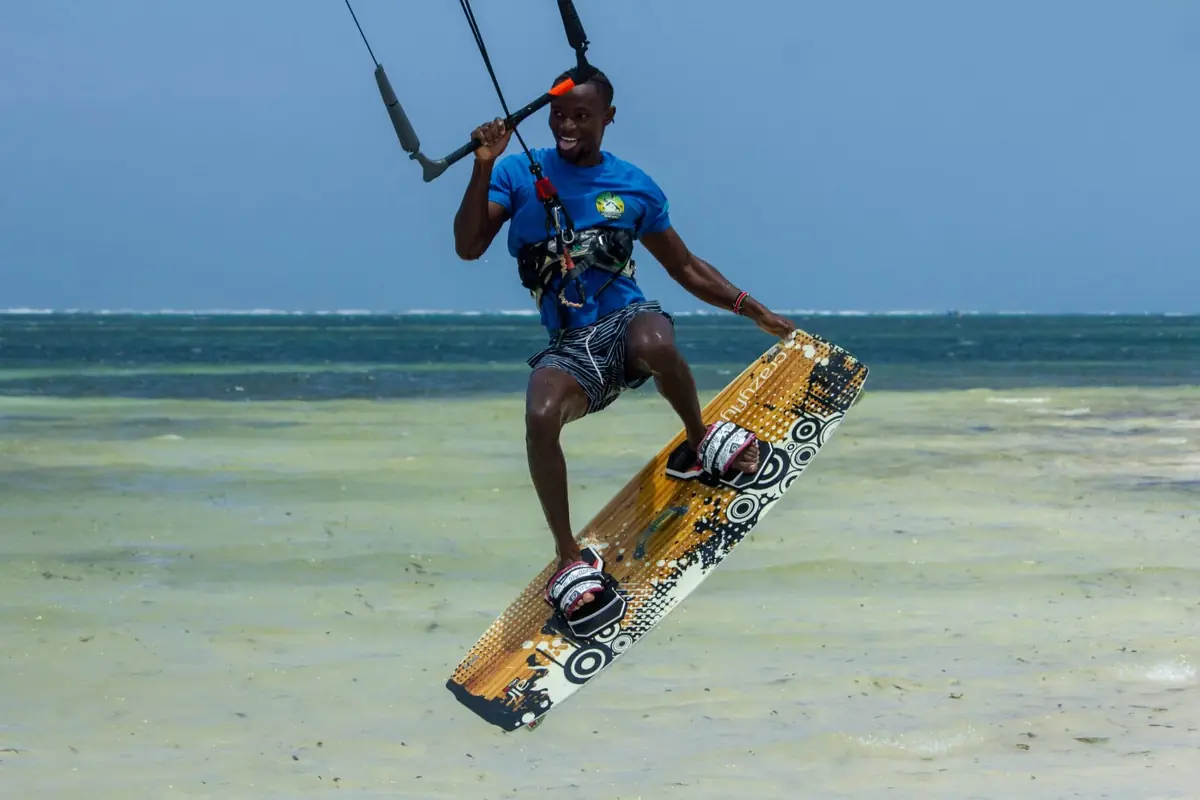
The best time to kitesurf in Watamu is December to March, when the north-east Kaskazi blows a steady 20 to 25 knots over warm, flat water and schools run their main beginner season. If you already ride and want stronger wind and reef waves, come June to September for the south-east Kuzi instead. Everything below goes beyond that headline call: the month-by-month chart, how the tide (not just the calendar) decides your session, when the beaches get busy, and what to do if a session falls flat.
When is the best time to kitesurf in Watamu?
For most travellers it is the Kaskazi, December through March: warm 25–30 °C water, a cross-onshore wind that holds at 20–25 knots once it fills in, and schools teaching daily at low tide. Independent riders chasing stronger wind and the reef waves further out should target the Kuzi, June to September, when the same cross-onshore pattern blows harder and a little cooler.
What does Watamu's kite season look like month by month?
Watamu runs on two named trade winds rather than a single thermal cycle, so the chart below groups every month into one of the two seasons or the quieter weeks between them, based on how local sources and the school describe each stretch rather than a station's daily readings.
| Month | Season | What to expect |
|---|---|---|
| January | Kaskazi | Steady 20–25 kn, warm, a core beginner month |
| February | Kaskazi | Steady 20–25 kn, warm, a core beginner month |
| March | Kaskazi | Still reliable, tailing off towards the rains |
| April | Rains / transition | Wet, wind inconsistent, sources disagree on strength |
| May | Rains / transition | Wettest stretch, little kiteable wind to count on |
| June | Kuzi | Season builds in, wind strengthening |
| July | Kuzi | Strongest wind of the year, up to 30 kn |
| August | Kuzi | Still the windiest stretch, around 25 kn |
| September | Kuzi | Reliable but easing off the July–August peak |
| October | Transition | Dry and sunny on land, wind inconsistent |
| November | Transition | Short rains return, little reliable wind |
| December | Kaskazi | New season builds in from early-to-mid month |
How does the tide decide your session, not just the month?
In Watamu the tide table matters as much as the season. Most of the bay's sandbars only turn into flat water for about three hours either side of low tide, so your actual riding window shifts by roughly an hour a day as the tide moves, and a school will quote you a time slot, not a fixed clock hour.
- Turtle Bay sandbar and Plot 40: flat water roughly three hours either side of low tide; this is where lessons run.
- Kite Beach: the exception, rideable on every tide, with reef waves about a kilometre out once the water is deeper.
- Jacaranda: flat water only on neap tides, again around three hours either side of low tide.
- Silversands, about 20 minutes away: a wave spot that works roughly three hours either side of high tide, Kuzi season only.
Which Watamu beach works best in each season?
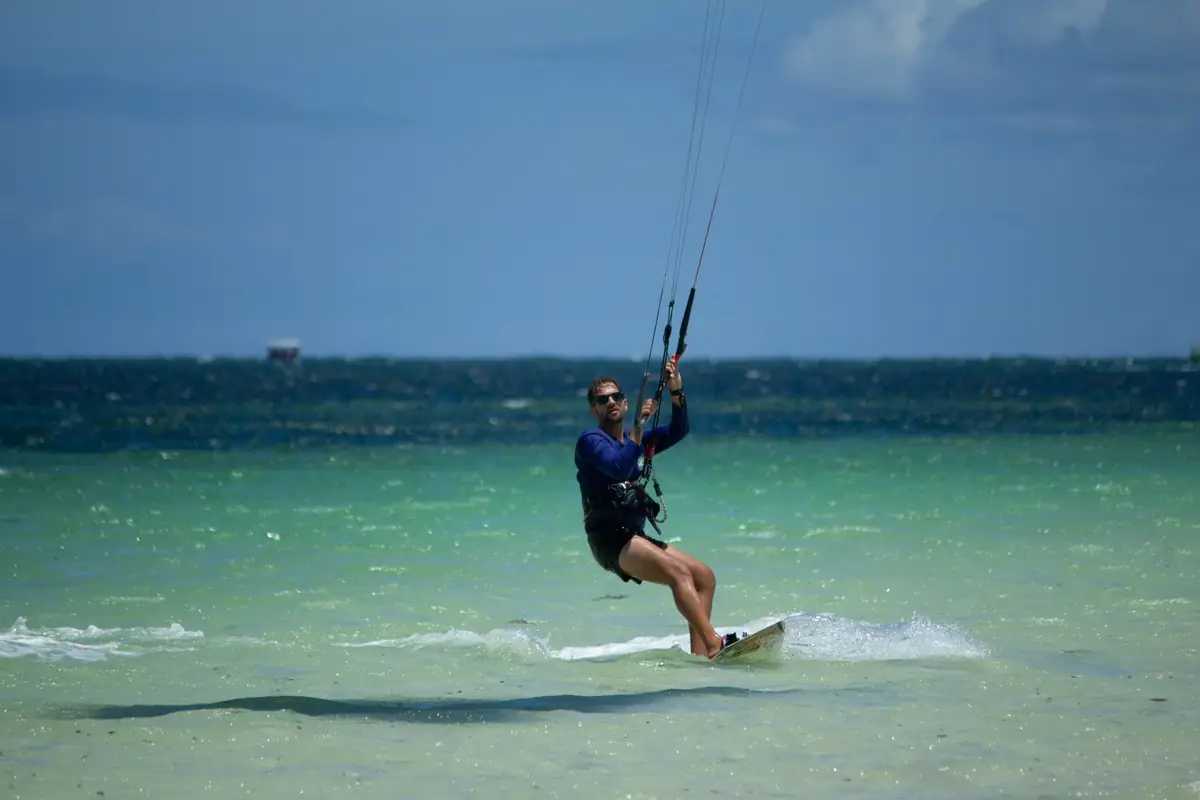
In the Kaskazi season from December to March, the flat sandbars at Turtle Bay and Plot 40 are at their best around low tide, and Kite Beach works on every tide. In the stronger Kuzi season from June to September, Kite Beach, Jacaranda and the Silversands wave spot come into their own for riders who already kite on their own.
- Kaskazi (north-east wind): Turtle Bay sandbar, Kite Beach and the Plot 40 sandbar, all cross to cross-onshore.
- Kuzi (south-east wind): Kite Beach, Jacaranda on neap tides, and Silversands for waves on a south-east swell, about 20 minutes' drive away.
- Kite sizes from the spot guide: about 9 m for most Kaskazi days, 12 m on light evenings, and around 7 m in the Kuzi.
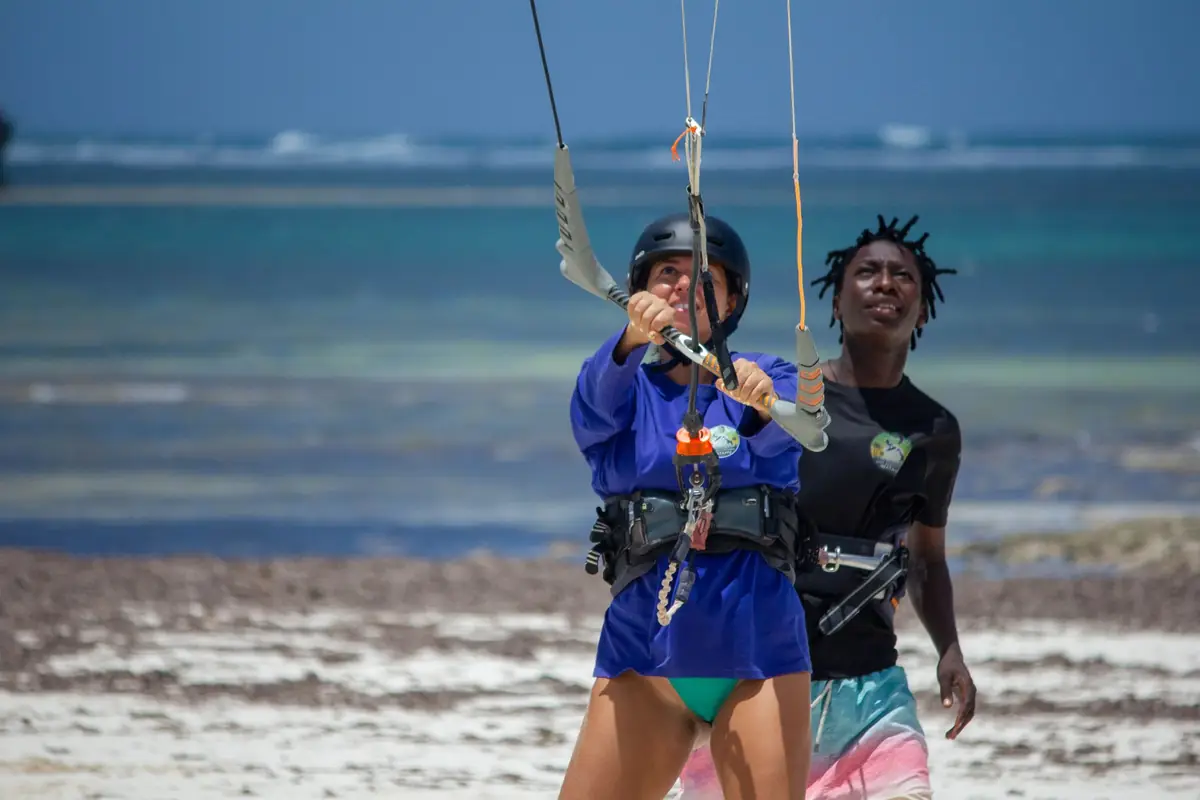
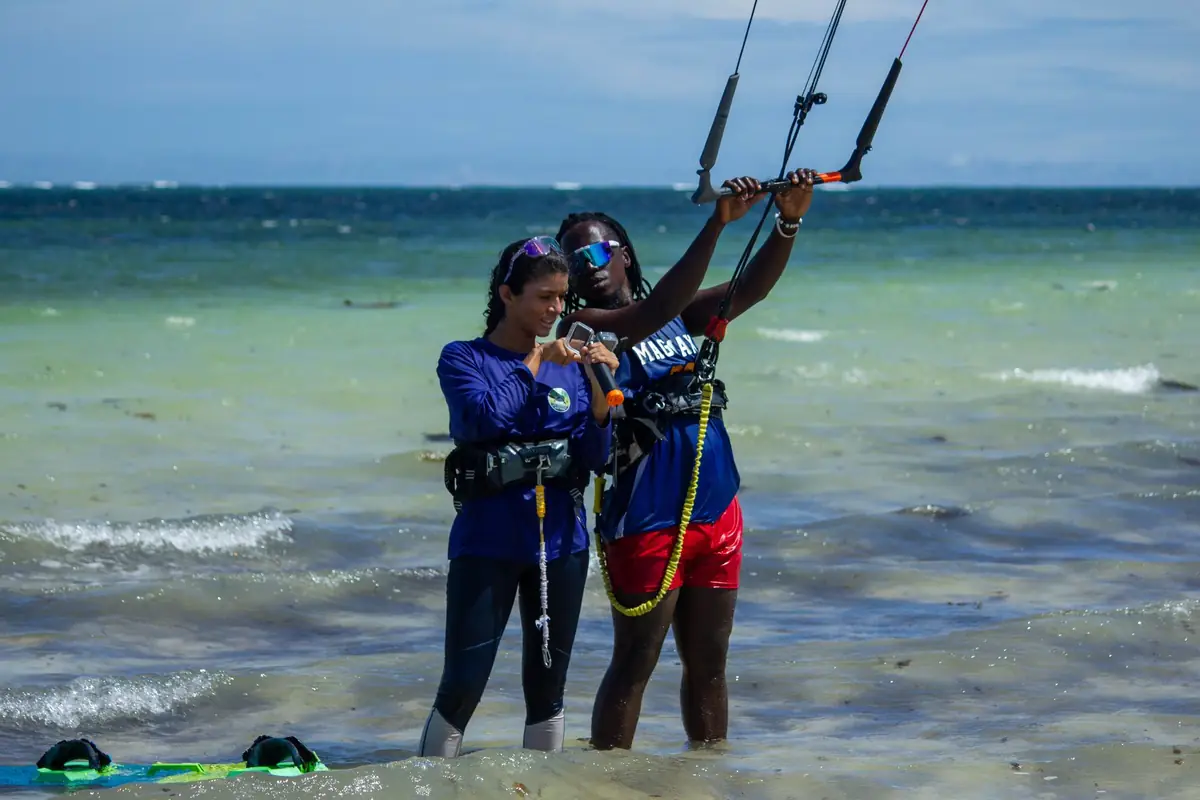
- Learning from scratch? Lessons with Kite Adventures Watamu run on the Turtle Bay sandbar at low tide.
Which months suit beginners, and which suit advanced riders?
Beginners do best in January and February: the Kaskazi is already steady, the water is at its warmest, and the beach is free of seaweed. July and August suit riders who already kite independently and want the strongest wind and the biggest reef waves, but the same months are tougher for a first lesson since gusts run stronger and the air cools slightly.
When does Watamu get busy, and when is it quieter?
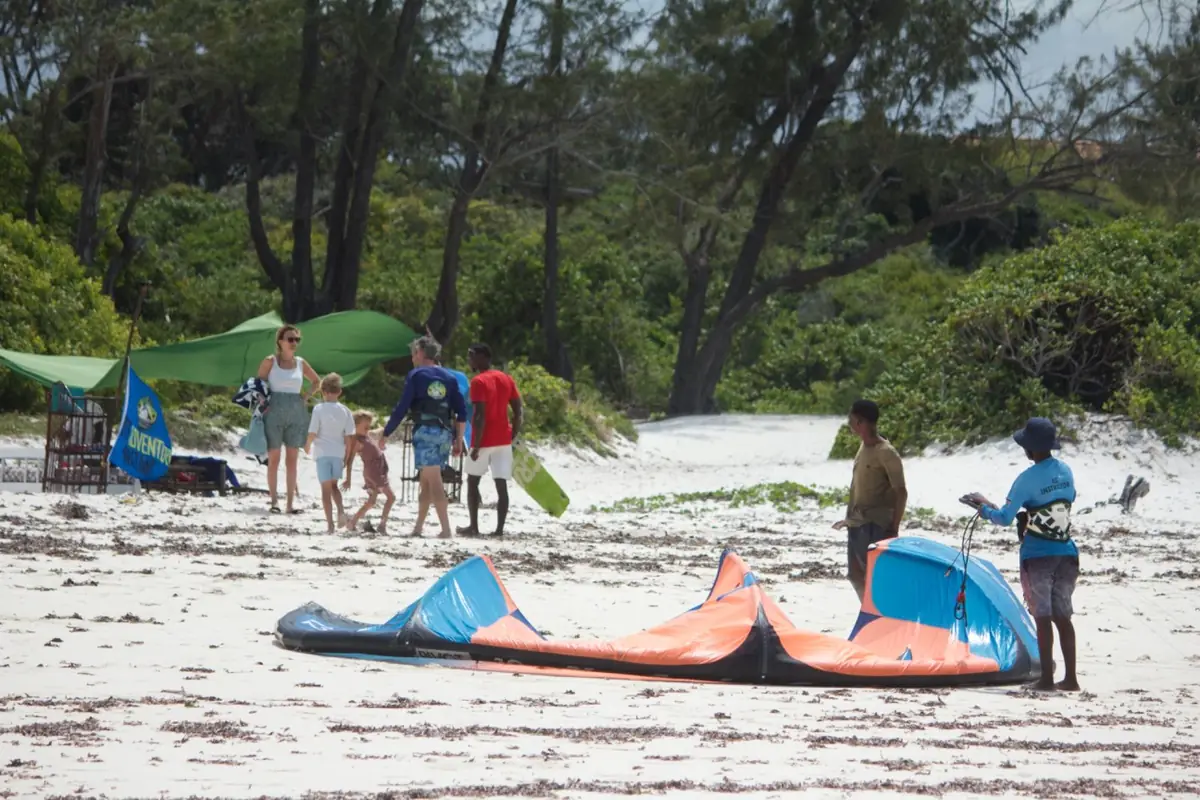
December through February overlaps Christmas and New Year, and July through October is the long dry season, so both stretches bring the most visitors and the highest accommodation rates. The rainier months, April through June and November, see far fewer guests and lower prices, which suits riders happy to gamble a little on wind for a quieter beach and better-value accommodation.
What should you pack for kitesurfing in Watamu?
Pack light on the wetsuit front and heavier on sun protection: a rash guard or kite-specific top covers both. Reef shoes or sandals matter more here than almost anywhere else, since several sandbars sit near coral and rock. Bring a tide table or app, since it decides your session far more than any forecast does.
- Rash guard or thin long-sleeve top for sun, not cold; a wetsuit is rarely needed even in the cooler Kuzi season.
- Reef-safe shoes or sandals for the sandbars and the coral patches near Kite Beach.
- Strong, reef-safe sun protection; the midday sun at this latitude is intense even on a windy day.
- A tide-table app for Watamu or Malindi, since beach windows move with the tide, not the clock.
- A light rain layer if you are travelling in April, May or November.
What should you do on a flat or windless day in Watamu?
A no-wind day is not a wasted day here. Watamu sits inside its own Marine National Park, with reef snorkelling on the doorstep, and the Gede Ruins, a Swahili settlement site, are a short drive inland.
- Snorkel or dive the reef inside Watamu Marine National Park, rated among East Africa's better reef sites.
- Visit the Gede Ruins, the remains of a centuries-old Swahili town a short drive from the beach.
Which airport should you fly into, and does the season change that?
Malindi (MYD) sits about 20–25 minutes from Watamu's beaches, though most international routes connect through Nairobi; Mombasa (MBA) is about two hours by road and is often the cheaper fare. Neither airport's schedule changes with the kite season, so book flights around your own dates rather than around wind, and let the tide table decide your daily session once you land.
- Malindi (MYD): about 20–25 minutes by road, usually reached via a Nairobi connection.
- Mombasa (MBA): about two hours by road from Watamu, often the cheaper fare into Kenya.
Ready to book? See the full Watamu kite spot guide for every beach, or go straight to lessons with Kite Adventures Watamu. First time kiting? Read what a lesson in Watamu looks like first.
How does Watamu fit into Kenya's wider kite season?
Watamu is the best-documented spot for both of Kenya's seasons, with sandbars, a protected bay and a town set up for kite tourism. For the country-wide picture, including how other Kenyan spots fit the same two seasons, see our best time to kitesurf in Kenya guide.
What is the single best month to kitesurf in Watamu?
January or February, in the middle of the Kaskazi season: the wind is already steady at 20–25 knots, the water sits near its warmest at around 30 °C, and the beach is clear of seaweed. July and August are windier still, but suit riders who already kite independently rather than first-timers.
Can I kitesurf in Watamu outside December–March and June–September?
You can try, but April, May, October and November are transition months with less reliable wind, and sources disagree on how often it actually blows. Accommodation is cheaper and the beaches are quieter then, so it can suit a flexible traveller, but do not plan a fixed-date trip around those months alone.
Do I need to check tide times, not just the wind forecast, for Watamu?
Yes. Most of Watamu's sandbars only give flat, shallow water for about three hours either side of low tide, so a school plans your session around the tide table rather than a fixed hour. Kite Beach is the one spot that rides on every tide, wind permitting.
Is Watamu crowded during the Kaskazi season?
December through February is Watamu's busiest stretch, overlapping Christmas, New Year and the steadiest wind of the Kaskazi, so beach accommodation gets booked up and costs more. Book lessons and a place to stay ahead if you are travelling in that window.
What should I do in Watamu if there is no wind?
Use the day on the water a different way: snorkel or dive the reef inside Watamu Marine National Park, or visit the nearby Gede Ruins, the remains of a centuries-old Swahili town a short drive inland.
Do I need a wetsuit for kitesurfing in Watamu?
Usually not. Water stays around 25–30 °C all year, warmest in the Kaskazi season, so most riders wear only boardshorts or a bikini with a rash guard for sun. A thin top can help in the slightly cooler, seaweed-prone Kuzi season, but a full wetsuit is rarely necessary.