Best Time to Surf in El Zonte: A Guide to the Months
Find the best time to surf in El Zonte using monthly regional wave ranges, water temperatures and advice for choosing conditions that suit your level.
The best time to surf in El Zonte, El Salvador, depends on your experience: March through November has the highest regional wave-expectation ratings, while December through February generally offers smaller regional waves for beginners to consider. Check the day's swell, wind and tide with a coach before entering.
Key takeaways: March and April pair dry-season travel with high regional wave ratings. Beginners can consider December through February and start in small beach-break whitewater. The one school listed on kitesurfing.me offers beginner and intermediate sessions for 50 USD each.
When is the best time to surf in El Zonte?
March through November has the highest regional wave-expectation ratings for El Zonte, with May, June and July rated highest. March and April fall in the dry season, while May through October bring rain and southern swells. The ratings describe regional wave expectations, not clean-wave frequency or suitability for every surfer.
March has a regional monthly wave expectation of 1.0 to 1.4 metres, while June's range is 1.2 to 1.6 metres. These are planning figures for the wider El Zonte and El Palmarcito area, not promises for a particular beach or morning. At El Zonte Point, a strong swell can produce waves around 3 metres over a rocky bottom.
El Zonte weather follows El Salvador's broad dry and rainy seasons. Rain generally falls from May through October, with June and September among the wetter months nationally. March and April are useful choices if you want to surf and spend time on the road. During the rainy season, allow time for heavy rain and check road conditions before inland trips.
South to south-southwest swell feeds El Zonte's point and beach breaks. North to northeast wind blows offshore and can help keep the wave face clean. A rising tide toward high water gives more clearance over the point's rocks, but it does not remove the need to check the entry. The El Zonte surf guide describes the local breaks.
What is El Zonte like month by month?
El Zonte's regional wave expectation rises from 0.8 to 1.3 metres in January to 1.2 to 1.6 metres in June. Average sea temperatures stay between 27.7 and 29.5 °C across the year. Use the table to choose travel dates, then check the forecast and the beach before each session.
The wave ranges cover El Zonte and nearby El Palmarcito. They describe monthly regional expectations, while the water figures are monthly averages for El Zonte Beach. Neither tells you exactly how big or clean the waves will be when you arrive. A smaller monthly range can still include days that are too demanding for a learner.
At El Zonte Point, the takeoff area is compact and weekends or good-wave days can be busy. Watch several sets before joining the queue. Give the surfer closest to the breaking part of the wave priority, and leave room for anyone already riding. If you cannot judge the lineup from shore, ask a coach before paddling out.
| Month | Regional monthly wave expectation | El Zonte Beach average water temperature |
|---|---|---|
| January | 0.8 to 1.3 m | 27.7 °C |
| February | 0.8 to 1.3 m | 27.7 °C |
| March | 1.0 to 1.4 m | 28.1 °C |
| April | 1.1 to 1.5 m | 28.9 °C |
| May | 1.1 to 1.6 m | 29.5 °C |
| June | 1.2 to 1.6 m | 29.3 °C |
| July | 1.1 to 1.6 m | 29.3 °C |
| August | 1.0 to 1.5 m | 29.4 °C |
| September | 1.0 to 1.5 m | 29.3 °C |
| October | 1.0 to 1.4 m | 29.1 °C |
| November | 1.0 to 1.4 m | 28.8 °C |
| December | 0.8 to 1.3 m | 28.3 °C |
Which months are best for beginners in El Zonte?
December through February are useful months to consider for a first surf trip to El Zonte. The regional wave expectation is 0.8 to 1.3 metres in each month, and all three fall in the dry season. Pick a small day and practise in beach-break whitewater with a coach.
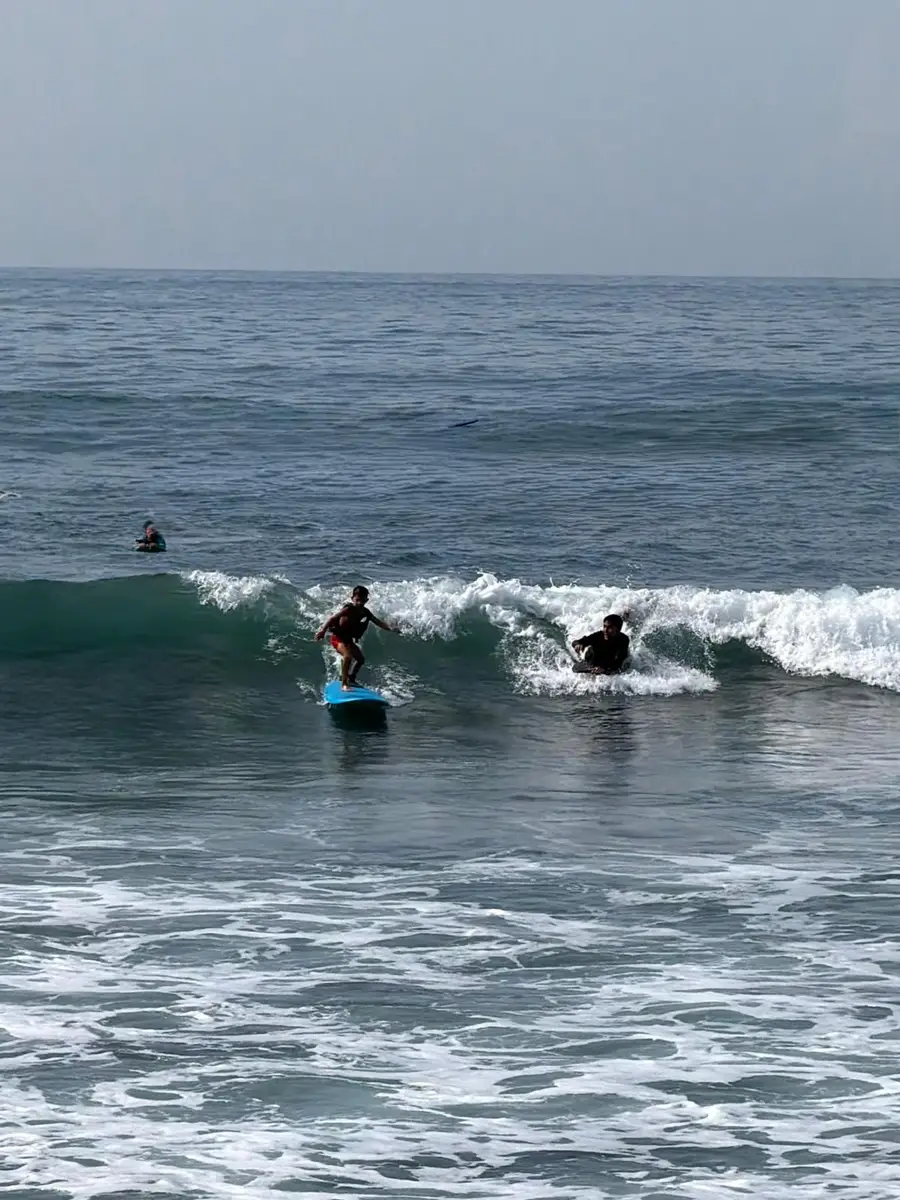
El Zonte's sandy beach break lies west of the river-mouth section. Its peaks can be short and steep, so ask a coach where to enter and which way the current is moving. Start close to shore in waves you can handle. Keep hold of your board, give swimmers space and follow your coach's directions when walking back out.
The rocky right at La Punta and the river-mouth left suit surfers with more experience. A larger southern swell can make the paddle and takeoff demanding, even for a confident beginner. If you already catch unbroken waves, ask about the day's point conditions before choosing it. For a different base, read about El Zonte and El Tunco.
The school listed here has a one-hour beginner session for 50 USD. It includes personal coaching, a rashguard and a foam board sized to the student. Tell the coach if you have never surfed, or if you have tried before but still need help in whitewater. That gives you a useful starting point for choosing a session.
A month on the calendar cannot tell you where to paddle out in El Zonte. Look at the size of the sets, the current and the space between surfers on the day. If the beach break is too strong, a lesson can wait. Browse surfing lessons and destinations if you are still deciding where to take a trip.
How warm is El Zonte's water and what should you wear?
El Zonte's average sea temperature ranges from 27.7 °C in January and February to 29.5 °C in May. Boardshorts or a swimsuit are practical throughout the year. Add a rashguard for sun and board protection, and bring drinking water for your time on the beach.
A full wetsuit is generally unnecessary in El Zonte's warm water. The monthly average stays above 29 °C from May through October, while November averages 28.8 °C. These figures describe the sea rather than the air. A light layer for the trip home can still feel useful after a long session, especially when rain or wind arrives.
Pack reef-safe sun protection and consider a hat for time between sessions at El Zonte. The beginner lesson with Jeffrey Surf Coach includes a rashguard, so you do not need to pack one for that session. If you bring your own board, pack a leash and check airline board-bag rules before booking your flight.
A board bag also needs space in your airport transfer. Tell the driver how many boards you have when arranging the ride, and confirm that the vehicle can carry them. Ask your accommodation about board storage and the walking route to the beach. Those details can make the difference between carrying your gear once and moving it several times.
What can you do on a flat day in El Zonte?
On a flat day in El Zonte, travel inland to Tamanique, where a trail leads to four waterfalls. Reaching the fourth waterfall involves a roughly 2 km walk and a rope-assisted descent. Ask a local guide about the route and current conditions before setting out.
Bring shoes with grip and water for the walk. Heavy rain can affect travel around El Salvador, and floods and landslides occur during the May to October rainy season. Check the trail and road conditions before leaving El Zonte, then allow enough time to return to the coast in daylight. Local guides can accompany visitors from Tamanique.
A quiet day also gives you time to study El Zonte's breaks from shore. Walk between the point and beach section, note the rocks and watch how the tide changes the entry. For another coastal outing, explore surf spots in El Salvador, then arrange a taxi or car if you plan to travel beyond the village.
Watching the lineup can be useful preparation for your next session. Notice where surfers enter, where they wait and how they return to shore. At the point, pay attention to the compact takeoff area and leave space for the person already riding. Ask a coach about anything you cannot see clearly from the beach.
How do you book a lesson in El Zonte?
To book a lesson in El Zonte, send a request on kitesurfing.me and wait for the school to confirm it. You pay at the school. The beginner and intermediate sessions each last one hour and cost 50 USD, with equipment suited to the session.
Choose the beginner session for personal coaching, a rashguard and a foam board sized to you. The intermediate session includes a board matched to your goals. Explain what you can already do and what you want to practise when you contact the school. See the available surf sessions before sending your request.
Share your preferred dates and experience, then keep the agreed meeting details handy once the school confirms. The road trip from El Salvador International Airport to El Zonte takes roughly 45 minutes to one hour. If you bring a board, tell your driver in advance and check that the transfer has room for your bag.
An airport transfer and occasional taxi are practical for a stay focused on El Zonte village. A car gives you more freedom to reach neighbouring breaks such as El Palmarcito, K59 and K61. Before booking a room, check the walking route to the beach and ask about board storage. The El Zonte spot page outlines the local breaks.
If you plan to visit more than one town, allow time to check conditions at each break. The coast does not offer the same entry or wave on every stretch of beach. Use the El Salvador surfing guide to plan a wider route, and ask your driver about carrying boards before setting a departure time.
How should I use an El Zonte surf forecast?
Use an El Zonte surf forecast to check swell height, direction, period, wind and tide together. South to south-southwest swell and north to northeast offshore wind are useful starting points. Check again near your session, then watch several sets from shore and ask a coach if you are unsure.
What does a 12-second swell period mean at El Zonte?
A 12-second swell period is the time between successive swell peaks passing a fixed point. At El Zonte, read that number alongside swell height and direction, wind and tide. Longer-period swell can carry more energy, so ask a coach to assess the beach break if you are learning.
What is the best month to visit El Salvador for El Zonte?
March is a good month to visit El Zonte in El Salvador because it combines dry-season weather with a regional wave expectation of 1.0 to 1.4 metres. April also has a high regional rating. Beginners should still choose their session by the day's conditions, rather than the month alone.
How big are the waves in El Zonte right now?
Check a current El Zonte surf forecast and observe the break for today's wave size. Regional monthly expectations range from 0.8 to 1.6 metres across the year, while the point can reach about 3 metres on strong swells. Those planning figures do not tell you today's conditions.
Which tide should I check for El Zonte Point?
A rising tide toward high water is a useful starting point for El Zonte Point because it gives more clearance over the rocks. Check the entry and watch several sets before paddling out. The river-mouth left also needs a careful check for rocks and currents, whatever the tide.