Best Time to Surf in Essaouira: Month by Month
Surf Essaouira from October to March for bigger swell, or April to September for small waves and early starts. Water temperature, wind and lessons from 25 EUR.
The best time to surf in Essaouira is October to March, when northwest Atlantic groundswell is biggest and the trade wind is lighter. April to September brings smaller waves in the town bay that suit first lessons, as long as you surf early. The sea runs from 16.4 °C in February to 19.0 °C in September. Wind, not swell, sets the length of your session, because the north trade wind chops the water from late morning.
Key takeaways: surf from October to March for stronger swell, or from April to September for smaller waves and early starts. Plan every session for the morning. Pack a 4/3 mm wetsuit for winter and a 3/2 mm for the rest of the year.
When is the best time to surf in Essaouira?
October to March is the best time for most surfers, because the Atlantic groundswell is bigger and more regular and the wind is lighter. Beginners can also learn from April to September, when the town bay gets smaller waves, provided they paddle out early. Sources disagree on which season suits learners.
A surf-forecast database describes the town beach as an exposed beach break that works at any time of the year, with winter the best season and December most often the best month. Its December statistics for that beach read 30 % clean, 68 % blown out and only 2 % too small. Those percentages cover one month and one beach, so use them as a rough pattern rather than a forecast.
Local guides split on beginners. One suggests May to September for learning because the waves are small and consistent, and another points complete beginners at the sheltered town beach from January to March. Both agree that the break is rideable all year and that the swell is more reliable in winter. The sensible reading is that winter gives you more wave to choose from, while summer gives you less wave but more mornings you can handle.
The surfing guide for Essaouira lists each break with its level and the wind that suits it. If you are building a longer trip along the coast, the Morocco surfing overview shows where else the swell works.
What is Essaouira like month by month?
Essaouira has a winter swell season and a summer wind season, and the months in between mix both. Sea temperature stays within a range of about 2.6 °C across the year. Guides describe the swell and wind in words rather than numbers, so the table below shows the broad pattern and the monthly sea temperature.
The table does not rate months with a score, because published statistics cover only December. The table uses sea temperatures averaged over 10 years and the typical wetsuit advice from two guides. Check the live forecast a few days before you travel, because individual days vary widely inside any month.
| Month | What guides say about swell and wind | Average sea | Typical suit |
|---|---|---|---|
| January | Winter swell, biggest at exposed breaks; lighter wind | 16.6 °C | 4/3 mm |
| February | Winter swell continues; coolest water of the year | 16.4 °C | 4/3 mm |
| March | Late winter swell; lighter wind | 16.5 °C | 4/3 mm |
| April | End of the main swell season; smaller waves in the bay | 17.0 °C | 3/2 mm |
| May | Smaller waves; trade wind building, surf early | 17.5 °C | 3/2 mm |
| June | Small waves; strong afternoon wind | 18.1 °C | 3/2 mm |
| July | Small waves; wind strongest, dawn sessions only | 18.1 °C | 3/2 mm |
| August | Small waves; strong wind, busiest tourist season | 18.4 °C | 3/2 mm or shorty |
| September | Transition: swell returns, wind eases | 19.0 °C | 3/2 mm |
| October | Main swell season starts; wind easing | 18.9 °C | 3/2 mm |
| November | Regular swell; quieter beaches | 17.8 °C | 4/3 mm |
| December | Most often the best month in one forecast database | 17.1 °C | 4/3 mm |
Treat the swell column as a seasonal tendency. A winter week can still bring a flat day, and a summer week can bring a decent morning. The wetsuit column follows the 4/3 mm from November to March and 3/2 mm the rest of the year that two guides give; a shorty only suits the warmest summer days.
How does the wind change your surf day?
The north trade wind decides how long you can surf. It usually picks up between late morning and early afternoon and chops up the sea, and from May to September it blows earlier and harder. Dawn and the first hours after it are the cleanest window in every season. Our Essaouira surfing guide shows how each break handles it.
A wind-statistics station about 16 km away lists north as the prevailing wind, with an annual average of about 8 knots. That average hides the daily pattern: calm mornings, then a stronger breeze. Guides describe the offshore direction as east-southeast at the town beach and south at Sidi Kaouki, so an early light wind from those directions grooms the waves before the trades take over.
This is why the same coast is a famous kitesurfing and windsurfing destination (see the kitesurfing season guide). A strong afternoon wind is bad news for a surf lesson but good news for wind sports, and in June to August the beaches fill with kites and sails. If you are planning a summer trip, book the earliest lesson slot, and expect to finish before the wind fills in.
Tide matters less here. The same database says the town beach and Sidi Kaouki work at all stages of the tide, although one guide prefers a mid-rising tide on the town beach and says Cap Sim works best at low to mid tide.
Which months suit beginners and which suit stronger surfers?
Beginners do best from April to June or from September to October, when waves in the bay are small and the sea is mild. Intermediate and advanced surfers do best from October to March, when exposed breaks like Sidi Kaouki deliver bigger, more powerful waves. These ranges come from guides and may shift with the swell.
For a complete beginner, the town beach is the usual choice at any time of year. It has a sandy bottom and soft whitewater, and waves of about 1 to 1.5 m on a typical day. In deep winter the town beach is still the better learner break than the exposed beaches, but the water is colder and you need a 4/3 mm wetsuit.
For a confident beginner or intermediate surfer, winter at Sidi Kaouki brings peaks of 2 to 3 m according to one guide, with left and right waves on a long beach. Rocks are the main hazard, and the beginner label is disputed between guides. Go with an instructor if you are unsure; the surf lessons guide lists lesson types and prices.
Advanced surfers can add Cap Sim, a rocky right-hand point between Essaouira and Sidi Kaouki, and Moulay Bouzerktoun, an exposed reef and rocky point to the north. Both sit in remote or wind-affected spots, so they suit experienced surfers who can read the sets. Sources differ on whether Cap Sim is intermediate or advanced, so treat it as advanced until you have watched it.
How cold is the water and what should you wear?
The sea is cool all year, so you need a full wetsuit. Average temperatures run from 16.4 °C in February to 19.0 °C in September, based on 10 years of data; a second database averages about 1 to 2 °C warmer, up to about 21 °C in September. Guides suggest a 4/3 mm suit from November to March and a 3/2 mm suit for the rest of the year.
Air temperature is mild. Climate normals give average daily highs of about 18 °C in January and 22 to 23 °C in August and September, with rain mostly in winter: about 55 mm in each of November and December and almost none from June to August. Annual rainfall is about 300 mm.
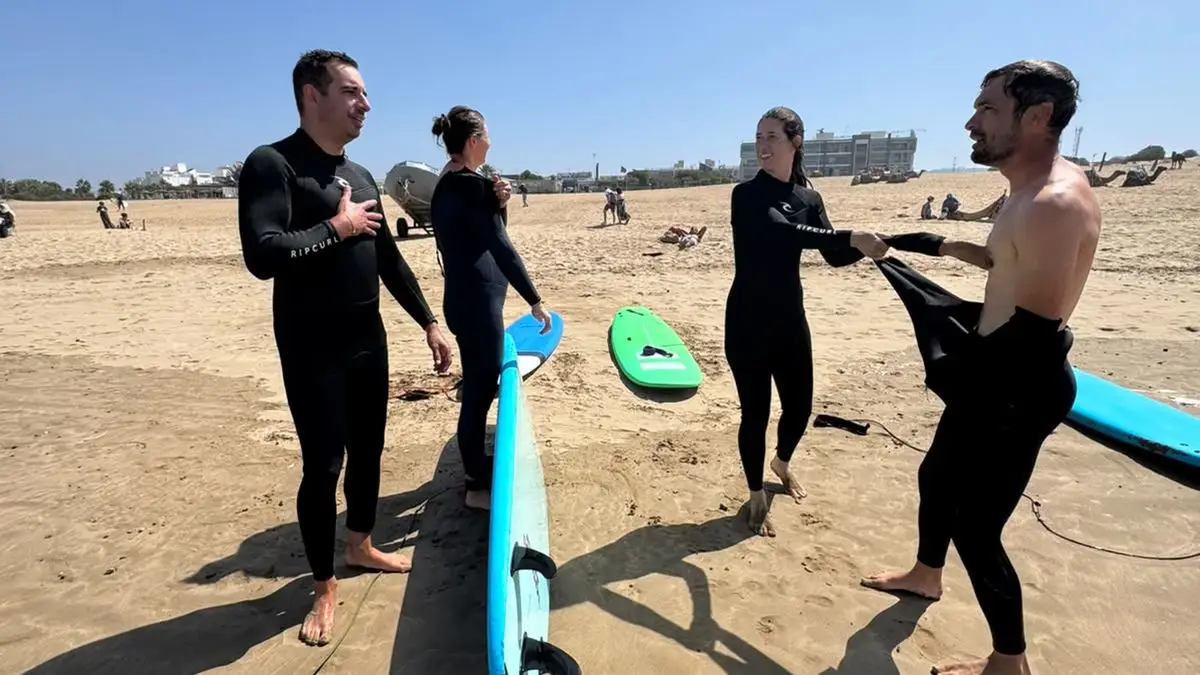
Warm layers matter on the beach in winter, when the wind makes the sand feel colder than the thermometer suggests. In summer, bring sun protection, because the morning sessions are sunny, windy and exposed. KiteTripping includes board and wetsuit in every surf lesson, so you do not need to pack your own for a lesson.
If you rent equipment instead, KiteTripping lists surfboard and wetsuit rental at 15 EUR for a half day, 20 EUR for a full day and 100 EUR for a week. Ask what is included before you pay.
Where should you surf in each season?
Surf the town beach in the morning in any season, Sidi Kaouki in winter when you want more power, and keep the points for days with a clear forecast. Sidi Kaouki and Moulay Bouzerktoun lie roughly 20 to 25 km from town in opposite directions, so choose the break on the day. For what each break needs in swell, wind, tide and transport, see Essaouira surf spots. The Morocco surfing overview covers the wider coast.
Town beach, all year
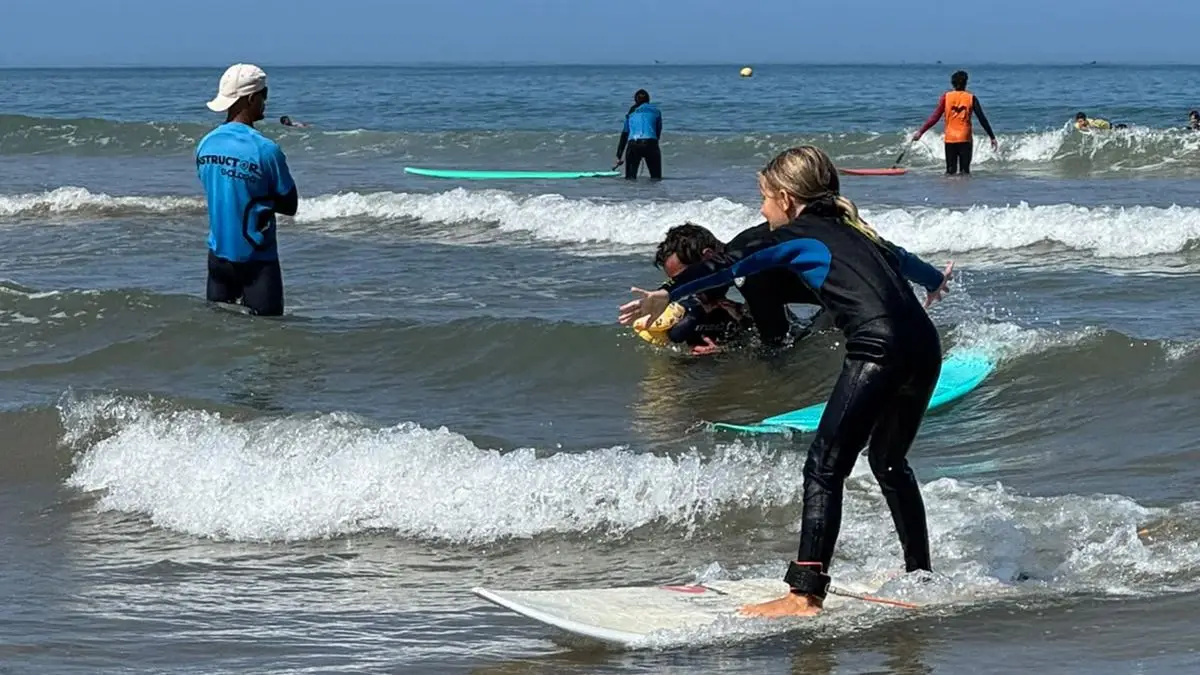
The beach in front of the medina is the steady option. Sand under your feet, soft waves and a short walk from the old town make it the default choice for lessons. It is busy with school groups, so stay aware of other riders and use the quieter sections when the beach is full.
Sidi Kaouki, October to March
About 25 km south of Essaouira, Sidi Kaouki gets more swell. It is a long beach with several peaks, a sandy bottom and rocks to watch for. There is no direct public transport, and a taxi costs around 150 dirhams one way, so most visitors arrive with a school transfer or a hire car. One guide says it can still have good surf when the town beach is windy in summer.
Cap Sim and Moulay Bouzerktoun, for experienced surfers
Cap Sim is reached by a dirt track and has no facilities, so bring water and food. Moulay Bouzerktoun is mainly a wind spot, and surfing there is best on rare calm days. Both are rocky and powerful, and neither suits a beginner.
What can you do on a flat or windy day?
On a flat day, walk the ramparts and harbour, or head to the beach south of town. Essaouira is a walled port town with a broad sandy beach that runs south from the harbour to the Oued Ksob river mouth, and the village of Diabat lies about 5 km further south. Tagart beach is noted for its sand dunes.
On a windy day, you can still enjoy the beach if you accept the wind. The same trade wind that ends a surf session is what makes Essaouira a wind-sport town. Watch the kites and sails from the sand, or plan a surf lesson for the next morning, when the wind is lighter.
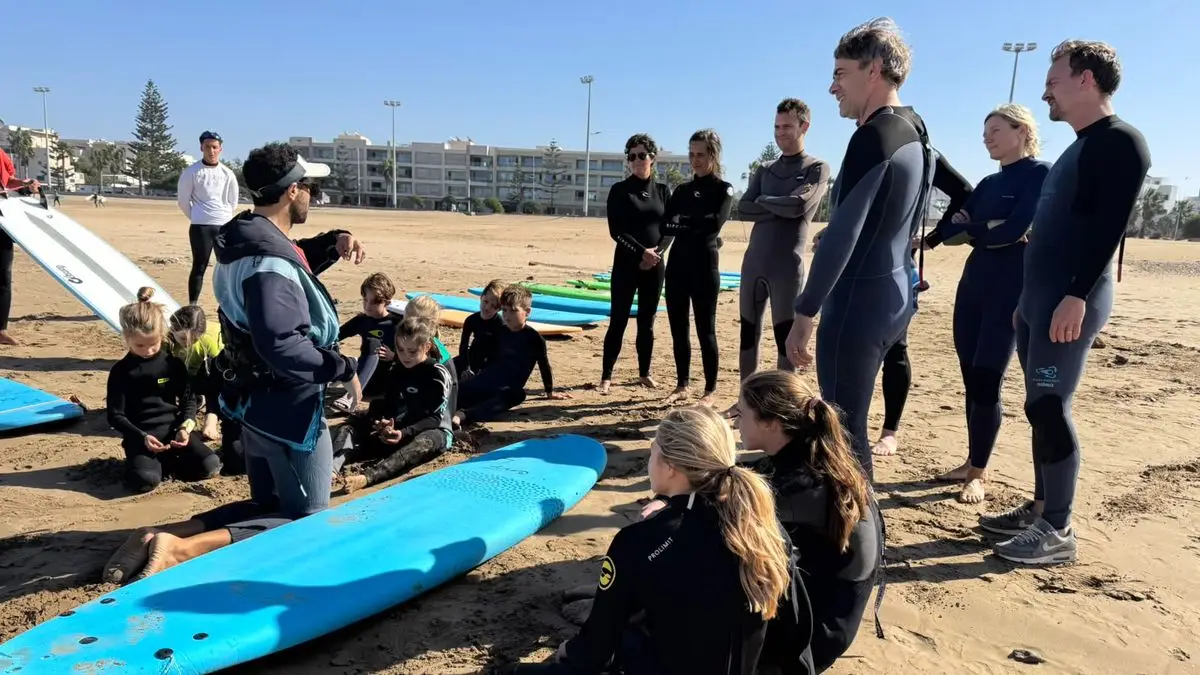
Surf rental and lessons run from Essaouira itself, and KiteTripping offers lesson packages that combine accommodation with group surf lessons, such as a 3-day package for 250 EUR with 2 nights in a room and 2 group lessons. See the lesson and price guide for the full price list, or visit KiteTripping's profile to send a booking request.
What is the best month to surf in Essaouira?
December is most often the best month, according to a surf-forecast database, with 30 % clean days at the town beach. October to March is the wider peak season, with bigger groundswell and lighter wind. Spring and autumn offer a good balance of smaller waves and milder water.
Can you surf in Essaouira in summer?
Yes, but summer waves are smaller and the trade wind is strong from late morning, often earlier in June to August. Surf at dawn or in the first hours after it. Afternoons belong to kitesurfers and windsurfers, so plan lessons and sessions for the early slots.
Is Essaouira better for beginners in winter or summer?
It depends on the guide. Some recommend May to September for small, consistent waves, while others suggest January to March at the sheltered town beach. Either works with a morning lesson. Winter water is colder, so you need a 4/3 mm wetsuit.
How cold is the sea in Essaouira?
The monthly average sea temperature runs from 16.4 °C in February to 19.0 °C in September. Guides suggest a 4/3 mm wetsuit from November to March and a 3/2 mm wetsuit the rest of the year. A shorty only suits the warmest summer days.
How far is Sidi Kaouki from Essaouira?
Sidi Kaouki is about 25 km south of Essaouira, roughly 25 minutes by car on the coastal road. There is no direct public transport, and a taxi costs around 150 dirhams. Many schools arrange transfers, and KiteTripping includes transport to the spot in its lesson prices.