Best Time to Kitesurf in Essaouira: Wind and Season by Month
April to October is the kitesurf season in Essaouira, with 16 to 26 knots in summer. Month-by-month wind, sea temperature and the best months for beginners.
The best time to kitesurf in Essaouira is April to October, when the northern trade wind blows on most days. June to September is the most dependable stretch, and July is the windiest month on average. The sea warms from about 18 °C in April to 21 °C in September. November to March still brings some strong days, but the wind is far less predictable, so most visitors keep their dates inside the main season.
What is the best time to kitesurf in Essaouira?
Pick June, July or September for a first course, May or October for steady wind with fewer people, and July or August for the strongest conditions. Guides and the local school agree that April to October is the main window. Outside it, you can ride on some days, but plans need slack.
Essaouira sits on a long Atlantic bay where a strong northern trade wind, with a thermal element according to regional spot guides, blows side-onshore across the water. One spot guide likens its pattern to the Canary Islands. That is why the season is long and why the wind is strong rather than gentle. If you want the spot itself first, our Essaouira kitesurfing guide covers the beaches, the kite zone and the nearby wave spots.
What is the wind like in Essaouira, month by month?
Wind builds from a few kitable days in winter to near-daily afternoon wind from June to September. The table gives what each source says for each month, with sea temperature and air temperature added. These are descriptions, not measured percentages, because no published statistics break Essaouira's wind down by month.
| Month | Wind (KiteTripping's month notes and guides) | Sea / air high | Rain | Good for |
|---|---|---|---|---|
| January | Gusty, a few kitable days per week | 17.9 / 18.4 °C | 48.5 mm | Surf; kitesurfing on lucky days |
| February | Inconsistent | 17.2 / 18.7 °C | 37.3 mm | Empty beaches, flexible plans |
| March | More frequent, especially late in the month | 17.3 / 19.4 °C | 38.1 mm | Early-season kiting |
| April | Afternoon wind as the main season opens | 17.9 / 19.5 °C | 17.3 mm | Intermediates, space on the beach |
| May | Settled summer trades, strong without August crowds | 18.7 / 20.6 °C | 9.4 mm | Improvers, calmer beach |
| June | About 20 to 25 knots in the afternoon | 20.1 / 21.4 °C | 0.5 mm | First course, long days |
| July | Windiest month on average, often 20 to 30 knots | 20.7 / 21.9 °C | 0.0 mm | Experienced riders, early booking |
| August | Strong most afternoons, busiest month | 21.3 / 22.4 °C | 0.8 mm | Power riding, warm water |
| September | Strong and steady, thinner crowds after the first week | 21.4 / 22.6 °C | 4.3 mm | First course, best value |
| October | Some 20-knot sunny days, some glassy surf days | 21.3 / 22.2 °C | 33.3 mm | Fewer riders, mixed conditions |
| November | Less reliable, with some big clean days | 19.5 / 20.5 °C | 54.5 mm | Advanced riders, waves |
| December | Short strong windows, storm season | 17.9 / 19.4 °C | 55.7 mm | Surf rather than kite |
Sea temperatures are monthly averages from a sea-temperature database, and air highs and rainfall are 1991 to 2020 climate normals for Essaouira. The wind column follows the school KiteTripping's month notes and is cross-checked against the other guides listed below the article. They agree on the shape of the year, even where their numbers differ.
How strong is the wind in Essaouira?
Expect a strong wind. A travel magazine's Essaouira guide puts typical summer wind at about 16 to 26 knots with gusts up to about 40 knots, and another magazine quotes a steady 15 to 25 knots from April to October. The gusts matter more than the average, especially close to the town.
Guides do not agree on every number. One spot guide describes summer days of 25 to 35 knots, a school blog gives a typical 18 to 30 knots, and KiteTripping says 15 to 25 knots with some days above 30. The sensible reading is a wide band: a mid-range kite most days, a smaller one when the afternoon peak arrives, and a bigger one on lighter shoulder-month days.
One rider who spent 10 days here in June flew 5, 7 and 9 m kites and found bigger sizes unnecessary, as a travel magazine reports. Kite size depends on your weight, so ask the school what fits that day instead of guessing from a table.
Which months suit beginners, and which suit experienced riders?
Beginners do best in June, July and September, say KiteTripping and others, because the wind is dependable without being at its extreme. Experienced riders favour July for power, and April, May, October and November for wave days at the spots outside the town. Mixed groups often settle on June or September.
A beginner course needs several decent afternoons in a row, not one perfect day. A three-day course wants three afternoons above about 15 knots, which is likeliest in July, though the instructors are busiest then. An older spot guide also notes that August and September can suit less experienced riders, because the wind is only slightly behind July. Our guide to kitesurfing lessons in Essaouira shows how a course is built and what it costs.
Advanced riders have more choice. Sidi Kaouki, about 25 km south, has stronger wind and waves, and Moulay Bouzerktoun north of town is the big-wave spot when the swell runs. Both are better visited with local advice on a first trip, and the winter and shoulder months are when the swell is largest. Our guide to the Essaouira kite spots sets out which beach suits which level.
What time of day is best for kitesurfing in Essaouira?
Afternoon is the best time to kitesurf in Essaouira. KiteTripping describes the wind as calmest from 08:00 to 11:00, building from about 11:00 to 14:00 and strongest between 14:00 and 17:00. A spot guide reports that it often reaches force 6 to 7 by mid-afternoon in summer.
That pattern shapes how you plan a day. Lessons are usually scheduled when the wind has arrived, and the mornings are for surf, a walk through the medina or a slow breakfast. At Sidi Kaouki the afternoon is also the better window, according to a travel magazine.
How cold is the sea in Essaouira, and what wetsuit do you need?
The sea is cool rather than cold. Averages run from about 17 °C in February to about 21 °C in September, and wind chill makes it feel colder. A travel magazine recommends a full wetsuit of about 3 mm all year, and KiteTripping suggests a 3/2 mm from May to October and a 4/3 mm with boots from November to April.
Air is mild all year, with daily highs from about 18 °C in winter to about 22 °C in late summer, per the climate normals above. Strong sun, sand blown by the wind and the chill after a session are the practical issues, so bring sun protection and a windproof layer for the beach. Wetsuits are included in lessons at KiteTripping, which saves packing one for a first week.
Can you kitesurf in Essaouira in winter?
Yes, on some days, but winter is not the season to plan a kite trip around. From November to March the wind follows passing Atlantic weather, so strong, clean days alternate with light or stormy ones. KiteTripping lists December to February as the least reliable months and suggests surfing, wing foiling or other activities on poor kite days.
The sources disagree on how strong winter gets: KiteTripping gives about 8 to 18 knots, gusty and often with rain and swell, while a spot guide says 20 to 30 knots, less consistent and less predictable in direction. Both agree on swell, and that is the winter attraction for experienced riders and surfers. Rain is also higher: the climate normals show 48.5 mm in January, 54.5 mm in November and 55.7 mm in December, against almost none from June to August.
What can you do in Essaouira on a windless day?
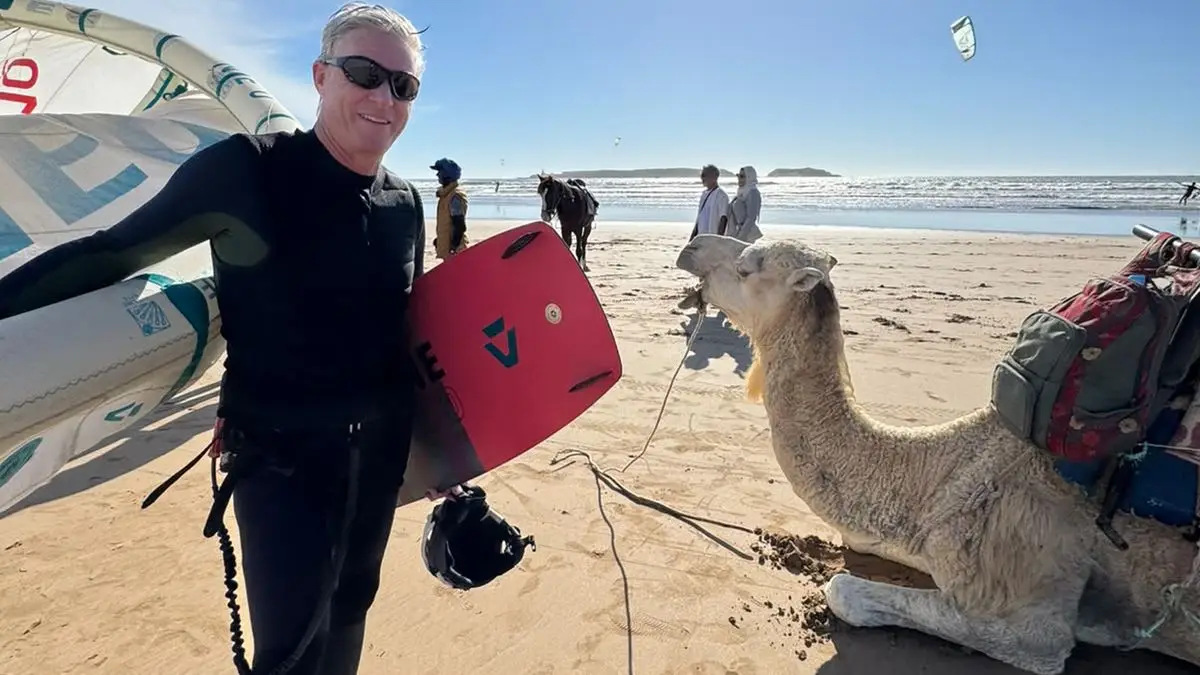
Essaouira has plenty to fill a windless day. The medina is a UNESCO World Heritage Site, the harbour is a short walk from most riads, and the Atlantic swell brings surf lessons within reach. Travel guides also list stand-up paddling, horse and camel rides and rug and argan oil shopping.
- Surf or foil: the same school teaches surfing and wing foiling, so a calm day does not cost you the session (see the KiteTripping profile).
- Walk the medina and the harbour: both are in the town centre, a short ride from the kite beach.
- Ride a horse or camel along the beach, or try stand-up paddling when the wind is light.
- Hire a car or taxi for Sidi Kaouki, about 25 km south, to watch the wave riders when the swell is up.
Travelling in the shoulder months leaves the most room for these plans, because a missed kite day costs less when the beaches are quiet and rooms are easier to find. If Essaouira is only one of several Moroccan options on your list, kitesurfing in Morocco shows the other coasts, and the Dakhla season guide shows how a lagoon destination differs.
Packing and booking for the season
Pack for wind, sun and cool water rather than heat. Book lessons early for July and August, when the beach is busiest, and for any trip that has to land on a fixed week. Through kitesurfing.me you send a request, the school confirms it, and you pay the school directly.
- A windproof layer and a towel for the beach: wind chill and blowing sand are the usual complaints.
- Sunscreen (the school suggests factor 50 or more) and sunglasses with a strap.
- Swimwear and water. Wetsuit, harness, helmet and board come with a lesson at KiteTripping.
- Time for slack: leave one or two spare afternoons in the week in case a day is too light.
- A plan for your gear if you bring your own: airlines and transfers may charge for board bags, so ask before you book.
For the getting-there details, Essaouira-Mogador Airport is about 15 minutes from town, Marrakech is roughly 2 to 2.5 hours by road, and direct buses take about 3 hours according to a travel guidebook. Our best places to learn kitesurfing round-up puts Essaouira next to other destinations if you are still choosing.
What is the best month to kitesurf in Essaouira?
July is the windiest month on average, but June and September are the most comfortable for a first course because the wind is dependable without being at its extreme. May and October offer steady wind with fewer riders. Experienced riders chasing power often pick July or August, and wave riders prefer November and the shoulder months.
Is Essaouira windy all year?
It is windy for much of the year, but not equally. The main season runs from April to October, with near-daily afternoon wind from June to September. From November to March the wind follows Atlantic weather, so it is less consistent, and the guides disagree on how strong it gets, from about 8 to 30 knots.
How warm is the sea in Essaouira?
Monthly averages run from about 17 °C in February to about 21 °C in September and October. Wind chill makes it feel cooler, so a full wetsuit of about 3 mm is recommended all year, with a thicker 4/3 mm suit and boots from November to April at the partner school.
Is July too windy for beginners in Essaouira?
It can be demanding. July has the most windy days on average, with 20 to 30 knots quoted and gusts up to about 40 knots, so many guides send first-timers to June or September. A good instructor adapts the kite size and the session, but you should still expect strong afternoon wind.
How far ahead should I book kitesurf lessons in Essaouira?
Book early for July and August, when schools fill up and the beach is busiest. In the shoulder months, a few days ahead is often enough. On kitesurfing.me you send a request first, the school confirms availability, and you pay at the school, so ask about wind-day rescheduling when you book.