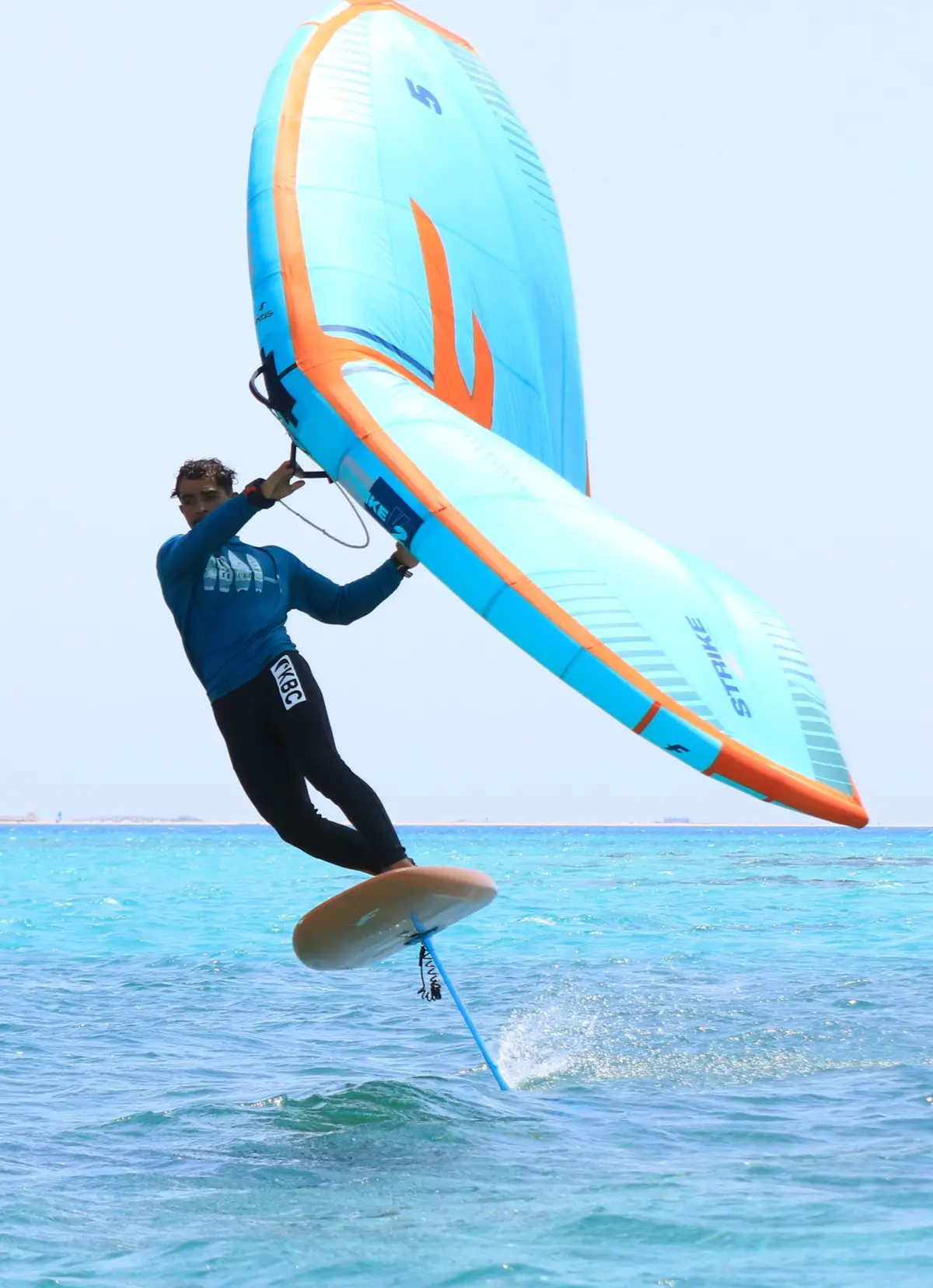
Best Time to Wing Foil in Hurghada: Months Guide
Find the best time to wing foil in Hurghada with 12 months of wind and water averages, lesson prices and practical beach tips for your trip.

The best time to wing foil in Hurghada, Egypt depends on your dates, the forecast and the conditions you want. June, August and September have the highest airport monthly mean in this record, at 14 knots. A monthly average cannot predict lesson conditions, so check the forecast and the school's advice for your dates.
Key takeaways: June, August and September share the highest airport wind mean at 14 knots. September's water averages 28.1 °C, while March averages 22.3 °C. Beginners should ask about sheltered practice space, foil depth and rescue before booking.
When is the best time to wing foil in Hurghada?
June, August and September have the highest Hurghada Airport monthly mean in the 2000 to 2026 record, at 14 knots each. May and July average 13 knots. Wind occurs throughout the year, but these figures cannot tell you whether your particular lesson or session will have suitable conditions.
September pairs that 14-knot mean with water averaging 28.1 °C. June has the same wind mean and a water average of 26.6 °C. If warm water matters more than the small difference in the airport means, October is another option, with 27.4 °C water and a 12-knot wind mean.
The Hurghada wind is mainly northerly, though the beach layout affects what you feel on shore. At Magawish, a headland shelters the bay and can make the wind gustier near the beach. Ask the school how the forecast translates to its launch, particularly if you are learning or bringing your own equipment.
A monthly mean combines lighter and stronger periods, including hours when you may not be riding. It cannot tell you how many days will suit your wing, board or ability. Wind at one Hurghada beach often builds during the morning and continues into the afternoon, so ask a local operator about the likely lesson window.
Leave room in your schedule for changing conditions rather than relying on a single session. The Hurghada wing foil spot guide explains the launch areas and depth checks. If you are still choosing a destination, the Egypt wing foil guide provides a wider view of places to ride.
What are Hurghada wind statistics by month?
Hurghada wind statistics show an airport monthly mean of 11 knots in January and 14 knots in June. The 10-year water average reaches its low of 22.3 °C in March and its high of 29.1 °C in August. Use the table to choose dates and clothing, then check the local forecast.
The wind figures come from measurements at Hurghada Airport between 2000 and 2026. They describe average speed, not the number of rideable days. The water figures use a separate 10-year average. Neither series is a forecast, and conditions at a sheltered beach can differ from those measured at the airport.
March and April each have a 12-knot airport mean and cooler water than summer. May rises to 13 knots with water at 24.9 °C. In November, the water still averages 26.3 °C while the airport wind mean falls to 11 knots. Ask about available space at the launch when planning your dates.
Gusts are another reason to check the forecast and speak to the school. In the airport record, mean gusts range from 20 knots in January to 46 knots in September and November. A gust average describes a different measure from the monthly mean wind; neither number predicts the gusts on your lesson day.
| Month | Wind: airport monthly mean | Water temperature: 10-year mean |
|---|---|---|
| January | 11 knots | 23.1 °C |
| February | 11 knots | 22.4 °C |
| March | 12 knots | 22.3 °C |
| April | 12 knots | 23.1 °C |
| May | 13 knots | 24.9 °C |
| June | 14 knots | 26.6 °C |
| July | 13 knots | 28.3 °C |
| August | 14 knots | 29.1 °C |
| September | 14 knots | 28.1 °C |
| October | 12 knots | 27.4 °C |
| November | 11 knots | 26.3 °C |
| December | 11 knots | 24.6 °C |
Which months and beaches suit beginners in Hurghada?
Beginners can plan a Hurghada lesson in any season, subject to the forecast and the school's advice. June, August and September have the highest airport monthly mean in this record, at 14 knots. A monthly average cannot predict lesson conditions, so check the forecast and the school's advice for your dates.
For a first lesson, ask where you will practise wing control and how you will reach water deep enough for the foil. At Magawish, a sandy entry and deeper water beyond the shallows allow a progression from wing handling to foiling. An instructor can explain the route and choose a suitable time for the day's conditions.
Sandbanks shelter flatter water at Magawish, but parts can dry at low water. That matters when a foil extends below the board. Follow marked entry routes where present, and give swimmers, coral and other riders space. Before launching on your own, check the water depth and ask about local access and rescue.
El Khayam lagoon, between Hurghada and El Gouna, has shallow water for early wing handling. Ask local operators about access and the route to deeper water before taking out a foil. The Hurghada and El Gouna kitesurfing guide provides more context on the two areas, though the sports have different equipment needs.
Experienced riders can use the open water beyond Magawish for longer runs and chop. Ras Soma, south of Hurghada, has flat water and wind that can blow cross-shore or offshore. Riders report wading 200 metres or more at high tide at one launch. Agree on access and rescue before setting out, and see the Safaga wing foil guide for the wider area.
How warm is Hurghada water and what should you wear?
Hurghada water temperature averages 22.3 °C in March and reaches 29.1 °C in August, according to the 10-year monthly average. A wetsuit can help during cooler months and longer lessons. In summer, lighter waterwear and sun protection suit the warmer sea, with a layer ready for time on the beach.
Hurghada weather also changes between winter and summer. Airport climate records put the January mean air temperature at 16.6 °C and the August mean daily maximum at about 38 °C. Plan shade and drinking water for a summer lesson. A warm layer is useful on winter mornings and for the trip back from the beach.
Consider how much time you expect to spend in the water. A beginner may spend more time standing or falling into the sea than an experienced rider on a foil. Ask Saida Kite what clothing is available for your lesson, and bring protection for exposed skin, including your head and feet.
If you bring equipment to Hurghada, check your airline's sports baggage dimensions and charges before booking. Protect foil edges inside the bag and arrange an airport transfer with enough room for the board. The Hurghada wing foil travel and gear guide covers packing choices in more detail.
A warm monthly water average does not guarantee that you will feel warm throughout a lesson. Wind, time in the water and your own comfort all affect what you may want to wear. Ask the school about the day's conditions before deciding whether to use a wetsuit or lighter waterwear.
What can you do without wind in Hurghada?
On a calm day in Hurghada, visit Hurghada Museum or explore the Red Sea away from the launch. Hurghada Museum holds about 2,000 objects. Its usual hours are 10 am to 1 pm and 5 pm to 11 pm; Ramadan hours differ. Bags larger than 40 by 40 cm must go in the cloakroom. Check current hours before visiting.
The museum collection spans ancient to modern Egyptian history. Check the current entry price before leaving, especially around holidays, and allow time for the galleries. If you have a board bag with you, dropping it at your accommodation first makes the museum stop easier to plan.
The coast around Hurghada also gives you a chance to see marine life while snorkelling or diving. Choose an outing suited to the day's sea conditions, keep clear of coral and follow the operator's instructions. A calm day can also give you time to check your equipment and talk through your next session.
Use a break from riding to visit the launch and ask how its entry route works. Find out where shallow areas sit, which way the wind is expected to blow and whom to contact for rescue. The wing foil guide explains the sport if you are preparing for your first lesson.
- Ask about a Red Sea snorkelling or diving trip and keep clear of coral.
- Check the Hurghada launch area, entry route and rescue arrangements before your next session.
- Ask your school how it handles lesson timing when the wind changes.
How do you book a wing foil lesson in Hurghada?
To book a Hurghada lesson, send a request on kitesurfing.me, wait for the school to confirm it, then pay at the school. Saida Kite lists a 1-hour private session for €75. Its beginner courses last 3, 8 or 12 hours, giving you several options for your trip.
The Saida Kite beginner options cost €168 for 3 hours, €400 for 8 hours and €565 for 12 hours. A short session gives you time to try the sport or work on a particular skill. A longer course gives you more time to practise wing control, board handling and progression onto the foil.
The schools listed here include 9 that teach wing foiling in Hurghada. When you request a lesson, include your dates, experience and equipment needs so the school can respond to your plans. See Saida Kite's school page or browse Hurghada wing foil lessons to send a request.
Before choosing a course, ask where the first lesson takes place and how the instructor decides when to move into deeper water. Tell the school if you have tried other board sports, but explain your wing foil experience separately. Also ask what clothing and equipment are included and how lessons are arranged around the forecast.
Keep your confirmation and check the meeting point with the school before you travel to the beach. If the forecast changes, contact the school about the lesson time. For a different sport, the Hurghada kitesurfing lessons guide explains what to consider before booking kite instruction.
When should you go kitesurfing in Egypt from Hurghada?
June, August and September are months to consider for kitesurfing near Hurghada, with a 14-knot airport monthly mean in each. The average does not predict your riding days. Kitesurfing and wing foiling use different equipment, so check the beach and forecast for your sport. Read the Hurghada kitesurfing timing guide.
When is the best time to visit El Gouna near Hurghada?
June, August and September are worth considering for a wind-focused El Gouna trip, although the nearby Hurghada Airport's 14-knot monthly means cannot predict individual days. Mangroovy Beach has a shallow lagoon for wing handling. Ask a local operator about the forecast and the route to deeper water before riding with a foil.
Can you kitesurf in Hurghada as well as wing foil?
Yes, you can kitesurf and wing foil in Hurghada, including around Magawish. The sports use different equipment and share parts of the water with other beach users. Check the launch layout for your sport, follow any marked entry route and leave room for swimmers and other riders.
Where can you kitesurf near Hurghada on Egypt's Red Sea?
Magawish, El Gouna and Ras Soma are riding areas accessible from Hurghada. Magawish has access to open water, El Gouna has shallow lagoons, and Ras Soma has flat water with wind that can blow cross-shore or offshore. Check local access, depth and rescue arrangements for your sport before setting out.
How much do wing foil lessons cost in Hurghada?
Saida Kite lists a 1-hour private wing foil session in Hurghada for €75. Its beginner courses cost €168 for 3 hours, €400 for 8 hours and €565 for 12 hours. Send a booking request with your dates and experience, wait for confirmation, and pay at the school.