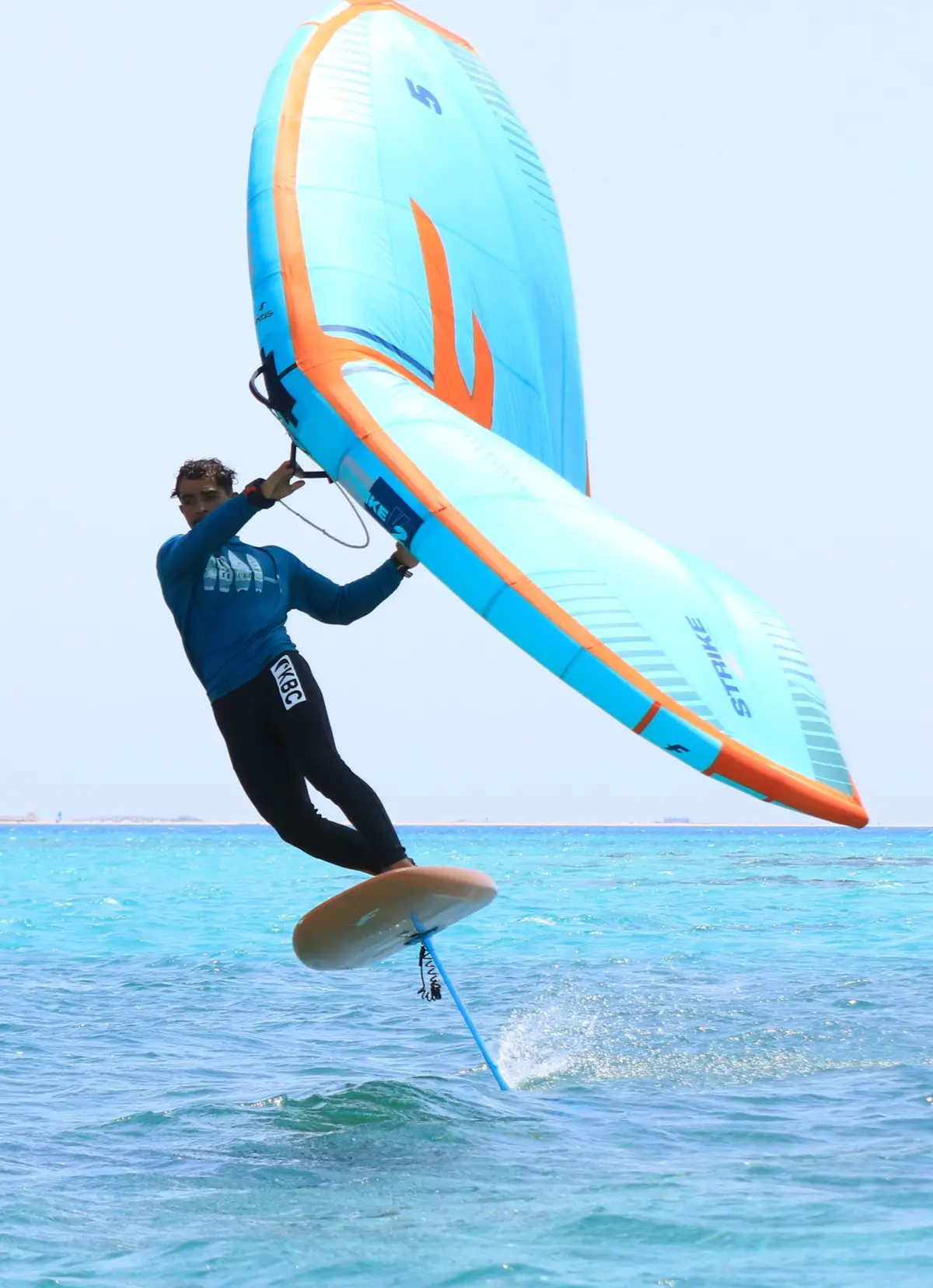
Hurghada Wing Foil Travel Gear: A Guide to Flying
Plan Hurghada wing foil travel gear with 12 monthly wind averages, flight bag advice and transfer questions, so you can pack for your Red Sea trip.

For a wing foil trip to Hurghada, Egypt, pack a board, wing and foil suited to your ability and launch. Protect the dismantled foil, check sports baggage rules and reserve a transfer with room for your measured bag. Your Hurghada wing foil travel gear should also suit the wind on the day.
Key takeaways: Check what a lesson or rental includes before paying to fly with equipment. Measure and weigh the packed bag, then send its dimensions to your airline and transfer provider. At Magawish, check the water depth before lowering a foil.
What Hurghada wing foil travel gear should you pack?
For Hurghada, pack a board, hand wing, foil, pump and the tools needed to assemble your setup. Long-term airport measurements put monthly mean wind between 11 and 14 knots. Choose your wing and foil for your weight and ability, then check the actual wind at your launch.
Bring the board leash and wing leash you use at home, plus your helmet and impact vest. Put compatible screws, washers and your assembly tool in a closed pouch. A spare set of fasteners can save a session if one disappears into the sand. Keep the foil covers handy for the walk between your room and the beach.
If you are new to the sport, a stable board with enough volume can make the first stages easier. An instructor can help you choose equipment for your weight and skill. If you already ride independently, ask a local operator about the launch and current conditions before deciding which wing and foil to bring.
Hurghada's water averages 22.3 °C in March and 29.1 °C in August. Choose exposure protection for your comfort, time in the water and the day's air conditions. Consider a rash vest, sun protection and a wetsuit suited to your tolerance. Leave room in the bag for wet gear on the return trip.
For a first attempt, a lesson may save you from flying with a full setup. Ask what equipment the session includes and whether you can use any of your own gear. If you are still learning the parts of a setup, the wing foil guide provides a starting point.
How should you protect gear on a flight to Hurghada?
For a flight to Hurghada, dismantle the foil and protect each part before placing it beside the board. One published wing foil travel bag measures 160 by 70 by 30 cm and has 10 mm padding. Measure your own packed bag, including handles, and weigh it before asking the airline and transfer provider.
Cover the mast, front wing and stabilizer, then stop them shifting inside the bag. Separate hard edges from the inflatable wing and from the board's rails, nose and tail. Check for pressure points before closing the zip. Padding is most useful when the parts cannot slide away from it during handling.
- Pad the board's nose, tail and rails inside a suitable travel bag.
- Remove the mast, front wing and stabilizer, cover each piece and keep them from moving.
- Deflate the hand wing, keep it dry and separate its fabric from sharp edges.
- Seal screws and washers in a pouch with the correct assembly tool.
- Record the full bag dimensions and packed weight for the airline and Hurghada transfer.
Fold the hand wing according to its instructions and keep hardware away from its canopy. Place the pouch of screws where it cannot open against the board or wing. Photograph the packed contents and the outside of the closed bag before check-in. Keep the photos with your travel documents in case you need them later.
An inflatable board may make the Hurghada transfer easier to arrange because you can deflate it for packing. The foil and pump still need space and protection. Pack the complete setup at home, including anything you plan to add on departure day. Then weigh the closed bag and measure all three dimensions.
How do airline baggage rules affect a Hurghada trip?
Airline rules can determine the size, weight and cost of a wing foil bag on a Hurghada trip. One carrier accepts a small surfboard under 2 metres and up to 32 kg as checked baggage outside the free allowance. Ask your carrier how it classifies a complete wing foil setup.
Give the airline your packed dimensions, total weight and a description of the board and detached foil. Ask about the fee, advance registration and every flight in your itinerary. A connecting flight or a flight operated by another carrier may have different conditions. Keep the written response with your booking details.
The carrier's published rule places surfboards and windsurf boards longer than 2 metres in its cargo category. A wing foil setup needs its own classification, so check before buying a ticket to Hurghada. Do not assume that an allowance for ordinary checked baggage covers the board, or that a board rule covers the separate foil.
At check-in, allow time to hand over an oversized bag and follow staff directions. Label the board bag with your contact details and retain your baggage receipt until you collect it. Keep a change of clothes and your travel documents in your regular luggage. Check security and battery rules before packing an electric pump or loose batteries.
For the journey home from Hurghada, weigh the bag again after packing. Wet equipment and any items added during the trip can change its weight. Keep the airline's response accessible at the airport, especially if you registered the sports bag in advance. Ask the carrier how to handle any change to your itinerary.
How do you arrange a Hurghada airport transfer with a board?
Arrange a Hurghada airport transfer after measuring the packed board bag. One published bag measures 160 by 70 by 30 cm, but send the provider your own measurements. Include the number of passengers and other bags, request a suitable vehicle, and agree on the fare and meeting point before arrival.
Hurghada International Airport is about 5 km southwest of El Dahar. Your actual journey depends on the address of your accommodation or launch, so send the full destination to the transfer provider. A board bag that fits in an empty vehicle may compete for space with passengers and suitcases. Describe the whole load when booking.
Ask how the driver will secure a long bag and confirm the same arrangement for the return journey. If the bag travels inside, keep its padded edges clear of passengers. Carry your arrival flight number and the driver's contact details where you can reach them after collecting your equipment at Hurghada airport.
Your launch matters when choosing a base. Magawish lies in the Hurghada area, Mangroovy Beach is in El Gouna, and Ras Soma is farther south. Give the driver the precise address rather than only the name of the coast. The Egypt wing foil guide covers other places to ride.
If you plan to move between launches during your stay, ask about carrying the same bag on those journeys too. Tell the provider whether the equipment will be packed or assembled when it needs transport. Confirm the collection time for your return flight, allowing time to pack and hand over the board bag.
Where can you store and rinse wing foil gear in Hurghada?
Ask your Hurghada accommodation or a local operator about secure storage and fresh water before you travel. Give them the dimensions of your board bag, such as 160 by 70 by 30 cm for one published model, and ask about access hours and charges. Rinse the board and foil after each session.
If you are taking your first lesson, ask what equipment is included before paying airline baggage fees. If you already ride independently, ask about suitable rental equipment, availability and storage before deciding whether to bring your own. Tell the operator your weight, experience and dates so they can answer for your trip.
At Magawish, keep the foil covered when carrying it across the beach and set it down away from sharp objects. Rinse sand and salt from the foil box and fasteners. For longer storage, dismantle the foil, clean the connections and follow the manufacturer's advice on screw grease. Store the dry pieces in their covers.
Dry the hand wing fully before packing it for the flight home from Hurghada. Pick a shaded place away from sharp objects, and keep sand and water out of the bladders. Ask where you can leave the equipment while it dries, particularly if you plan to ride on your departure day.
Before choosing storage near Magawish, ask whether your assembled board and mast fit and who can access the space. If you plan to visit Ras Soma or El Gouna as well, ask about moving the bag between launches. Keep the return transfer's collection time in mind when arranging your final rinse.
Where can you book Saida Kite wing foiling in Hurghada?
You can request a Hurghada wing foil session with Saida Kite on kitesurfing.me. The listed private session costs €75 for one hour. Send your booking request through the site, wait for Saida Kite to confirm it, then pay at the school when you arrive.
Saida Kite also lists a 3-hour beginner course for €168, an 8-hour beginner course for €400 and a 12-hour beginner course for €565. Choose the duration that fits your trip and tell the school about your experience. Ask what the session includes and how lessons are scheduled across your stay.
On the Saida Kite school page, send your preferred dates and any equipment questions with your request. Tell the school if you have never handled a wing or if you have already spent time on a foil. Ask how it schedules a course when conditions change and what to bring to the first session.
Allow for flights, baggage and transfers alongside the course price. If you plan to bring equipment, ask whether you will use it during the lesson and where you can leave it between sessions. Wait for the school's confirmation before treating the requested dates as booked, then keep the details available for your arrival.
Check the Hurghada wing foil spot guide for launch depth, beach access and rescue questions. Bring those questions to the school before your session, especially if you hope to ride independently afterward. The right launch and enough water beneath the foil matter when you choose where to enter.
Which Hurghada months suit a wing foil trip?
Hurghada Airport's long-term monthly mean wind reaches 14 knots in June, August and September. It averages 13 knots in May and July, and 11 or 12 knots in the other months. These are historical averages, not a forecast. Check the wind at your chosen launch before riding.
What are Hurghada's wind and water averages each month?
Monthly airport wind means range from 11 to 14 knots, while the 10-year water averages range from 22.3 °C in March to 29.1 °C in August. See the Hurghada wing foil season guide for the month-by-month table. These figures describe averages, so check current conditions for your travel dates.
Which beach near Hurghada suits my level?
Magawish suits beginners with instruction and offers deeper water for progression. El Khayam and Mangroovy have shallows for wing handling, followed by deeper water. At Ras Soma, experienced riders should check offshore wind and rescue; reaching foil depth can mean wading 200 metres or more at high tide. See the Safaga wing foil guide for the wider area.
How much should a beginner budget for Hurghada lessons?
At Saida Kite in Hurghada, the listed 3-hour beginner course costs €168, the 8-hour course €400 and the 12-hour course €565. A one-hour private session costs €75. Request your dates, wait for the school's confirmation and pay at the school. Budget separately for your flight, accommodation and transfer.
Can a Hurghada visitor try another wind sport?
Hurghada also has kitesurfing, including around Magawish. It uses different equipment, and riders may share parts of the water, so check local launch instructions. The Hurghada kitesurfing lessons guide, kitesurfing season guide and Hurghada and El Gouna guide cover that sport.